Back in the day, Linda Godfrey would regularly share stories with me from her classic book Weird Michigan and her other works. Linda has regrettably passed on and her Weird Michigan website is lost, but here’s a seasonally appropriate tale of shipwrecks & lost love from my archives…
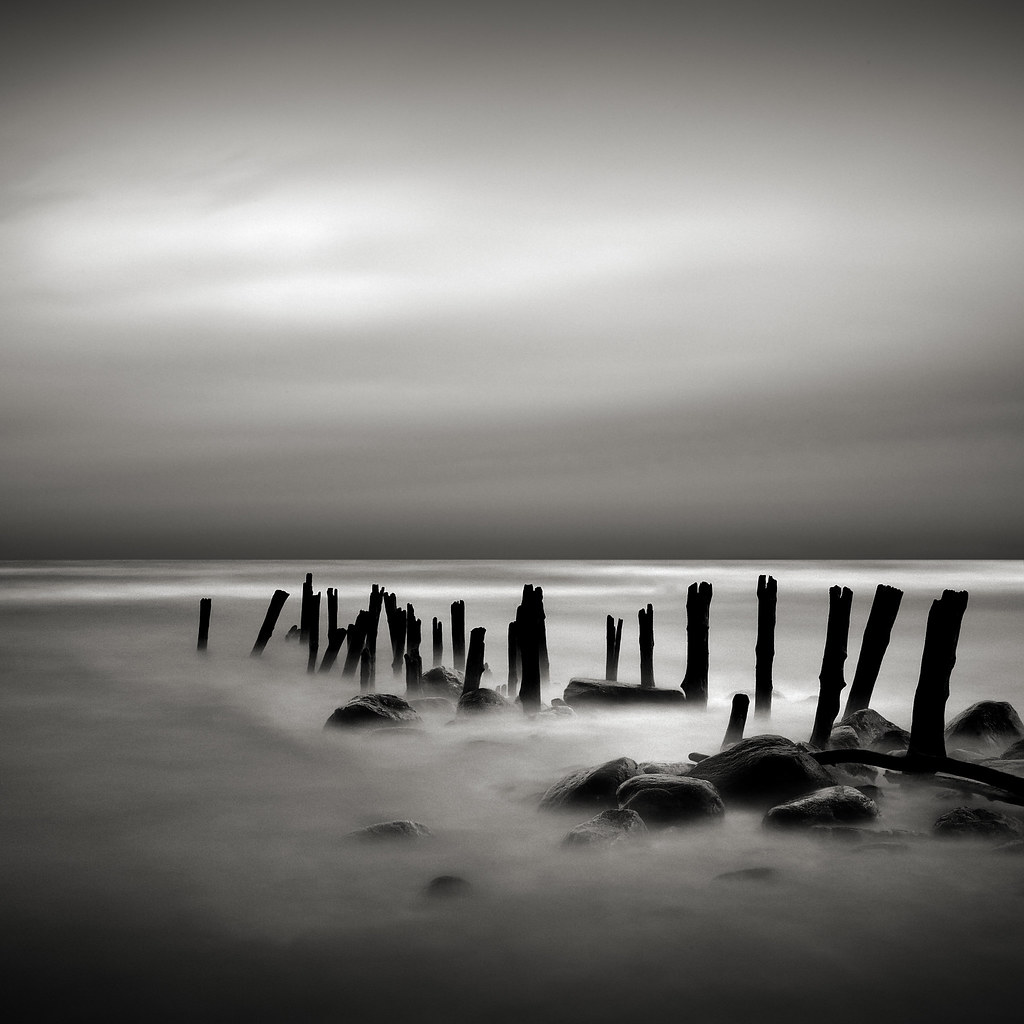
In the mid-1800s, the Lake Huron port and lumber town of Forester was a far cry from the sleepy, near ghost town it is today. The remains of huge pilings just off the scanty beach now stand as crumbling reminders of the great pier that once bustled with Great Lakes ships and sailors.
One of those sailors unwittingly started the legend that would be Forester’s main claim to fame after the lumber ran out and the ships stopped coming.On shore leave one day, the unnamed young man took up with a local girl named Minnie Quay, whose folks, James and Mary Ann Quay, owned the town tavern.
The Quays forbid Minnie to see her beloved, but the order proved tragically unnecessary after his ship became one of many that succumbed to Great Lakes gales. Minnie made one more visit to the forbidden pier after learning that news, and on April 26, 1876, at the age of 16, she threw herself into the water in hope of joining him in the afterlife. She lies in a waterfront cemetery now, next to the bodies of her father, mother and brother.
Legend says that she still wanders the beaches, moaning for her lost sailor, and that some have seen her standing waist deep in the water, beckoning others to join her. The former Quay home and bar still stands, giving Minnie’s ghost even more reason to linger.
When I posted about the wreck of the Edmund Fitzgerald a couple weeks ago, a reader asked why I don’t share the other famous shipwrecks. I explained that although posts about the Fitz tend to be more shared, my vote for the most grievous loss on the Great Lakes has always been the S.S. Carl D Bradley, a 639-foot freighter that sank almost 70 years ago November 18, 1957. Here’s an article by Valerie van Heest (Seeking Michigan / the Archives of Michigan) that was featured on my Absolute Michigan website back in the day.
“A Deafening Thud”
Abandon ship! Abandon ship! The whistle squawked seven short blasts, then one long blast. It was a signal twenty-six year old deck watchman Frank Mays knew well, but never expected to hear. Just minutes earlier, he had been having a smoke with Gary Price in the dunnage room, deep in the bow, when they heard a deafening thud. “We hightailed it out of there to find out what had happened,” Mays recalls. “When I reached the upper deck, I looked aft and saw the stern flapping up and down like a dog’s tail.” The Carl D. Bradley‘s back had broken, and it would be only a matter of minutes before water filled the tunnels and cargo holds of the 639-foot vessel. It was 5:30 p.m. on November 18, 1958.
Final Voyage
The Bradley had departed Gary, Indiana the day prior, running in ballast in building southwest seas along Lake Michigan’s western shore. On the season’s final voyage, the veteran boat was scheduled to head to Manitowoc, Wisconsin for repairs during its winter lay-up. The rusting cargo had been due for an $800,000 replacement for over a year, but its owner, Bradley Transportation Company, a subsidiary of U.S. Steel, pushed the work back until the end of the season. A radio call from headquarters ordering an additional stone delivery before lay-up proved to be the demise of the Bradley. Despite reports of gale-force winds and thirty-foot seas that compelled other freighter captains to take shelter along Wisconsin’s shore, Captain Roland Bryan, known as a “heavy weather man,” headed northeast across the lake from the Door County peninsula toward the Straits of Mackinac and back to Rogers City. At 5:35 p.m., the Bradley sank twelve miles southwest of Gull Island.
“The Worst Night of His Life”
Even today, survivor Mays recalls that horrific night with clarity. Hunkered down on the life raft just aft of the pilothouse, he trembled realizing the sinking beneath him. His eyes were drawn aft toward the flying sparks as the huge steel deck plates began to tear apart. In the growing darkness and mayhem, he could make out second mate John Fogelsonger running toward the stern and leaping over the break. Before his eyes, his friend disappeared as the Bradley ripped apart. The next thing Mays recalls was being pitched into the air, landing in the icy, angry water and then struggling onto the raft where he fought to hold on through the worst night of his life.
“A Painful Memory”
By morning, only Mays and first mate Elmer Fleming were alive. After fifteen bone-numbing hours in the icy waters, the U.S. Coast Guard cutter Sundew rescued them. All thirty-three of their mates, including Gary Strelecki and Dennis Meredith, who shared the raft for most of the night, as well as two of Frank’s own cousins, perished. These men left behind twenty-five widows and fifty-four fatherless children. Considering twenty-three of the crew hailed from Rogers City, the home port of the Bradley, the loss personally affected nearly everyone in the small community. Fifty years later, the sinking is still a painful memory.
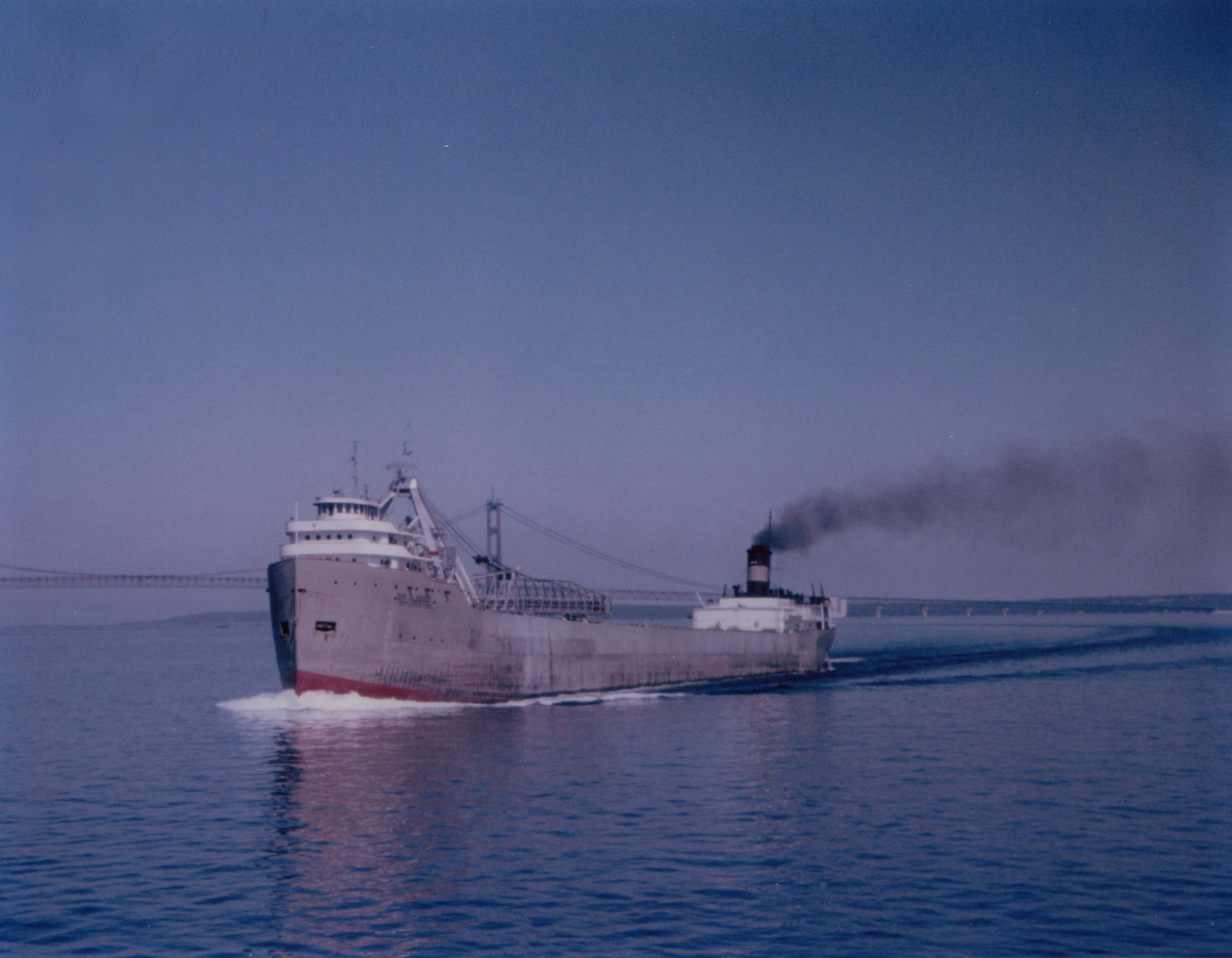
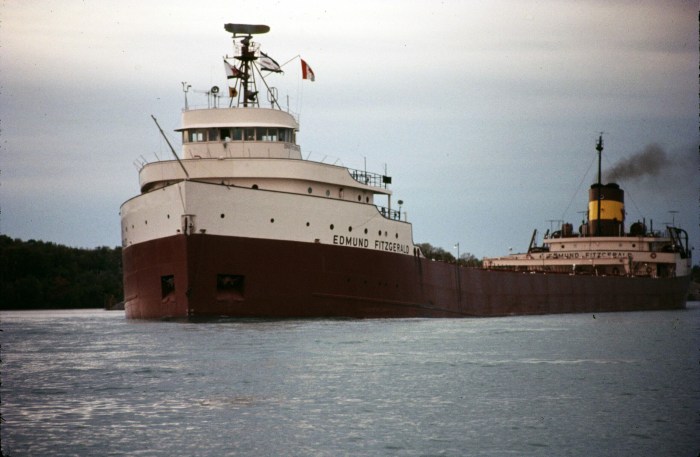
50 years on November 10, 1975, the mighty SS Edmund Fitzgerald was lost with all hands in a powerful storm on Lake Superior. At 729-feet long, it was the largest ship on the Lakes at the time and the largest vessel to ever sink in the Great Lakes.
While Gordon Lightfoot’s classic song The Wreck of Edmund Fitzgerald undoubtedly contributed to the legend of the Fitz, the documentary Backstory: The Edmund Fitzgerald from Click on Detroit/Local 4 on the sinking of the Edmund Fitzgerald explores the myriad ways the ship in woven into Michigan’s culture & consciousness. I really encourage you to make some time to watch this excellent documentary. In addition to exploring the mystery of the wreck and the impact of Lightfoot’s iconic song, it features anecdotes like the fact many of the furnishings were from Hudson’s and a truly beautiful recounting of the stories of the sailors lost. Seriously excellent work!
“And the iron boats go as the mariners all know, with the gales of November remembered” – Gordon Lightfoot
Every Michigander knows that the winds of November are to be respected and even feared on the Great Lakes. The State of Michigan says that an estimated 6,000 vessels were lost on the Great Lakes with about a quarter of these canoes, sailing ships, ferries, steamers, and modern ore boats like the mighty SS Edmnd Fitzgerald still remain on Michigan’s 38,000 square miles of the Great Lakes bottomlands.
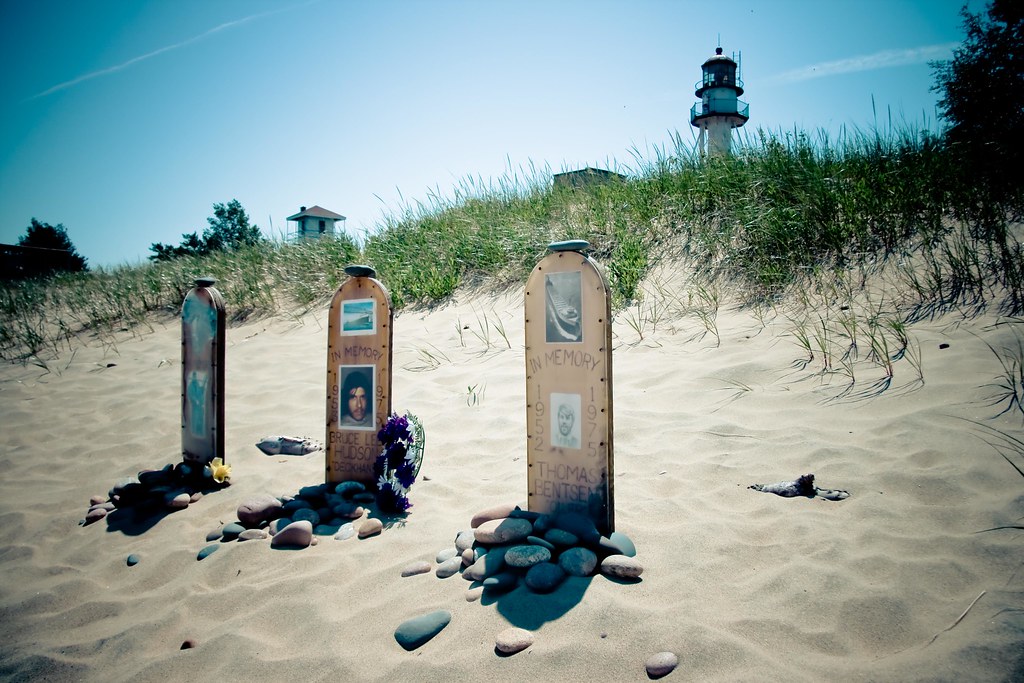
Yolanda took this photo a memorial at Whitefish Point Lighthouse to few of those lost aboard the S. S. Edmund Fitzgerald. More in her excellent Somewhere in Michigan gallery.
The 1868 peak in sail-powered ships on Lake Michigan also marked the year the 123-foot Rouse Simmons was launched from Milwaukee’s shipyards. The ship was built by the firm of Allan, McClelland, and Company, one of Milwaukee’s preeminent shipbuilding firms …In the early 1870s, the Rouse Simmons joined the sizeable shipping fleet of wealthy lumber magnate and philanthropist Charles H. Hackley of Muskegon, hauling loads of lumber for Hackley’s fleet from company mills to the various markets around the lake for roughly 20 years.
By the late 19th and early 20th centuries, the popular German tradition of decorating an evergreen tree in the home was widely practiced, and it was not uncommon for a handful of lake schooners to make late-season runs from northern Michigan and Wisconsin loaded with thousands of Christmas trees for busy Chicago waterfront markets. Estimates of the number of Christmas schooners vary, but perhaps up to two dozen vessels in any season delivered evergreens to markets in Great Lakes states.
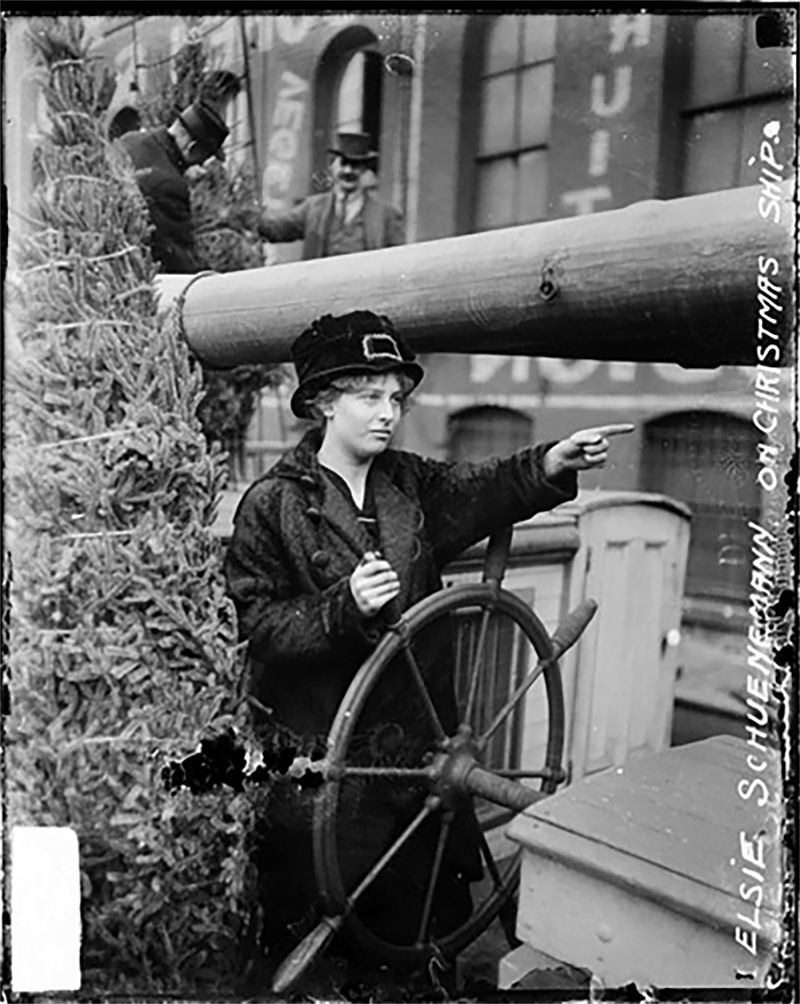
In Chicago, most vessels, including the Rouse Simmons, sold the trees directly from their berths along the Chicago River’s Clark Street docks. Electric lights were strung from the schooner’s bow to stern, and customers were invited to board the ship to choose their trees. In addition to selling Christmas trees, many boat operators, including Schuenemann, made and sold wreaths, garlands, and other holiday decorations. Barbara Schuenemann and her three daughters (Elsie is pictured above) helped make and sell these items as part of the family’s holiday trade.
You can read on for much more about Herman Schuenemann’s long career as “Captain Santa” which tragically came to an end on Friday, November 22, 1912 when the Rouse Simmons, heavily laden with 3,000–5,000 Christmas trees filling its hold & deck, left the dock at Thompson, Michigan looking “like a floating forest.” Sadly, the Rouse Simmons sailed into a powerful winter storm on the lake that sent her and several other ships including the South Shore, Three Sisters, and Two Brothers to the bottom of Lake Michigan.
On November 23, 1912, Back in 2007 Rich Evenhouse shared this video of a dive to the wreck of the Rouse Simmons. The shipwreck lies upright in 165 ft. at the bottom of Lake Michigan & I’ve heard that every year divers place a Christmas tree on the bow.
“Does anyone know where the love of God goes when the waves turn the minutes to hours?”
It’s November 10th again, which means that for the 48th year straight year I have Gordon Lightfoot’s legendary ballad to the Witch of November on repeat. My absolute favorite version of the song (as many of you know probably all too wdell) is this version that Joseph Fulton created way back in 2009. Given YouTube’s ruthlessness on music copyright, I have to assume that Lightfoot blessed this because from the moment Harry Reasoner begins speaking, who wouldn’t?
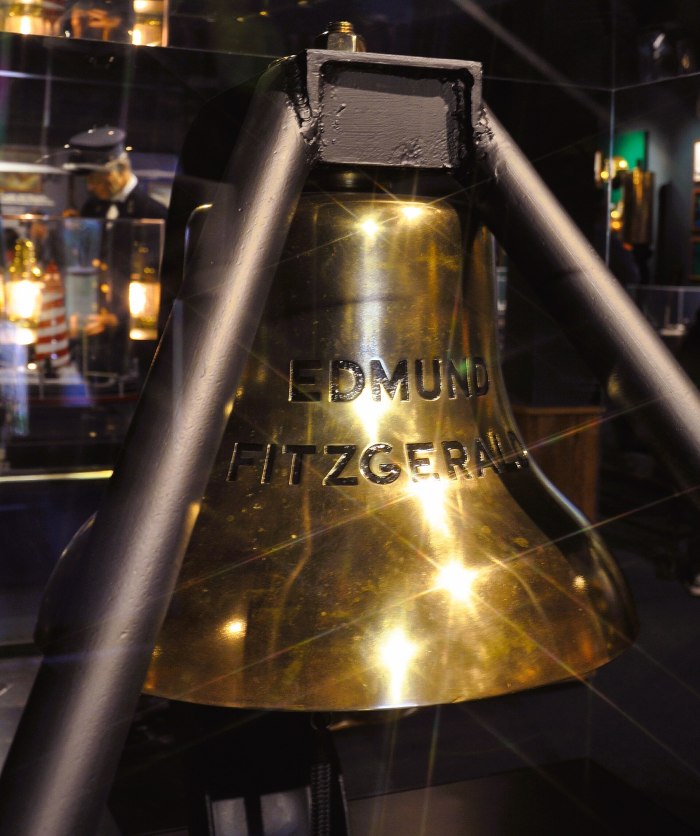
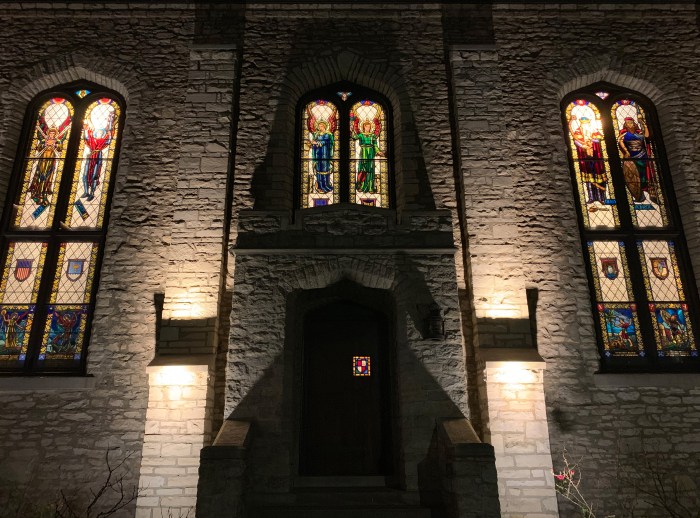
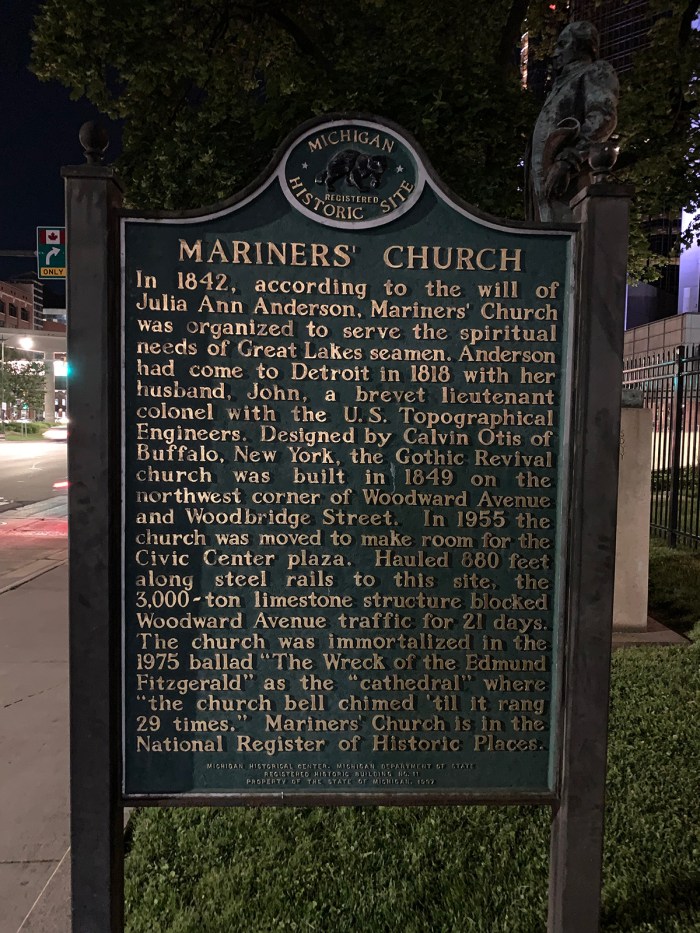
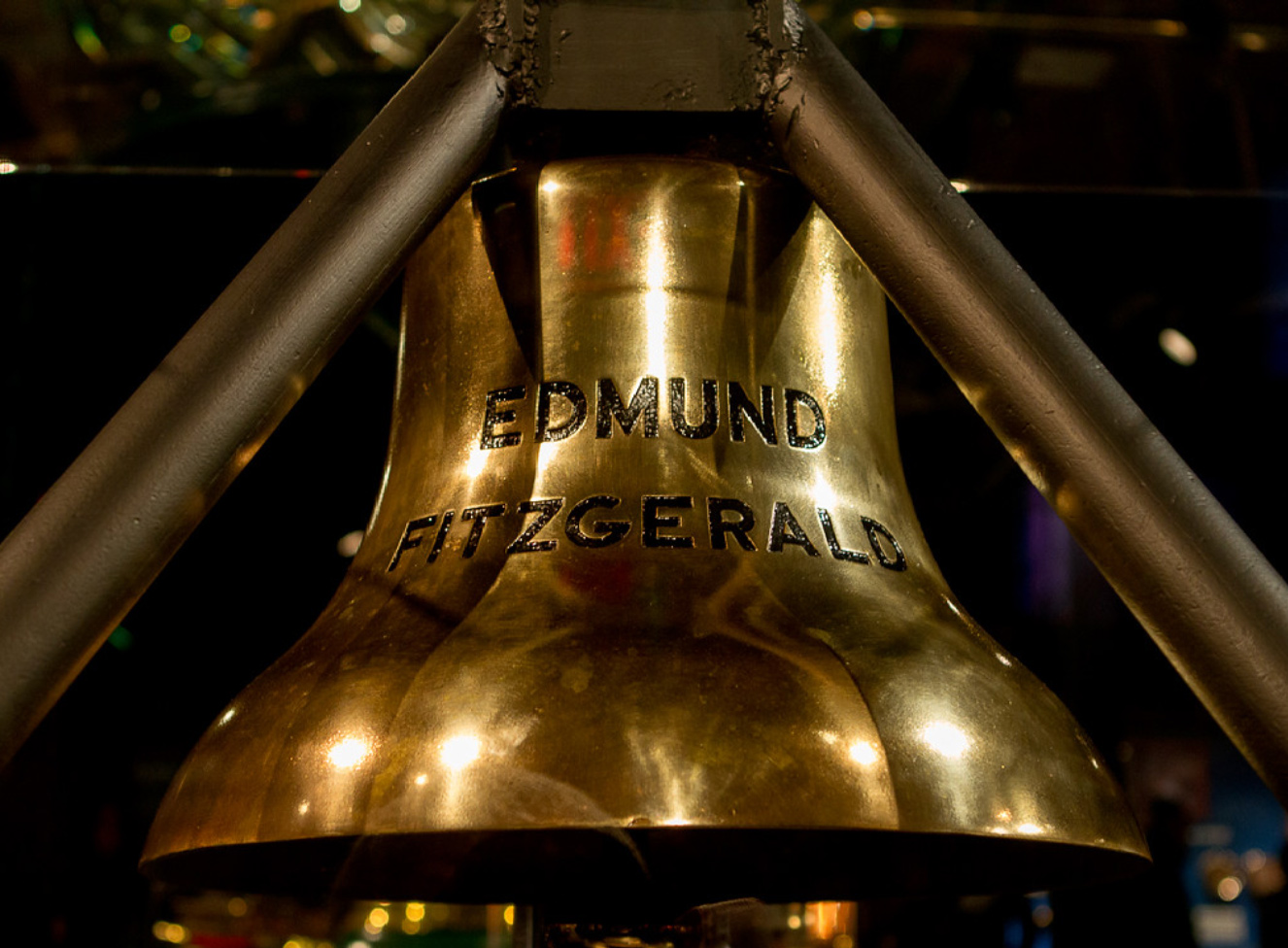
You can join the 49th annual Great Lakes Memorial Service, a remembrance of the crew of the Edmund Fitzgerald in person at Mariners’ Church in downtown Detroit or on their YouTube livestream at 11am today. On November 11, 1975 they rang their church bell 29 times in honor of all the sailors that lost their lives due to the wreck of the S.S. Edmund FItzgerald. They do it every year, and the beloved service also commemorates all sailors who have lost their lives on the Great Lakes.
Here are a couple of photos I took recently of the beautiful stained glass and the historical marker at Mariners’ Church which is between Hart Plaza and the Renaissance Center on the riverfront in downtown Detroit. Lots more about the Edmund Fitzgerald on Michigan in Pictures!
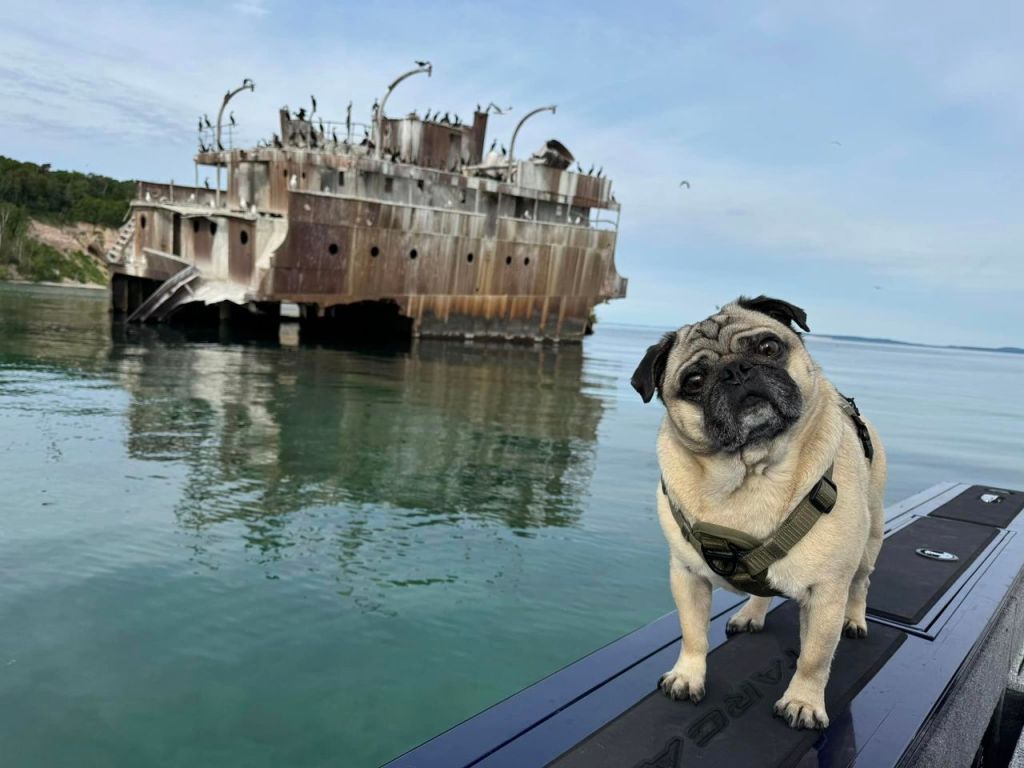
If you love the Great Lakes and aren’t yet following the exploits of Milo’s owner, Great Lakes shipwreck explorer Chris Roxburgh, then today is your lucky day!! Follow Chris on Facebook and view & purchase his work including some awesome coffee table books on his website!
On the night of November 28, 1960, Lake Michigan would claim one of her most recent victims. The steamship Francisco Morazan ended a 38-year career when she ran aground on South Manitou Island. She had sailed for eleven owners, under six flags, with eight names.
…The Morazan was Captain Eduardo Trivizas’ first command. Onboard were 12 crew, and the captain’s pregnant wife, Anastasia. Fog slowed the ship and a bad feeder pump for the boiler forced the crew to stop and drift in Lake Michigan for eight hours to replace it. The Morazan passed Point Betsie in a blinding snowstorm at about 7:15 pm on the 28th. She was pushed off course and ran aground just 300 yards from the beach on South Manitou Island.
Three Coast Guard vessels and a civilian tug responded to the Morazan’s mayday. On December 4, the crew was removed from the ship after it was determined that she couldn’t be salvaged. Attempts were made to salvage the cargo but were ultimately abandoned. In the years afterward, the wreck became a popular hangout for island residents. They helped themselves to the cargo of canned chicken and toys. The wreck is now protected as a part of the Manitou Passage State Underwater Preserve.
Most Michiganders of a certain age remember the furious storm of November 10, 1975, and 10-year-old me was no exception. I was enjoying re-creating the scene in the Wizard of Oz where the Tin Woodman leans at impossible angles by holding out my coat & leaning into the wind when the wind started ripping 4 x 8 sheets of metal roofing of our barn & driving them into the ground, ending that experiment in a hurry.
The memory of the fury of that storm & the shock people around me has stuck with me all my life. I feel like the one video I watch every year by Joseph Fulton perfectly captures the impact, so please enjoy.
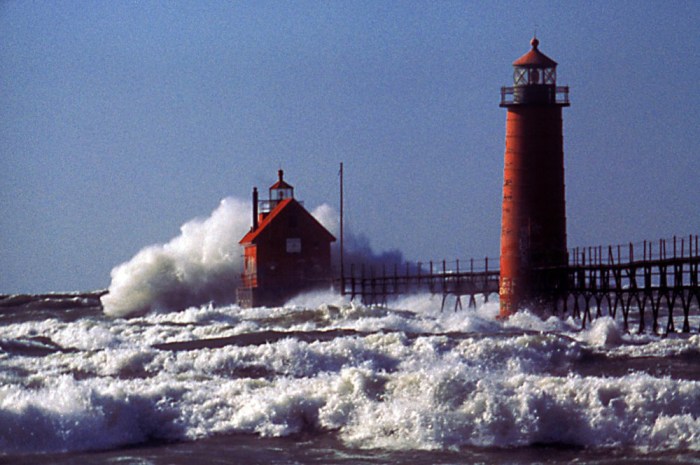
Carl took this shot way back on November 10, 1975 in Grand Haven where the storm also washed several people off the pier, killing 2. See more in his Lighthouses gallery & stay off piers in storms people!
Today is the 45th anniversary of the sinking of the S.S. Edmund Fitzgerald, and if you’re in Michigan, you’ll probably hear The Wreck of the Edmund Fitzgerald by Gordon Lightfoot today. I’m pretty sure, however, that you won’t enjoy it more than when you’re watching this video.
Joseph Fulton put together this amazing tribute to the 29 men who went down with the Edmund Fitzgerald in Lake Superior on November 10, 1975. This video is one of the best I’ve ever seen on YouTube and I hope you can watch it.
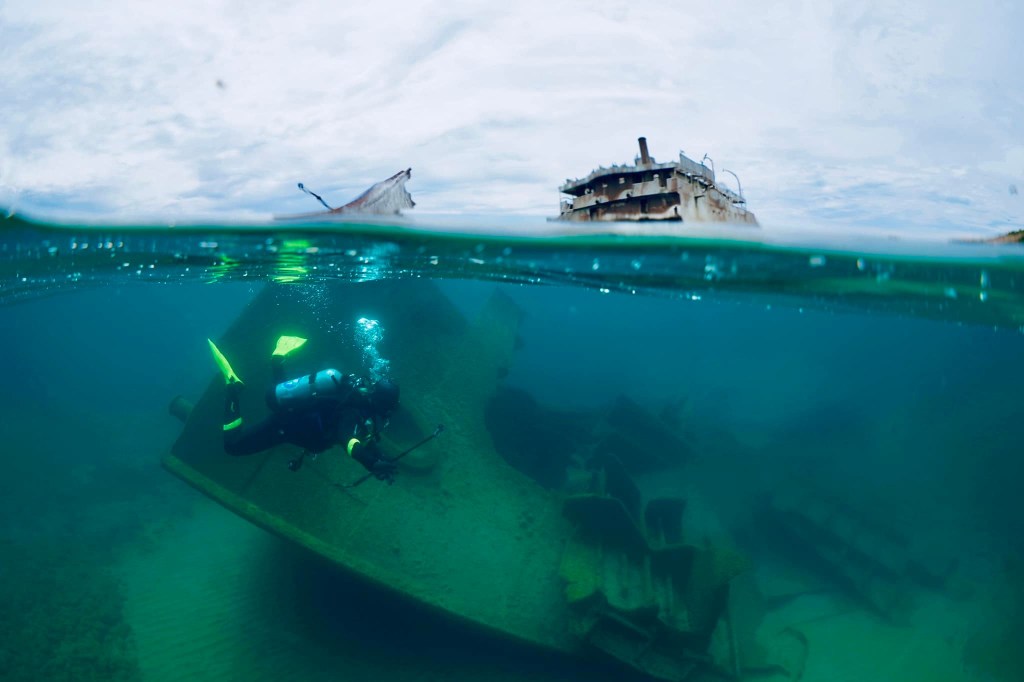
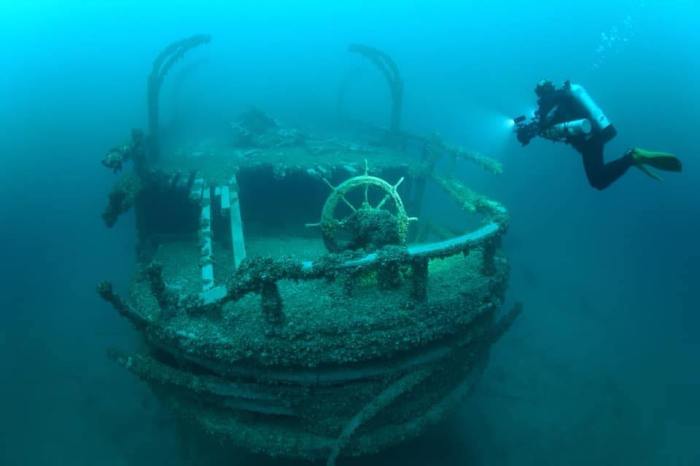
Chris Roxburgh is a diver and photographer who is one of my favorite follows on Facebook. About this photo he writes:
The Westmorland shipwreck located in a 200’ deep unpublished location in Lake Michigan. After many wreck hunters tirelessly searched for this vessel rumored to have whiskey Barrels and gold that was being delivered to the garrison army on Fort Mackinac. She sank on December 7th 1864. When she was finally found in 2010 by Ross Richardson the mystery was unlocked to her final resting place.
The Westmorland was one of the first 200 foot long steam powered ships in the Great Lakes and at first was called a “propeller” since they used a prop instead of sails. She hauled many tons of grain and meat across the Great Lakes. With a crew of 34 she steamed into rough seas with over 20’ waves and a violent snow storm all while leaking from the night before. As the crew made a bucket brigade trying to keep the engines out of the water they could not keep up with the ever increasing flow. Once the water stopped the engines she could not keep straight into the waves. The lifeboat Davits you can see in this picture where used to lower the boats Into the water as she sank. Out of the 34 crew fifteen went down with the ship and two succumbed to weather on the shore of Platte Bay as the others walked 40 miles to a nearby town.
I was very excited to dive her because only a handful of trusted divers have been given the opportunity to visit this site. Dusty Klifman and I decided to plan this deep dive last week as the opportunity with perfect weather on Lake Michigan arrived.


#/media/File:Edmund_Fitzgerald,_1971,_4_of_4.JPG)
 Michigan in Pictures
#/media/File:Fall_777.jpg)