Kawkawlin River: the Place of the Pike Fish

Kawkawlin River

Kawkawlin River, photo by conradthedog

A Brief History of the Kawkawlin River from the Kawkawlin Watershed Property Owner Association says that the native name for Kawkawlin was U GUH KON NING or ‘place of pike fish’. They add that the Saginaw Treaty of 1819 was negotiated by Lewis Cass with the Chippewa Indians and opened the lands of Saginaw Valley to settlers for $1.25 per acre and have lots more history & information at the link above.

Check out Jon’s photo background big and see more in his Michigan slideshow.

Many more rivers on Michigan in Pictures.

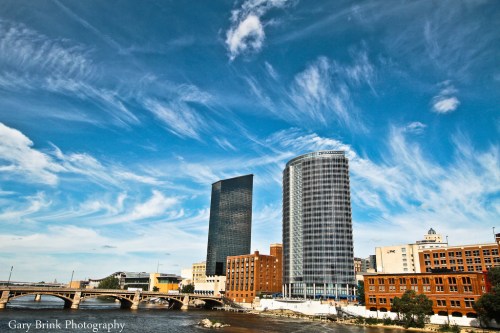
Clouds over Grand Rapids

Untitled

Untitled, photo by photofrenzy2000

An amazing shot of Michigan’s second largest city.

Check it out bigger and see more including some more incredible cloud shots in Gary’s slideshow.

More Grand Rapids on Michigan in Pictures.

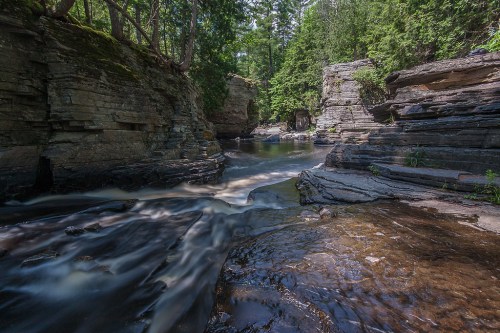
Sturgeon River Gorge: Michigan’s Grand Canyon

Michigan's -Grand Canyon--2

Michigan’s -Grand Canyon–2, photo by ShaneWyatt

The Ottawa National Forest page on the Sturgeon River Gorge Wilderness says:

The Wild and Scenic Sturgeon River rushes out of the northern portion of this wilderness, over the 20 foot volcanic outcroppings of Sturgeon Falls, and through a gorge that reaches 350 feet in depth and a mile in width. Throughout this rugged, steep Wilderness, the Sturgeon and Little Silver Rivers and their tributaries have carved falls, rapids, ponds, oxbows, and terraces. Stunning views are possible from the eastern rim of the gorge. Except for a few naturally bare slopes, most of the land is forested with pine, hemlock, aspen, sugar maple, birch, and basswood. When the leaves of the hardwoods change color in the fall, they form a vivid tapestry.

There are few established trails in Sturgeon River Gorge Wilderness, and the few overgrown logging roads are hard to find and follow. The North Country National Scenic Trail parallels the northern and eastern boundaries for about eight miles. Sturgeon River Campground offers seven sites on the southeastern boundary. In spring and during peak runoff, kayaking and white water canoeing are challenging, and only recommended for advanced paddlers.

Check it out bigger and see more on Shane’s map!

More Michigan rivers on Michigan in Pictures.

Overlooked Falls in Porcupine Mountains State Park

fallen tree [Overlooked Falls 2478 2481]

fallen tree [Overlooked Falls 2478 2481], photo by Frank Kaelin (aka Fir Dawg)

GoWaterfalling’s page on Minor Waterfalls has this to say about Overlooked Falls in Porcupine Mountains State Park:

Overlooked Falls is a small falls on the Little Carp River. The scenic falls consists of two drops, each about 5′ in height. This is the most easily accessed of the falls on the Little Carp River, big or small. It is only a few hundred feet from the parking area. The trailhead to the falls is at the end of Little Carp River road. This is also the trailhead to Greenstone Falls, which is about 1/2 mile away. The trail also leads to the much larger Trappers Falls, which is three miles away.

Check this out bigger and see more in Frank’s Mainly Water slideshow.

Many (many) more Michigan waterfalls on Michigan in Pictures!

Mr. Brownie, Brown Trout, Salmo trutta

Mr. Brownie

Mr. Brownie, photo by heronwheels

The Michigan Department of Natural Resources page on Brown Trout, Salmo trutta says that Brown trout is something of a misnomer as many Great Lakes brown trout are mainly silver in color. Michigan Sea Grant has excellent information about Great Lakes fish, and their Brown Trout entry says that the they were first stocked in the Great Lakes in the 1880s and:

The brown trout’s scientific name translates to “trout-salmon.” The Atlantic salmon and brown trout both belong to the genus Salmo. Rainbow trout, coho salmon, and Chinook salmon belong to a different genus – Oncorhynchus.

Great Lakes brown trout typically enter tributaries to spawn during late fall. Reef spawning also has been documented in Lake Superior and Lake Michigan. Although naturally reproducing populations of brown trout exist in Michigan waters, most are maintained through stocking. Unlike Chinook and coho salmon, brown trout do not necessarily die after spawning and can live for up to 13 years in Lake Michigan.

Browns can tolerate warmer water than other trout species, which adds to their popularity as a gamefish in rivers that are not suitable for native brook trout. In the Great Lakes, brown trout stay near shore in waters less than 50 feet deep, which makes them an ideal gamefish for shallow bays such as Lake Huron’s Thunder Bay.

The diet of brown trout varies greatly depending on its environment and available food sources. In the Great Lakes, brown trout prey mostly on forage fish such as alewife, rainbow smelt, and round goby. In rivers, small browns eat a variety of aquatic invertebrates. Larger fish transition to a diet of small fish, large insects, and even small rodents. Big browns are notorious for their wariness and nocturnal feeding habits.

Read on for more from Michigan Sea Grant and connect with them on Facebook. For more information on how and where to catch brown trout see the DNR’s Michigan Fish and How to Catch Them and Better Fishing Waters.

Stacey caught this beauty on the Pere Marquette River near Baldwin. Check this out bigger and see more in her Pure Michigan slideshow.

More fish on Michigan in Pictures, and be sure to check out this brown trout with a happy fisherman from the 1930s courtesy Seeking Michigan!

Rainbow Falls on the Black River

n2c_113-0377

Ragin’ Rainbow Falls, photo by sgowtham

The GoWaterfalling page on Rainbow Falls explains:

This is the last of the main falls on the Black River before it enters Lake Superior. This is an interesting waterfall. Unfortunately the best views are from the east side of the river and the observation deck is on the west side of the river. The hike from the west side trailhead is 1/2 mile. In my opinion the smarter thing to do is to drive down to end of the Black River Scenic Byway, cross the river and hike back up to the falls. A supsension bridge takes you across the river and a mile long, scenic, and mostly level trail, takes you back to the falls. The views are far superior. In low water you can wade across the river above the falls.

The Black River Scenic Byway starts north of US 2 near Bessemer. There are signs on US 2. Rainbow Falls is about 16 miles north of US 2. The scenic area is on the right and is clearly marked. It is about a 1/2 mile walk from the parking area to the falls. There are a lot of stairs at the end.

The waterfall has carved out a large pothole. Most of the river falls into the pothole, but some of the water, depending on how high the river is, goes around or jumps clear over this hole.

Head over to GoWaterfalling for more pics and information about other falls in the area.

View Gowtham’s photo on black and see more in his Nature slideshow.

Many more Michigan waterfalls on Michigan in Pictures!

Gorge Falls on the Black River Scenic Byway

gorge falls-black river, gogebic county, MI

gorge falls-black river, gogebic county, MI, photo by Northwoods Apparition

I’m always happy when someone shares a photo of a waterfall I’ve never seen. Michigan in Pictures has a ton of Michigan waterfall photos, so it’s not often that this happens! The GoWaterfalling.com entry for Gorge Falls explains:

Gorge Falls is named for the deep and narrow gorge above and below the falls. This was my personal favorite of Black River Scenic Byway waterfalls. It is also one of the easier waterfalls to visit, being only a short distance from the parking area. There are a fair number of stairs to the falls overlook. It is only a short walk upstream to see Potawatomi Falls.

I do not know how hard it would be to get to the east side of the gorge, or what the views are like.

The Black River Scenic Byway starts north of US 2 near Bessemer. There are signs on US 2. Gorge Falls is about 14.5 miles north of US 2. The scenic area is on the right and is clearly marked.

Click through for more and see a map of the Black River Scenic Byway.

Check Kirk’s photo out background bigtacular and see more great shots in his slideshow!

Grand Rapids Flood of April 2013

Waterwindows

Waterwindows, photo by Canon Screwdriver (gary syrba)

This mLive article on the historic Grand River flooding in Grand Rapids explains that April 2013 is now the third wettest month on record for the city:

Evan Webb with the National Weather Service in Grand Rapids said 10.57 inches of rain had fallen in the city this month as of 8 a.m. Wednesday, its wettest month in 17 years. That should come as no surprise to West Michigan, which saw weeks of heavy rainfall caused widespread flooding and led the Grand River to crest at record levels.

Grand Rapids already had shattered its longstanding April rainfall record, but just crept into the top three wettest of any month of the year.

The No. 1 spot goes to June 1892, when 13.22 inches of rain fell. Second place belongs to September 1986, when 11.85 inches doused the city.

Webb said it is possible Grand Rapids could see enough rain to put it in the No. 2 spot, but it is unlikely with only a week and a half left in the month.

mLive also has some crazy pictures of the flooding including some great aerial photos and a timeline of the flooding.

View Gary’s photo on black and see more in his Water, water, everywhere … but not a drop to drink slideshow. He writes:

All the rain we have had, and the heavy winter added to the water levels a bit around here. The floods are near records. The Grand River, which goes through the heart of the city and ends at Lake Michigan hits the flood limit at 18′. We went 3 1/2 feet over that. Many buildings flooded, many roads were covered for days, and many, many basements flooded. Our sump pump has been running non-stop for two weeks. We have been lucky… we only had about 20 gallons of water that got into the basement… though the sump pump has siphoned thousands of gallons from around our house. Many neighbors had a few inches of water in their basements. A lot of homes have dumpsters in the driveway. Pretty sad. Still… the crowds downtown looking at the floods and taking photos are amazing. People are everywhere, and most are fine.

You might also be interested in the Great Michigan Flood of 1908.

West Michigan’s Rogue River

Rogue River Reflection

Rogue River Reflection, photo by MichellePhotos2

Wikipedia’s Rogue River entry says that this 48 mile long river is a major tributary of the Grand River that runs through Kent and Newaygo counties and the Rogue River State Game Area.

Its headwaters are a series of ditches that drain the old Rice Lake bed near Grant for agricultural purposes.

…Originally named “Rouge River”, the river’s appellation was altered in the 19th century due to the printing error of a Wisconsin mapmaker. As a frontier waterway, the historic Rogue River was of major importance to local tribes and traders. During the lumber era in the latter 19th century its waters floated timber to the mills of the Grand River valley, and the riverboat Algoma plied its way northward along Rogue giving its name to the Kent county township of Algoma.

Rogue River is designated as “Country Scenic” under Michigan’s Natural Rivers Act. It is popular with trout fishers and local youth who have floated the river by innertube since the mid-20th century. It is intersected in parts by the White Pine Trail. It varies from 15 feet (4.6 m) wide in the upper sections to 80 feet (24 m) wide near its end and is 1 to 4 feet (0.3 to 1.2 m) deep. There are “holes” in the river up to 15 feet (4.6 m) in depth.

You can get the management plan, maps and more from the DNR’s Rogue River Page.

View Michelle’s photo on black and see more in her slideshow.

More Michigan rivers on Michigan in Pictures.

Bonanza Falls on the Big Iron River

"Bonanza Falls" - (Big Iron River) Silver City, Michigan

“Bonanza Falls” – (Big Iron River) Silver City , Michigan, photo by Michigan Nut

The photo is of Bonanza Falls, about which Go Waterfalling says:

Bonanza Falls is a wide, low falls on the Big Iron River. The falls is at most 10 feet high, but in the spring the falls is 100 feet wide. In summer it is broken up into a number of segments. The bedrock here is tilted back against the flow of the river, creating many obstacles for the water to overcome.

Bonanza Falls is located about a mile south of Silver City along Route 64. This is a sign on west side of the highway visible as you head south for Bonanza Falls. A short gravel road leads to the river. The “Bonanza” refers to the mining boom times of the 1800’s.

Check this out on black, check out a long exposure and see many more in John’s Michigan Waterfalls slideshow.

Many more Michigan waterfalls on Michigan in Pictures.