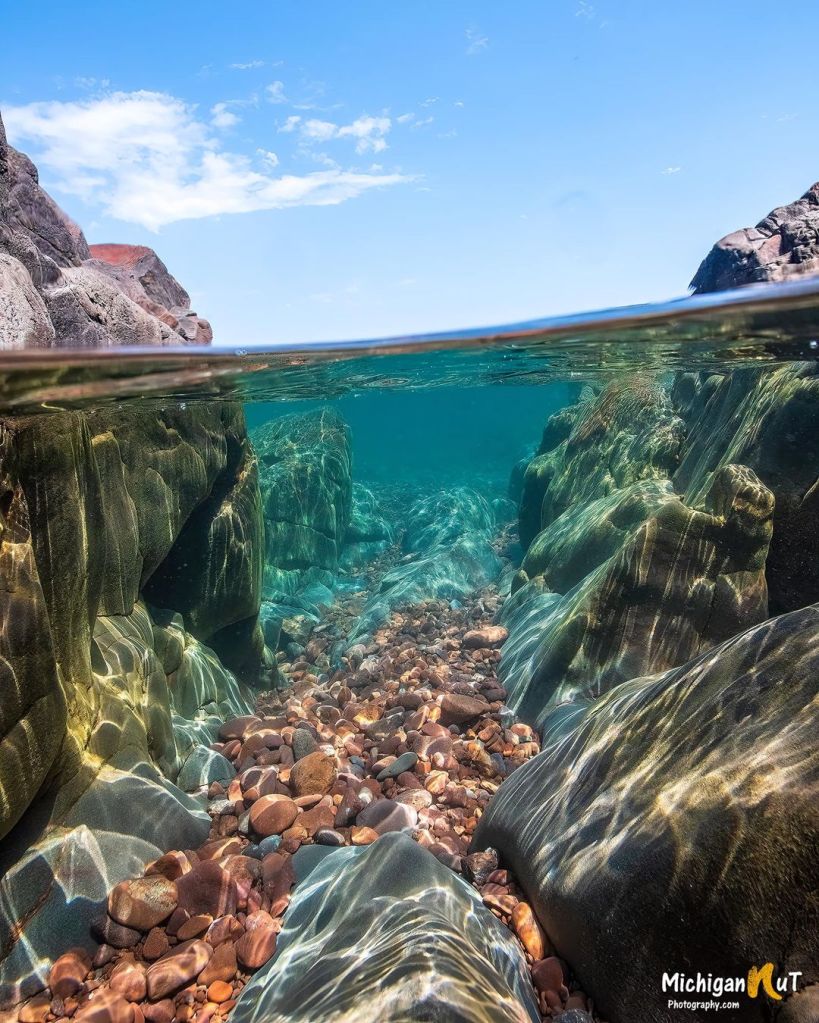
All clear beneath Copper Harbor

Lake Superior, Copper Harbor, MI by Michigan Nut Photography

Lake Superior, Copper Harbor, MI by Michigan Nut Photography

Let’s stay up on the Keweenaw Peninsula today with a look at the crystal clear waters of Lake Superior as seen from under the surface of Copper Harbor! For almost all my life, Lake Superior has been the cleanest & clearest of the five Great Lakes. Imagine my surprise to learn that in 2017, Lake Michigan & Lake Huron were found to be more clear than Lake Superior:

While Lake Superior has not gotten any dirtier, lakes Huron and Michigan have gotten significantly clearer in the past 20 years or so, a study published earlier this year in the Journal of Great Lakes Research found.

Anecdotally, scientists knew water clarity was improving in those lakes. But it hadn’t been quantified.

“What surprised us was the magnitude of the change,” said Robert Shuchman, a study co-author and co-director of the Michigan Tech Research Institute. “We had no idea the data was going to tell us that Huron and Michigan have surpassed the water clarity in Lake Superior. That was the startling piece.”

Scientists analyzed satellite images of the lakes captured between 1998 and 2012. Over that period, they found, the depth that light could penetrate down into the water — known as the photic zone — increased by about 20 percent in lakes Michigan and Huron.

They attribute part of that change to less phosphorous runoff. Climate change also likely plays a role. But the dominant factor is the explosion of invasive zebra and quagga mussels in the lakes since the late 1990s, researchers concluded.

Some of the highest abundances of quagga mussels in the world are found in Lake Michigan, said Gary Fahnenstiel, a senior research scientist at Michigan Tech and study co-author.

So in the end, not great that Michigan & Huron passed Superior in this. I looked to see if anything had changed in that regard, but it appears not.

You can view & purchase a bunch more photos of this wild place including some more underwater shots in the Porcupine Mountains & Keweenaw Peninsula gallery on MichiganNutPhotography.com!

Lots more Lake Superior on Michigan in Pictures!
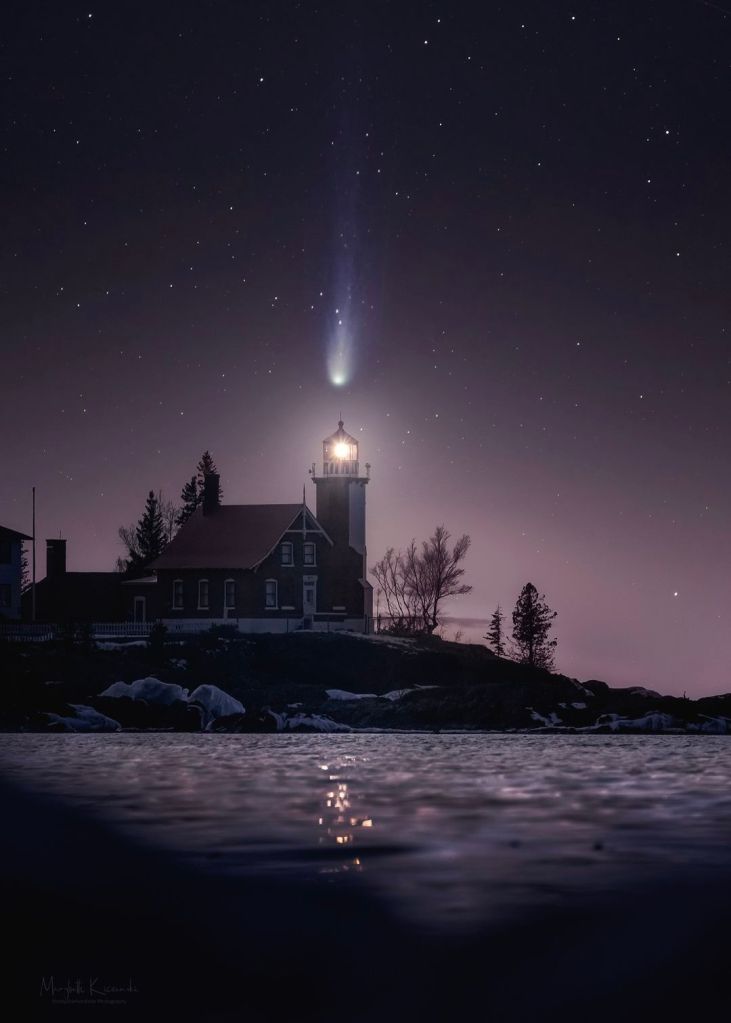
Comet P12 Pons-Brooks Visits Eagle Harbor!

Comet P12 Pons-Brooks Visits Eagle Harbor by Shelby Diamondstar Photography

Comet P12 Pons-Brooks Visits Eagle Harbor by Shelby Diamondstar Photography

Let’s head WAY north for another exciting celestial phenomenon, Comet P12 Pons-Brooks aka the Devil’s Comet. Space.com explains that the comet is named after French astronomer Jean-Louis Pons (1761-1831) who went on to become the greatest visual comet discoverer of all time:

In today’s world, comets are routinely found when they are far out in space, beyond the ability of being picked up by human eyes, but are caught using robotic cameras attached to large telescopes either here on Earth or from satellites out in space.

In contrast, Pons made most of his discoveries using telescopes and lenses of his own design; his “Grand Chercheur” (“Great Seeker”) was an instrument with a large aperture and short focal length, similar to telescopes that our modern-day amateurs would refer to as a “comet seeker.” Pons is noted today for visually discovering 37 comets (still a record) from 1801 to 1827.

…On Sept. 2, 1883, British-born American comet observer William R. Brooks (1844-1921) accidently found it. Like Pons, Brooks was a prolific discoverer of comets. In fact, his total of 27 visual discoveries is second only to Pons. Not until the first orbital calculations of Brooks’ discovery was made, was it realized that this comet and the comet found by Pons of 1812 were one of the same. So, this comet now bears the surnames of both observers.

With an orbital period of roughly 71 years, comet Pons-Brooks is considered to be a “Halley-type” comet, that is, a comet with an orbital period between 20 and 200 years, often appearing only once or twice within one’s lifetime. Other comets with a similar orbital period include 13P/Olbers, 23P/Brosen-Metcalf and the most famous of all, 1P/Halley. Because it was the twelfth comet to have a definitive orbital period calculated, it is cataloged today as 12P/Pons-Brooks.

You can look for the comet just after sunset, but you will probably need binoculars given the afterglow of the sunset.

MaryBeth took this way up on the Keweenaw Peninsula at Eagle Harbor Lighthouse. Click the photo above to share a comment with her on Facebook and for sure view & purchase her work at shelbydiamondstar.com!

PS: In my best Arnold voice, “I’ll be back” (because she has an amazeballs photo for us!)

When You Look into the Sun

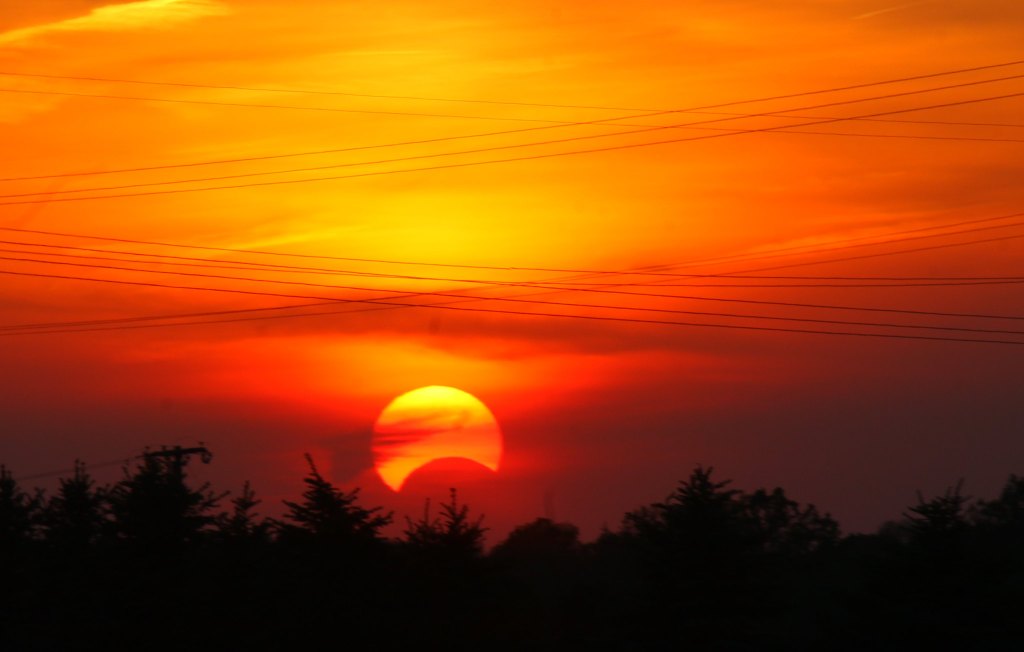
Solar Eclipse 2012 by Diane

So when you look into the sun and see the words you could have sung
It’s not too late, only begun
We can still make summer
Yes, summer always comes anyway

-Ian Anderson (of Jethro Tull)

There’s a lot of wild stories flying around about today’s eclipse. One that isn’t is the fact that there are a LOT of counterfeit glasses out there. If you are not CERTAIN the ones you have are legit, DO NOT WEAR THEM. You could go permanently blind.

Diane took this back in May 2012. See more in her Sunrise~Sunset album on Flickr.

Have a great eclipse & for sure share any pictures here or to this post on Facebook!

Gordie Howe’s Last Girder

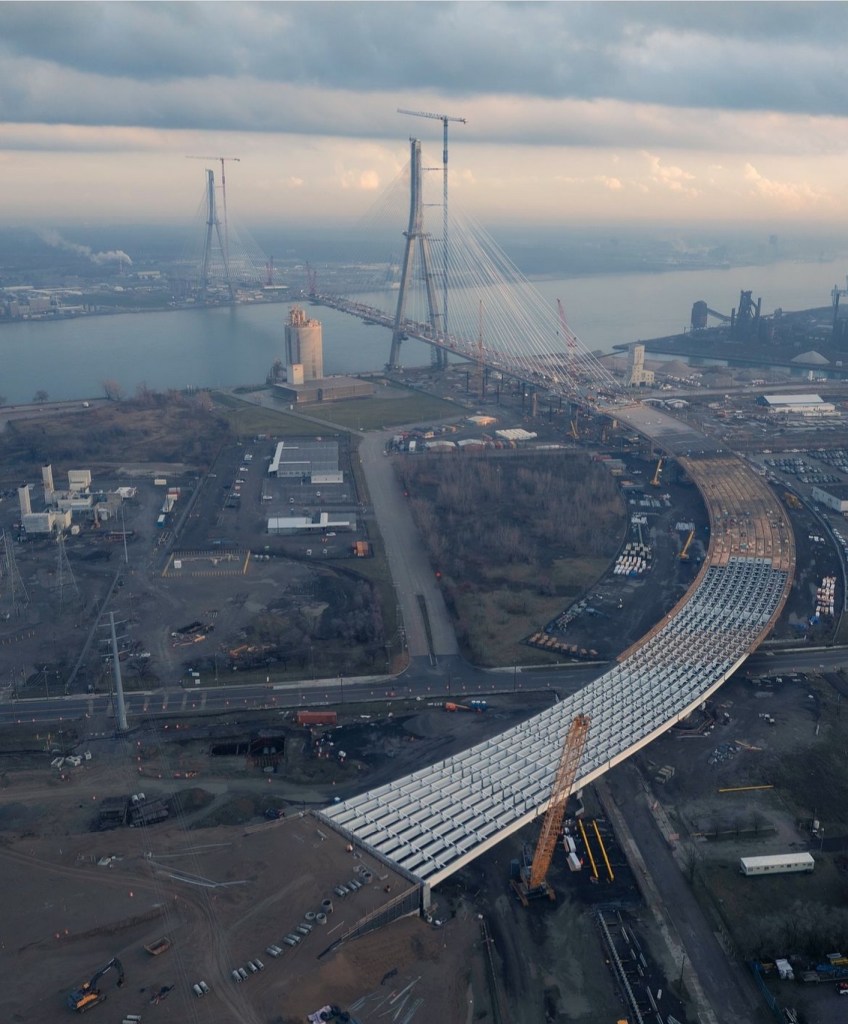
With nearly 3,000,000 views, this photo was the most popular photo of 2024 on Michigan in Pictures & the most popular photo all time!!

Gordie Howe’s Last Girder by photosbyjoeyd

Joey got an incredible drone shot of workers laying the last girder in place to connect the deck of the new Gordie Howe International Bridge to the Detroit Port of Entry. An astonishing project that is directed and paid for by Canada!

Check out more photos by Joey on his Instagram and view & purchase photos on his website!

Lots more Gordie Howe Bridge & lots more bridges on Michigan in Pictures!

Support Michigan in Pictures with Patreon

Taking a break…

Sunrise Greilickville Harbor Park

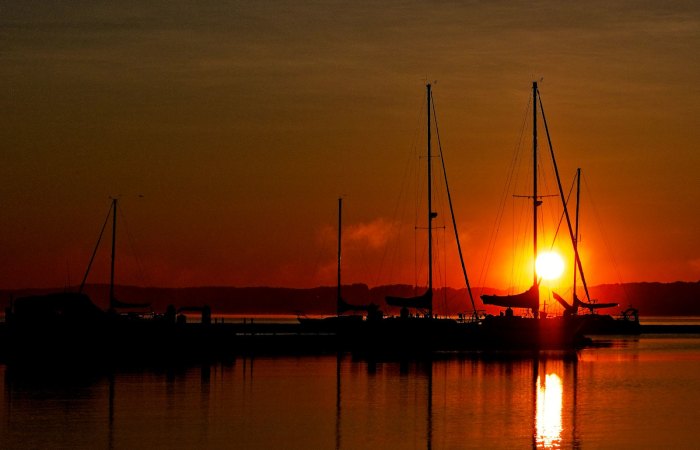
Sunrise Greilickville Harbor Park by Jeff Hudson

Good morning everyone. Regrettably, I need to take a break which (fingers crossed) won’t be too terribly long to deal with some health issues. In the meantime, I hope all of you are able to enjoy the bounteous offerings of Michigan summertime!

Jeff took this photo two years ago at sunrise on June 29th (my birthday) in Traverse City (where I currently live), so I thought it would be a perfect placeholder while I’m gone. See more from Jeff in his Most Faved (Best of) gallery on Flickr.

Support Michigan in Pictures with Patreon

Ghost Bikes

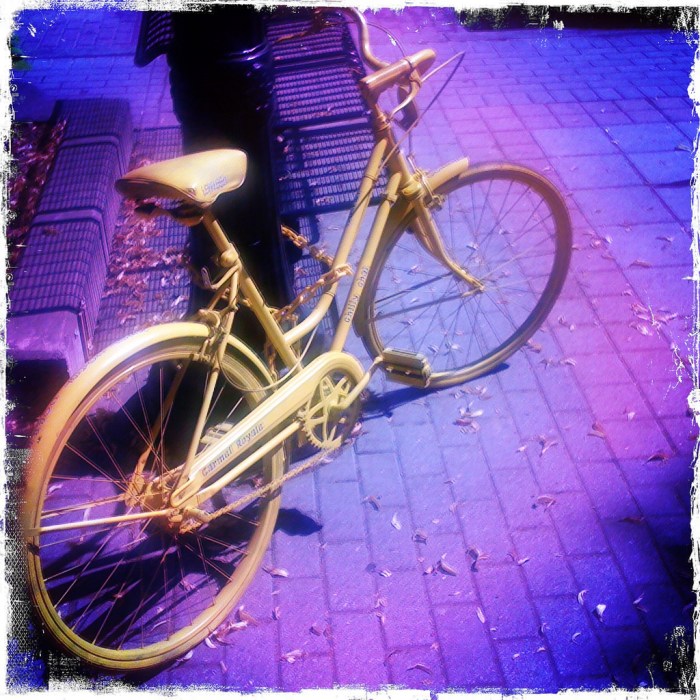
Grand Rapids Ghost Bike by Patrick Goff

Grand Rapids Ghost Bike by Patrick Goff

Summer in Michigan is a time when you’ll see a lot more bikes on the road, and I offer today’s post with the sincere hope that everyone who reads it remembers that 75% of all bicycle fatalities are caused by driver error. It’s your duty as a driver to PAY ATTENTION as you pilot a several thousand pound machine that can become a deadly weapon in an instant. GhostBikes.org shares:

Ghost Bikes are small and somber memorials for bicyclists who are killed or hit on the street. A bicycle is painted all white and locked to a street sign near the crash site, accompanied by a small plaque. They serve as reminders of the tragedy that took place on an otherwise anonymous street corner, and as quiet statements in support of cyclists’ right to safe travel.

The first ghost bikes were created in St. Louis, Missouri in 2003. Currently there are over 500 ghost bikes that have since appeared in over 180 locations throughout the world. (current number is well over 600) For those who create and install the memorials, the death of a fellow bicyclist hits home. We all travel the same unsafe streets and face the same risks; it could just as easily be any one of us. Each time we say we hope to never have to do it again — but we remain committed to making these memorials as long as they are needed.

Patrick took this photo back in 2010. See more in his Hipstamatic gallery on Flickr.

PS: There’s a Michigan Ghostbikes group on Facebook in case you’d like to join.

Support Michigan in Pictures with Patreon

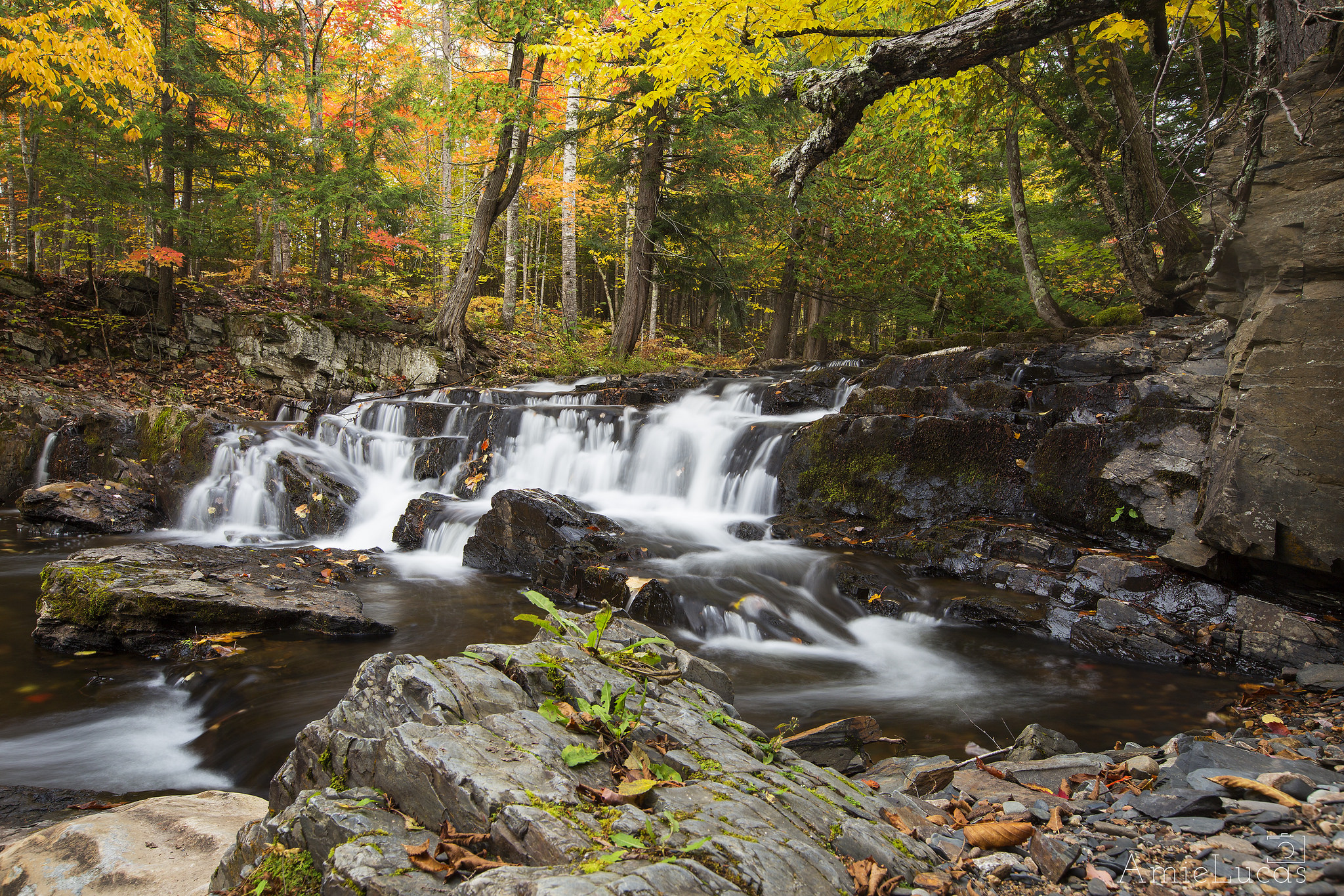
Waterfall Wednesday: Black Slate Falls

Black Slate Falls

Black Slate River Falls by Amie Lucas

Go Waterfalling’s page on the Slate River Falls shares that:

Slate River Falls is, unsurprisingly, on the Slate River. This is the largest of many drops over a three mile stretch of the river. This is a wild waterfall, with no fences, and the only trail is one left behind by the curious feet of others.

The falls are located along Skanee Road between L’Anse and Skanee, about 10 miles east of L’Anse. There is a sign marking the Slate River, so the falls are easier to find than some. 

If you continue upstream past the falls a few hundred yards you can find two smaller falls, Slide Falls and Ecstasy Falls (so named by kayakers). About 3 miles upstream you can find Quartzite Falls, Black Slate Falls and more unnamed drops.

Amie took this way back in October of 2015. View the photo background bigilicious and see more in her Michigan Waterfalls gallery on Flickr.

Support Michigan in Pictures with Patreon

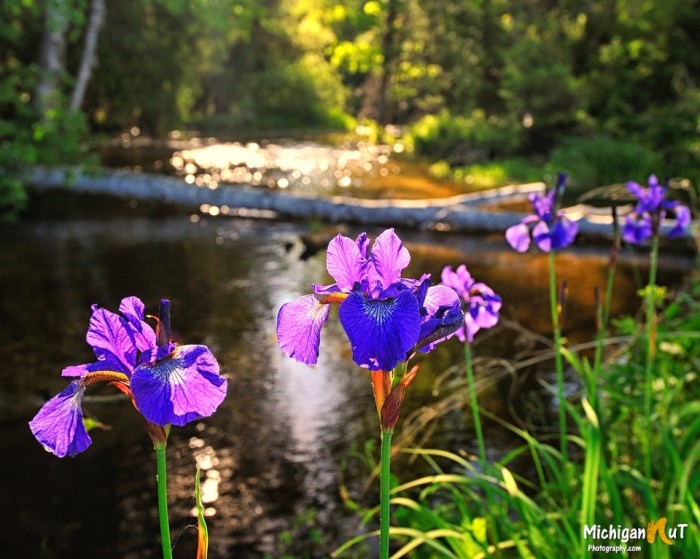
Shalda Creek Iris

via leelanau.com…Shalda Creek Iris by Michigan Nut Photography

Shalda Creek Iris by Michigan Nut Photography

John got this shot of wild Iris along the banks of Shalda Creek in the Sleeping Bear Dunes National Lakeshore.

See more on the Michigan Nut Facebook page and at michigannutphotography.com.

Support Michigan in Pictures with Patreon

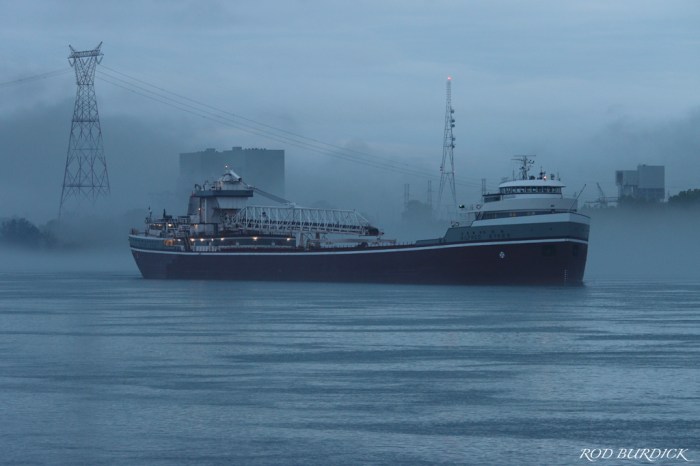
Passage at Dawn

wsykes52722dawn_rb by Rod Burdick

wsykes52722dawn_rb by Rod Burdick

Rod took this photo of the classic laker and steamer Wilfred Sykes in fog on the St. Clair River at dawn last week. Head over to his Flickr for the latest!

Support Michigan in Pictures with Patreon

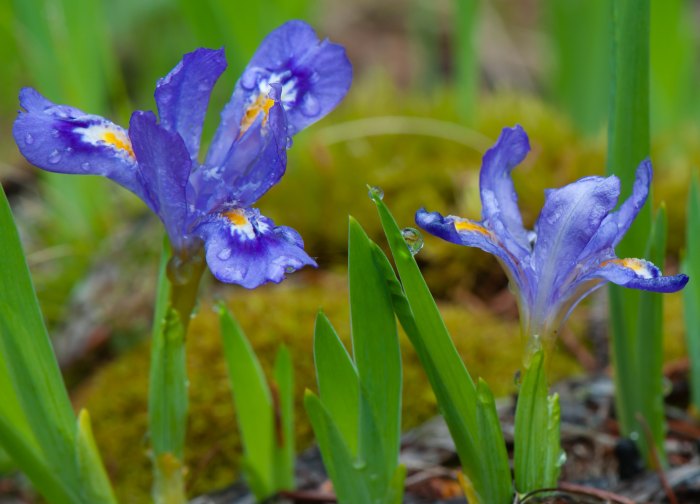
Purple for June: Dwarf Lake Iris

Iris lacustris by Bradford Slaughter

Iris lacustris by Bradford Slaughter

Some of you know that my mother Jill suffered for years from the terrifying effects of Alzheimers disease, ultimately passing last winter. June is Alzheimer’s & Brain Awareness Month, and the Alzheimer’s Association encourages us to wear purple (and of course donate) to raise awareness about a disease that afflicts tens of millions of Americans. 

June is also when you can see Michigan’s official State Wildflower, the Dwarf Lake Iris (Iris lacustris), in bloom:

The official wildflower of the Great Lakes State is right at home anywhere it can get its feet wet along the rocky coast of Northern Lake Huron, but those places are getting harder to come by.

This pint-sized perennial is known for its deep blue flowers that emerge mere inches above the ground for a fleeting few weeks in May and June—individual blossoms last just days. The rest of the time, its yellow-green leaves cling close to the ground, hiding in plain sight until springtime comes around again.

It’s a bit of a miracle this fragile flower exists at all: They grow in the thin, nutrient-poor soil that overlays limestone gravel and bedrock. The Northeast Michigan coast, rich with sand dunes and limestone deposits, creates the perfect habitat for the iris, found nowhere else outside the northern Great Lakes.

Along with a limited range that’s shrinking due to lakeshore development, the plant has been sought out by collectors who replant or sell it elsewhere. For these reasons, the dwarf lake iris was added in 1988 to the list of federally threatened species.

Read on for more at Huron Pines & for sure check out their Dwarf Lake Iris Best Practice Guide for tips on how to protect this flower!

Coincidentally, Bradford took this photo at Beavertail Point Nature Sanctuary on the northern coast of Lake Huron eight years ago on June 2nd, 2014 so I guess it’s a #TBT to boot! See more in his Iridaceae (Iris Family) gallery on Flickr 

Support Michigan in Pictures with Patreon