The Petoskey Underwater Crucifix

Petoskey Crucifix by Martin McReynolds

Petoskey Crucifix by Martin McReynolds

The Petoskey Visitors’ Bureau shares the story of the Petoskey Underwater Crucifix:

About 800 feet offshore and under 21 feet of water lies an Italian white marble crucifix, the only known freshwater-underwater crucifix. It came to Petoskey in 1962 in a round-about way, and has become a draw for divers and visitors alike ever since. You will not find a shrine like this anywhere else in the U.S.

The 11-foot tall crucifix, with a 5-foot 5-inch figure of Jesus Christ, was placed in the Bay, near the Petoskey breakwall at Bayfront Park, by the Wyandotte-based Superior Marine Divers Club in 1962. Its original intent was to honor Charles Raymond, a Southgate diver who drowned in Torch Lake. Later, the club expanded the focus of the monument to memorialize all those who have perished at sea.

Its origins date back to the late 1950s, when a grieving mother and father from Rapson in Michigan’s Thumb area had it crafted in memory of their son, Gerald Schipinski. Gerald was 15-years-old in 1956 when he was accidentally killed by a shotgun on the family farm.

After being crafted in Italy, the cross was broken during shipping to the Rapson Catholic church; the family rejected the damaged crucifix and it was sold in an insurance sale to the Wyandotte dive club. The crucifix made its way to Little Traverse Bay and was first placed by the U.S. Icebreaker Sundew 1,200 feet off the Petoskey breakwall on Aug. 12, 1962.

…in the early 1980s Dennis Jessick was president of the Little Traverse Bay Dive Club, and he proposed a winter viewing of the crucifix. The first was held in 1986, affording the community the chance to view the statue through a hole made in the ice. Lights are placed under water to help with viewing. The viewing of the crucifix,” as the locals call it, has continued.

The viewing of the Crucifix is always free and takes place if the ice is thick enough and other weather related conditions are right, usually in the end of February or early March. (NO VIEWING IN 2022) A tent is set up at the viewing area – which is a sure sign to the public that the viewing is taking place. It is also publicized in local media and on local Chamber of Commerce and Visitors’ Bureau web sites.

More at the Petoskey Visitors Bureau & for sure check out this article on the crucifix from Northern Michigan Mish-Mash for a ton more info & some photos. Not gonna lie – I was really hoping to see this in person this year, but unfortunately there won’t be a public viewing in 2022 as there usually is. 

Martin took this photo back in 2009. Head over to his Well Liked gallery on Flickr for lots more great shots from Petoskey & elsewhere.


Support Michigan in Pictures with Patreon

Waterfall Wednesday: Victoria Dam Falls

Victoria Dam & Falls by Nathan Miller

Victoria Dam & Falls December 2021-11 by Nathan Miller

The Waterfalls of the Keweenaw entry for Victoria Dam Falls has directions & says in part:

This section of West Branch Ontonagon River was once the home of the famous Ontonagon Boulder (a copper boulder now housed in the Smithsonian weighing almost two tons) and a tall, impressive waterfall. A dam and basin now covers both landmarks and only an overflow channel, one that is rarely flowing, remains. Viewing the drop is easy as it flows down from the opposite bank facing an access point.

Nathan took this back in December of 2021. For sure head over to Flickr to see this & other shots extra big in his Victoria Dam & Falls gallery

Support Michigan in Pictures with Patreon

Two for 2-22-22

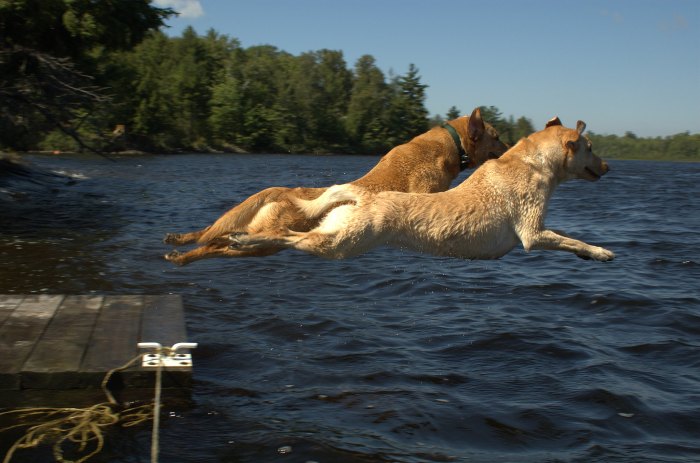
Flying Twins by Tate King

Flying Twins by Tate King

I can’t think of a better pic for 2-22-22 than this shot from Tate that I featured 14 years ago. Check out this & others of his most popular photos on Flickr and have a great day!

Support Michigan in Pictures with Patreon

Another UP 200 in the books!

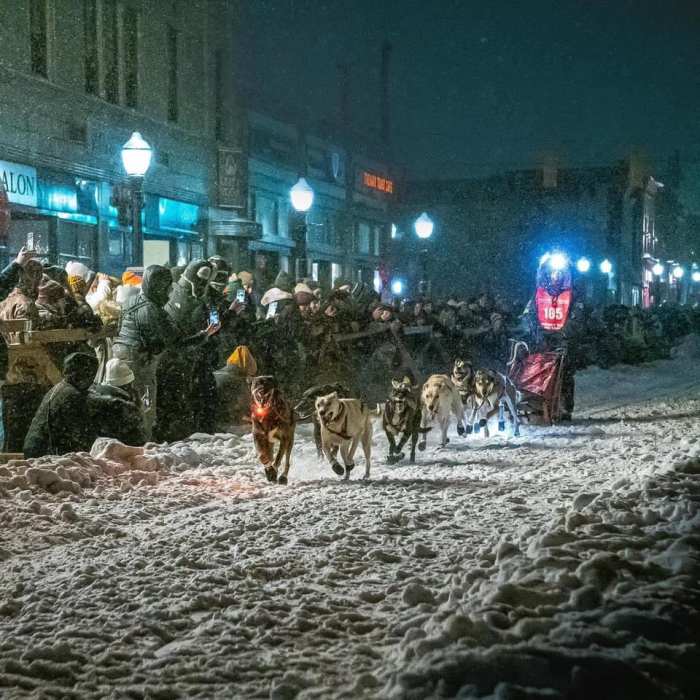
Off to the Races by UP 200 Sled Dog Race

Off to the Races by Hannah Frames Moments

The annual UP 200, Midnight Run, and Jack Pine 30 Sled Dog races took place in Marquette & the surrounding area last weekend. They share that musher Ryan Anderson of Cushing, WI finished first in the 228-mile UP200 Dog Sled Race followed by Wade Marrs & Nick Vigilante. Michael Bestgen & Joanna Oberg had the top 2 finishes in the 82-mile Midnight Run, and Erin Schouweiler was the top finisher in the Jack Pine 30.

Get all the results at UP200.org.

The photo was taken by Hannah Wescott. You can see a bunch more on her Facebook page & for sure head over to her website to view & purchase her work!

Support Michigan in Pictures with Patreon

The Ontonagon Boulder

Ontonagon Copper Boulder at the Smithsonian

Ontonagon Copper Boulder at the Smithsonian by Ian Shackleford

Today’s post is what we call a foreshadowing in the photo blog game. It concerns the extremely messy saga of the Ontonagon Boulder which is now at the Smithsonian Museum of Natural History. You can (and should) read it all, but here’s some highlights:

In 1669 the French government sent Louis Joliet to search for copper deposits in the area. Joliet decided to discover the Mississippi River instead.

English adventurer and fur trader Alexander Henry trips up the Ontonagon River in 1765 and 1771. An underwhelmed (and astoundingly wrong) Henry was unimpressed writing, “The copper ores of Lake Superior can never be profitably sought for but for local consumption….” The 5 million plus tons of copper 5,400,000 disagree.

In 1819 Gen. Lewis Cass directed an expedition to the boulder & sought to move it by burning thirty cords of wood around the boulder & throwing water on the hot copper which didn’t succeed in fracturing the boulder.

In 1841, Detroit hardware merchant Julius Eldred and an interpreter set out to buy the boulder from the Chippewa on whose land it stood for $150. He failed that time & the next, but in 1843 with a portable railway & car managed to move it (after having to buy the rock AGAIN from some Wisconsin miners for $1,365).

From the U.S. National Museum report of 1895: For four miles and a half, over hills 600 feet high, through valleys and deep ravines; through thick forests where the path had to be cut; through tangled underbrush, the home of pestiferous mosquitoes, this railway was laid and the copper bowlder (sic) was transported; and when at last the rock was lowered to the main stream, nature smiled on the labors of the workmen by sending a freshet to carry their heavily laden boat over the lower rapids and down to the lake.

At this long-awaited, triumphant point, Eldred was confronted by an order from the Secretary of War to General Cunningham, directing that the copper boulder be seized for transportation to Washington.

“The persons [Eldred and his sons] claiming the rock have no right to it,” the Secretary decreed, “but justice and equity would require that they be amply compensated for the trouble and expense of its removal from its position on the Ontonagon to the lake; and for this purpose General C. will examine their accounts and allow them the costs, compensating them fully and fairly therefore, the sum, however, not to exceed $700….”

In the end & with the help of Congress, Eldred received $5,664.98 which is roughly $200,000 in today’s dollars.

Read lots more from the Smithsonian & also check out a more detailed look at the drama around Eldred from The Mining Journal.

The photo was taken by Ian Shackleford & appears in the Wikipedia entry for the Boulder

Support Michigan in Pictures with Patreon

Ice Cave Memories

via leelanau.com…Ice Cave Sunset by Mark Miller

Ice Cave Sunset by Mark Miller

Today a photo from back in 2014 of the massive ice coverage along the coast of the Leelanau Peninsula showed up in my memories. While we’ve got nothing like that this year, I figured it would still be nice to take a look back.

You can see some more shots in Mark’s Leelanau’s Ice Caves of 2014 gallery on Flickr.

Get more on Leelanau’s ice caves from Leelanau.com & please remember, walking on the ice on Lake Michigan (or any lake) in the winter is never “safe” so please miss me with your complaints.

Support Michigan in Pictures with Patreon

Glowing Flying Squirrels are actually a thing!

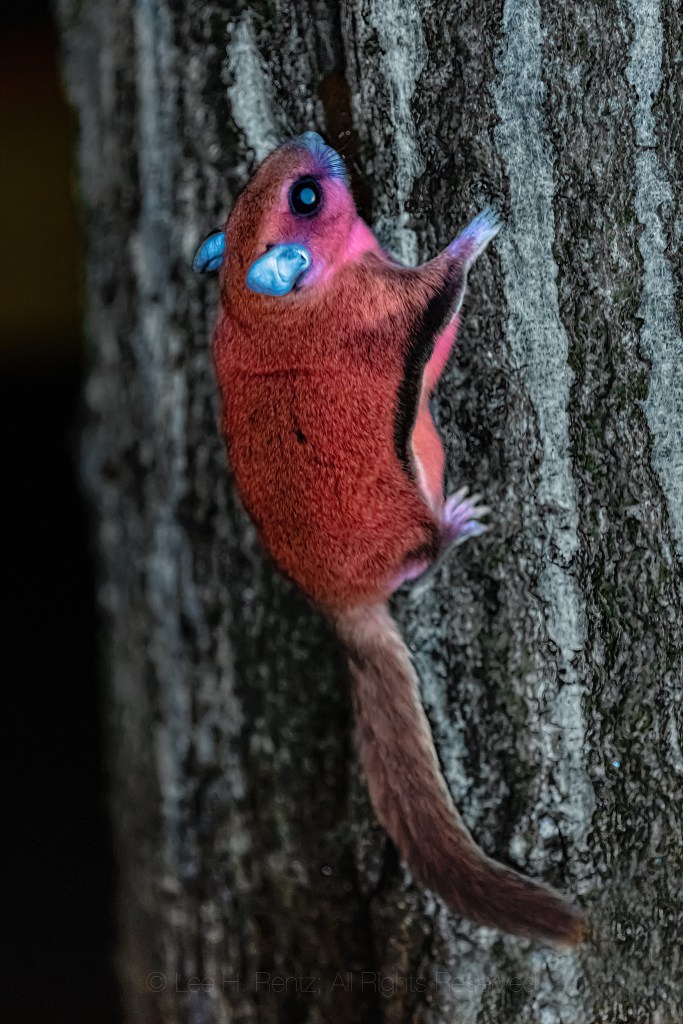
Southern Flying Squirrel Showing Biofluorescene by Lee Rentz

Southern Flying Squirrel Showing Biofluorescene by Lee Rentz

Lee’s incredibly cool shot of a southern flying squirrel exhibiting biofluorescence when illuminated by a UV light source led me to this fascinating 2019 New York Times article on the discovery of ultraviolet fluorescence in squirrels:

One spring night in Wisconsin, John Martin, a biologist, was in his backyard with an ultraviolet flashlight. Suddenly, a hot-pink squirrel flew by.

It was a southern flying squirrel, a small, furry creature most active at dawn and dusk. Under most circumstances, it has a warm brown color. But in the beam of Dr. Martin’s flashlight, it sported a gaudy Day-Glo hue closer to something you might see in a nightclub or a Jazzercise class circa 1988.

“He told his colleagues at Northland College, but of course, everyone was pretty skeptical,” said Allison Kohler, a graduate student at Texas A&M University.

Dr. Martin asked Ms. Kohler, then a student at Northland, to look into it. After examining more than 100 specimens of flying squirrels across two museum collections and spotting five more squirrels under UV light in the wild, the researchers and their colleagues reported surprising results last week in the Journal of Mammalogy: The pink is real.

…What the flying squirrels get out of it is still a mystery. Confirming that the squirrels are even capable of seeing in ultraviolet wavelengths will require additional study, Ms. Kohler said.

The researchers have some hypotheses concerning what’s behind the squirrels’ Day-Glo displays. Ultraviolet rays are abundant during the dawn and dusk periods when the squirrels are moving around. So it is reasonable to expect that the fluorescence is visible to other organisms even when there are no biologists with UV flashlights in the vicinity.

The vivid pink color might have evolved to confuse the owls who prey on the squirrels. Those birds of prey fluoresce in precisely the same hue themselves; a flying squirrel may look, superficially at least, like a flying owl.

Or, if it’s confirmed that the squirrels see UV, the color might have something to do with mating or signaling to other flying squirrels.

“It could also just be not ecologically significant to the species,” Ms. Kohler said, noting that future work will delve into the question. “It could just be a cool color that they happen to produce.”

Head over to Lee’s Flickr for more shots of this squirrel & a friend!!

PS: Can I interest you in glow in the dark mushrooms?

Support Michigan in Pictures with Patreon

Valentine Skies

Valentines Skies #2 by Gary Brink Photography

Valentines Skies #2 by Gary Brink Photography

Gary took this stunning shot at Holland’s “Big Red” lighthouse on Valentine’s Day back in 2017. Head over to his Flickr for the latest & I hope that you all have a lovely week!

Support Michigan in Pictures with Patreon

Frozen Falls Friday

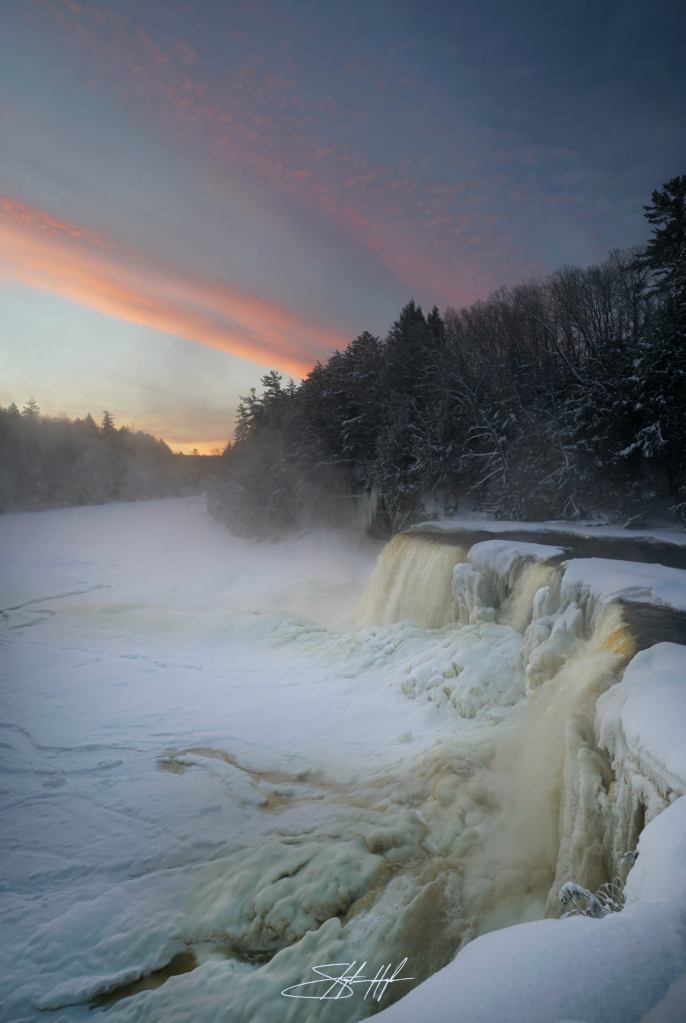
Upper Tahquamenon Falls by S Hughes Photos

Upper Tahquamenon Falls by S Hughes Photos

S Hughes shared this sweet shot from a subzero sunrise the other day at the Upper Falls in Tahquamenon Falls State Park.  Follow her on Facebook & for sure check out her video from the overlook!

Support Michigan in Pictures with Patreon

The color of a mosquito bite

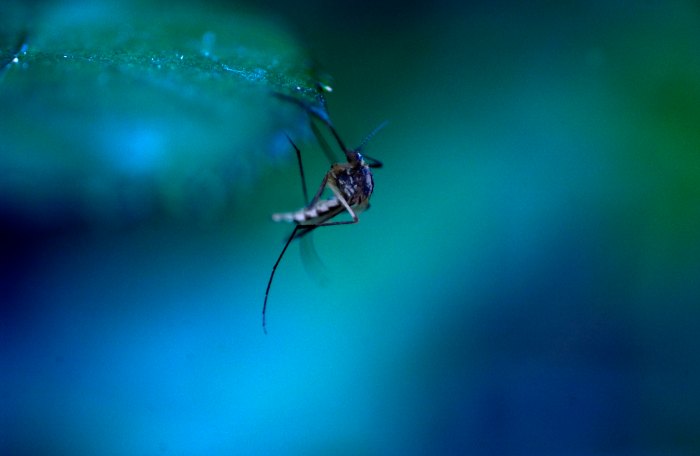
Mosquito by Stephanie

Mosquito by Stephanie

Although this study didn’t focus on our Michigan-bred mosquito, I thought you’d enjoy this article from Sci-News about how specific colors impact the feeding behavior of mosquitos:

A new University of Washington-led study shows that after detecting a telltale gas that we exhale, yellow fever mosquitoes (Aedes aegypti) fly toward specific colors, including red, orange, black and cyan, but they ignore other colors, such as green, purple, blue and white.

“Mosquitoes appear to use odors to help them distinguish what is nearby, like a host to bite,” said Professor Jeffrey Riffell, a researcher in the Department of Biology at the University of Washington.

“When they smell specific compounds, like carbon dioxide from our breath, that scent stimulates the eyes to scan for specific colors and other visual patterns, which are associated with a potential host, and head to them.”

…The researchers tracked individual mosquitoes in miniature test chambers, into which they sprayed specific odors and presented different types of visual patterns — such as a colored dot or a tasty human hand.

Without any odor stimulus, mosquitoes largely ignored a dot at the bottom of the chamber, regardless of color.

After a spritz of carbon dioxide into the chamber, mosquitos continued to ignore the dot if it was green, blue or purple in color. But if the dot was red, orange, black or cyan, mosquitoes would fly toward it.

…If the researchers used filters to remove long-wavelength signals, or had the researcher wear a green-colored glove, then carbon dioxide-primed mosquitoes no longer flew toward the stimulus.

You can read more at Sci-News & (if you’re so inclined) dig MUCH deeper into the study from Nature Communications

Stephanie took this pic 13 years ago & shares that three of this little ladies friends bit her while she was taking the photo! Thanks to Stephanie for her service & see more in her Bugs gallery on Flickr.

Support Michigan in Pictures with Patreon