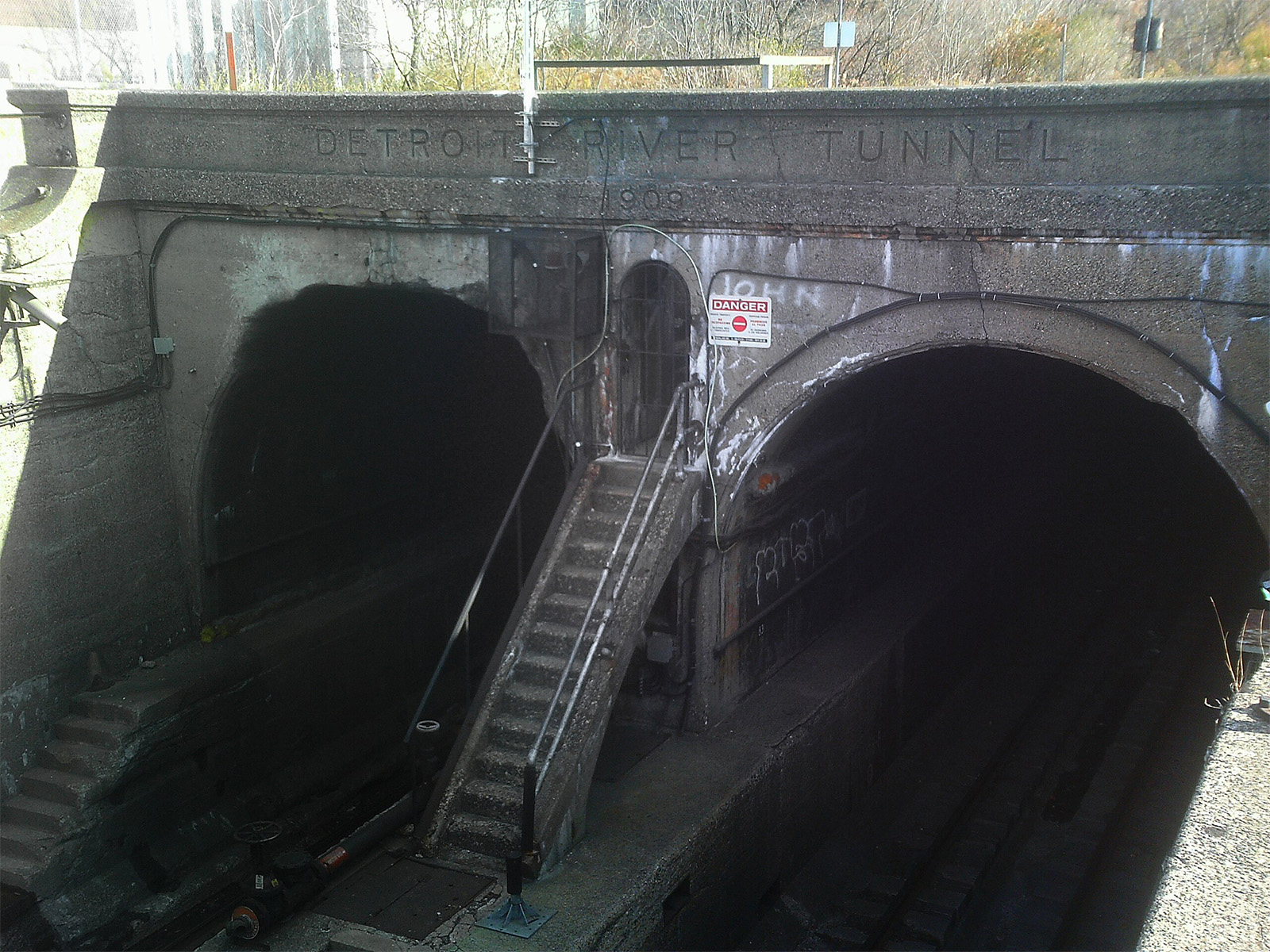
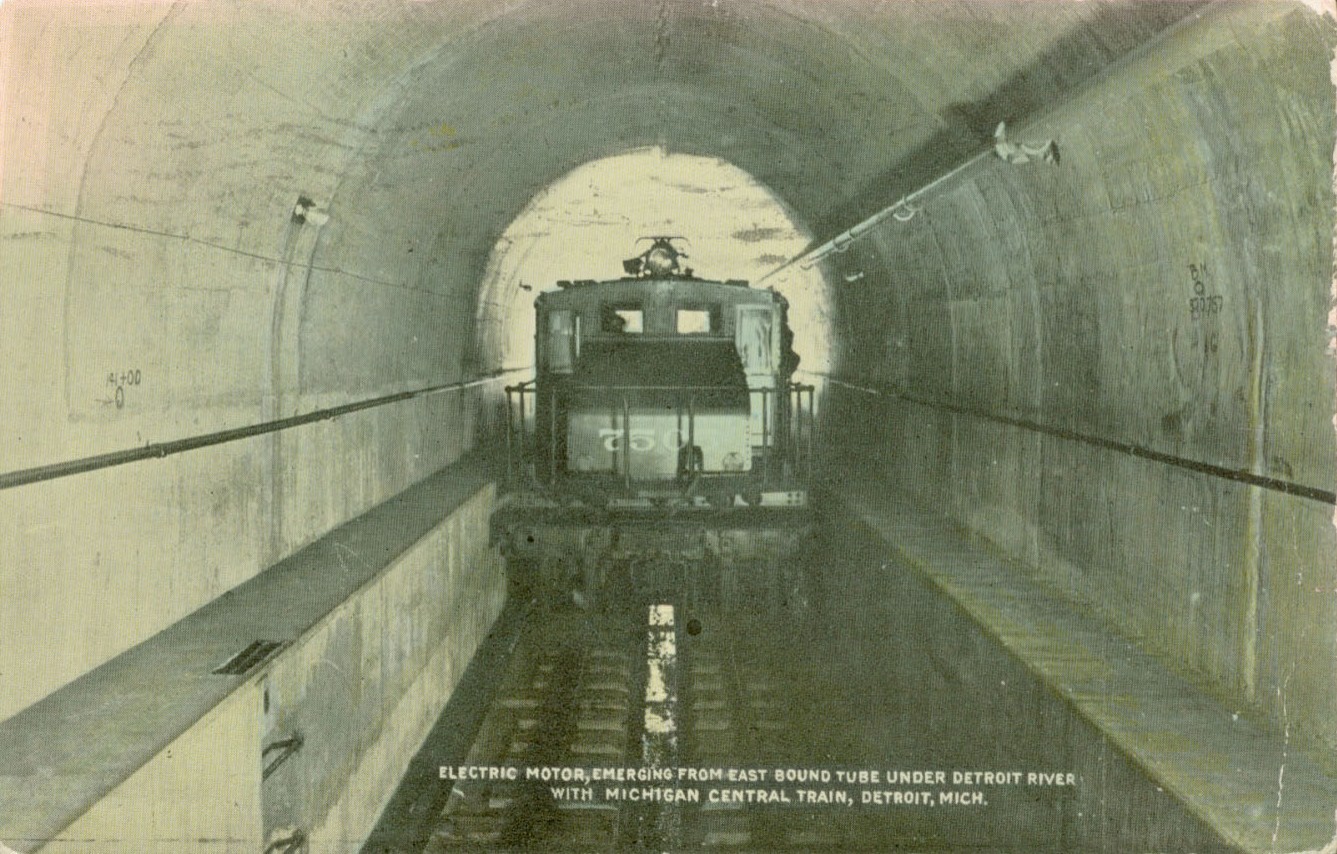
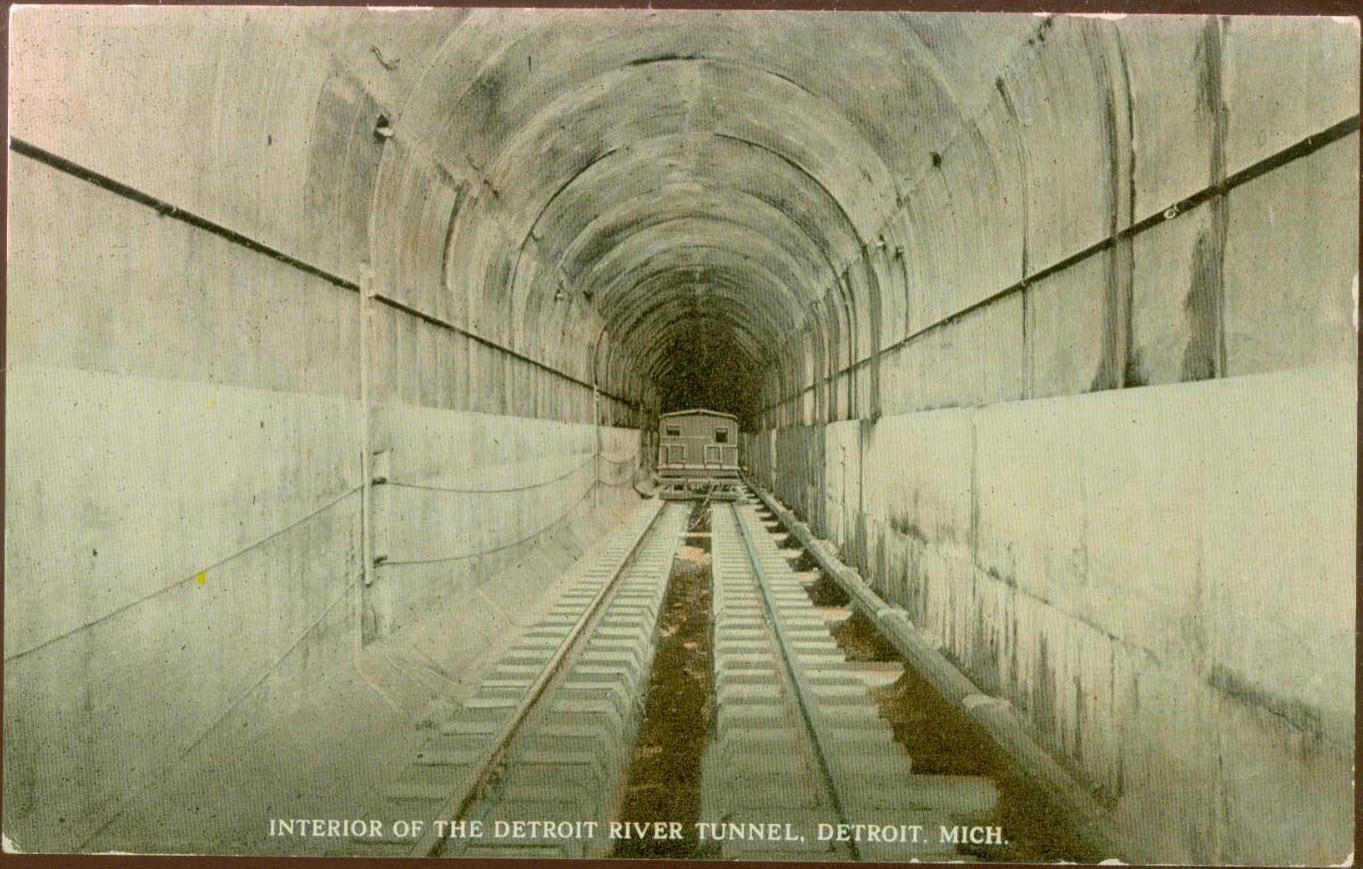
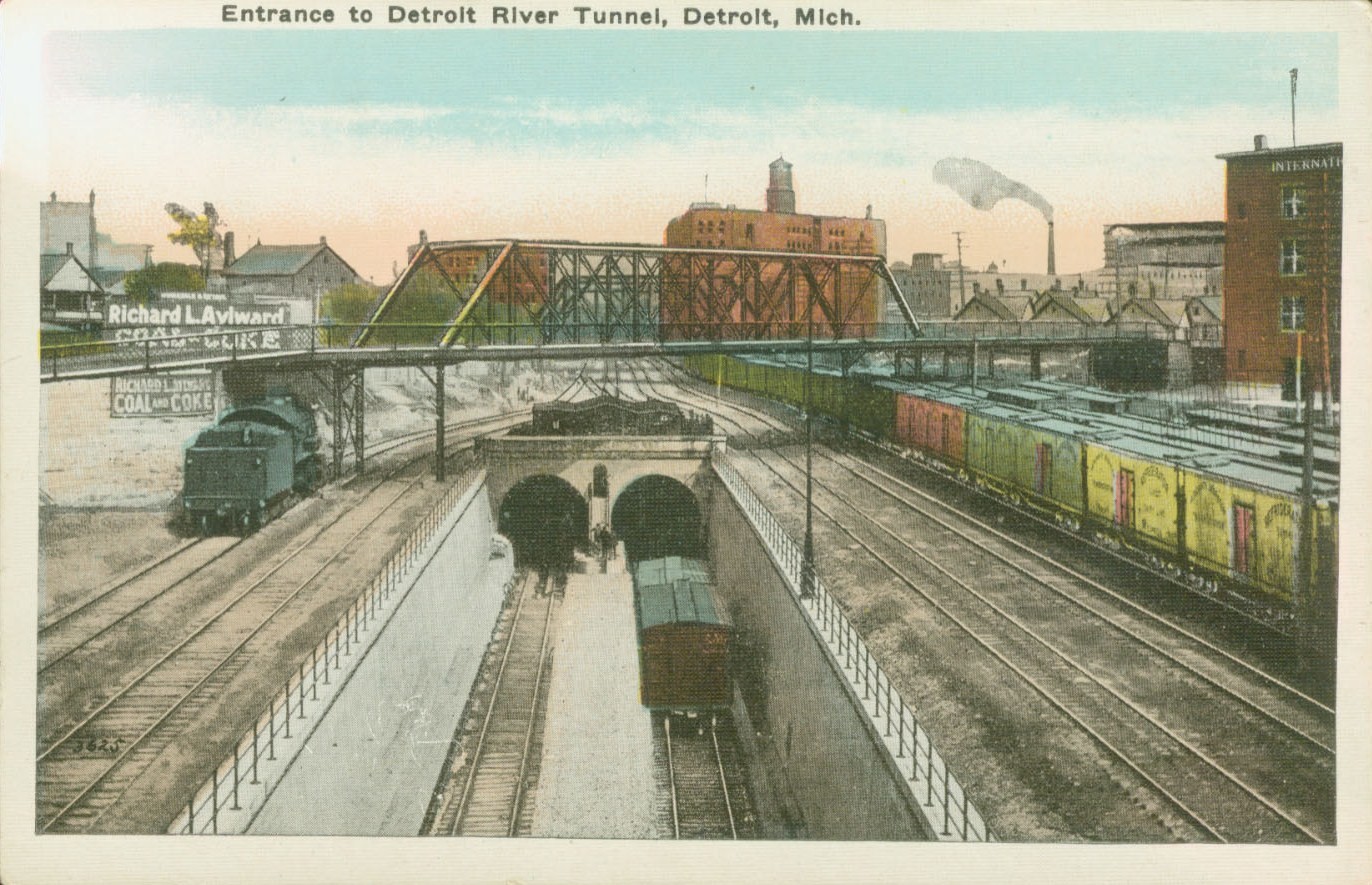
One of the fun things about Michigan in Pictures is the way that the photos I share raise questions that I am then obliged to find the answers to! That is the case today after someone asked “Where does the Holiday Train cross over from Canada?” The answer is the Michigan Central Railroad Tunnel which the Henry Ford explains was the answer to a wintertime challenge:
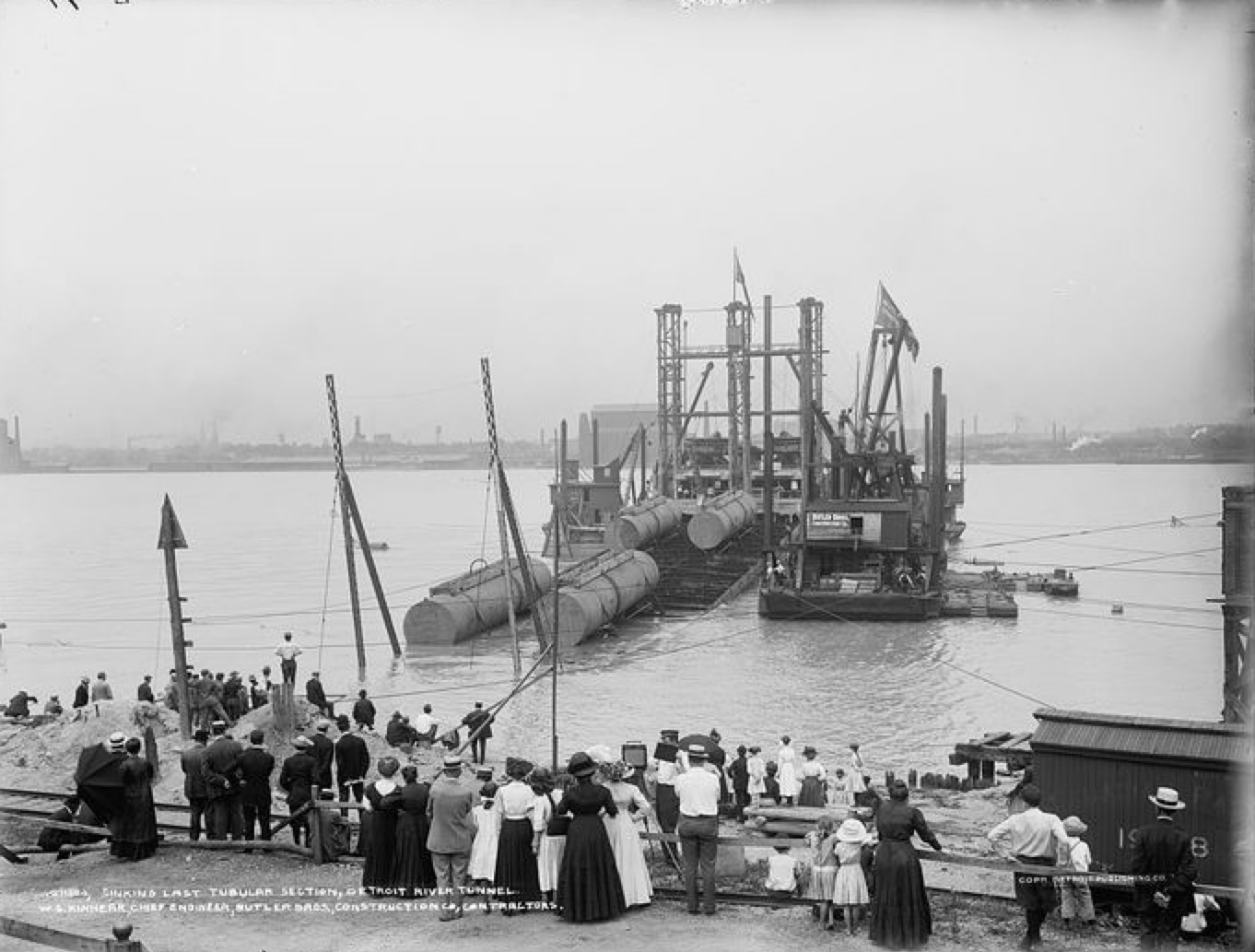
Ferrying railroad cars across the Detroit River was time-consuming and expensive — and sometimes impossible through winter ice. The Michigan Central Railroad opened a tunnel between Detroit and Windsor in 1910. The tunnel’s sections were built on land and then towed and sunk into position. This innovative construction technique saved the railroad some $2 million versus more conventional methods.
The Diesel Shop shared the photo above and continues the explanation:
The tunnel was constructed utilizing the immersed tube method in which tunnel sections are prefabricated and then sunk to the bottom of the river. Immersed tube construction is generally faster and cheaper than the alternative of boring a tunnel into the earth. The Michigan Central Railway Tunnel was the first immersed tube tunnel to carry traffic. The tunnel, built at a cost of $8,500,000, is 1 3/8 miles in length from portal to portal.
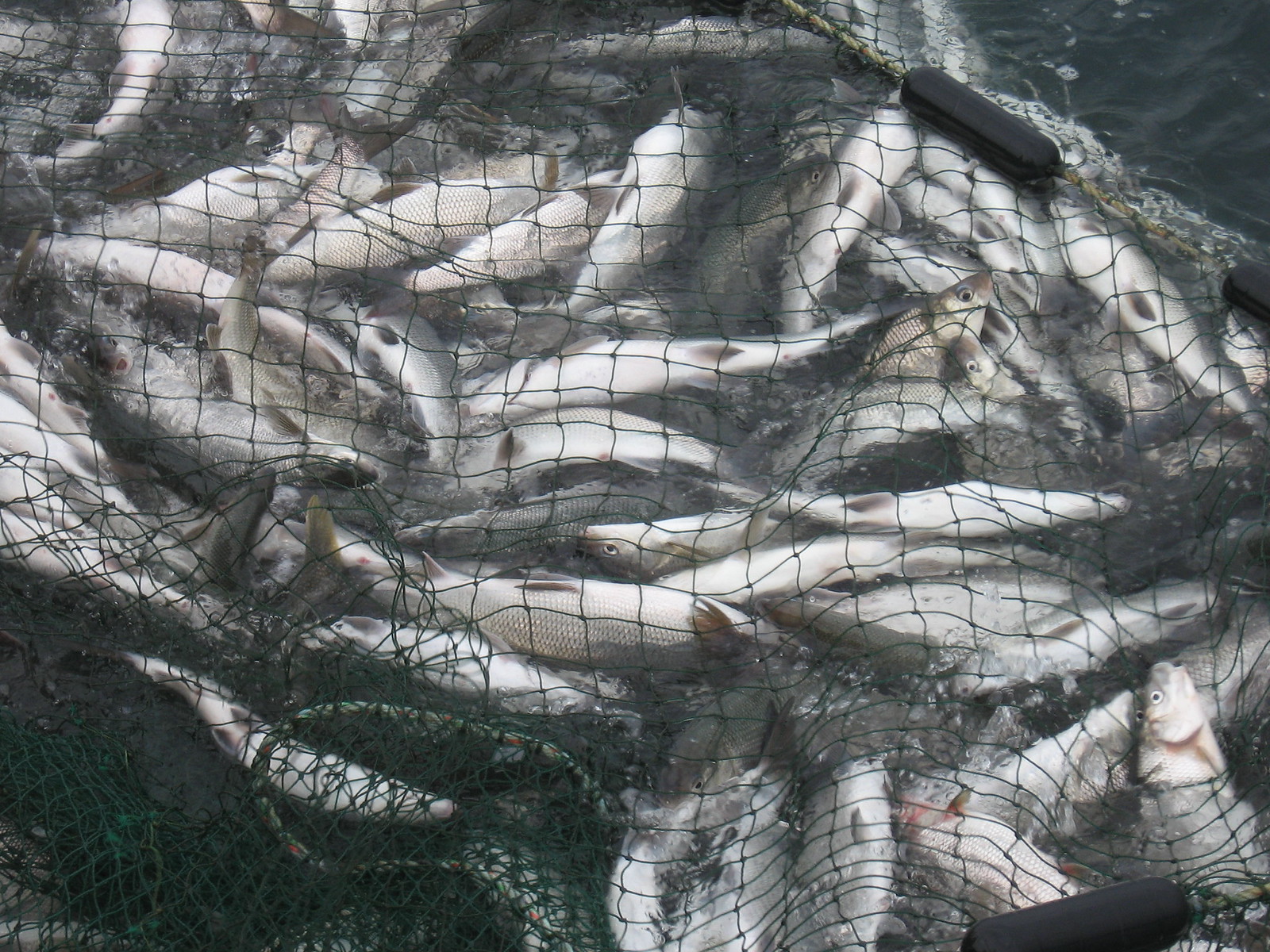
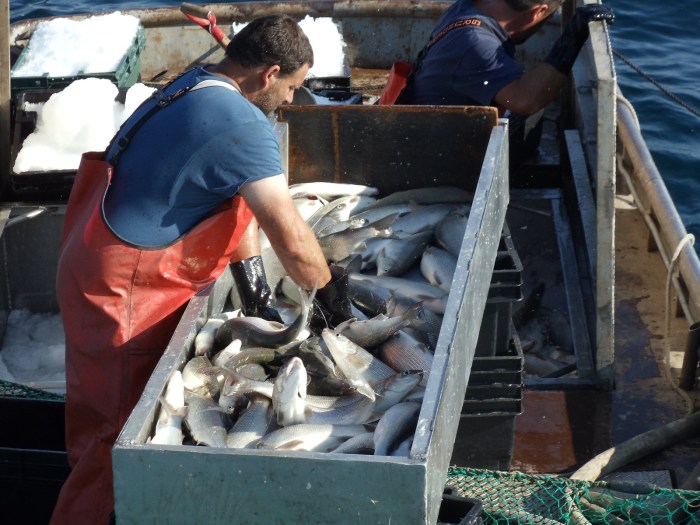
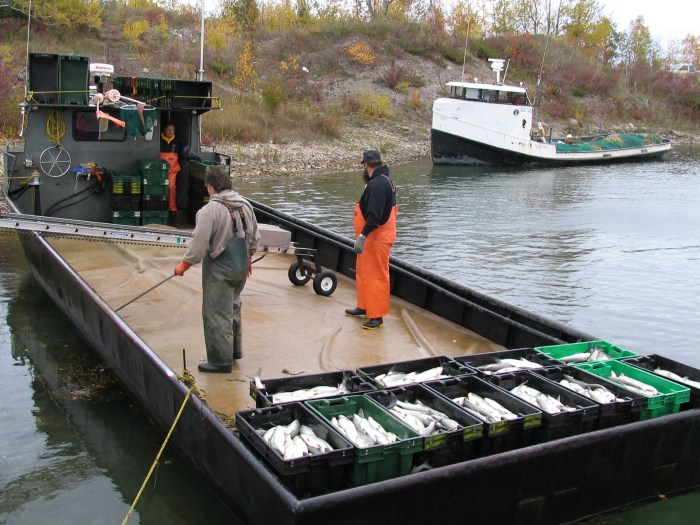
“Since first arriving in the Great Lakes in the 1980s, invasive mussels have spread to all five lakes, and altered the ecosystem in profound ways. Today we understand that zebra and quagga mussels are an existential threat to the Great Lakes and without a coordinated response, they will continue to inflict harm on the environment, infrastructure, and critical species such as lake whitefish. Just as invasive sea lamprey require a coordinated, binational response for effective control, we must partner with national, state, provincial, Indigenous, regional, and local partners to find a solution to the mussel invasion. This bill makes that happen.” –Great Lakes Fishery Commission Chair Ethan Baker
US Reps. Debbie Dingell, D-Ann Arbor, and Tim Walberg, R-Tipton, want to increase funding for mussel control research more than fiftyfold to $500 million over the next 10 years. (EDITOR: They released it on Tuesday)
Otherwise, the “fish that we take for granted are going to just disappear,” Dingell told Bridge Michigan.
…The damage wrought by invasive mussels is among the biggest threats to the Great Lakes in history. Yet Bridge found that while the US government has spent mightily to combat other threats, the fight against mussels has received a comparative pittance.
The main funding program for Great Lakes science has devoted an average of less than $1 million annually to the cause since 2010, according to spending records analyzed by Bridge. The federal government spends about 20 times that amount to keep sea lamprey out of the Great Lakes and has promised 90 times as much to build a barrier against invasive carp.
Read on for much more & kudos to these two Representatives for working together to protect the livelihoods and meals of Michiganders!
The photos are from Michigan Sea Grant and the one of the boat moored was taken by Brandon Schroeder. Sea Grant is an excellent organization that works hard for Michigan waters and the Great Lakes as a whole!
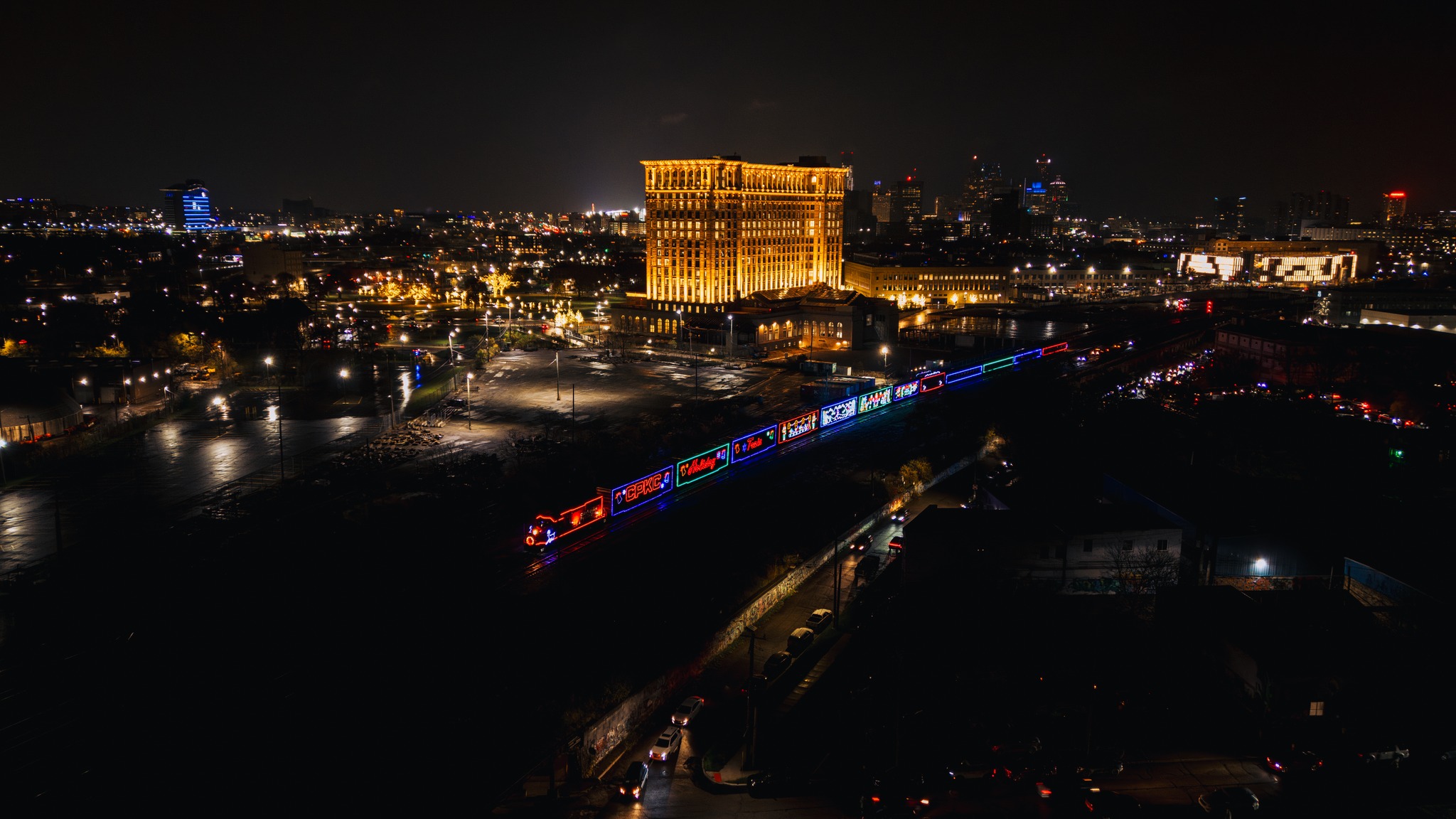
The CPKC Holiday Train is set to roll through Michigan this Saturday November 22nd. My post about the train last week generated so many questions and so much interest that I decided to share some more info about this very cool Canadian project. Since its first journey in 1999, the CPKC Holiday Train has collected over 5 million pounds of food and raised more than $26 million dollars for community food banks in Canada and the US!
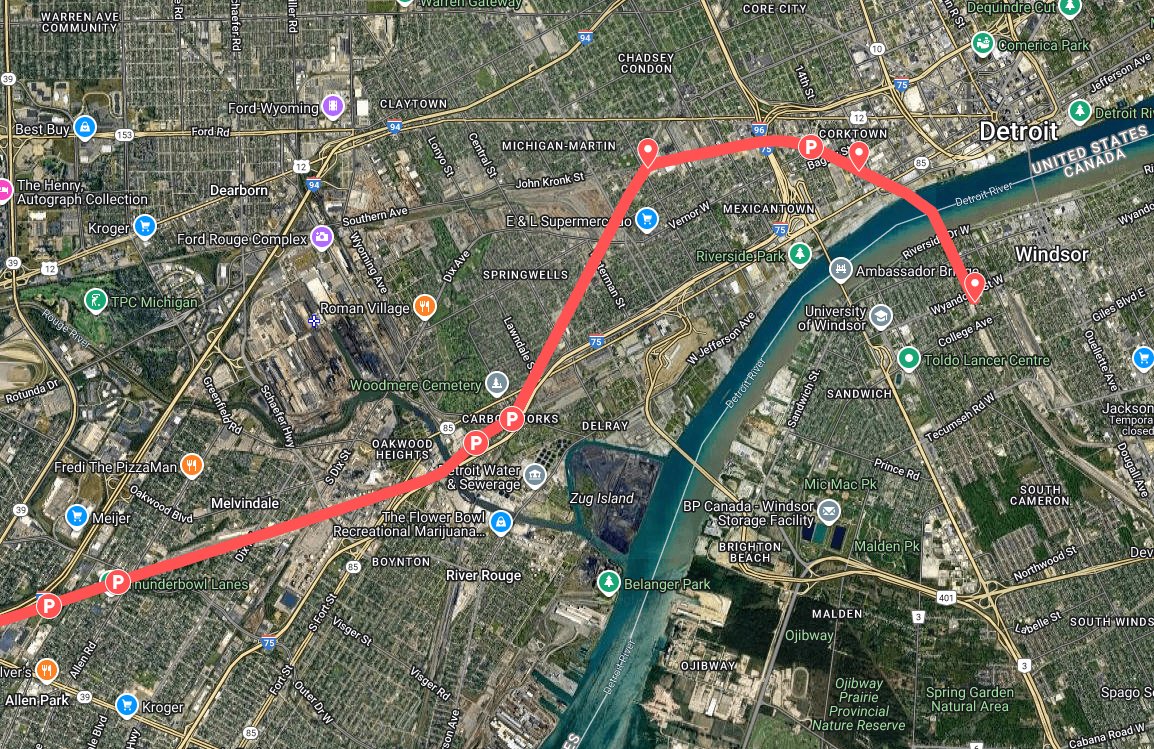
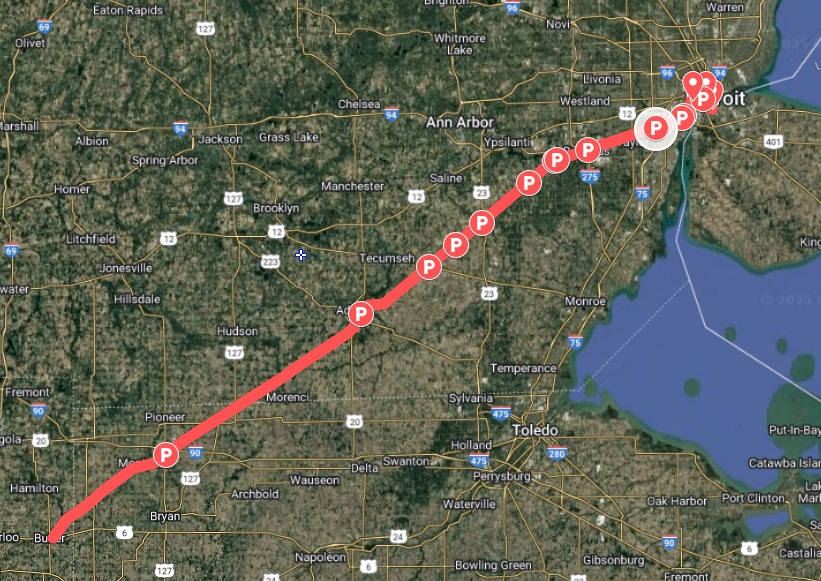
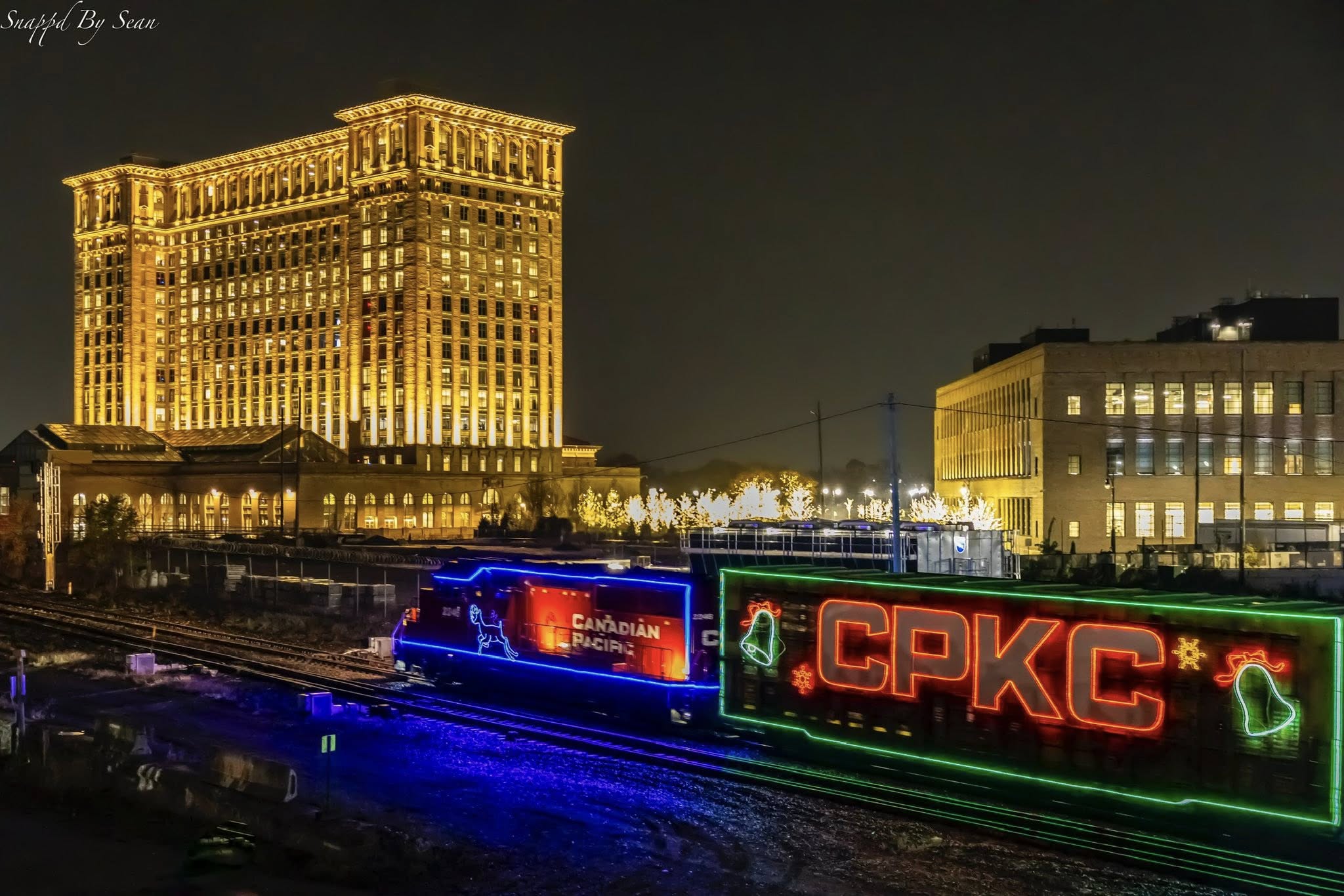
The estimated time that the train will pass by Michigan Central Station in downtown Detroit is 6pm, but it could be (and usually is) later. The train passes through southwest Detroit including Melvindale, Allen Park (est 6:30 – 7:30pm), Taylor, and Romulus before passing through Adrian (est 10pm – 2am) on its way out of Michigan near Munson. I’ll add updated information & answers to questions on this Facebook post about the Holiday Train.
Also, Detroit photographer Montez Miller reports that she has a friend in Windsor who is a police officer & will let her know when the train is leaving customs so you should probably follow her for that and also her amazing work as a photographer for the red hot Detroit Pistons!!
UPDATE: Montez adds that cpkcr.com will provide LIVE TRAIN TRACKING, but it won’t go live until the train starts to move. She also shared some good Metro Detroit locations where you can watch the Holiday Train!
CPKC railway, a few minutes from tunnel/bridge in Windsor
Railroad in Windsor
Southwest Greenway/Michigan Central Station
Delay/Southwest Detroit/111 Gates St
Thunderbowl Lanes, Allen Park (parking lot)
Airport (Romulus)
Wayne Rd/94
North Side of airport along 94
Social House Group – Belleville, MI same plaza as the Belleville Secretary of State office and Jet’s Pizza
When I posted about the wreck of the Edmund Fitzgerald a couple weeks ago, a reader asked why I don’t share the other famous shipwrecks. I explained that although posts about the Fitz tend to be more shared, my vote for the most grievous loss on the Great Lakes has always been the S.S. Carl D Bradley, a 639-foot freighter that sank almost 70 years ago November 18, 1957. Here’s an article by Valerie van Heest (Seeking Michigan / the Archives of Michigan) that was featured on my Absolute Michigan website back in the day.
“A Deafening Thud”
Abandon ship! Abandon ship! The whistle squawked seven short blasts, then one long blast. It was a signal twenty-six year old deck watchman Frank Mays knew well, but never expected to hear. Just minutes earlier, he had been having a smoke with Gary Price in the dunnage room, deep in the bow, when they heard a deafening thud. “We hightailed it out of there to find out what had happened,” Mays recalls. “When I reached the upper deck, I looked aft and saw the stern flapping up and down like a dog’s tail.” The Carl D. Bradley‘s back had broken, and it would be only a matter of minutes before water filled the tunnels and cargo holds of the 639-foot vessel. It was 5:30 p.m. on November 18, 1958.
Final Voyage
The Bradley had departed Gary, Indiana the day prior, running in ballast in building southwest seas along Lake Michigan’s western shore. On the season’s final voyage, the veteran boat was scheduled to head to Manitowoc, Wisconsin for repairs during its winter lay-up. The rusting cargo had been due for an $800,000 replacement for over a year, but its owner, Bradley Transportation Company, a subsidiary of U.S. Steel, pushed the work back until the end of the season. A radio call from headquarters ordering an additional stone delivery before lay-up proved to be the demise of the Bradley. Despite reports of gale-force winds and thirty-foot seas that compelled other freighter captains to take shelter along Wisconsin’s shore, Captain Roland Bryan, known as a “heavy weather man,” headed northeast across the lake from the Door County peninsula toward the Straits of Mackinac and back to Rogers City. At 5:35 p.m., the Bradley sank twelve miles southwest of Gull Island.
“The Worst Night of His Life”
Even today, survivor Mays recalls that horrific night with clarity. Hunkered down on the life raft just aft of the pilothouse, he trembled realizing the sinking beneath him. His eyes were drawn aft toward the flying sparks as the huge steel deck plates began to tear apart. In the growing darkness and mayhem, he could make out second mate John Fogelsonger running toward the stern and leaping over the break. Before his eyes, his friend disappeared as the Bradley ripped apart. The next thing Mays recalls was being pitched into the air, landing in the icy, angry water and then struggling onto the raft where he fought to hold on through the worst night of his life.
“A Painful Memory”
By morning, only Mays and first mate Elmer Fleming were alive. After fifteen bone-numbing hours in the icy waters, the U.S. Coast Guard cutter Sundew rescued them. All thirty-three of their mates, including Gary Strelecki and Dennis Meredith, who shared the raft for most of the night, as well as two of Frank’s own cousins, perished. These men left behind twenty-five widows and fifty-four fatherless children. Considering twenty-three of the crew hailed from Rogers City, the home port of the Bradley, the loss personally affected nearly everyone in the small community. Fifty years later, the sinking is still a painful memory.
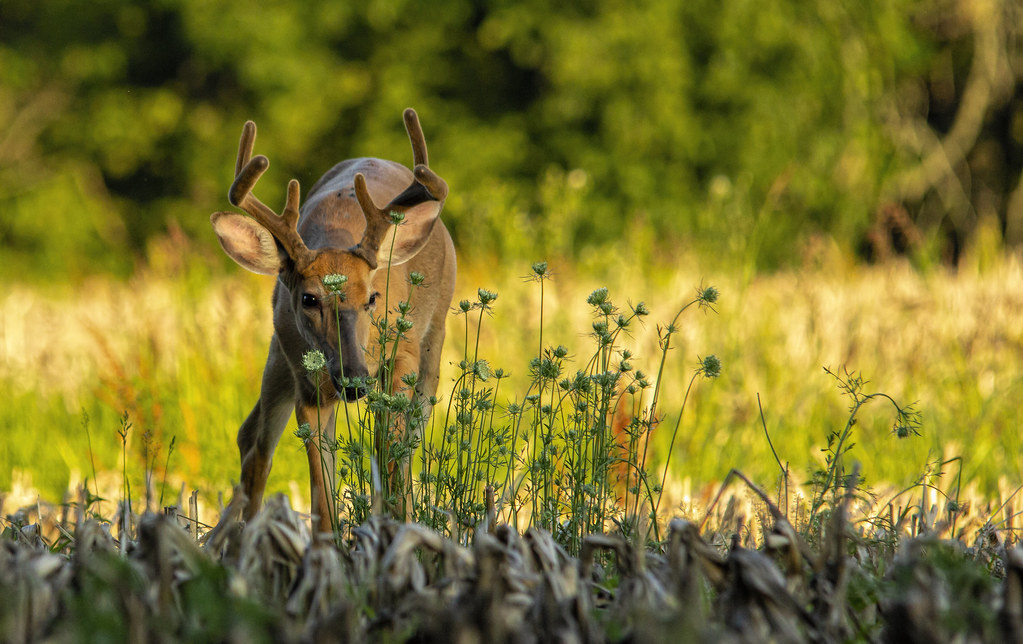
Opening Day is Michigan’s largest unofficial holiday, generating a big chunk of the $2.3 billion dollars that hunting in Michigan brings in according to Pure Michigan. UpNorth Live shares that the 2025 Michigan deer hunting season starts tomorrow (Saturday, November 15) and runs through the 30th. They highlight the DNR’s Hunters Feeding Michigan program that lets hunters to donate deer to food pantries. Collection events happen November 21-23 and January 3-4. You can get all the info at the link!
Kevin took this 10 years ago. You can see his talent for wildlife photography in his excellent Animals gallery on Flickr.
The 2025 CPKC Holiday Train will tour Canada and the United States November 19 through December 21st raising money, food and awareness to support food banks across their rail network. Professional musicians play free concerts from the brightly decorated train’s stage, and CPKC donates to the local food bank at each stop and encourages all attendees to make a monetary or heart-healthy food donation! Since its inaugural journey in 1999, the CPKC Holiday Train has raised more than $26 million and collected approximately 5.4 million pounds of food for community food banks in Canada and the U.S.
Sean shares that he got these shots from near Detroit’s Michigan Central Station last year – click the pic above for more photos! He recommends it as a really good spot, especially if you can make it there before the crowds. You can see lots more if Sean’s work on his Facebook, where you can also subscribe for exclusive content including live videos.
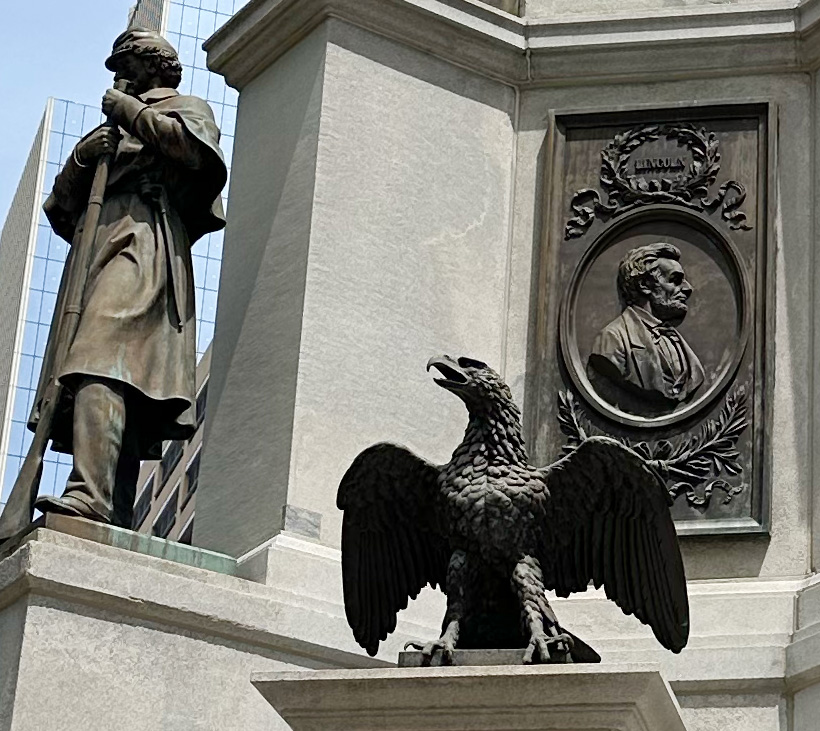
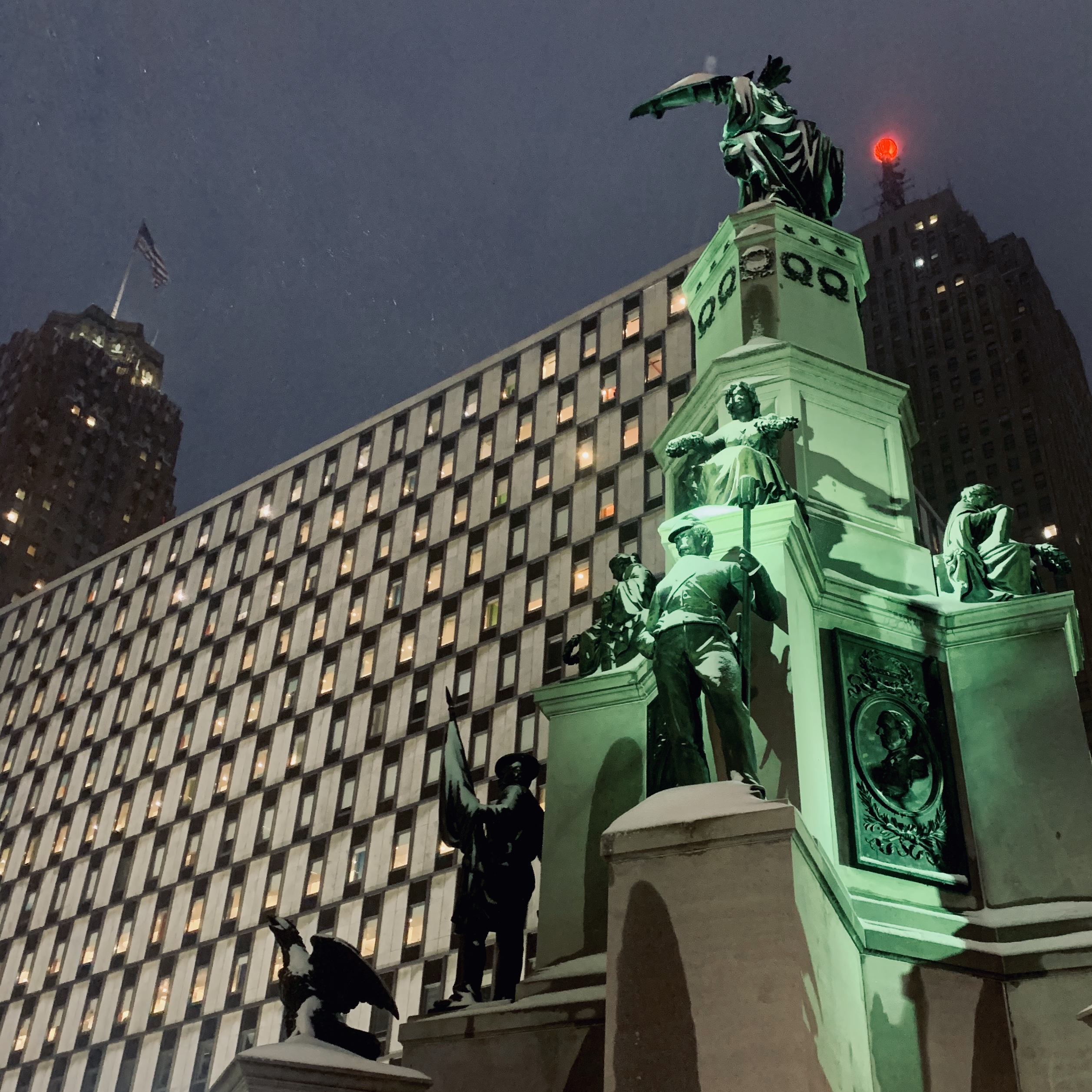
Historic Detroit shares that although there is probably no other area of Detroit has changed more often and more drastically over the years than the city center, Campus Martius, the Soldiers and Sailors Monument has endured:
Over the years, Old City Hall, the Majestic Building, the Pontchartrain Hotel, the Family Theatre, the Hammond Building and the old Detroit Opera House have all come and gone.
Only one landmark has outlived them all.
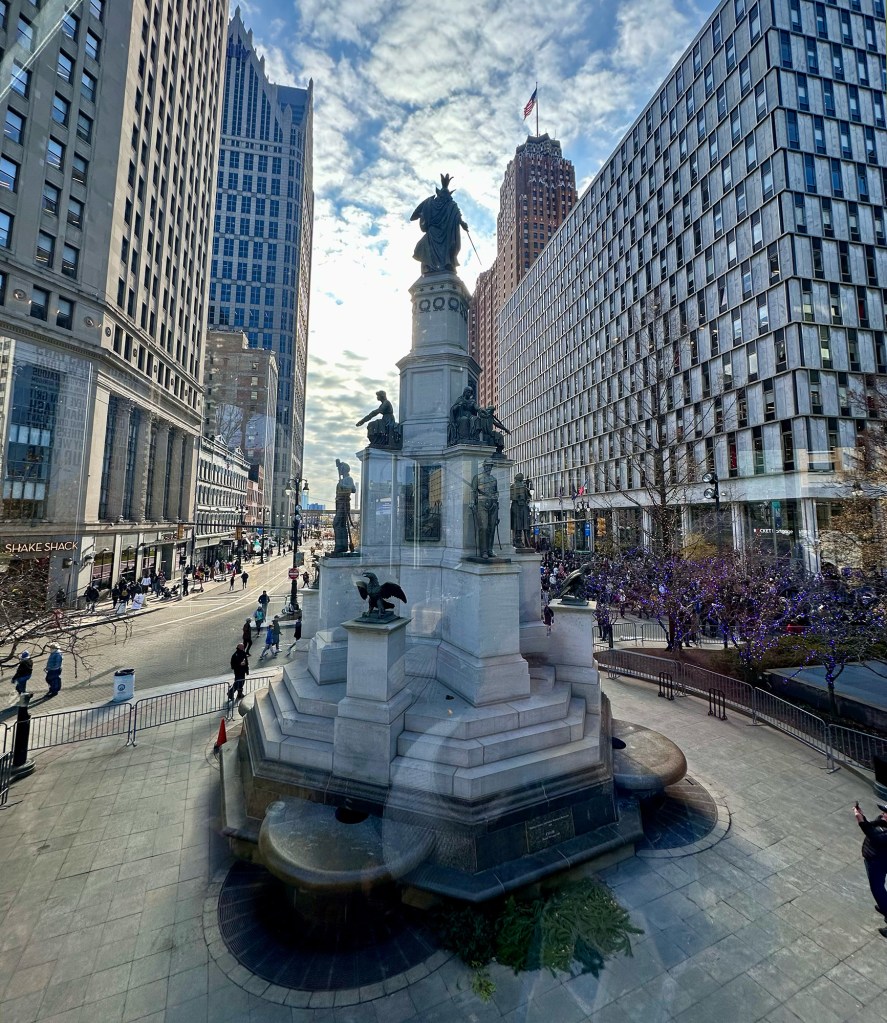
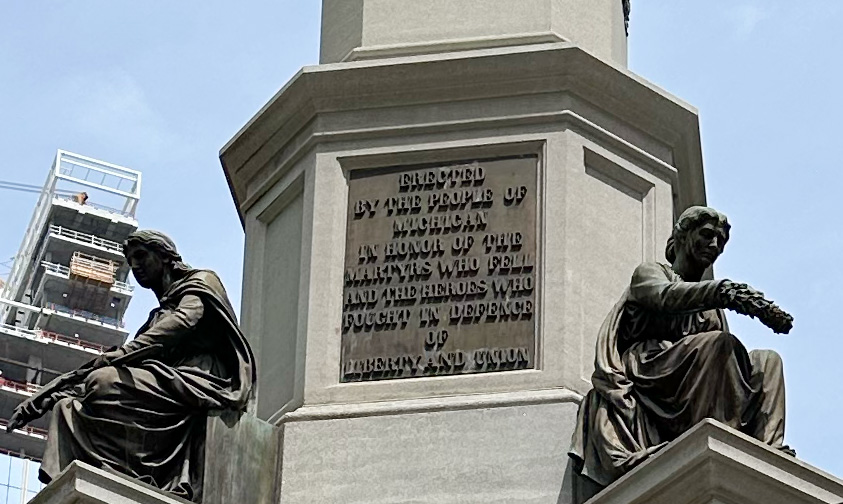
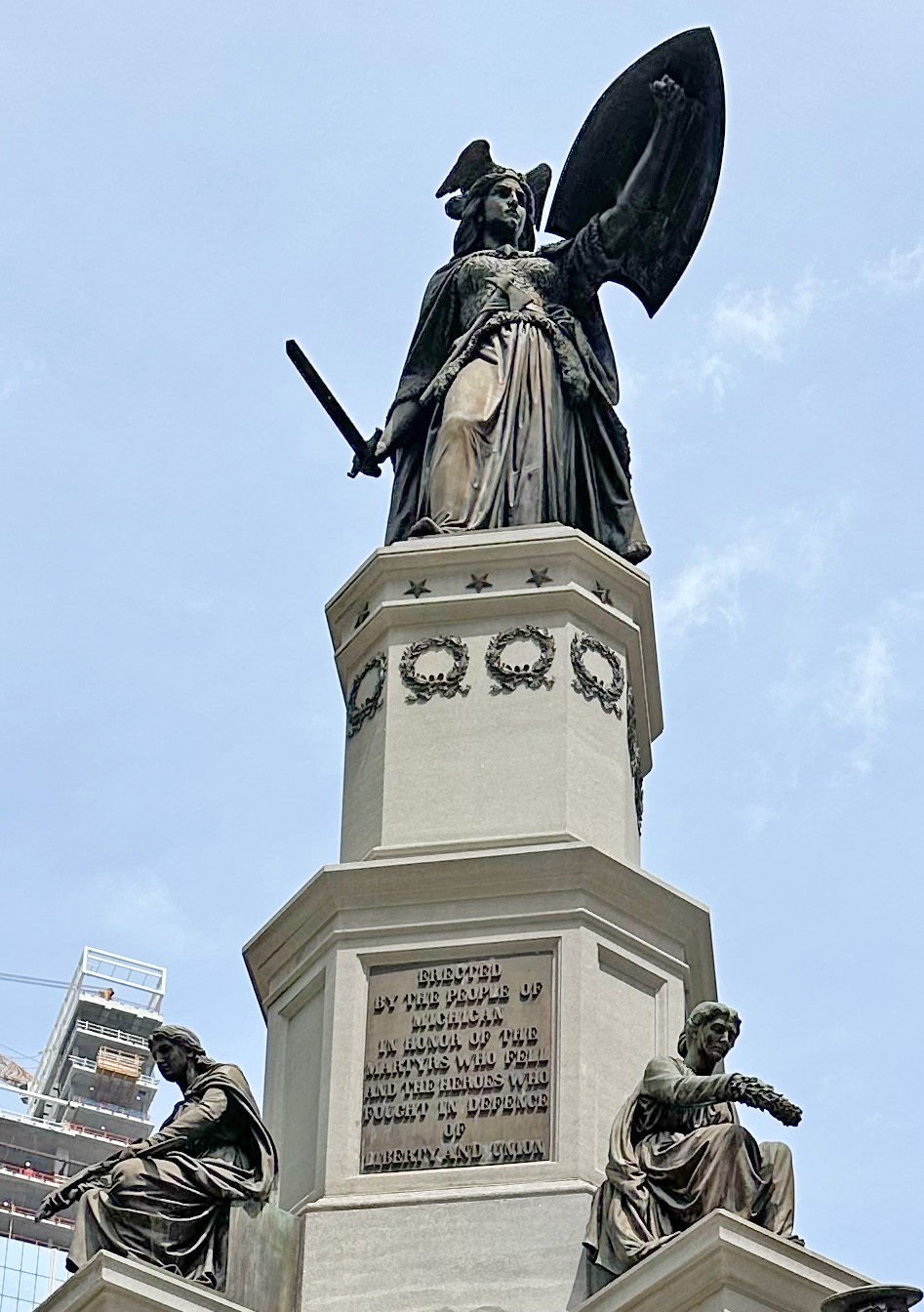
The Soldiers and Sailors Monument is among Detroit’s oldest pieces of public art and was one of the first monuments to honor Civil War veterans in the United States. It was announced by Gov. Austin Blair in 1865 that money would be collected to erect a tribute to Michigan’s soldiers killed in battle. Detroit, being the largest city, won the right to the monument.
…The bronze and granite sculpture was formally unveiled on April 9, 1872, though some of its statues were not added until July 18, 1881. Among the military commanders of Civil War fame attending the ceremony were Gens. George Armstrong Custer, Ambrose Burnside, Philip Sheridan, Thomas J. Wood and John Cook. The estimates were that 25,000 visitors turned out for the event, and each of the state’s main cities was represented by a marching delegation. Detroit’s hotels could not accommodate the crowd and some people had to sleep on the floors of the halls and parlors of taverns.
The Classical Revival monument stands more than 60 feet tall and cost more than $75,000 ($1.3 million today) to build. It was sculpted by Randolph Rogers, who grew up in Ann Arbor and studied at the Academy of St. Mark in Florence, Italy, under Lorenzo Bartolini. Rogers won the commission after a public competition in 1867. He also is known for the bronze doors for the U.S. Capitol’s main entrance and created monuments like the Sailors and Soldiers in other cities.
Read on for much more at Historic Detroit, and for sure thank a veteran today and every day for stepping up to serve.
Although most of the photos that appear on Michigan in Pictures are by other photographers, I took these photos. I don’t sell my photos, but you can for sure throw me a few bucks through Patreon if you enjoy Michigan in Pictures! The top photo is from second floor the new glass pub on Campus Martius looking south down Woodward and the detail shots are from just after they cleaned the monument before the 2024 NFL Draft.
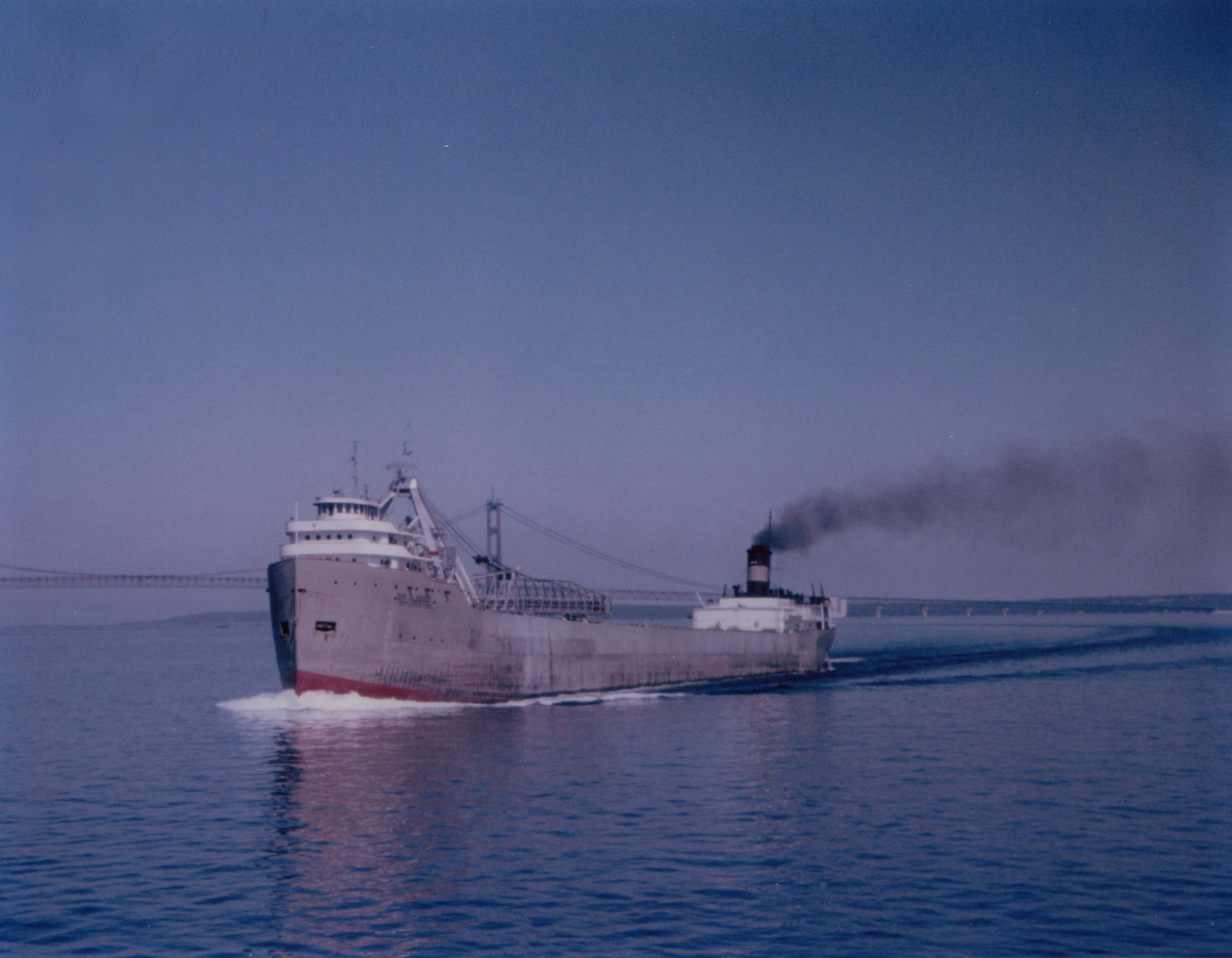
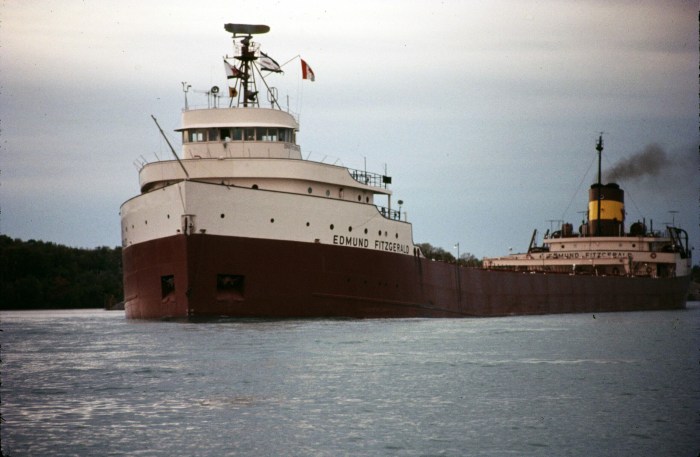
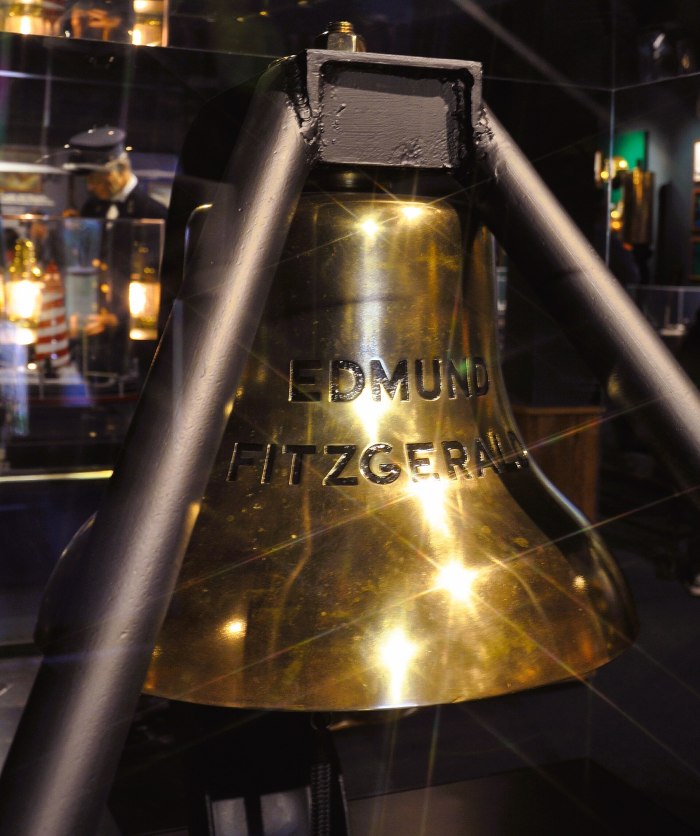
50 years on November 10, 1975, the mighty SS Edmund Fitzgerald was lost with all hands in a powerful storm on Lake Superior. At 729-feet long, it was the largest ship on the Lakes at the time and the largest vessel to ever sink in the Great Lakes.
While Gordon Lightfoot’s classic song The Wreck of Edmund Fitzgerald undoubtedly contributed to the legend of the Fitz, the documentary Backstory: The Edmund Fitzgerald from Click on Detroit/Local 4 on the sinking of the Edmund Fitzgerald explores the myriad ways the ship in woven into Michigan’s culture & consciousness. I really encourage you to make some time to watch this excellent documentary. In addition to exploring the mystery of the wreck and the impact of Lightfoot’s iconic song, it features anecdotes like the fact many of the furnishings were from Hudson’s and a truly beautiful recounting of the stories of the sailors lost. Seriously excellent work!
“And the iron boats go as the mariners all know, with the gales of November remembered” – Gordon Lightfoot
Every Michigander knows that the winds of November are to be respected and even feared on the Great Lakes. The State of Michigan says that an estimated 6,000 vessels were lost on the Great Lakes with about a quarter of these canoes, sailing ships, ferries, steamers, and modern ore boats like the mighty SS Edmnd Fitzgerald still remain on Michigan’s 38,000 square miles of the Great Lakes bottomlands.
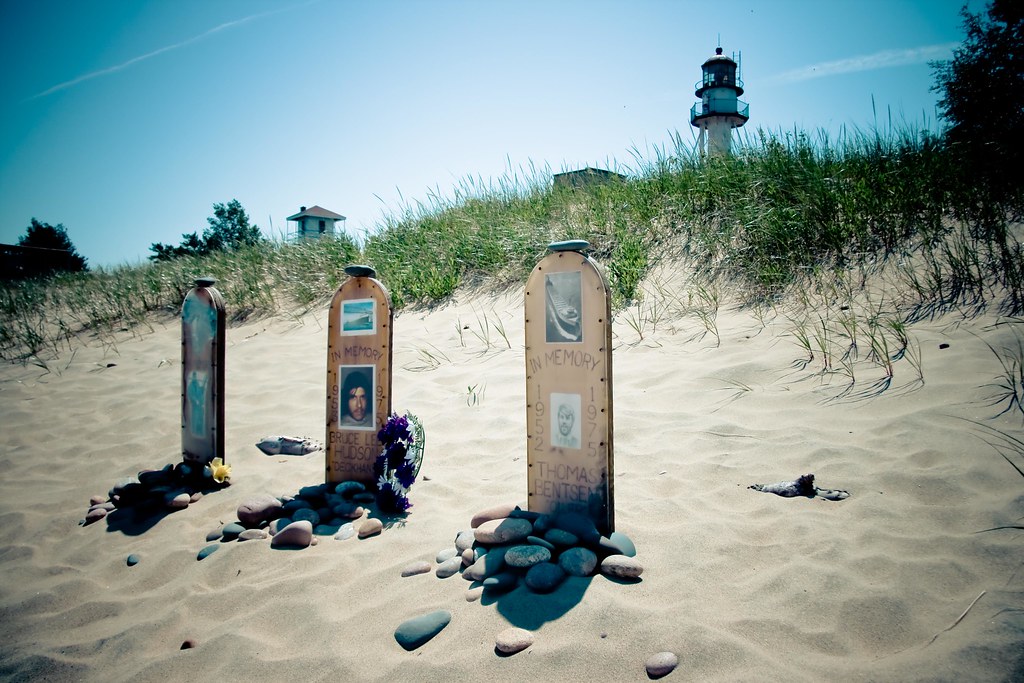
Yolanda took this photo a memorial at Whitefish Point Lighthouse to few of those lost aboard the S. S. Edmund Fitzgerald. More in her excellent Somewhere in Michigan gallery.
We’re going to keep our eyes on the skies today, because in addition to the waning but nearly full Super Hunter’s Moon & Taurid Meteors from yesterday, the NOAA NWS National Space Weather Prediction Center is calling for G3 level aurora activity to continue tonight, which means that Northern Lights are more likely, and they could be seen all the way to the southern state line if conditions are right! They have also launched an experimental Auroral Viewline graphic that shows where you are likely to be able to see northern lights, but to be clear, this is an inexact science AT BEST and hunting for the northern lights is very often unrewarding … unless you think being out under the stars is its own reward.
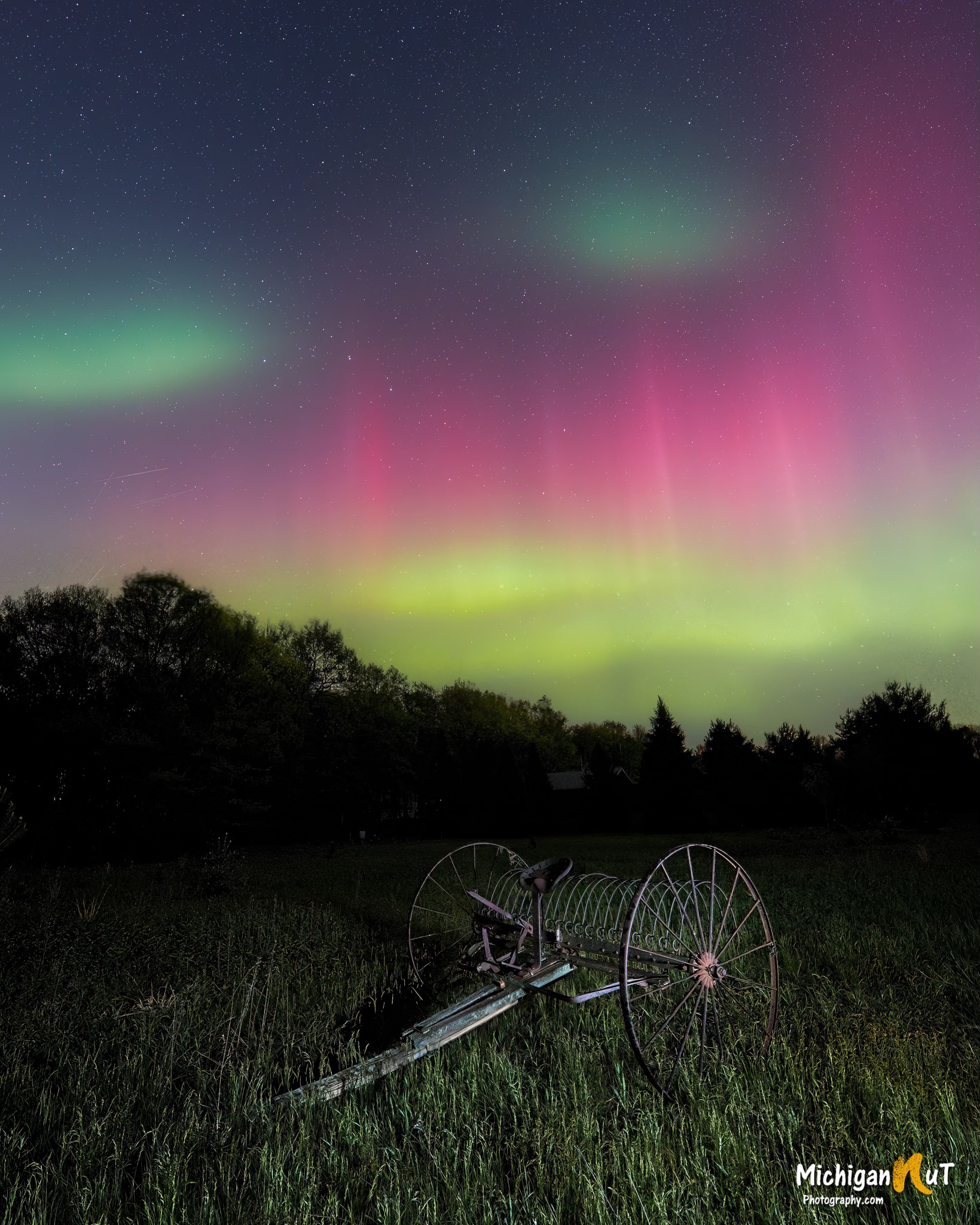
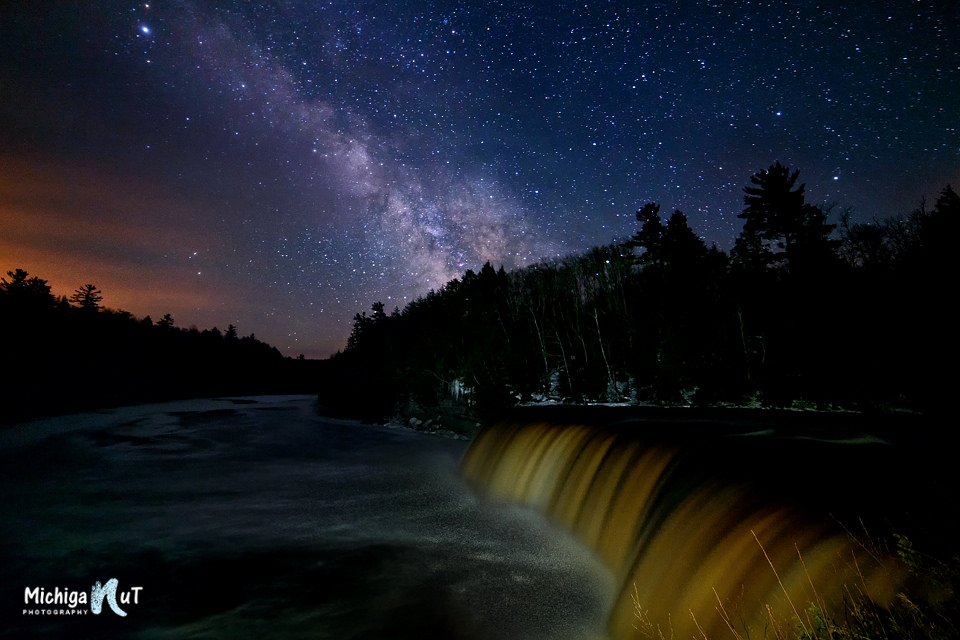
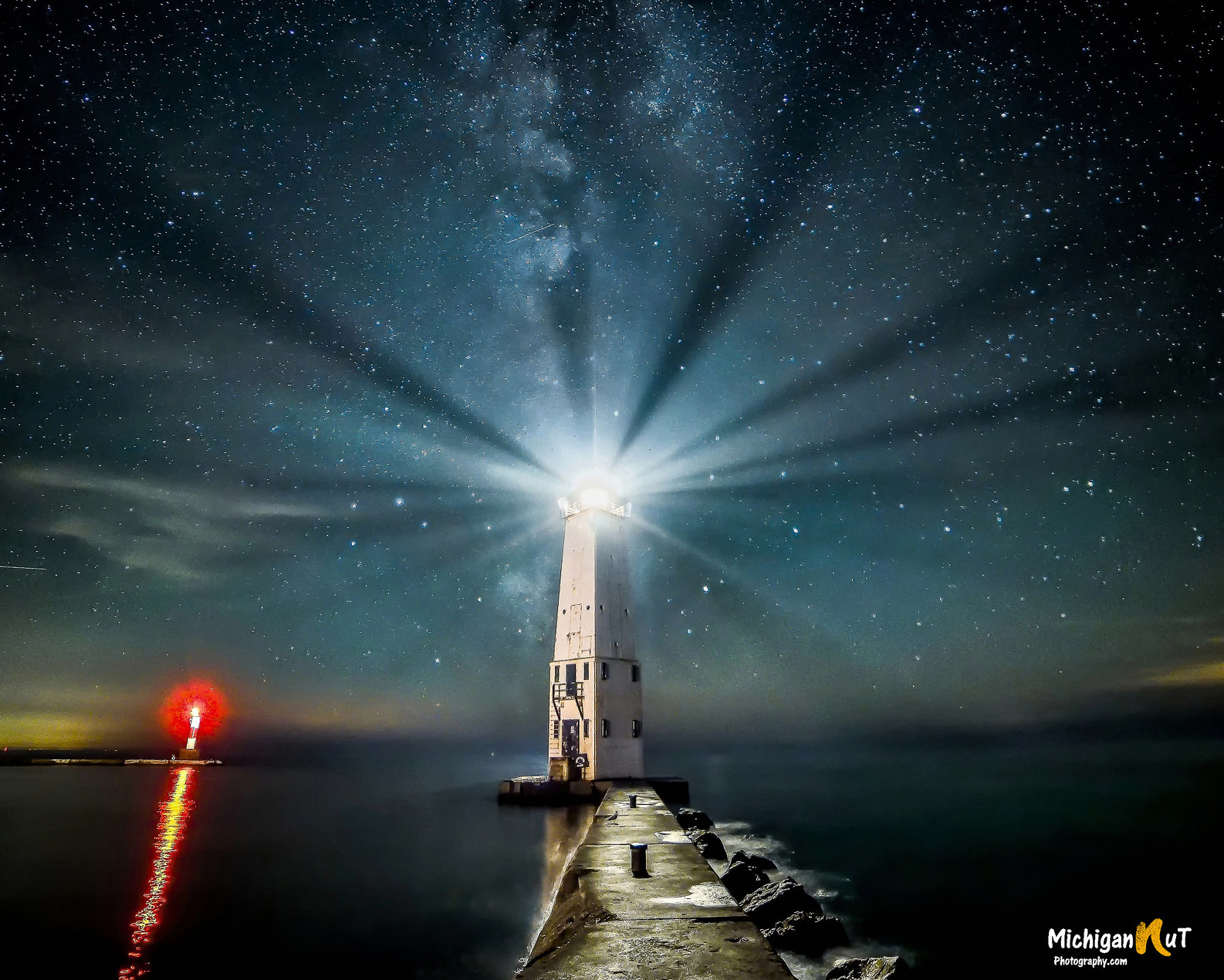
I have featured dozens of photos from John McCormick aka Michigan Nut Photography since the first pic I blogged in 2011. In all that time & even though he’s taken TONS of northern lights shots over the years, I’ve never shared one of them!! 😲 Here are a pair from John plus a couple of his night shots that I am particularly fond of. See many (many) more on his Facebook and for sure view & purchase his work at michigannutphotography.com!


#/media/File:Edmund_Fitzgerald,_1971,_4_of_4.JPG)


 Michigan in Pictures
#/media/File:Fall_777.jpg)