The Soul of the Yoop

The Soul of the Yoop

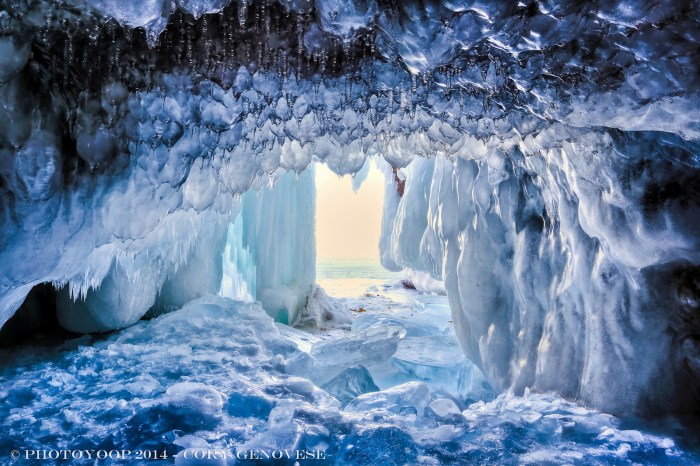
Soul of the Yoop, photo by Cory Genovese

While our Great Lakes shoreline still holds some cool formations this winter, unlike the last two years this winter hasn’t had the very cold days coupled with high winds that combine to form truly spectacular ice caves. Thankfully, we can look back … and hope for a wintry turn in the weather!

Cory took this photo of one of his favorite little Lake Superior ice caves in a spring thaw in April of 2014. View the photo bigger, see more in his Yoop Life slideshow, and definitely follow him on Facebook at PhotoYoop for more great shots of life on the edge in Michigan’s Upper Peninsula!

More ice caves on Michigan in Pictures, and please consider becoming a patron of Michigan in Pictures.

New Marks for Michigan National Parks

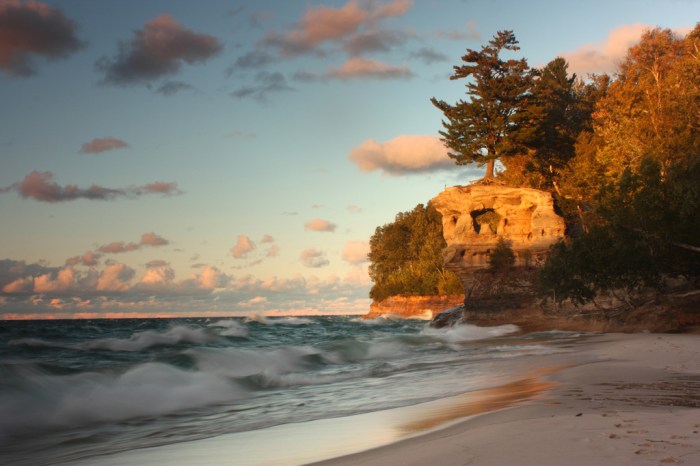
Chapel Rock Pictured Rocks

Pictured Rocks – Chapel Beach, photo by Todd

Crain’s Detroit Business reported that two of Michigan’s national parks saw record numbers of visitors in 2015:

The National Parks Service says Pictured Rocks National Lakeshore in the Upper Peninsula and River Raisin Battlefield Park in southeastern Michigan set visitation records in 2015. The two parks, along with Isle Royale National Park in Lake Superior and Sleeping Bear Dunes National Lakeshore along Lake Michigan’s northeastern coast, had more visitors through November 2015 than in 2014 and saw double-digit increases in visitors.

…The increased popularity of national parks in Michigan mirrors a nationwide trend: Overall visits to national parks are expected to reach 300 million in 2015. Last year’s figure was a record 293 million.

The park system turns 100 next year, and the Obama administration and Republican lawmakers have different ideas about what to do. Both parties agree the country’s national parks and historic sites could use some sprucing up but the question is how much of a dent Congress will make in a system-wide maintenance backlog with an estimated $11.5 billion price tag. President Barack Obama has recommended spending an additional $1.5 billion on the parks over a three-year period. Republican leaders in Congress have a smaller birthday present in mind.

Here’s hoping that our elected officials can come together to keep our National Park system strong!

Todd took this shot at Chapel Beach in September of 2012. View it bigger and see more in his Pictured Rocks National Lakeshore slideshow.

Lots more on Michigan’s state & national parks on Michigan in Pictures!

Doing nothing about Asian carp probably isn’t going to work

Salmon Fishing on the Sable River Outlet

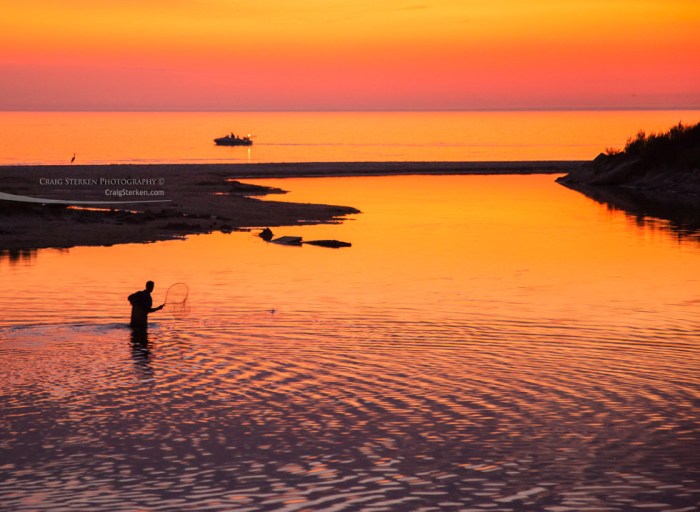
Salmon Fishing on the Sable River Outlet, Ludington Michigan, photo by Craig Sterken

Traverse City based AP Environmental Writer John Flesher is (for my money) one of the best reporting on Great Lakes issues. His latest piece Effort to keep Asian carp from Great Lakes appears stymied begins:

When scientists discovered six years ago that aggressive Asian carp had made their way up the Mississippi River’s tributaries toward the Chicago area, the Obama administration and alarmed state officials pledged swift action to head off an invasion they feared could devastate fishing and boating on the vital Great Lakes.

Since then, federal agencies have spent more than $300 million on stopgap measures, including placing electric barriers on one likely route, a shipping canal that leads to Lake Michigan. But as the carp get closer_some are within 80 miles of the lake— the quest for a surefire deterrent seems to be coming up empty.

An advisory panel that has debated solutions for several years is scheduled to hold what may be its final meeting Thursday, with no sign of a consensus plan, several members said in interviews.

Even if talks continue, chances are growing that the carp will arrive before anything conclusive is done to stop them. At their recent pace, the first young carp could reach Lake Michigan within two years, although a number of obstacles could slow them considerably.

“It’s one of the things that keep me up at night,” said U.S. Sen. Debbie Stabenow, a Michigan Democrat whose state borders four of the five Great Lakes. “Asian carp could devastate our Great Lakes and the hundreds of thousands of jobs that depend on them.”

…Environmental groups and the region’s fishing and boating industries, which generate $23 billion annually on the lakes, are most worried about two varieties of Asian carp: bighead and silver, which weigh dozens of pounds and gorge on the same tiny plant and animal life that feeds the lakes’ other fish. Scientists are still measuring their impact in rivers, but under worst-case scenarios, the large carp could leave popular sport fish to go hungry and suffer population drop-offs. Asian carp are edible but bony, and most Great Lakes fish connoisseurs regard them as a poor substitute for the walleye and whitefish.

Additionally, silver carp are notorious for springing from the water when startled, sometimes ramming boaters with bone-cracking force — a hazard that some fear could damage the Great Lakes’ tourism industry.

Read on for much more, and be sure to follow John on Twitter for more of the story. And please, make it clear to every elected official you interact with how important the health of the Great Lakes is to Michigan!

View Craig’s photo bigger, see lots more Great Lakes goodness in his slideshow and view & purchase photos from him on his website.(this one is in the Ludington collection)

More about the threat of Asian carp on Michigan in Pictures.


The Night’s Watch

The Nights Watch

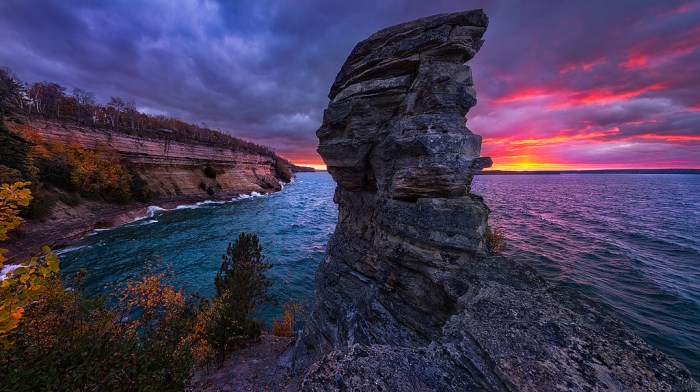
The Night’s Watch, photo by Jiqing Fan

Of this stunning photo from back in October at Miners Castle in the Pictured Rocks National Lakeshore, Jiqing Fan writes:

Winter is coming! The night’s watch of the North guard the last bit of colors against the white walkers (snow storm) approaching.

It appears that the Watch did its job and turned back winter 2016! View his photo bigger and see more in his Houghton & UP MI slideshow.

Lots more about Miners Castle on Michigan in Pictures!

Old School Efficiency at Copper Harbor Lighthouse

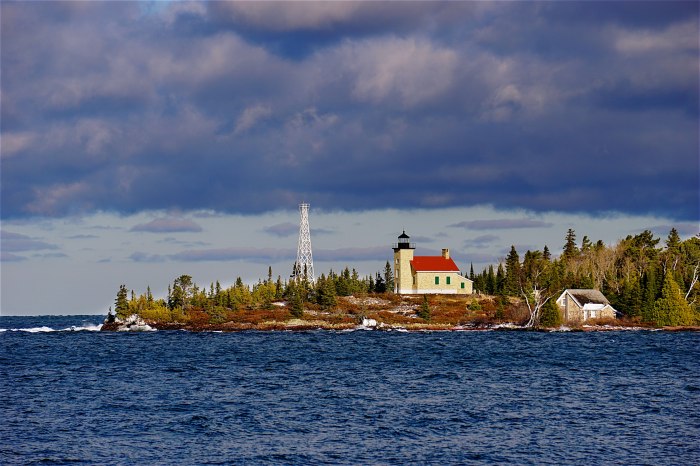
Copper Harbor Lighthouse

Copper Harbor Lighthouse, photo by Frank Wulfers

Terry Pepper’s Seeing the Light has an extensive article on Copper Harbor Lighthouse that shines a light on some solid planning from back in the day … and some that was less so:

As was the case with virtually all of the lighthouses built on the Great Lakes during the Pleasonton administration, the true costs of inferior materials and shoddy workmanship began to show. After his 1864 visit to the station, the Eleventh District Inspector remarked that the Copper Harbor lighthouse required “extensive repairs.” On subsequent investigation, the condition of the tower was determined to be beyond repair, and the following year the decision was made to raze the old tower and erect a completely new structure. With old Pleasonton-era stations needing replacement at both Marquette and Ontonagon, and new stations planned for Gull Rock, Huron and Granite Islands, the decision was made to build all six lights to the same plan. Specifying a simple brick two-story dwelling with a tower integrated into the center of one of the gable end walls, this design would eventually become known as the “schoolhouse” style, as a result of its similarity to the design of rural nineteenth century one room schoolhouses.

The lighthouse tender HAZE returned to Copper Harbor in early 1866 and deposited a working crew and materials on lighthouse point to begin construction of the new main lighthouse. Work began with the demolishing of the old rubble stone tower, and excavating the foundation for the new structure. Under normal circumstances one would assume that the old tower would have been left standing until the new station was complete. However, an archeological survey conducted by the Michigan Technological University in 1994 showed that a large portion of the stone from the old tower was reused in building the foundation of the new building. Thus it is evident that the old tower must have been demolished first. What steps were put in place to allow the continued display of a light at the station for the time period between the demolishing of the old tower and the completion of the new structure are unrecorded. However, it is almost certain that some arrangement for the display of a temporary light would have been made.

Atop the rubble stone foundation, a team of masons erected a Cream City brick building, and its 42-foot tall tower capped with a square gallery with iron safety railing. A spiral cast iron stairway within the tower provided the only means of passing between the first and second floors in addition to providing access to the lantern. Centered atop the gallery, a decagonal prefabricated cast iron lantern was installed, and the Fourth Order lens from the old tower reassembled atop a cast iron pedestal at the center of the new lantern.

Seeing the Light has much more including old photos and an account of the Pleasanton Administration’s first draft of the Copper Harbor lighthouse. Before you judge Stephen Pleasanton too harshly, however, click over to his Wikipedia entry where you will learn how this James Monroe appointee helped to save the Declaration of Independence during the War of 1812!

View Frank’s photo background big and see more in his Michigan Upper Peninsula slideshow.

More Michigan lighthouses and more Copper Harbor on Michigan in Pictures.

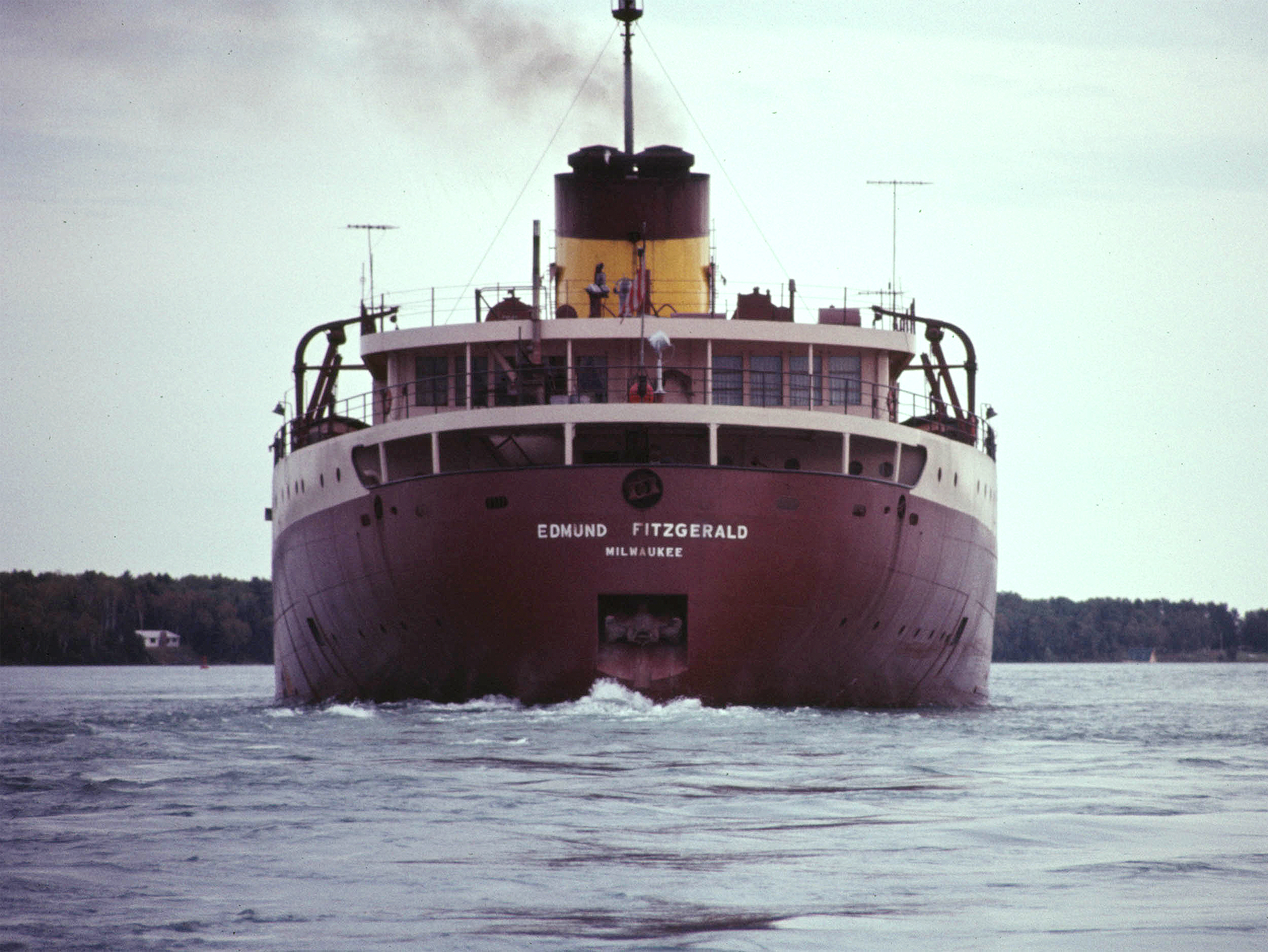
The Wreck of the Edmund Fitzgerald

SS Edmund Fitzgerald Underway

SS Edmund Fitzgerald Underway, photo via Wikimedia Commons

I went and bought all of the old newspapers, got everything in chronological order, and went ahead and did it because I already had a melody in my mind. It was from an old Irish dirge that I heard when I was about three and a half years old. I think it was one of the first pieces of music that registered to me as being a piece of music. That’s where the melody comes from, from an old Irish folk song.
~Gordon Lightfoot on The Wreck of the Edmund Fitzgerald

40 years ago today, Michigan’s most remembered shipwreck took place. A big part of this is certainly Gordon Lightfoot’s signature ballad The Wreck of the Edmund Fitzgerald. The song – familiar to almost every Michigander – seems to memorialize more than simply the 29 men who perished in that horrible storm. There is certainly no better video of this song than this one crafted by Joseph Fulton featuring footage of the Fitz that you’ve probably never seen. It starts out with Walter Cronkite’s Harry Reasoner’s news report from November 11, 1975 and just gets better from there – definitely worth your time!

mLive has an article about how & why Gordon Lightfoot wrote ‘The Wreck of the Edmund Fitzgerald’ that you should check out. It includes a nice little video where he shares how he’s edited the live lyrics to reflect what’s been learned about the sinking of the ship. They got Lightfoot’s account of  the writing of the song from the songwriter’s Ask Me Anything on Reddit, an interesting look inside of the mind of a thoughtful and talented songwriter.

I made some minor corrections to today’s photo to get the colors a little closer to those of the Fitz. View it big as the Fitz and see more at Edmund Fitzgerald images at Wikmedia.

There more ships and more shipwrecks on Michigan in Pictures.

Continue reading The Wreck of the Edmund Fitzgerald

The Great Storm of 1913 and the Last Voyage of the Henry B. Smith

Henry B Smith Great Storm of 1919

Henry B Smith LOC det 4a16048, photo by Detroit Publishing Co. (via Library of Congress)

In November I like to share stories of some of the ships that have been lost in the most dangerous month of shipping on the Great Lakes. November is a month when owners and captains have historically sought to bet the margins in their favor. Sometimes their gamble doesn’t pay off…

The Great Lakes Storm of 1913 is one that caught many ships in the wrong place at the wrong time. More or less via Wikipedia’s page:

The Great Lakes Storm of 1913 is historically referred to as the “Big Blow,” the “Freshwater Fury,” or the “White Hurricane.” It was a blizzard with hurricane-force winds that ravaged Michigan, Ontario and much of the Midwest from November 7-10, 1913. The storm was most powerful on November 9, battering and overturning ships on four of the five Great Lakes, particularly Lake Huron. Deceptive lulls in the storm and the slow pace of weather reports contributed to the storm’s destructiveness.

The deadliest and most destructive natural disaster ever to hit the lakes, the storm killed more than 250 people, destroyed 19 ships, and stranded 19 others. The financial loss in vessels alone was nearly US $5 million (or about $120 million in today’s dollars).

There’s so much more about this storm on the Wikipedia page and definitely check out this Michigan in Pictures post on the unique weather pattern on the Great Storm.

One of the ships lost to the lakes was the Henry B. Smith, a 525′ steel-hulled, propeller-driven lake freighter. Well…

The Smith arrived at Marquette on November 6 to take on iron ore. Over the next two days a southwest gale swept over Lake Superior, dropping the temperature to 24 degrees Fahrenheit. The cold weather caused the ore to freeze inside the hopper cars, requiring men to knock them loose by hand. This resulted in a loading delay for the Smith. Captain James Owen had been plagued by misfortunes all year that had resulted in the Smith being delayed or late for its destinations. Rumors abounded, then and now, that the owners of the boat made it clear to Owen that he better make this last trip on time, or else.

Around 5 p.m. on November 9, the Smith loaded its last car of ore. Since the gale seemed to be in a brief lull, the big freighter immediately backed away from the dock and began to leave. As soon as the Smith left Marquette Harbor, the fierce wind returned and the storm’s lull ended. Witnesses on shore noted that the deckhands were frantically trying to close the Smith‍ ’​s hatches. The freighter had a total of 32 hatches; each hatch required individual attention with locking bars, clamps, and tackle. It was a couple hours’ work for even the most skilled crew. And so it was that Captain James Owen was piloting the Henry B. Smith into one of the worst storms in memory with unsecured hatches.

After about twenty minutes, the full force of the gale hit the Smith as huge waves crashed over her deck, drenching the hapless deckhands who were still struggling to close the hatches. Instead of turning to starboard on the usual course for the Soo Locks, the Smith hauled to port, rolling greatly as she did so. Witnesses on shore concluded that Owen had realized his error and was heading for shelter behind Keweenaw Point to the north. With the encroaching darkness and thick snow squalls, the Smith was then lost from view.

Two days after the storm blew itself out, the beaches along Chocolay Bay, Shot Point, and Laughing Fish Point were littered with debris from the Smith. The wreckage was found high up on the beach, indicating it came ashore at the height of the storm. The body of the second cook, H.R. Haskin, was found floating about fifty miles west of Whitefish Point some days later. Only one other body of the Smith‍ ’​s crew was ever recovered; the skeleton of third engineer John Gallagher was found on Parisian Island in the spring of 1914.

A note in a bottle, allegedly from the Smith, was found in June 1914. In it, the author claimed the ship had broken in two 12 miles east of Marquette. After a long debate, the boat’s owners decided the note was a phony; it was dated 12 November, when the Smith sank either on the 9th or the early morning hours of the 10th.

Read on for more about the Smith. In May of 2013, the wreck of the Henry B. Smith was rediscovered in about 535 feet of water roughly 30 miles north of Marquette. The article is less kind to Captain “Dancing Jimmy” Owen – so named for his habit of frequenting local dance halls – than the Wikipedia version.

View the photo background big at Wikimedia.

More of the Freshwater Fury and more Michigan shipwrecks on Michigan in Pictures.


Haunted Michigan: Mishipeshu, the Water Panther

Note: While this is a tale of Michigan, it’s not a photo of Michigan, but rather Ontario!! That might be the scariest thing about today’s post – I hope that you all can deal with it! ;)
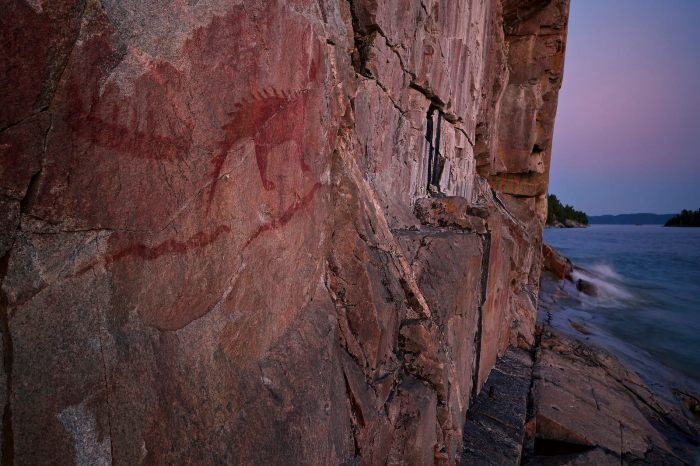
agawa pictographs lake superior provincial park ontario

agawa pictographs, lake superior provincial park, ontario, photo by twurdemann

Monstropedia says that the name Mishipeshu can be translated as Great Lynx and that this beastie was also known as “Gichi-anami’e-bizhiw” which means fabulous night panther.

The Cryptid Chronicles on Tumblr shares the tale of the Underwater Mystery Cat:

Native North Americans have a long tradition of stories regarding the Mishibizhiw, an underwater panther. Some tribes, particularly Anishinaabe, Odawa, Ojibwe, and Potawatomi, of the Great Lakes region of Canada consider this being as the most powerful underworld being. The Ojibwe held them to be the master of all water creatures. Some myths include this water lynx in their creation legends.

In the Ojibwe language, this creature is called “Mishibizhiw”, “Mishipizhiw”, “Mishipizheu”, “Mishupishu”, “Mishepishu”, “Michipeshu”, or “Mishibijiw”, which translates as “Great Lynx,” or Gichi-anami’e-bizhiw (“Gitche-anahmi-bezheu”), which translates as “the fabulous night panther.” Often, it is referred to as the “Great underground wildcat” or “Great under-water wildcat.” In Lake Superior Provincial Park on Ontario, there are pictographs of a mishibizhiw and two giant serpents. These creatures were described as water monsters that live in opposition to the Thunderbirds which are masters of the powers of the air.

With the body of a cat, usually like a lynx and the horns of a deer, it also sports scales on its back and sometimes even bird feathers. They typically are sporting long tails. Like many other creatures in native lore, it is said to be a shape shifter. It is said they roar or hiss like the sound of rushing water. Mishipizheu were said to live in the deepest lakes and rivers and can cause storms. Other traditions claim they can sometimes be helpful and protective, but generally they are viewed as bringing death or other misfortune. Traditionally, offerings are made to help with safe passage across the water.

“While skirting some rocks, which by their height and length inspire awe, we saw upon one of them two painted monsters which at first made us afraid, and upon which the boldest savages dare not long rest their eyes. They are as large as a calf: they have horns on their heads like those of a deer, a horrible look, red eyes, a beard like a tiger’s, a face somewhat like a man’s, a body covered with scales, and so long a tail that it winds all around the body, passing above the head and going back between the legs, ending in a fish’s tail.”
—French missionary Jacques Marquette, 1637

It was a widely held belief that copper came from the creature and charms were made to bring luck to hunters. After the hunt, these charms would be destroyed. Native Canadian preferred guns with brass plates depicting European dragons; they likely were interpreted to be images of Mishepishu. An Anishnaabe Ojibwa club from around 1800 has a Mishepishu figure on the end closest to the blade. In 2011, one of the Canadian Mint Mythical Creatures coins depicted a Mishepishu. The Canadian Museum of Civilization includes an underwater panther in its coat of arms. While often depicted in both ancient and modern art, modern sightings are virtually nonexistant.

Read on for more and you can also watch an episode of Grimm featuring the Mishipeshu right here!

Twurdemann writes that the Agawa Pictographs are at Agawa Rock, at the base of a 30 meter (100 foot) cliff and precarious ledge on the shore of Lake Superior. The site is sacred to the local Ojibwa and depict both historical events and legends. The paintings are believed to between 150-400 years old and were painted with a mixture of hematite (mineralized iron oxide) and animal fats. Check out the photo bigger, and see more in his Lake Superior slideshow.

More ghost & spooky stories on Michigan in Pictures.

PS: I’ve been to Agawa Rock, and if you ever get a chance to drive around all or part of Lake Superior, definitely stop here. These are some very cool pictographs!!!

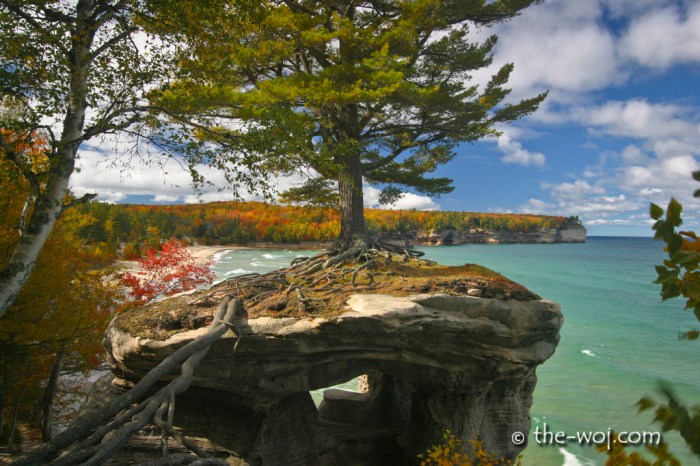
Autumn’s Chapel

Chapel Rock in Fall

chapel rock, photo by Paul Wojtkowski

Here’s a cool picture from way back in 2006 of what I think is definitely one of the 7 wonders of Michigan: Chapel Rock in the Pictured Rocks National Lakeshore.

The Lucky Tree of Chapel Rock features quite a number of photos that I think can give you a pretty good understanding of this marvelous Michigan miracle.

Chapel Rock on Lake Superior has a single tree perched atop its column. By rights the tree should not be there: the small surface area of land on the top of the rock is insufficient to sustain a tree of this size.

There is hardly any topsoil, certainly not enough for an obviously thriving tree. How then does it flourish?

Look a little closer and you will see the answer – that rope on the right of the picture is not, in fact a rope. It is a system of roots, extending and stretching over the edge of the rock to the main bluff where there are nutrients and water aplenty.

Yet how on earth did the root extend over to the mainland? Did it slither in some triffid like way until it reached the other side? Is there a Little Shop of Horrors thing happening here?

Click through for the answer and some pics that make things clearer – including to my surprise one of my own! – from Kuriositas which looks like a pretty cool site.

View Paul’s photo bigger and see this and more in his slideshow.

More Pictured Rocks on Michigan in Pictures? You bet!

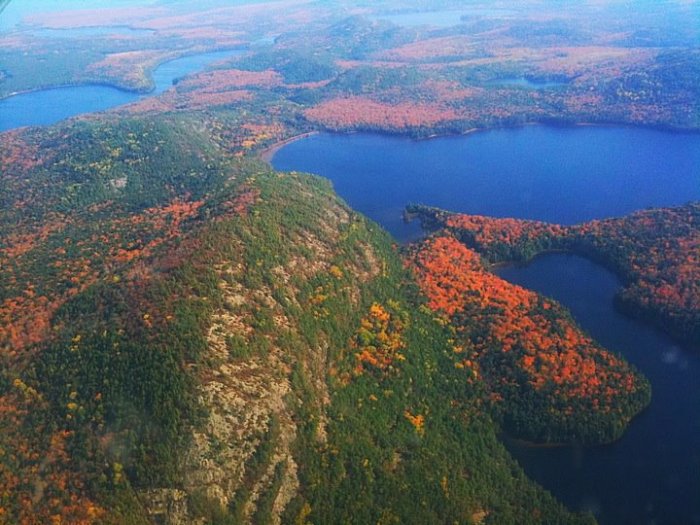
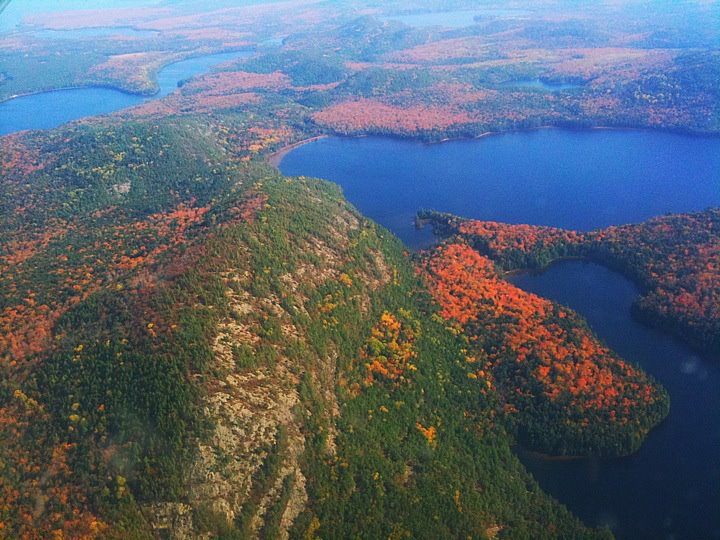
Birds Eye View of the Huron Mountains

Birds Eye View of the Huron Mountains

Birds Eye View of the Huron Mountains, photo by Kristian Saile

Summit Post’s page on the Huron Mountains says:

The Huron Mountains encompass THE most wild and rugged territory in Michigan. It is a region of low, yet surprisingly rugged mountains, swamps, lakes, and high plateaus. It is because this is such a large and diverse region that I decided to devote a page to the entire range in addition to the two prominent peaks already on this site (Arvon & Hogback). The majority of peaks in this area are unnamed and for the most part inaccessible. I have spent many years living near them, spent countless hours and days exploring them and feel like I’ve barely scratched the surface. The region has become increasingly popular with climbers in the past few years for its numerous granite cliffs. You’ll need a local to find them though:)

The Huron Mountains are the largest range of mountains in Michigan yet they are not listed on any map. The boundaries of the range are vague but generally include the area north of US-41 between Marquette and L’anse. This is approx. a 1000 sq. mi. chunk of real estate without a single paved road.

The Hurons can be divided up into three ranges. The Arvon Range includes the highest peaks, Mount Arvon (1980′) and Curwood (1979′), in the state of Michigan. The Arvon Range runs generally north-south in eastern Baraga County. The most rugged section, The Huron Range, runs northwest-southeast to the west of Big Bay in northern Marquette County. The highest peak in this region is Ives Hill at approx. 1400 feet. This part of the mountains has the most rugged relief, the highest waterfalls, and the prettiest lakes. Unfortunately a good chunk of it privately owned by the uber-exclusive Huron Mountain Club and is off-limits to the general public. The third region is the most accessible, the Marquette Iron Range. This region runs from Lake Superior at Marquette west to the Lake Michigamme area. Hogback Mountain (1200′), listed separately, is part of this range but numerous unnamed peaks to the west rise to over 1700 feet.

Read on for more and also check out the post author’s Michigan hikes – a lot of cool ones!

My friend Kristian took this in early October of 2011 while flying with his buddy Jon over the Huron Mountains. Click to view it bigger (if you can’t see it on facebook, try this link).

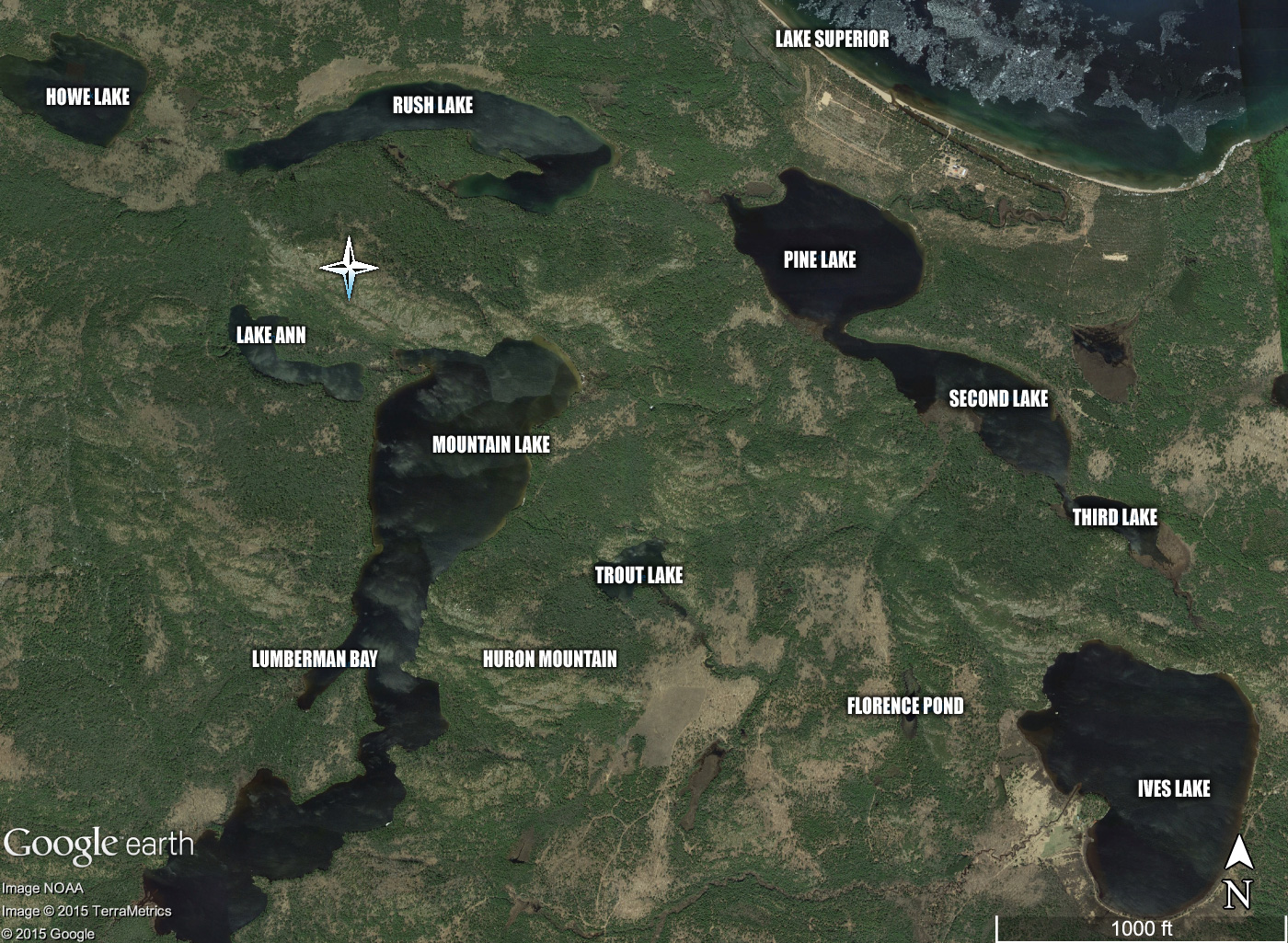
Another friend, Dick Huey of upwaterfront.com, researched the location for me – click the pic below to see it bigger.

The-Huron-Mts.-in-the-Huron-Mt.-Club

More aerial photos on Michigan in Pictures.