Deer Michigan, I Love You

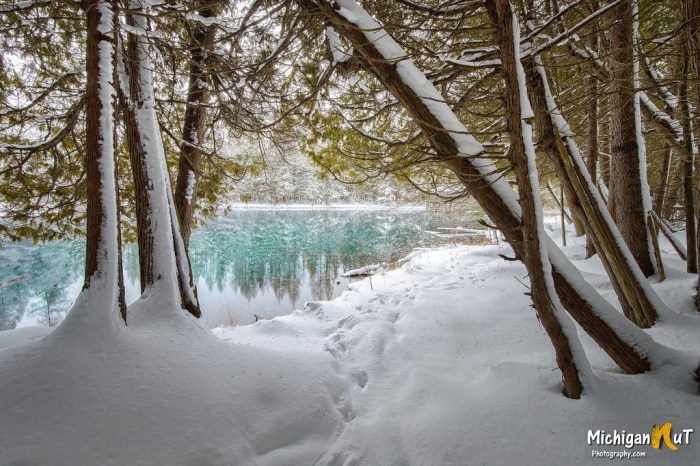
Deer Tracks - Kitch-iti-Kipi

Deer Tracks – Kitch-iti-Kipi, photo by John McCormick/Michigan Nut

Happy Valentines Day to all of you! I love Michigan even more than stupid puns. 

Someone else who loves this state is my friend John McCormick of Michigan Nut Photography. He’s on quite a tear right now with photos on many Pure Michigan billboards and being featured as an Instagram must-follow for Michigan lovers.

Kitch-iti-kipi means “The Big Spring” and it’s located in Palms Book State Park near Manistique. The park page shares what I’m realizing is kind of a dark story for Valentine’s Day. I do have past Valentine’s Day posts that are sweeter.

The legend of Kitch-iti-kipi is said to be about a young chieftain whose girlfriend got the best of him. He told her he loved her far above the other dark-haired maidens dancing near his birch bark wigwam. Prove it, she insisted. As a test of his devotion, she declared that he must set sail in his canoe on the pool deep in the conifer swamp. He was to catch her from his canoe as she leaped from an overhanging bough. His canoe overturned in the icy waters and he drowned. It turns out that the maiden was back at the village laughing at his foolish quest. According to legend, the Spring was named Kitch-itikipi in memory of the young chieftain who went to his death in the icy waters in an attempt to satisfy the vain caprice of his ladylove.

John observes that the deer that winter in this cedar swamp have a never ending supply of “Kitch-iti-Kipi Spring water.” View the photo bigger on Facebook, dive into his slideshow for some stunning winter shots from the UP, follow him at Michigan Nut Photography, and purchase photos from his website if you’re so inclined.

PS: I shared a summertime pic by John of Kitch-iti-Kipi with more info about this hidden Michigan gem!
Happy Birthday Holland: Looking back on the Holland Channel

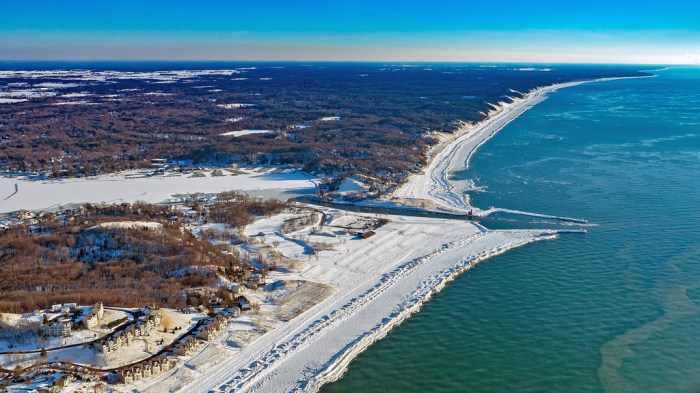
Looking Back on the Holland Channel

Looking Back at the Holland Channel, photo by Sandy Hansen Photography

February 9th is the 169th anniversary of the founding of Holland, Michigan. The History of Holland has some background about one of the prime factors for the city’s success, the Holland Channel:

From its very beginnings, Holland provided a refuge for those seeking freedom of expression and a more vibrant economy. Persuaded by religious oppression and economic depression, a group of 60 men, women, and children, led by Albertus C. VanRaalte, prepared for their 47-day trip from Rotterdam to New York. VanRaalte intended to purchase land in Wisconsin, but travel delays and an early winter caused the group to layover in Detroit. After hearing about available lands in west Michigan, VanRaalte decided to scout the territory. They reached their destination on February 9, 1847 on the banks of Black Lake—today’s Lake Macatawa.

The hundreds of Dutch immigrants that followed expected to find their promised land, but instead found a swamp and insect-infested forest. Although food was scarce, and the log sheds they built were unable to hold everyone, the settlers persevered. VanRaalte realized the practical and economic potential of the dense forest: trees could be felled to build homes and businesses, while the excess lumber could be sold to purchase farming supplies.

In the early years of Holland history, the settlers set out to conquer several projects. They knew that if Lake Michigan was to provide growth and development, it had to be made accessible by an adequate channel. After trying in vain to receive government aid, the determined Hollanders took up picks and shovels and went about digging the channel themselves. The immigrants also cleared a one-block square of land in the center of the colony—today’s Centennial Park—to serve as a market square.

Read on for more and click for a live webcam of the Holland Channel.

View Sandy’s photo bigger, see more in her Aerial slideshow, and follow her on Facebook too!

More aerial photos and more from Holland on Michigan in Pictures.

January 20, 1985: The Michigan Moose Lift

Upper Peninsula of Michigan moose

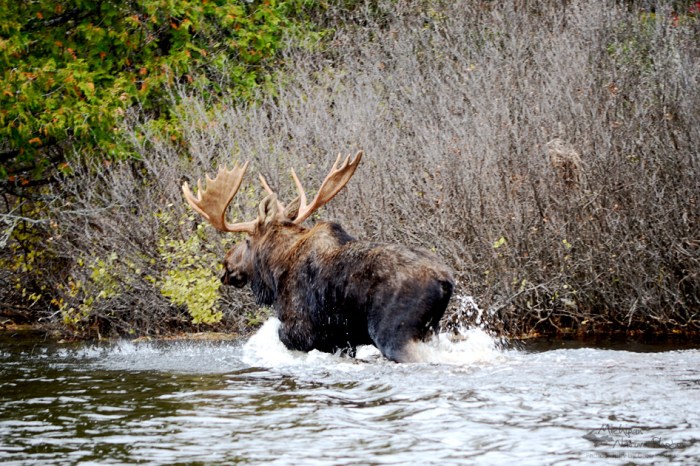
Upper Peninsula of Michigan moose, photo by Greg Kretovic

Every so often, something I have featured on Michigan in Pictures will vanish from the internet, leaving whatever I shared as the only remaining source. Such is the case with one of my favorite modern Michigan stories, The Michigan Moose Lift of January 20, 1985. Click that link to read about this historic operation that relocated 59 moose from the Algonquin Provincial Park in Ontario and led to the re-establishment of moose in Michigan’s Upper Peninsula – somewhere north of 400 at last estimate*.

Here’s a very cool video from the DNR that does a great job of telling the story. Enjoy!

Greg took this photo of a large bull moose exploring the shoreline of an inland lake in Baraga County in October of 2012. View his photo bigger, see more in his slideshow, and definitely follow him at Michigan Nature Photos on Facebook.

* From the Detroit Free Press article on the latest biennial survey of Michigan’s moose population:

The latest biennial survey by the Department of Natural Resources produced an estimate of 323 moose in their primary Michigan range, which includes Baraga, Iron and Marquette counties. If correct, that would be a decline there of about 28 percent from 2013, when the estimate was 451.

Chad Stewart, a deer, elk and moose management specialist with the DNR, said the population could have held steady since the 2013 count but that the findings, including a decrease in the number of calves spotted with adult females, suggest a decline is the likelier scenario.

It is “quite possible that we’re looking at a considerable drop in numbers,” Stewart said Monday.

A smaller moose herd wanders the eastern U.P. Biologists have long estimated their number at around 100.

Sandhills in the Mist

Sandhills in the Mist

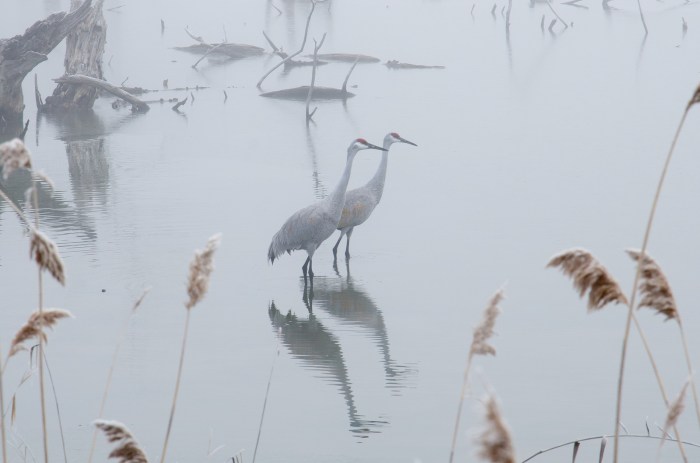
Sandhills in the mist, photo by Bill VanderMolen

Perhaps they’re waiting for the gorillas?

Here’s a shot from earlier in December, but Michigan is still just as misty and non-snowy as then.

View Bill’s photo bigger and see more in his slideshow.

More birds and more about sandhill cranes on Michigan in Pictures.

When did summer end?

When Did Summer End

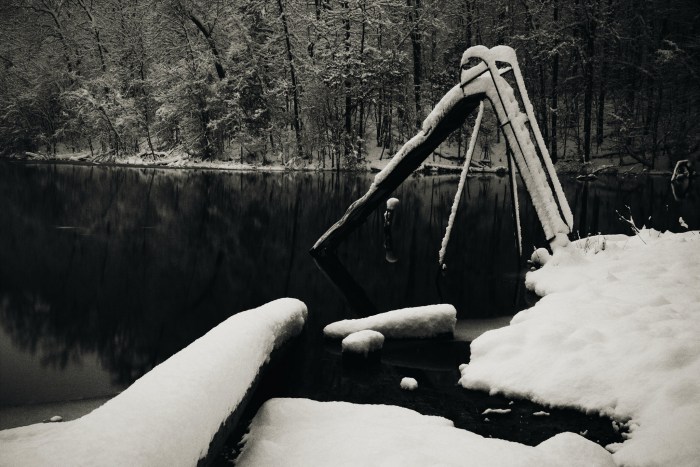
When did summer end?, photo by Cameron

Cameron took this 30 second exposure in heavy snowfall last week at Upland Hills Farm, which looks like a pretty cool place.

View the photo background bigtacular and see more in his Upland Hills Farm slideshow.

More winter wallpaper on Michigan in Pictures.

December 1st … Back into the Woods Day

Sit for a Spell

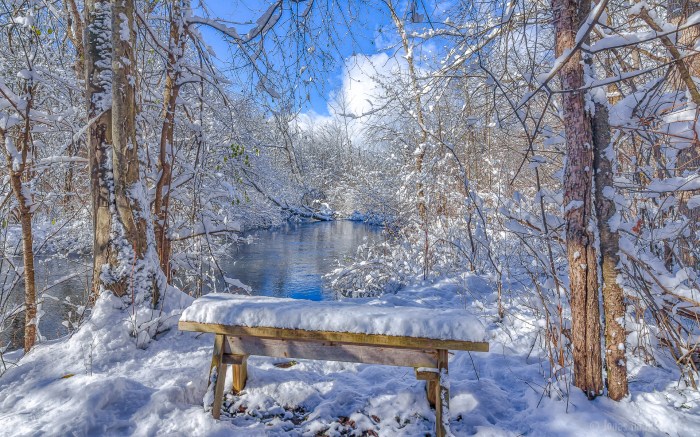
sit for a spell, photo by Doug Jonas

Longtime readers may know that I celebrate December 1st as “Back into the Woods Day” because for my money, the hardest 15 days for the year for the non-hunting lover of the outdoors in Michigan are November 15-30th. Enjoy as you will – orange clothing not required!

The photo was taken in Michigan State University’s W.K. Kellogg Experimental Forest in Augusta, midway between Kalamazoo & Battle Creek:

Established on abandoned agricultural land, the 716-acre Kellogg Experimental Forest is known worldwide for research on tree breeding and genetics, planting techniques, and plantation establishment and management. Much of the research that developed the Spartan spruce, a hybrid that combines the color and drought resistance of a blue spruce and the softer needles and rapid growth rate of the white spruce, was done at the Kellogg Forest. The forest is open to the public for biking, hiking, horseback riding and cross-country skiing, and has several interpretive trails.

Click for visitor information and there’s also some videos of what researchers are up to that show some of this beautiful spot.

Doug says this was an enchanted afternoon in the woods, with sun, shadow, snow and reflected sky. View his photo background bigilicious and click for more of his great Michigan photos.

More winter wallpaper and lots more parks & trails on Michigan in Pictures!

Red Jack Lake Sunrise

Red Jack Lake Sunrise

Red Jack Lake Sunrise, photo by John Dykstra

View John’s photo background bigilicious and see more in his Michigan slideshow.

Here’s a map to Red Jack Lake near Munising and here’s more Michigan lakes and more fall wallpaper on Michigan in Pictures.

PS: Trying out Facebook’s new photo carousel on the Michigan in Pictures Facebook


Eyes on the November Skies: North Taurid & Leonid Meteor Showers

Somewhere Over the Rainbow

Somewhere Over the Rainbow, photo by Snap Happy Gal Photography

I woke up early this morning, and after seeing 5 meteors in just ten minutes, realized that the Taurid meteors were still kicking, how about an upcoming meteor shower update courtesy EarthSky’s 2015 meteor shower page:

Late night November 12 until dawn November 13, 2015, the North Taurids

Like the South Taurids, the North Taurids meteor shower is long-lasting (October 12 – December 2) but modest, and the peak number is forecast at about 7 meteors per hour. The North and South Taurids combine, however, to provide a nice sprinkling of meteors throughout October and November. Typically, you see the maximum numbers at around midnight, when Taurus the Bull is highest in the sky. Taurid meteors tend to be slow-moving, but sometimes very bright. In 2015, the new moon comes only one day before the predicted peak, providing a dark sky for the 2015 North Taurid shower.

Late night November 17 until dawn November 18, 2015, the Leonids

Radiating from the constellation Leo the Lion, the famous Leonid meteor shower has produced some of the greatest meteor storms in history – at least one in living memory, 1966 – with rates as high as thousands of meteors per minute during a span of 15 minutes on the morning of November 17, 1966. Indeed, on that beautiful night in 1966, the meteors did, briefly, fall like rain. Some who witnessed the 1966 Leonid meteor storm said they felt as if they needed to grip the ground, so strong was the impression of Earth plowing along through space, fording the meteoroid stream. The meteors, after all, were all streaming from a single point in the sky – the radiant point – in this case in the constellation Leo the Lion.

Leonid meteor storms sometimes recur in cycles of 33 to 34 years, but the Leonids around the turn of the century – while wonderful for many observers – did not match the shower of 1966. And, in most years, the Lion whimpers rather than roars, producing a maximum of perhaps 10-15 meteors per hour on a dark night. Like many meteor showers, the Leonids ordinarily pick up steam after midnight and display the greatest meteor numbers just before dawn. In 2015, the rather wide waxing crescent moon sets in the evening and won’t interfere with this year’s Leonid meteor shower. The peak morning will probably be November 18 – but try November 17, too.

Read on for viewing tips and definitely try and take a look up at night when you can as the northern lights have also been very strong lately!

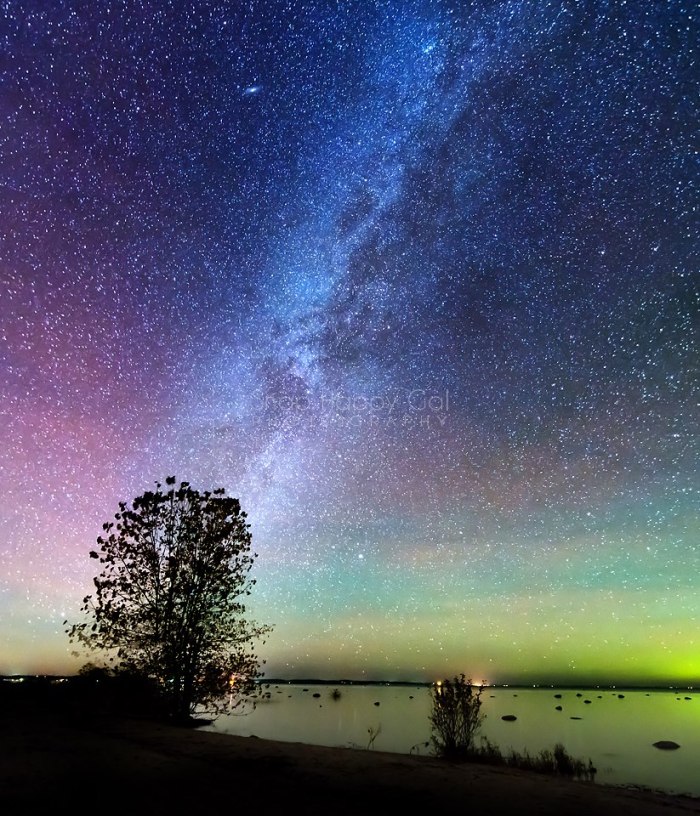
Heather writes that this image is a stitch of four 11mm frames with only minor adjustments to contrast – with no color saturation or vibrancy changes. It underscores what an incredible time for skywatching it is right now with low humidity making for extra-clear skies. View her photo background big and see more of her work at Snap Happy Gal Photography on Facebook!

More meteors & meteor showers & more northern lights on Michigan in Pictures.

Healy Lake Reflections

Healy Lake Fall Color

Healy Lake Reflections, photo by Dorn Gallatin

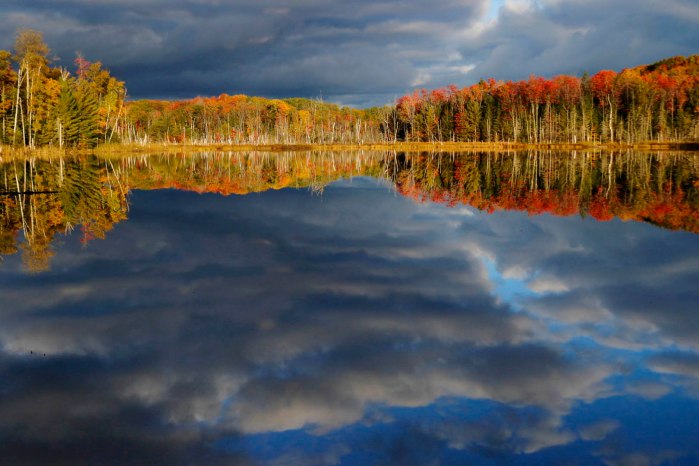
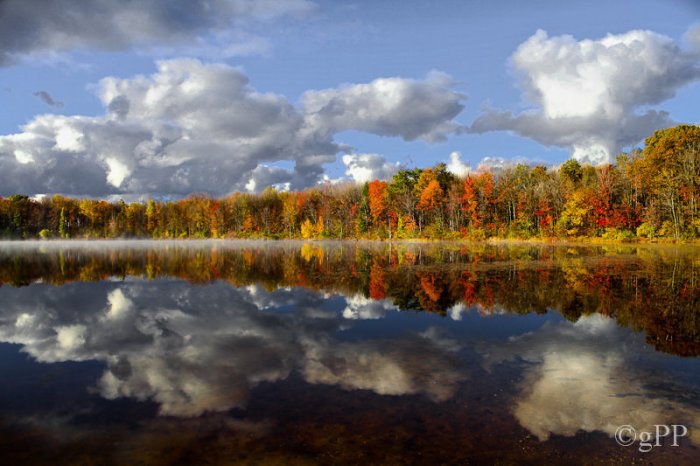
Hope everyone has a great weekend and gets out there to take a big bite out of autumn before winter eats it all!

Here’s a map to Healy Lake, located not far from Onekama. Lake Link’s entry for Healy Lake says:

Healy Lake is located in Manistee County, Michigan. This lake is 39 acres in size. It is 50.00 feet deep at its deepest point. Anglers can expect to catch a variety of fish including Bluegill, Largemouth Bass, Northern Pike, Sunfish and Yellow Perch.

Click to view it bigger and see more in Dorn’s Fall slideshow.

More Michigan lakes on Michigan in Pictures.

Mission Hill, Spectacle Lake & Fall Color 2015

Mission Hill View Upper Peninsula Michigan

Mission Hill 3, photo by Susan H

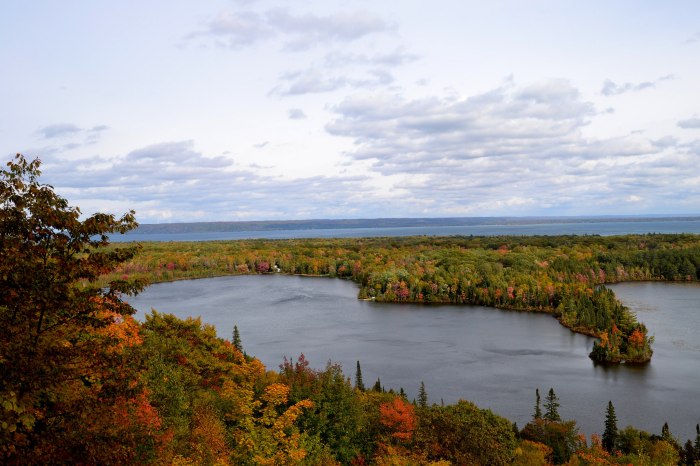
Here’s a look-in on the current state of fall color in the northeastern Upper Peninsula. DWHIKE has this to say about the Mission Hill trail, which also affords views of Spectacle Lake & Monocle Lake:

Monocle Lake sits just inland from Lake Superior about a half hours’ drive west of Sault Ste. Marie. Along its south shore is a nice National Forest campground which serves as the trailhead for the days adventure. The Monocle Lake Trail heads east from the swimming area at the south end of the lake for little more than a quarter mile where it splits north and south in to the North Country Trail and the Mission Hill Trail respectively…

Directions to Trailhead: -Take Highway 221 north from M-28 west of Sault Ste. Marie. -Follow Hwy 221 for 2.5 miles, through Brimley, to Lakeshore Drive. -Turn left on Lakeshore Drive, follow it 5 miles to Tower Road on the left. -Follow Tower Road (which changes to dirt as you climb the hill) 1.5 miles to overlook and trailhead on the right.

Click above for a map where you can need both lakes and get more about the Monocle Lake Trail from the DNR.

Susan took this photo on Sunday. View it big as the sky and see more in her UP slideshow.

Lots more Fall wallpaper on Michigan in Pictures!