Saginaw, Michigan: place of the sauk

place of the sauk

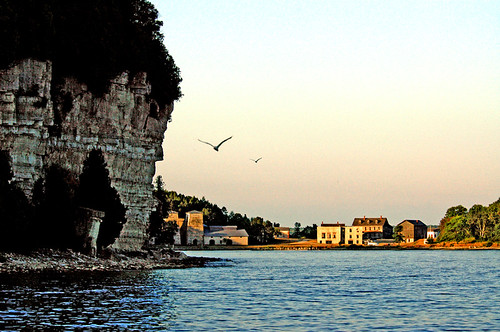
place of the sauk, photo by gsgeorge.

Today’s post springs from a critique by Lawrence Drouillard of a photo of Saginaw that we posted this spring

BLAND, BOARDED AND CRACKED, WITH AN UNCERTAIN BOTTOM LINE WITH NO FOCUS – NOT UNLIKE THE TOWN I’VE LIVED IN ALMOST ALL OF MY LIFE. THIS IS WHAT IT HAS BECOME. -SAGINAW, MICHIGAN

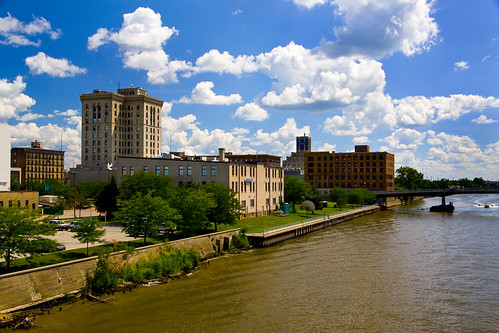
Now, I happen to like that photo quite a lot, but it’s certainly not a photo that shouts “move yourself or your business to Saginaw or just drop by for a visit” as a photo like this one by Geoffrey George does. (view larger). Since the other picture is the first thing that pops up on a search for “saginaw michigan photo”, we probably better address that.

The Saginaw Library details the history of Saginaw and says that there is archaeological evidence Paleo-Indian nomads in the Saginaw Valley from 12,000 years ago (some of the most valuable archaeological sites in Michigan are in the area). Woodland cultures including the mound-building Hopewell Indians settled along the Saginaw River. According to the library, name Saginaw is derived from an Ojibway term “O-Sag-e-non” or “Sag-in-a-we” that means “to flow out” and probably refers to the outflow of the Saginaw River into the Saginaw Bay. However, there are also those who believe that Saginaw is derived from Sagina’we’, signifying ‘the country or place of the Sauk’.

The library’s history goes on to explain how the American Fur Company established a trading post on the west side of the Saginaw River after the War of 1812, and how Saginaw City was founded by Norman Little in 1836. Both the article and Wikipedia’s entry on Saginaw, Michigan detail how Saginaw’s easy access to waterways served to fuel growth as Michigan’s massive white pine forests were felled and shipped around the nation in the 1800s. Soon after the close of the lumbering era, a new industry: the auto industry.

In Saginaw, the Jackson, Wilcox and Church Company produced carriages to be drawn by horses, and later produced components used in motor vehicles. This was eventually acquired by General Motors and formed the basis for its Steering Gear division. Additionally, General Motors established foundries and other manufacturing facilities in Saginaw. The early development of automotive production within Saginaw would set the course for the future economic circumstances of the City. (click for photo from the early automotive industry in Saginaw)

Modern day Saginaw has faced major challenges due to manufacturing job loss, but community leaders are actively seeking new industries through initiatives such as those listed on The Saginaw Valley. You will also want to explore the area through the Saginaw Chamber of Commerce, the Saginaw Valley Convention & Visitors Bureau and the City of Saginaw, Michigan.

You can see where this picture was taken (along with many more) on the Flickr photo map of Saginaw, MI and also see more photos from the past and modern day in the Saginaw, Michigan group on Flickr. Please also feel free to add your own thoughts on Saginaw or links to more information in the comments!

Mom’s World: Shopping in Grand Rapids, 1946

Untitled, photo by Joey Harrison.

Joey Harrison has put together an amazing set of photos called Mom’s World wherein he shares photos taken in the 40s and 50s by his mother (a serious amateur photographer) along with her entertaining comments. Here’s an excerpt:

Shopping can be tiring, and stores wisely provided very nice lunchrooms to keep their customers under their roof to take off down the aisles again after a respite, purses in hand. Those purses didn’t contain plastic, which came later. But we could charge to our store account, and the salesperson would always ask “Charge and send?” One simply did not carry packages.

The result is a unique look back on the post-war era that is well done and well worth your time. Click below to view the set! You may also want to check out Joey’s photoblog Eye Control.

Michigan State Capitol & other Michigan Landmarks

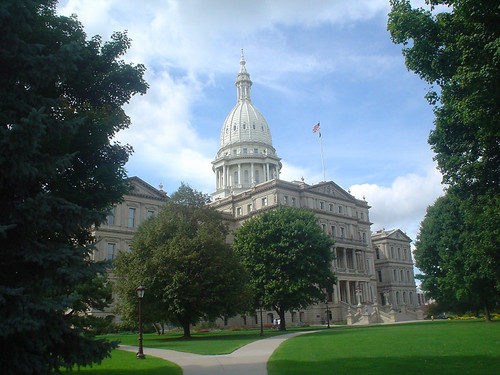
Michigan State Capitol

Michigan State Capitol, photo by Larry the Biker.

Of his set of 50-odd photos titled Michigan Landmarks, Larry the Biker writes: Si Quaeris Peninsulam Amoenam Circumspice — “If you seek a pleasant peninsula, look about you.” Things you will only see in the Great Lake State!

In addition to famous landmarks like the Mackinac Bridge and the Tahquamenon Falls, the set includes some lesser known landmarks like the Horton Bay General Store and the Pontiac Silverdome. With many of the photos, Larry also includes links to information about the subject. Click the barn to view the set!

Early Morning in Ludington

Early Morning in Ludington

Early Morning in Ludington, photo by mandj98.

The car ferry Badger (left) gets ready to make a trip across Lake Michigan to Wisconsin. The other ship is the Spartan. The 420′ Badger is the largest car ferry ever to sail Lake Michigan. When I was young, there were people who’d just ride back and forth and play cribbage. At today’s rates, I’m guessing the recreational rider may be a thing of the past.

Visit the website to learn more about the S.S. Badger car ferry from Ludington to Manitowoc. (including a cool tour of the ship)

Frankenmuth

2006.07.08 - Frankenmuth - 014

Frankenmuth , photo by ercy.

The photographer writes:

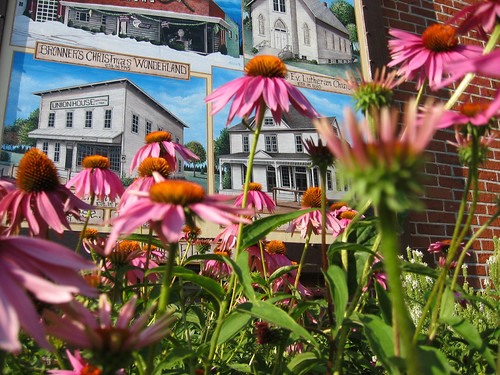
Frankenmuth, MI. You can read more about Frankenmuth, MI – a place best known for its chicken and year-round Christmas store (Bronners) – here.

From the the official Frankenmuth website:

Frankenmuth, “Michigan’s Little Bavaria”, delights over 3 million visitors annually. Come Experience Another World with unique attractionsshopping, restaurants, hotels & campingfestivals, and family fun!  Information on what is happening next in Frankenmuth is only a click away.

Regardless of the time of year, the festivities are always in full bloom.  Whether you come for a chicken dinner, to buy a special ornament, attend one of Frankenmuth’s many festivals or to simply see what’s new, Frankenmuth welcomes you with its flower-lined streets and Bavarian hospitality.  Frankenmuth is where memories are made and traditions begin ~ Come rediscover Frankenmuth! 

Wikipedia: Frankenmuth, MI
Wikipedia: Echinacea (aka Purple Cone Flower)

The Motor City

The Motor City

The Motor City, photo by slim57.

The Motor City, it all of its modern glory, shines bright against a surreal sky. Check out this detailed Wikipedia entry on the History of Detroit and discover how the city has become the place it is today.

Remembering the Flint Sit-Down Strike on a Labor Day

Flint Sit Down Strike

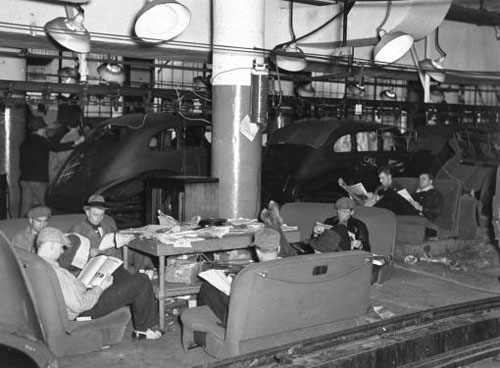
A movie produced by General Motors in 1936 called Master Hands that Christine Barry posted to her blog provided the impetus for today’s Labor Day holiday post. She dedicates it to her grandfather and it’s likely that many of us in Michigan have some relative who took some part (for or against) in the tumultuous labor struggles. Below are several links about Michigan’s most famous strike, the Flint Sitdown Strike of 1936-37 at GM’s Fisher Body #1 plant in Flint.

According to Remembering the Flint Sit-Down Strike at HistoricalVoices.org (an amazing web site that includes recordings of workers recalling the strike):

Working on the line at General Motors in Flint was a job many men needed desperately in the 1930’s, but it was also tremendously difficult. Terrible working conditions, combined with unfair and devious payroll practices, made the auto plants of Depression-era Flint into ripe locations for union organization.

The union was the United Auto Workers. The UAW pages on the 44-day strike that ended Feb. 11, 1937 say that it  was the most pivitol event the early history of the UAW. The result was the first UAW contract with General Motors and the establishment of the UAW as the sole bargaining representative for GM workers. This account has a lot of details on the political events surrounding the strike.

A couple more excellent resources are Michigan Epic’s multimedia exploration of the Flint strike, The historic 1936-37 Flint auto plant strikes from the Detroit News, Wikipedia’s entry on the Flint Sit-Down Strike and this great slideshow of the monument commemorating the strike in Flint Sitdowners Memorial Park.
Note: The above photo is credited to the Walter P. Reuther Library of Wayne State University. The keen of eye will see that the striking workers are sitting on car seats.

Also check out The Reo Ramblers at the 1937 sit-down strike from Michigan in Pictures & the Archives of Michigan.

Mission Point Lighthouse, Lake Michigan

Mission Point Lighthouse,  Lake Michigan

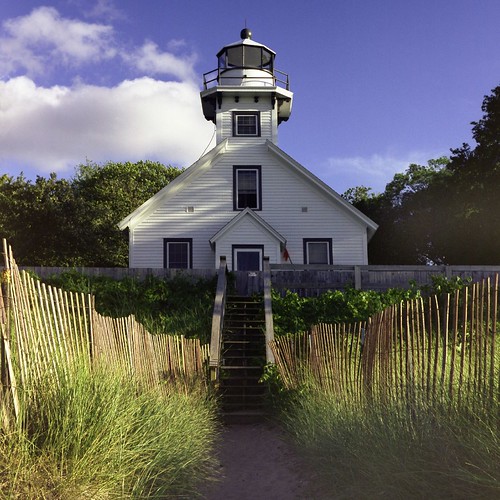
Mission Point Lighthouse, Lake Michigan, photo by JSE_Imaging.

Speaking from experience, I have to say that the Old Mission light is one of the hardest to take a picture of. Probably all that fencing.

The lighthouse was established on March 3, 1859 and sits at the tip of Old Mission peninsula (the eastern peninsula that forms Grand Traverse Bay). Lighthouse guru Terry Pepper has a page on the Mission Point Lighthouse that includes an account of the taking of lands around the light from the Ottawa.

Wikipedia’s Mission Point Lighthouse entry is pretty limited, but it does have a link to an article that says the Old Mission light was a twin to the now destroyedMama Juda Lighthouse in the Detroit River (a/k/a Mamajuda).

Fayette Historic State Park

Fayette Historic State Park photo

that cliff by whitewave

This photo of the ghost town of Fayette by Paul Rose is one of many that appears in Absolute Michigan’s profile of Fayette Historic State Park. The Fayette Townsite is located on the UP’s Lake Michigan shore and is an excellent restoration of a historic village that features 20 historic buildings against the beautiful background of Big Bay De Noc.

Sailplanes on the Frankfort Beach

Sailplanes on the Frankfort Beach
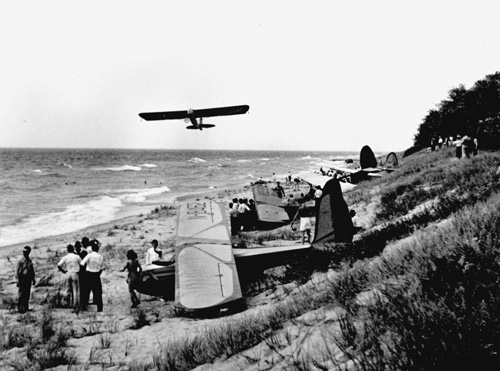
This photo shows a sailplane being winch-launched from the beach near Frankfort in the 1930s. It is one of many photos that appears in Soaring and Gliding: The Sleeping Bear Dunes National Lakeshore Area by Jeffery P. Sandman and Peter R. Sandman. The 127 page, oversized softcover uses archival photographs from the 1920s to the present day along with brief text passages to tell the story of the rise of the Sleeping Bear Dunes area in northwest Michigan as a soaring and gliding mecca.

Reprinted with permission from Soaring and Gliding: The Sleeping Bear Dunes National Lakeshore Area by Jeffery P. Sandman and Peter R. Sandman. Available from the publisher online at www.arcadiapublishing.com or by calling 888-313-2665.