The Ghost of Minnie Quay is calling

Sticks and Stones by Jeff Gaydash

Sticks and Stones by Jeff Gaydash

Back in the day, Linda Godfrey would regularly share stories with me from her classic book Weird Michigan and her other works. Linda has regrettably passed on and her Weird Michigan website is lost, but here’s a seasonally appropriate tale of shipwrecks & lost love from my archives…

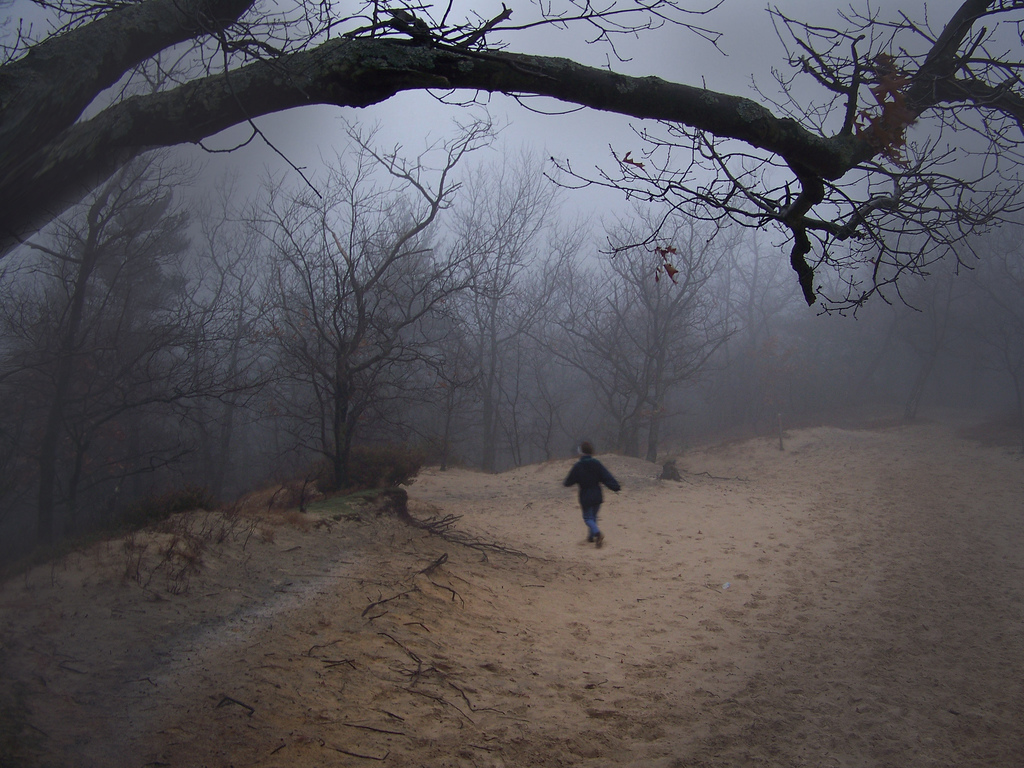
In the mid-1800s, the Lake Huron port and lumber town of Forester was a far cry from the sleepy, near ghost town it is today. The remains of huge pilings just off the scanty beach now stand as crumbling reminders of the great pier that once bustled with Great Lakes ships and sailors.

One of those sailors unwittingly started the legend that would be Forester’s main claim to fame after the lumber ran out and the ships stopped coming.On shore leave one day, the unnamed young man took up with a local girl named Minnie Quay, whose folks, James and Mary Ann Quay, owned the town tavern.

The Quays forbid Minnie to see her beloved, but the order proved tragically unnecessary after his ship became one of many that succumbed to Great Lakes gales. Minnie made one more visit to the forbidden pier after learning that news, and on April 26, 1876, at the age of 16, she threw herself into the water in hope of joining him in the afterlife. She lies in a waterfront cemetery now, next to the bodies of her father, mother and brother.

Legend says that she still wanders the beaches, moaning for her lost sailor, and that some have seen her standing waist deep in the water, beckoning others to join her. The former Quay home and bar still stands, giving Minnie’s ghost even more reason to linger.

Jeff is a fine art photographer & printmaker. Explore his work in the Great Lakes gallery on his website.

Support Michigan in Pictures with Patreon

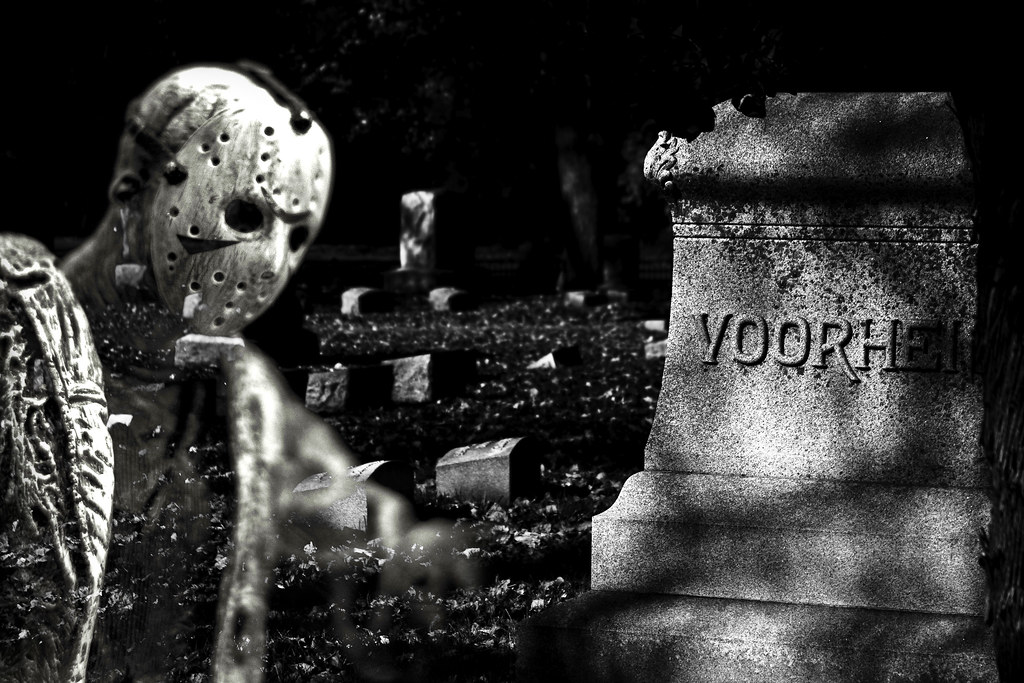
Happy Halloween all you Michighosts & Michigoblins!

Jason Voorhees by Chris

Jason Voorhees by Chris

Here’s hoping that everyone has a wonderful & safe Halloween … maybe not Jason tho ;)

Chris is a very creative photographer who took this at the the Voorhees grave marker in Belleville Cemetery way back in 2009. See more of his excellently spooky work in his Halloween Horror gallery on Flickr.

Support Michigan in Pictures with Patreon

The Devil’s Grist

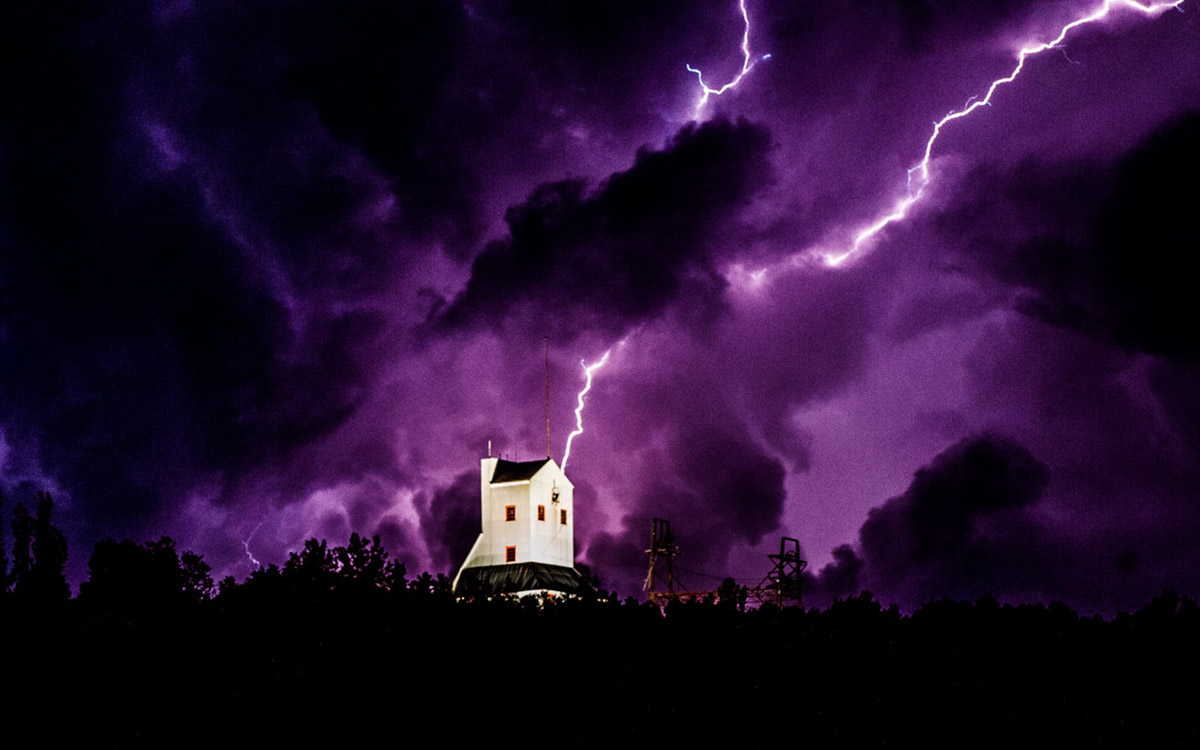
Houghton Blitz by Christopher Schmidt

Houghton Blitz by Christopher Schmidt

10 years ago today, I shared this story from Legends of Le Détroit by Marie Caroline Watson Hamlin with illustrations by Miss Isabella Stewart. If I were you, I would click over to the book right now on the Internet Archive and read it there!

In the spring of 1712, the English sent a war party of Fox & Macoutin to try and take Fort Pontchartrain in Detroit from the French. Over 1000 were massacred by tribes loyal to the French near Windmill Point at the mouth of the Detroit River on Lake St. Clair, effectively destroying the Fox nation. We join the story…

Years after the dreadful massacre which converted the beautiful spot called Presque Isle into the grave of the Fox nation, a stone mill was built there by a French settler, who came to reside with his sister Josette, undaunted by the ourrent traditions which peopled it with the spirits of the departed warriors. Jean was a quiet, morose man, different from the laughing, careless, pleasure-loving Canadian, — for rare were his visits, to the fort, and it was noticed that he never lingered over his cidre, nor spoke to the smiling, piquante daughters of the habitants.

…Josette was much older than her brother, and by dint of thrift and economy had saved enough to become a half owner in the mill. … Naught disturbed the monotony of their lives ; each day was but a repetition. The river flowed calmly on, the birds sang their songs – for nature has no moods, they belong to man alone.

At last Josette fell sick. Jean attended her as carefully as he could, and like a prudent man, would frequently ask her to whom she would leave her interest in the mill. Irritable from suffering, she became annoyed at his importunities, accused him of taking care of her for the sake of obtaining her money, and told him ‘she would leave it to the devil.” Jean tried in his clumsy fashion, to soothe her. He sent for some of his kindred to reason with her, but they only infuriated her the more, and she solemnly declared that not one of them should have her share in the mill, but “she would sooner leave it to the devil.”

Josette recovered, however, and with that perversity born of stubbornness, would not relent. A few months afterwards she was found dead in her bed, having died suddenly. That same night, whilst the candles threw their dim shadowy light in the room of the dead, a furious storm arose, lashing the waves against the shore, the winds howling fiercely around the point, the black clouds chasing each other across the lowering skies, as lurid gleams of lightning and deafening reverberations of thunder, made all the habitants shudder while they crossed themselves and told their beads. All at once there came so tremendous a shock that it seemed to swallow the island. The old stone mill was rent in twain. A pungent smell of sulphur filled the air, and a fiendish, laugh was heard loud above the raging storm from the shattered ruins. The arch fiend had come to claim his share.

For years afterwards when a northeast storm blew from the lake, making night hideous by its echoing peals of thunder, it was said that a hairy figure, with a horned head and forked tail tipped with fire, his mouth and eyes darting forth ruddy flame, could be seen in the mill, trying to put together the ruined machinery to grind the devil’s grist. And the lonely wayfarer to Grosse Pointe would see the marshes around Presque Isle all illuminated by flames, called by the hab- itants feu-follet (Will-o’-the-Wisp), which would try to inveigle the unhappy traveler and bring him to help grind the devil’s grist.

Christopher took this photo of the Quincy Mine way up in Houghton being struck by lightning way back in 2014. Felt perfect to me! See more in his awesome Keweenaw Lightning gallery on Flickr.

If you are interested in learning more about Quincy Mine, Michigan in Pictures has you covered!

More ghost stories & haunted tales on Michigan in Pictures!

Support Michigan in Pictures with Patreon

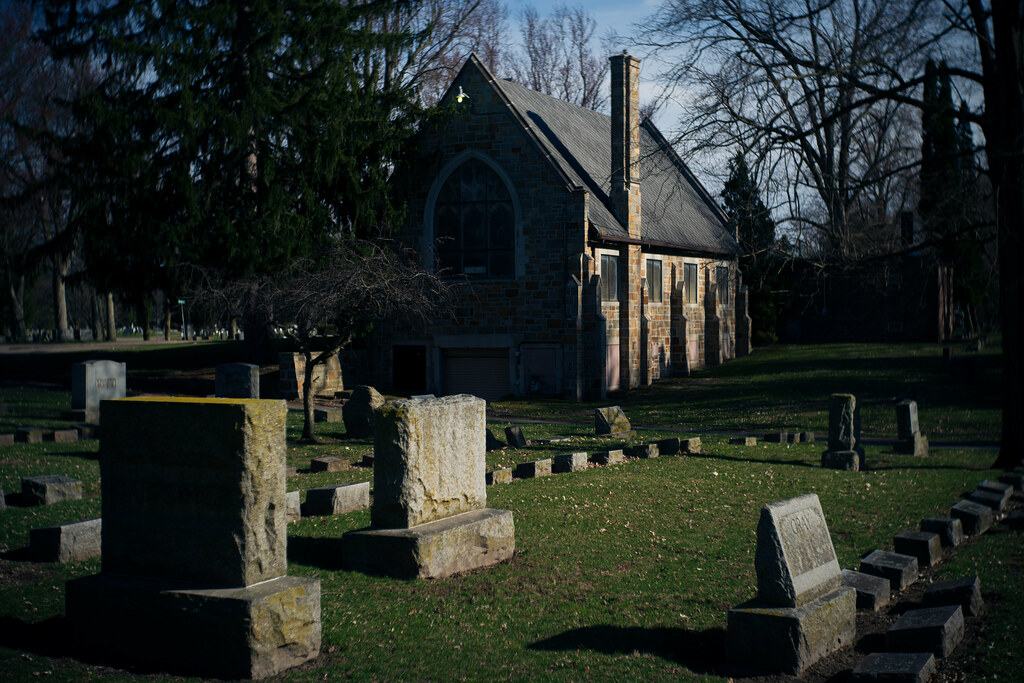
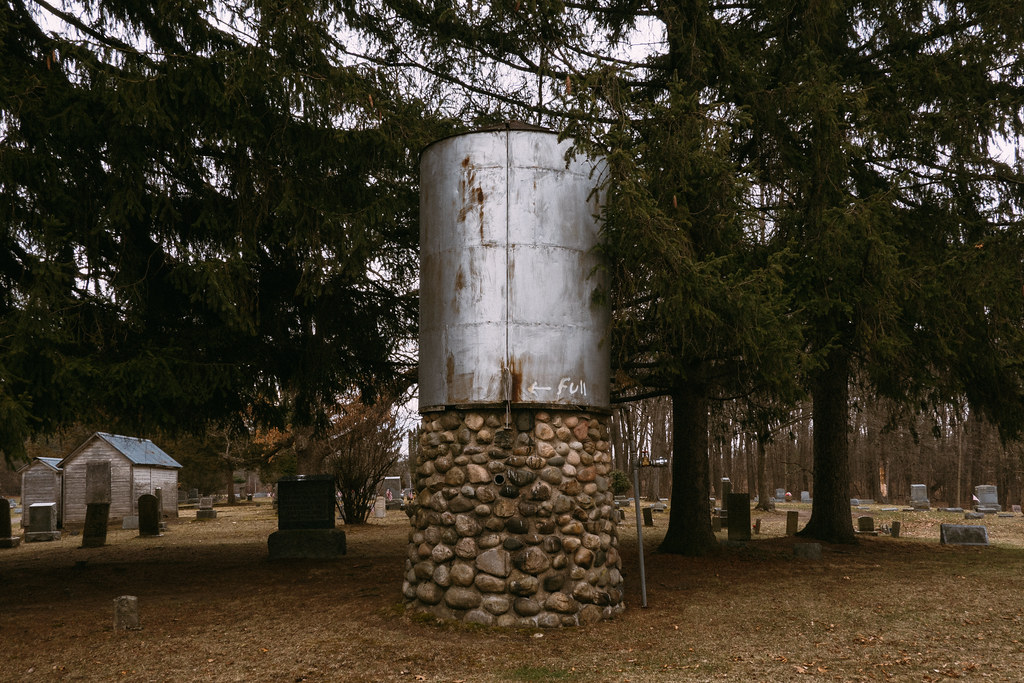
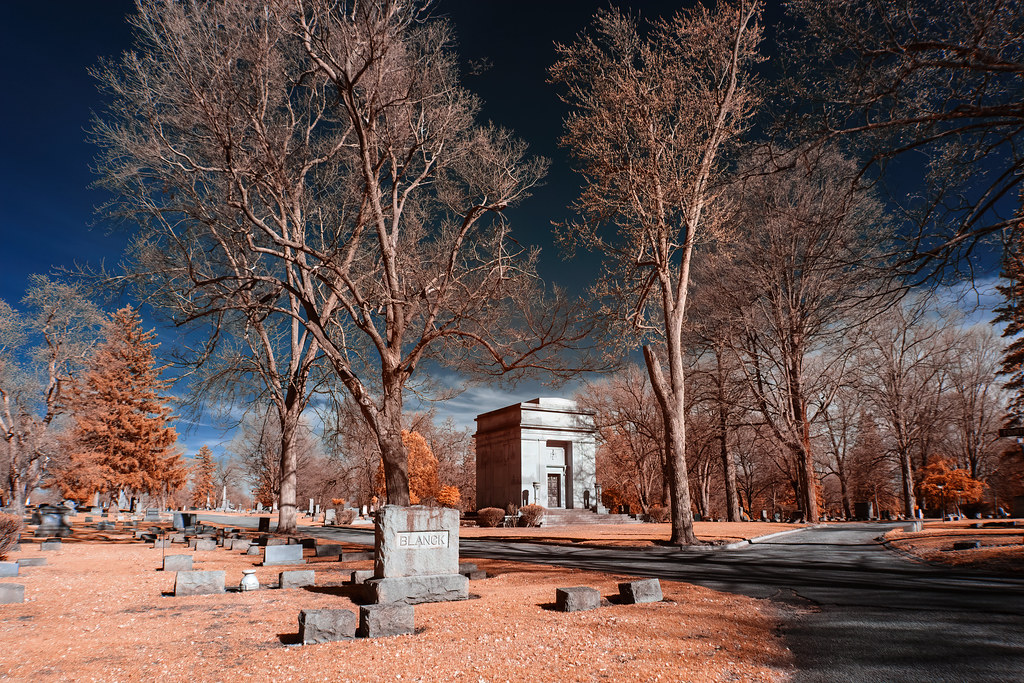
Crying Mary of Oak Hill Cemetery is not really a ghost story but Oak Hill is a really nice cemetery

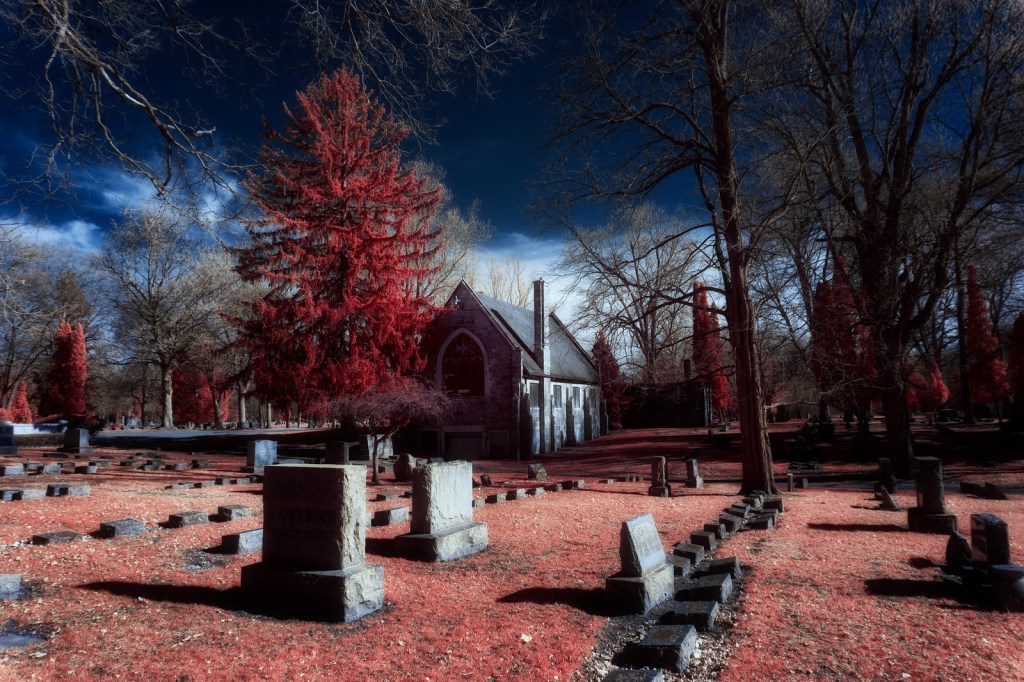
Oak Hill by Bill Dolak

Oak Hill by Bill Dolak

When I was looking through the many haunted tales on Michigan in Pictures the other day, I realized that one of the many things I enjoy about Halloween is how it draws you into history since so many of our spooky tales are rooted in the long ago. A number that I’ve shared are from our friends at Mysterious Michigan including the brief tale of Crying Mary of Oak Hill Cemetery:

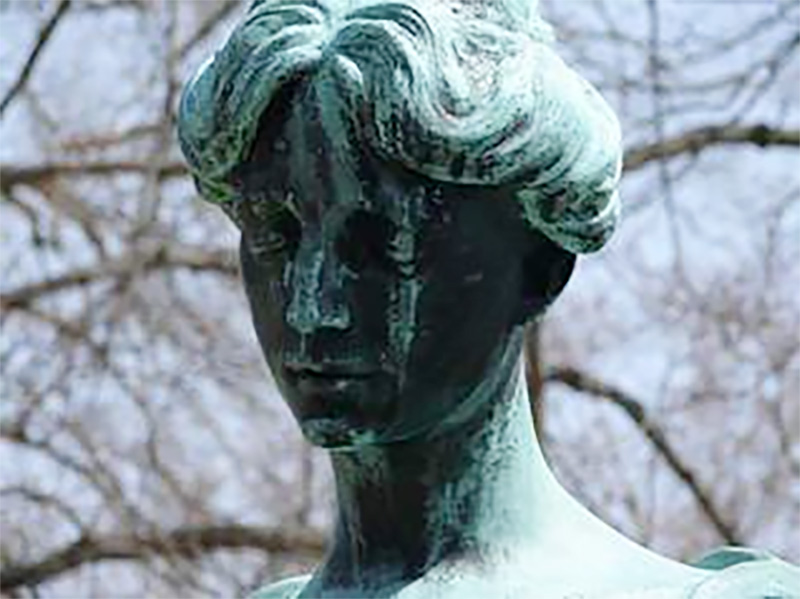
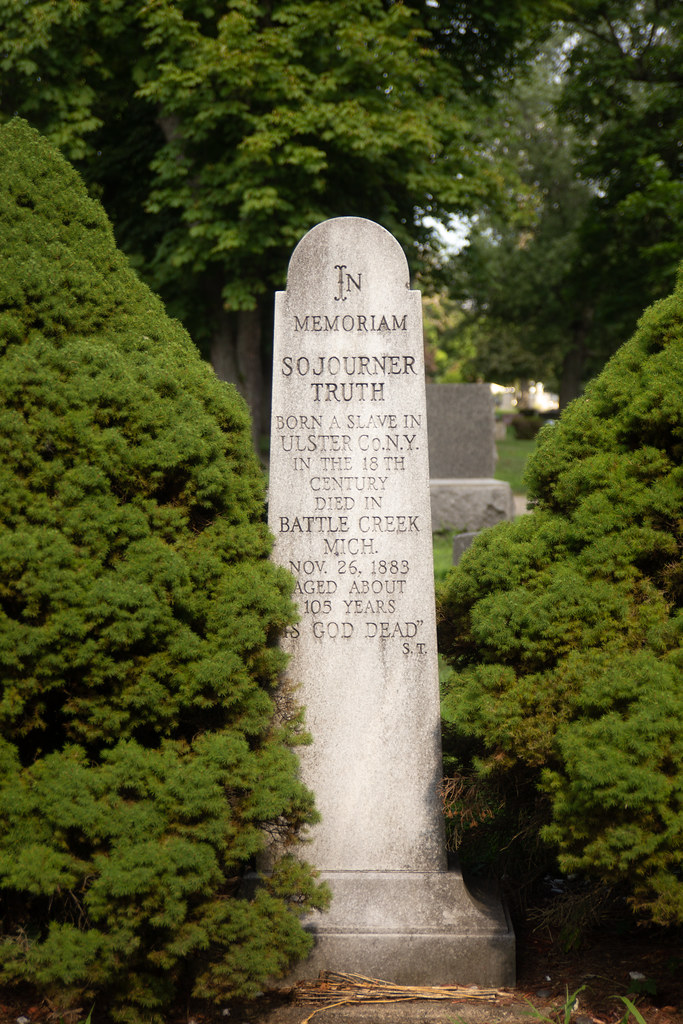
Established in 1844 and over 160 years old, Oak Hill Cemetery in Battle Creek, Michigan has a lot of history. It’s the final resting place of famous people such as Sojourner Truth, C.W. Post, W.K. Kellogg, his brother John Harvey Kellogg, Bill Knapp, Ellen & James White, founders of the Seventh Day Adventist Church and others. Among the many famous people slumbering within the grounds of Oak Hill, another famous person exists above ground. While Crying Mary may not be a living, breathing person, she does happen to be a beautiful statue of a Greek goddess at the grave site of Johannes Decker and is well known by the residents of Battle Creek.

The legend of Crying Mary says that at the stroke of midnight every Sunday, the statue cries. People have claimed to have seen and felt her tears. Some say she only cries at night and never during the day.

Crying Mary of Oak Hill Cemetery

The photo makes it appear to be a natural effect of water on the greening bronze, but whatever the cause, I doubt she’s crying about the view – what a gorgeous little cemetery.

Bill took these at Oak Hill Cemetery in Battle Creek. The top one is an infrared photo & you can see more in his Battle Creek Michigan gallery and for sure follow him on Facebook for his latest!

PS: If you need a spooky Michigan cemetery story, allow me to recommend the haunting tale of The Ada Witch!

Support Michigan in Pictures with Patreon

The Dogman is Michigan’s Werewolf

Nightmare at Muskegon State Park II by otisourcat

Nightmare at Muskegon State Park II by otisourcat

“Somewhere in the north woods darkness a creature walks upright, and the best advice you may ever get is don’t go out at night.”
-Steve Cook in The Legend of the Michigan Dogman

The Pacific Northwest has its Sasquatch, West Virginia has their Mothman, Jersey has their Devil, and we in the Great Lakes State have our Dogman, a fearsome werewolf-like beastie that purportedly roams the wilds of Northern Michigan. Discovery UK shares some of the Legend of the Michigan Dogman:

The first of the alleged Dog Man sightings in Michigan was in 1887, during a boom in US lumber production known as the great logging era, which roughly ran from 1870 to 1890. During this time, Michigan was its biggest producer of white pine lumber. Perhaps it’s therefore of little surprise that the initial influx of stories emerged then, with so many workers living and working in the woodlands in the area. The first of these is said to have taken place in 1887 in Wexford County, when a group of lumberjacks stumbled upon a creature they described as having the body of a man and the head of a dog. Its piercing eyes were either blue or yellow and its howl a terrifying scream.

  • 1917: Four horses found dead, all with their eyes wide open. It’s said the examining vet believed they appeared scared to death.
  • 1937: A victim of an attack by a pack of wild dogs claimed one of them walked on two legs.
  • 1957: A newspaper report stated that claw marks found on a church door could only have been made by a creature reaching a height of 7”4.
  • 1997: A farmer was found deceased at his plough from a heart attack, surrounded by dog tracks.
  • Unknown year: An army veteran claimed he saw the Dog Man of Michigan in Manistee National Forest, describing “a wolf head the size of my window” as the animal kept up with his truck travelling at 25 miles per hour. He also recalled it having sharp white teeth, three-inch long fangs, human-like hands some 14 inches across, black pointed ears, and yellow eyes.

Overall, Michigan Dogman stories often share common themes: a sinister canine visage, towering stature, and an unnerving ability to walk upright. What’s more, they all seemingly occurred in years ending in the number seven. This latter point has become a part of the mythos, with enthusiasts suggesting a possible ten-year cycle in the creature’s appearances.

Otisourcat originally shared this photo way back in 2008. Head over to their Flickr for the latest including some awesome shots of a raccoon on a snowman.

Some other Dogman related content you might enjoy includes this post on Michigan filmmaker Rich Brauer’s latest Dogman movie (third in his trilogy), the comprehensive Michigan Dogman entry in Wikipedia that relates the dogman is said to have been stalking the area around the Manistee River since the days when the Odawa tribes lived there, and of course Steve Cook’s song that “started” (or restarted) it all. Enjoy the song, but know that although author Steve Cook loves to claim he started the legend, it has been around for generations.

More of the Michigan dogman and other haunted Halloween fun on Michigan in Pictures!

Support Michigan in Pictures with Patreon

Still on Duty at White River Light

White River Light Station by Old Pharts Photos

White River Light Station by Old Phart’s Photos

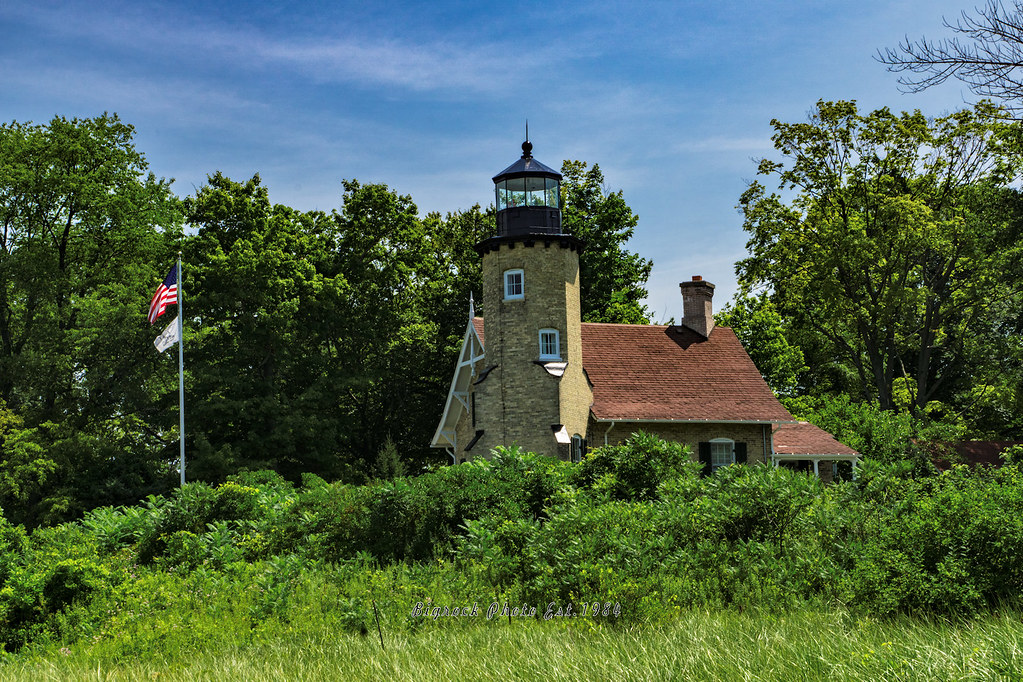
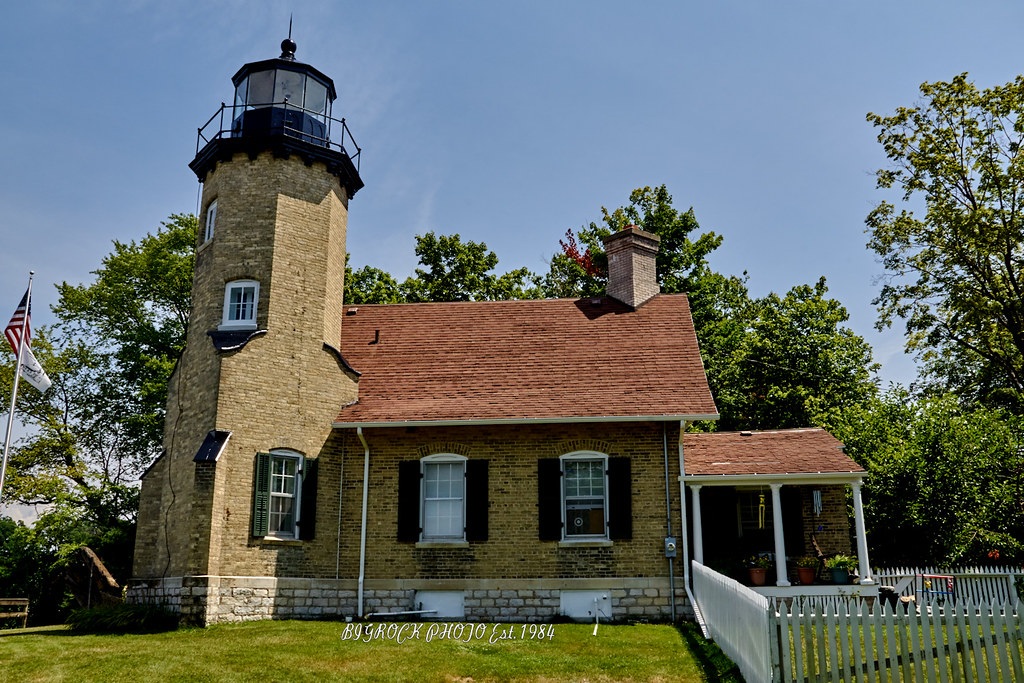
White River Light in Whitehall was built in 1875. It is now home of a maritime museum, but as this 2012 article from Michigan History Magazine that I shared years ago relates, the light station seems to have a keeper who never retired:

When Karen McDonnell is alone she sometimes hears footsteps on the stairway of the former White River Light. But she isn’t afraid. She says, “I like the comfort it gives me. It’s like a watchman, just making sure everything is okay before it’s too late at night.”

McDonnell is the curator of an old lighthouse that has been turned into a museum. She takes care of the light and gives tours to visitors. Sometimes early in the morning or late at night she hears what sounds like somebody climbing the stairs and walking around on the upper level. She wonders if it might be the spirit of the light’s first keeper.

When the White River Light opened in the mid-1870s, William Robinson and his wife Sarah moved in. Over the years, the English couple raised their family at Whitehall. Sarah died at a young age, but William remained the lightkeeper for 47 years. When the government forced the 87-year-old keeper to retire in 1915, William’s grandson became the next lightkeeper at White River. William helped his grandson run the light, but the rules said that only the lightkeeper and his “immediate” family could live at the lighthouse. William would have to leave. But he refused, telling his grandson, “I am not going to leave this building.” He was right. The day before he had to move out, he died. His grandson buried him in a small nearby cemetery.

Besides Karen, others have heard the unexplained sounds when visiting White River. Karen once asked friends to care for the light while she was gone. She did not mention the unexplained visits. When she returned, her friends asked, “Do you have some kind of ghost walking around upstairs?” They described the same sounds Karen often heard. Although Karen has “never felt fear” when she hears the footsteps, she has never gone up stairs when she hears it. As she explains, “I feel it is a ritual and that I shouldn’t disturb it.”

The structure is open to the public as the White River Light Station Museum and you can also visit Terry Pepper’s Seeing the Light to learn more about the Whitehall lighthouse’s history.

Old Phart tool these back in 2016. You can see more in his Lighthouses gallery on Flickr & follow him there for the latest!

More Haunted Michigan goodness on Michigan in Pictures!

Support Michigan in Pictures with Patreon

The Ghostly Gardener of Redford Cemetery

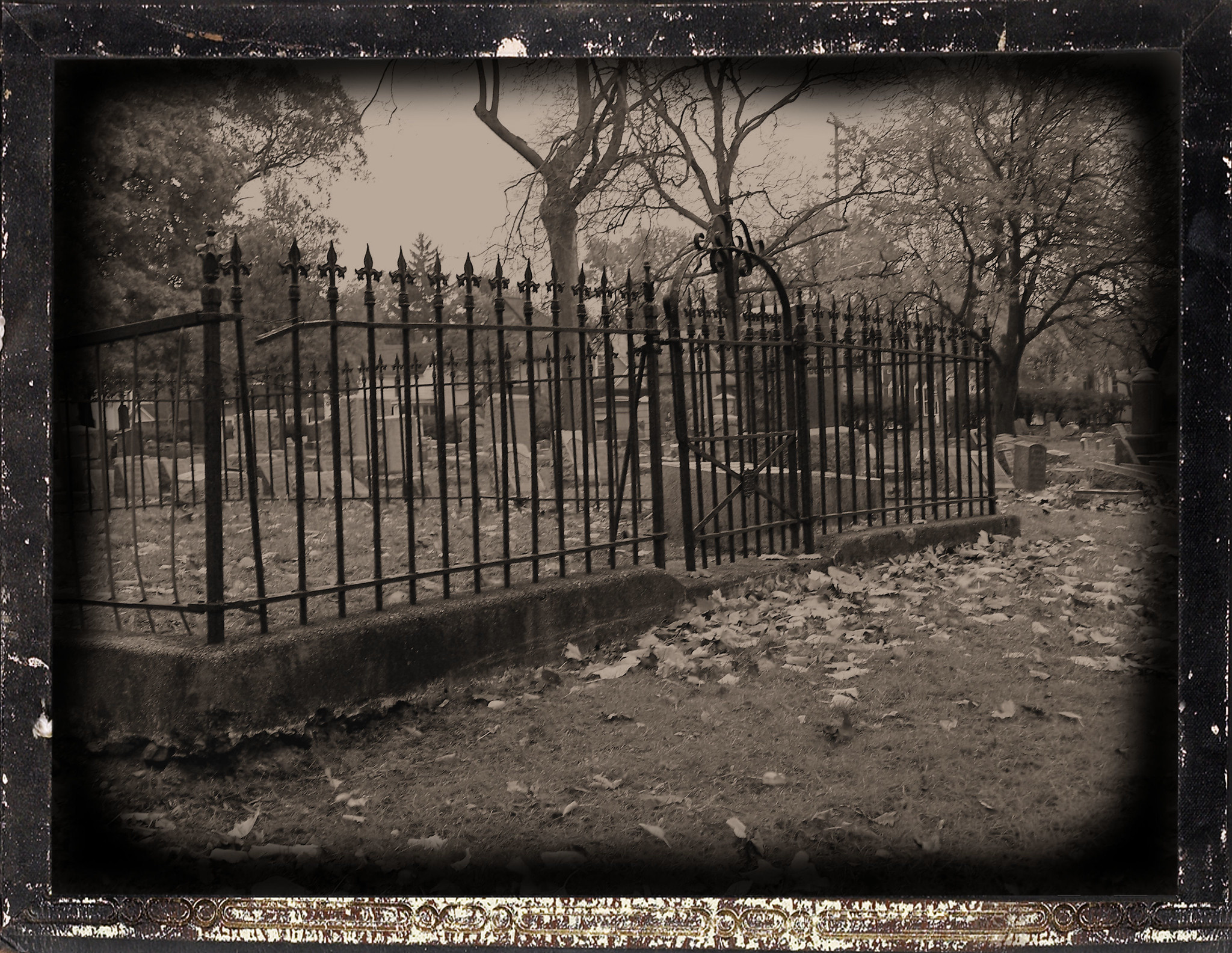
Redford Cemetery by Kim Scarborough

Redford Cemetery by Kim Scarborough

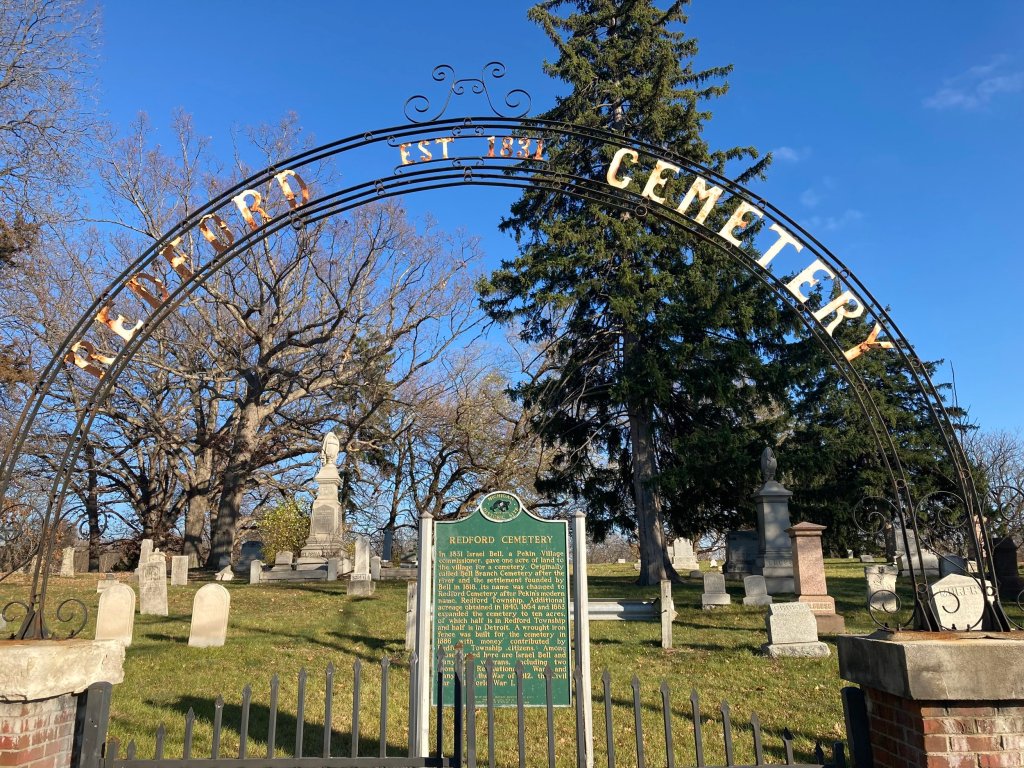
WFMK shares the spooky tale of The Gardener’s Grave at Redford Cemetery:

The grave is said to be immediately to the left of the entrance; if you stand in the vicinity long enough, the stench of death will reach you. This smell is followed by the appearance of the gardener, whose ghost will appear coming over the hill towards you. Be alert, because his apparition only lasts for a few seconds before he decides to disappear.

The Gardener is not the only ghost that makes its presence known here. The disembodied sobbing of a woman can be heard; but when trying to pinpoint the exact location, she can never be found…but the sound of the sobbing will continue. Apparitions, shadow people, and dark figures are seen in the surrounding forests, and the ground has been known to rumble and shake from time to time.

More about Redford Cemetery on their website.

Kim took this photo way back in 2005. See more in her Tombstones gallery on Flickr!

Support Michigan in Pictures with Patreon

Weird Wednesday: The Lake Leelanau Monster

Boathouse on Leelanau by Francois

Boathouse on Leelanau by Francois

Back in the day, I used to feature excerpts by Linda S. Godfrey from the definitive book of Michigan mysteries: Weird Michigan.  One of my favorites (and a good story for when you’re floating around this weekend) is the tale of the Lake Leelanau Monster:

The story of an early 20th Century sea monster sighting was sent to The Shadowlands Web site by a reader whose great-grandfather was the witness. The boy was fishing for perch one day in 1910 in the shallows of Lake Leelanau in Leelanau County. The lake had been dammed in the late 1800’s to provide water power for the local mill and to enable logging. The dam also flooded much surrounding area, turning it into swamps and bogs punctuated by dead, standing trees.

On that particular day, the young great-grandfather, William Gauthier, rowed out to a new fishing spot near the town of Lake Leelanau. Looking for good perch habitat, he paddled up close to a tree that he estimated to stand about five feet tall above the water, with a six-inch trunk. He was in about seven feet of water, and after deciding this would be a good place to stop and cast a line, began tying the boat to the tree.

That’s when young William discovered the tree had eyes. They were staring him dead in the face at about four feet above water level. The boy and serpent exchanged a long gaze, then the creature went, “Bloop” into the water. Gauthier said later that the creature’s head passed one end of the boat while the tail was still at the other end, though it was undulating very quickly through the water. The writer noted that Gauthier always admitted to having been thoroughly frightened by his encounter, and that the event caused him to stay off that lake for many years.

The writer added that his great-grandfather came from a prominent area family and was very well-educated, and that he knew others who would admit privately but not publicly that they, too, had seen the creature. No sightings have been reported in recent times, but who knows how many people have believed they were passing by a rotting old cedar when in fact they had just grazed the Leelanau lake monster?

While Linda’s website seems to have disappeared, you can buy the awesome Weird Michigan right here & get more Michigan weirdness on Michigan in Pictures!

Francois took this photo on North Lake Leelanau back in 2017. See more in his Michigan Journeys gallery on Flickr!

Support Michigan in Pictures with Patreon

Halloween Rewind: The Ada Witch

Fulton Cemetery by Tom Syrba

Fulton Cemetery by Tom Syrba

Today’s tale comes from Michigan’s Otherside, The Ada Witch of Findley Cemetery:

The Ada Witch has been a popular legend in West Michigan for decades. For years, people have claimed to have witnessed a paranormal classic: “the lady in white.” She’s been seen wandering around the area of Findley Cemetery and surrounding roads. But who is this mysterious “lady in white”? Over the years, this entity was given the title of the “Ada Witch,” but it’s nothing more than a nickname. Within the legend, there is nothing to support that she was a practicing witch or anything of that nature. It’s just a dramatic name that makes a good tale….

The legend says a woman during the 1800’s had been cheating on her husband. She would sneak off into the night to meet her lover. Her husband began to suspect she was up to something and pretended to fall asleep one night. After his wife got up and snuck away, he followed her and found her in the arms of another man. Rage welled up inside him and in an instant, the husband attacked the adulterous couple, killing his wife first. The two men fought until they both died from the wounds they inflicted upon each other.

For many years now, people say they have heard the sounds of a fight taking place around the Findley area, only to find no one around. The area at one point must have been open for hunting before it was developed into a residential area. There have been reports from hunters feeling a presence in the area, hearing the ghostly fight, getting tapped on the shoulder only to find no one there and even seeing a ghostly woman in white.

Read on for Michigan Otherside’s account of their visit to the Findley Cemetery and her research into the story.

Tom captured this photo of the not-too-far-from-Ada Fulton Cemetery in Grand Rapids way back in 2007. See more in his Grand Rapids gallery on Flickr.

More ghost & spooky stories on Michigan in Pictures!

Support Michigan in Pictures with Patreon

Halloween Rewind: Le Loup Garou

Where Wolves Play by Michael Seabrook

Where Wolves Play by Michael Seabrook

He was beloved by all, and most of all by the children.
For he told them tales of the Loup Garou in the forest.
And of the goblin thai came in the night to water the horses.
And of the White Letiche, the ghost of a child who unchristened
died, and was doomed to haunt unseen the chambers of children.
 ~Henry Wadsworth Longfellow, Evangeline

My favorite Halloween book on archive.org’s Internet Book Reader is Legends of Le Détroit by Mary Carolyn Watson Hamlin, illustrated by Miss Isabella Stewart, and published in 1894 in Detroit by Thorndike Nourse. In addition to Ms. Hamlin’s descriptive prose that really sheds light on what life was like for early settlers in the Detroit area through stories that raise your hackles spark a feeling that Michigan is wilder and more wonderful than you may have known.

I featured this story back in 2015, but thought you all would enjoy Le Loup Garou which is a lot longer than usual. I’ve tried to share the highlights of the story, but you really should click that link to read it all! We begin at Grosse Pointe where:

…a trapper named Simonet had settled near there on the margin of the lake.

His young wife had faded away in the early years of their married life, but as if in compensation, had left the little prattler Archange to wean him from his grief and to cheer his loneliness. And the strong, hardy man, with his sunburnt face and brawny arms hardened by toil and exposure, in his yearning love for his child, learned to soften his rough manners and soothe her with the gentle ways of a woman. Anxiously he watched the unfolding of his “pretty flower,” as he called her, and with a solicitude touching in its simple pathos, he would select the softest skin of the bear to keep her feet warm, search for the brightest wings of the bird to adorn her hat. When she grew up he taught her to skin the beaver, muskrat and deer which he brought home, and to stretch them out on the drying frame near the house. He was wont to boast that no one could excel Archange preparing the poisson blanc (whitefish), poisson dore (pickerel), or give that peculiar shade of brown which is in itself an art, to the savory cochon au lait (sucking pig).

She was as light-hearted as the cricket that chirped on the hearth, and her cheery voice could be heard caroling away to the music of her spinning wheel. In the long winter evenings her deft fingers would plait the straw into hats which found a ready sale, and which, added to the sum she gained by her knitted socks and dried corn, enabled her to secure many little articles that her vanity suggested to enhance her charms. For the Canadian girl, in the rude surroundings of her forest home, was as anxious to please and be witch by her toilet as her more favored Parisian sister ; the instincts of the sex still lived in the wilderness. At the corn-huskings and dances on the greensward Archange was the reigning belle, and held her little court of homespun dressed youths fascinated by the magic of her dark eyes, her brunette complexion with its warm glow, her raven tresses and piquante tongue. Many admiring eyes followed her lithe form as she tripped in marvelous rapidity la jig a deux or as she changed into the more graceful, swaying motion of la dance ronde.

Enter the capable young farmer Pierre La Fontaine, whose marriage proposal was happily accepted by Simonet, was building a cabin for his bonnie bride, and apparently driving his fragile canoe along the rippling waters lit up by elfish moonbeams (Ms. Hamlin’s words) as they made wedding plans that included the gift of a red cow from Archange’s god-father. Well…

One evening as Pierre placed Archange on the beach near her home and she lingered, following him with her loving eyes as he swiftly rowed away until he had disappeared and only the faint echo of his Canadian boat song floated towards her, she was startled by a rustling sound near by. Looking up a wild shriek escaped her, for a monster with a wolf’s head and an enormous tail, walking erect as a human being, crossed her path. Quickly the cabin door was thrown open by Simonet, who had been roused by his daughter’s scream. Archange flew into her father’s arms and pointed to the spot where she had seen the monster, but the animal surprised by the light, had fled into the woods. Simonet’s face grew pale as Archange described, as accurately as her fears had allowed her to see, the apparition, and he recognized the dreaded Loup Garou.

Did I mention long?

Simonet worried about the Loup Garou (werewolf), but soon the wedding day arrived:

…Soon after she (Archange) joined Pierre and hand in hand, followed by all the habitants in their holiday attire, they entered the little church of logs hewn square, the interstices chinked in with clay, the roof of overlapping strips of bark. In front of the altar, decorated with flowers arranged by loving hands, they knelt. Father Freshet, who had baptized Pierre and Archange and prepared them for their first communion, now came to unite them in the holy bonds of matrimony. After the ceremony they went to the sacristy and inscribed their names in the registry, then hurried off to Pierre’ s new house, where the festivities were to take place. On the green lawn in front of her new cabin the blushing Archange greeted all her friends. The Seigneur of the neighborhood came to claim the right of premier baiser (first kiss). The refreshments were in abundance and all gave themselves up to the enjoyment of the moment, for the Canadians dearly loved a wedding and kept up its festivities for days.

Whilst the merry making was at its height the dreaded Garou with a rush like the wind sprang into their midst, seized Archange and escaped with her into the forest. All were paralyzed by the sudden, daring deed. But Pierre recovering, started in quick pursuit guided by the despairing cry of Archange, followed by all the men, whilst the women and children said their prayers and gave vent to loud lamentations. Long after the shadows had fallen they returned to report to the anxious, trembling crowd, and their sad, dejected faces spoke of the fruitlessness of their search. The monster had baffled them. But Pierre returned not. He was shortly after found by his friends wandering around and around a swamp, and clutching a piece of white batiste. When questioned as to how he had obtained this clue to Archange, he returned a maniacal stare and with a blood-curdling shriek, would have juimped into the swamp if he had not been held back by his companions, who with sorrowful accents said “La folie du bois.”* He would always return to the same swamp, remaining there for hours gazing vacantly in the weird reflections of its slimy, stagnant waters, until some friend led him home.

At the marriage of his sister, which occurred about a year afterwards, Pierre, always dead to the outside world, seemed to be roused by the preparations. After the ceremony he rushed into the woods as if in pursuit of something. He did not return until nearly sunset when he was seen, with wild eyes, flying hair, his clothes torn as if lay briers, chasing a Loup Garou to the very edge of the lake. All stood petrified by the strange apparition and feared a repetition of Archange’s fate. But the animal, seeing no escape, stood on one of the boulders strewn along the shore and stretched out his arms as if beckoning to some mysterious one. A large catfish was seen to rise on the surface of the water and open its mouth, into which the Loup Garou vanished. To this day no Canadian will eat catfish. The footprint of the wolf is still shown at Grosse Pointe, indelibly impressed on one of the boulders.

As I said, read the story in full and if anyone has a shot of the footprint in the boulder, please send it to me!!

Michael took this back in 2010. If you’d like to see some great shots for the Halloween season, check out his Ghosts gallery on Flickr!

More ghost & spooky stories on Michigan in Pictures!

*La folie du bois (the folly of the woods) alludes to the well- known insane tendency which prompts those lost in the woods to go round in a continuous circle, instead of following a direct path which would lead to a clearing.

Support Michigan in Pictures with Patreon