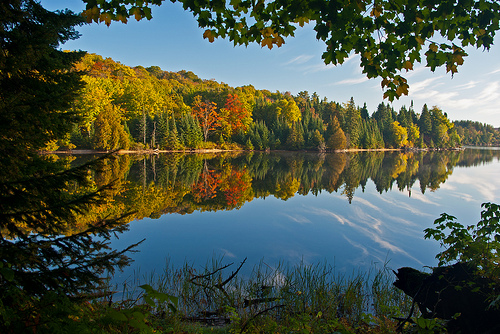
Grand Sable Lake in the Pictured Rocks National Lakeshore

Grand Sable Lake

Grand Sable Lake, photo by Gary of the North

The Michigan DNR says (in part from this PDF) that Grand Sable Lake:

…is a scenic undeveloped lake located in Alger County, about 6 miles southwest of Grand Marais. The 630 acre lake lies within the boundaries of the Pictured Rocks National Lakeshore (PRNL). The shoreline is mostly wooded with mixed hardwoods, conifers, and cedar species. Most of the surrounding soils are sandy. Sand dunes 200 ft high are located on the north end. Grand Sable Lake has a maximum depth of 85 feet, but averages around 35-40 feet. The banks drop off quite rapidly. Even so, the shoreline at the public access site on the northeast shoreline remains shallow for over 200 feet, dropping quickly into deep water…

Access to the lake before the area became part of the PRNL was from the small park on the north end. At that time, the park was managed by the village of Grand Marais. A 1949 fisheries survey documented the presence of rock bass, northern pike, yellow perch, smallmouth bass, white suckers, and minnow species. Past stocking efforts included rainbow trout, splake, smelt, smallmouth, largemouth, pike, bluegills, and lake trout.

It’s apparently 50% white suckers now – click through to read more. Also see the Grand Sable Loop at DW Hikes.

Check this out background big and check out some other views here and here. More in Gary’s Pictured Rocks National Lakeshore slideshow.

Much (much) more from the awesomely amazing Pictured Rocks National Lakeshore on Michigan in Pictures!

It’s playoff time in Hockeytown

Jimmy Howard

Jimmy Howard, photo by Seth Christie

The Detroit Red Wings open the 2012 NHL playoffs at 8 PM tomorrow night in Nashville. As the game preview on the Red Wings site shows, the two teams finished with just 2 points separating them. The Predators have Pekka Rinne, the NHL’s leader in wins in the net and home ice in the series. The Wings have Jimmy Howard, Pavel Datsyuk, Nicklas LidstromHenrik Zetterberg and 2004 and 2008 playoff series victories over Nashville with 2008 resulting in a little thing called Lord Stanley’s Cup. Should be a great series – get more in Five Things you need to know about the Detroit Red Wings on Absolute Michigan.

Seth shot this great shot of Jimmy Howard from his seat in row K after being kicked out from by the glass. He has a better plan next time that involves not wearing the away teams jersey to the game. Check it out bigger and in his short but sweet Detroit slideshow.

Much more Detroit Red Wings action on Michigan in Pictures.

We’ve got you covered

DSC02766_tonemapped

DSC02766_tonemapped, photo by ansonredford.

I thought I’d feature a photo from our Michigan Cover Photos Group. You can add pics to it if you want to have them featured on our Michigan in Pictures Facebook and also the Absolute Michigan Facebook.

Recently we featured Donald’s photo of one of the sculptures on the Wayne County Courthouse. This is one of four that depict Law, Commerce, Agriculture, and Mechanics. They were executed by sculptor J. Massey Rhind.

Check it out background bigtacular and see some more including an amazing HDR of the courrthouse in Donald’s slideshow.

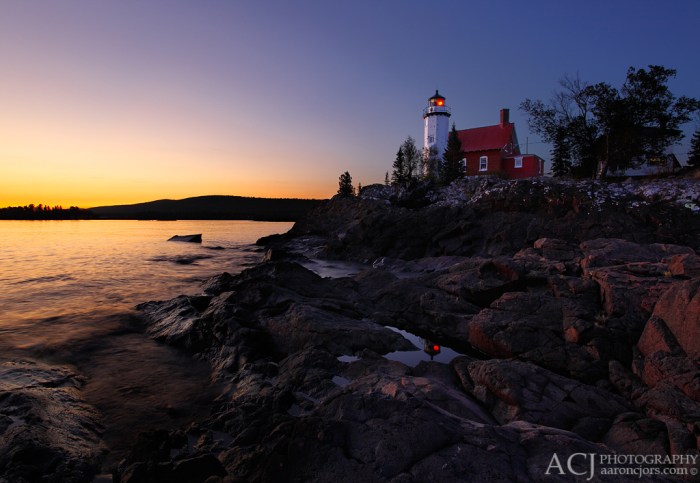
Eagle Harbor Lighthouse

Eagle Harbor Lighthouse Sunset

Reflecting Light – Eagle Harbor Lighthouse (Eagle Harbor, MI), photo by Aaron C. Jors.

Our tour of the lighthouses of the Keweenaw Peninsula with Aaron Jors continues with the light at Eagle Harbor.

The Eagle Harbor Lighthouse from Terry Pepper’s Seeing the Light tells of the first light built in 1850 at the western point of Eagle Harbor built in 1850 and the rubble stone keeper’s dwelling with a square white-painted wooden tower integrated into one end of the roof. As with many lights built during the penny-pinching Pleasonton administration, the light was judged to be “laid together in the rudest manner” and targeted for replacement.

Rather than creating a unique set of plans for the new station, Eleventh District Engineer Brevet Brigadier General Orlando M. Poe resurrected a plan which had been previously used on Chambers Island in 1867 and at Eagle Bluff in 1868. After blasting out a hole for the cellar, the masons crafted a two-story dwelling red brick dwelling, 29-foot by 25-foot in plan, with an integrated 44-foot tall tower oriented diagonally into its northeastern corner. The exterior of the first and second stories of the tower were approximately ten feet square with buttressed corners, while the tower’s upper portion consisted of a ten-foot octagon. The tower was double-walled, with a circular inner wall approximately four inches thick and eight feet in diameter. This cylindrical inner wall supported a cast iron spiral staircase which wound from the oil storage room in the cellar to a hatch in the lantern floor. Since these spiral stairs also served as the only means of moving between floors in the dwelling, steel doors provided access to landings on both the first and second floors to prevent the spread of any fire in either the dwelling or tower.

Read on for much more and get information of visiting the lighthouse from the Keweenaw Historical Society.

Check this out bigger and in Aaron’s Lighthouses slideshow.

Many (many) more Michigan Lighthouses from Michigan in Pictures.

Trouble for Tart Cherries

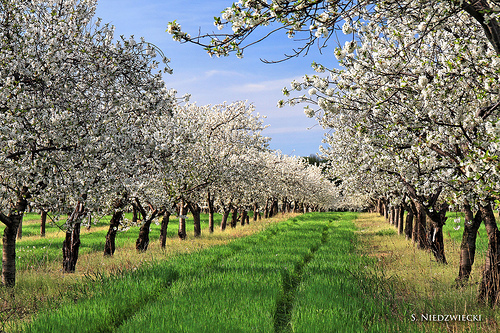
Beautiful Blossoms 5320-11
Beautiful Blossoms 5320-11, photo by StacyN – MichiganMoments

Cherry blossoms are out a full month early in Michigan, and our “Summer in March” appears to have claimed much of Northern Michigan’s 2012 tart cherry crop. Interlochen Public Radio reports:

A spring freeze last week across Northwest Michigan killed more than half of the buds on tart cherry trees. Industry officials estimate the loss for the region in the 50 to 70 percent range. Trees can produce a decent crop if a third of the buds survive. But several factors, including another freeze this spring, could still damage more of the crop before harvest.

Leelanau County saw the heaviest loss, estimated at as high as 90 percent of sour cherries killed in many orchards. But other fruit trees, like apple and sweet cherries, are in decent shape.

Antrim & Benzie county crops appear to be in better shape, but with a hard frost out there this morning, it’s probably not over yet.

Stacy took this shot last May just south of Traverse City. Check this out bigger and in her Spring slideshow.

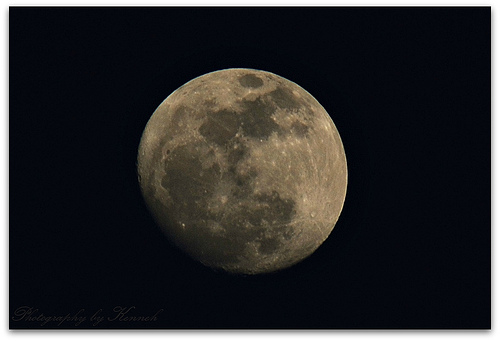
Pink Moon, Planter’s Moon, Seed Moon, April Full Moon

Almost There...

Almost There…, photo by Kenneh Raymond

The moon is officially full today at 4:19 PM. The Old Farmer’s Almanac says that April’s full moon is the:

Full Pink Moon This name came from the herb moss pink, or wild ground phlox, which is one of the earliest widespread flowers of the spring. Other names for this month’s celestial body include the Full Sprouting Grass Moon, the Egg Moon, and among coastal tribes the Full Fish Moon, because this was the time that the shad swam upstream to spawn.

Colonial Americans knew it as the Planter’s Moon, while the Celts called it the Growing Moon. Some other names: Seed Moon (Medieval England) and the Peony Moon (Chinese). Thanks to Keith’s Moon Page for the names!

Check this photo out on black in in Kenneth’s The Night Sky slideshow.

If baseball is the national pastime, why isn’t Opening Day a national holiday?

deleted photo by some asshole

The Detroit Tigers open the 2012 season today at 1:05 PM at home at Comerica Park vs. the Boston Red Sox. The game preview begins:

Opening Day will dawn Thursday afternoon. And in Detroit, it dawns in a big way.

You’ve got reigning AL Most Valuable Player and Cy Young Award winner Justin Verlander facing MVP runner-up Jacoby Ellsbury in the first inning. You’ve got Prince Fielder’s Detroit debut and Bobby Valentine’s first game at the steering wheel for Boston. You’ve got Miguel Cabrera manning the hot corner for the first time in four years.

…Regarding that aforementioned Verlander-Ellsbury matchup, it’s pretty rare stuff. The last time a reigning MVP pitcher faced the man who finished second to him in the balloting in his first start of the season? You have to go all the way back to 1932, when Lefty Grove faced Lou Gehrig.

Head over to Absolute Michigan for our Detroit Tigers 2012 season preview that includes all kinds of links and a look back at the very first Detroit Tigers Opening Day!

Much more about the Detroit Tigers on Michigan in Pictures!

Signs of Spring in Michigan: Spring Peepers (Pseudacris crucifer)

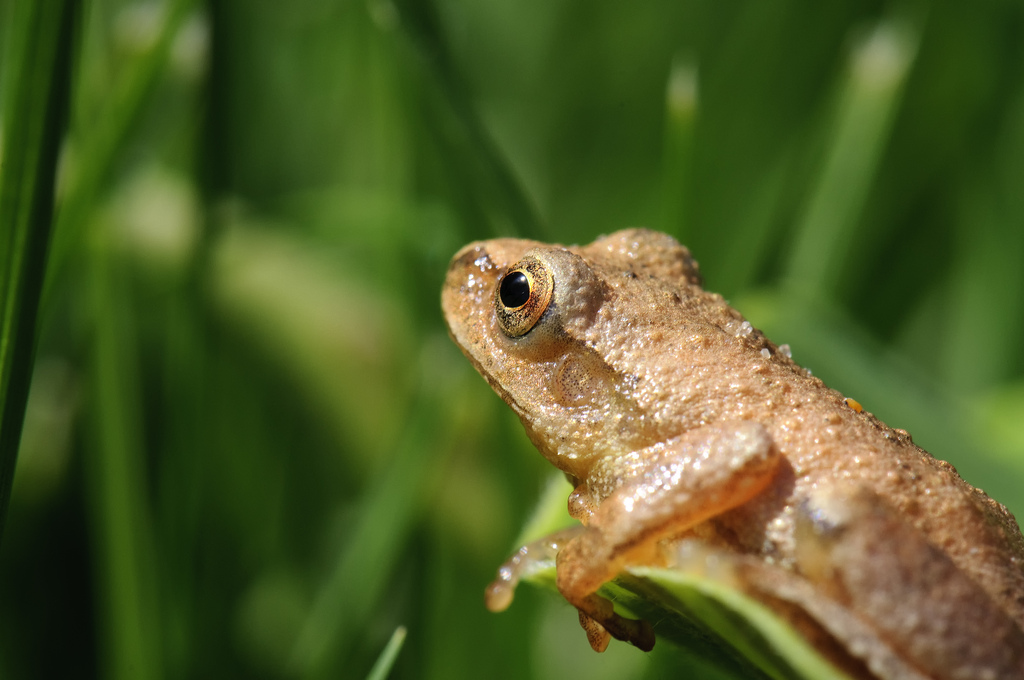
Spring Peeper Pseudacris crucifer

Untitled, photo by Tim Mayo.

The Michigan DNR’s page on Northern Spring Peeper (Pseudacris crucifer) says:

The tinkling of bells is a popular description of the spring peeper’s spring mating call. Spring peepers are one of the earliest callers among the dozen frog species found in Michigan. During the first warm evenings of spring in late March or early April through May, their distinctive single note, high pitched “peep” is considered a harbinger of spring. The intensity of calling increases and can become a deafening chorus during humid evenings or just after a warm spring rain when many males congregate.

Only the male frogs call. They establish territories near the edge of permanent or ephemeral wetlands. They may call from elevated perches of submerged grass or shrubs near the water. The faster and louder a male sings, the more likely he is to attract a mate.

The female will lay between 750-1,200 eggs. The strings or clumps are attached to twigs and aquatic vegetation. Depending on the temperatures, eggs may hatch within four days or may take up to two weeks during cooler periods. After another two to three months, young tadpoles are fully transformed into young frogs and leave the pond.
They resemble their parents with the most distinctive mark being a dark brown “X” (may be irregular or incomplete on some) on their lighter brown or tan back. They begin feeding on small food items like spiders, mites, ticks, pill bugs, ants, and caterpillars. By the end of the summer, they have reached the adult size of about 1 – 1 1/2 inches. As the days cool, the peepers dig into the soft mud near ponds for the winter. Still, during warm spells into the fall they can be confused and emerge to give their spring mating call.

The spring peeper is the most abundant of Michigan’s singing frogs and is common statewide. They prefer damp woodlands, swamps, and marshes. However, they still need protection – local populations around small ponds and wetlands can be highly susceptible to surface water runoff. These waters can carry chemicals, pesticides, or silt that can kill adults, eggs, or tadpoles. Good soil erosion practices and the careful application of pesticides and fertilizers are good for spring peepers.

The most distinctive thing about peepers is their call, which can become deafening in springtime. The Pseudacris crucifer (Spring Peeper) section from UM Animal Diversity Web has a short peeper call from Livingston County, and you can see a peeper peeping in this video.

Some more peeper particulars: Wikipedia’s Spring Peeper entry notes that their calls can be heard from as far as 1 – 2.5 miles depending on the number of peepers in a pond, that peepers generally like to breed when it is closer to dusk and throughout the evening and early morning hours, and that peepers can live up to 3 years in the wild. At Portage Lake in Washtenaw County, Michigan in the 1950s, surveys in March, April, and May found that spring peepers were the most abundant animals. The page on peepers from watersheds.org notes that spring peepers produce glucose (sugar) in their livers that acts as an anti-freeze and is pumped to vital organs including the heart and lungs to allow them to freeze and thaw without developing ice crystals. Our Peeper-pedia on Absolute Michigan has a few more links and a cool video of a Michigan peeper in action.

Check Tim’s photo out bigger and in his PJ Hoffmaster State Park slideshow.

More frogs on Michigan in Pictures.

(not) Tulip Time

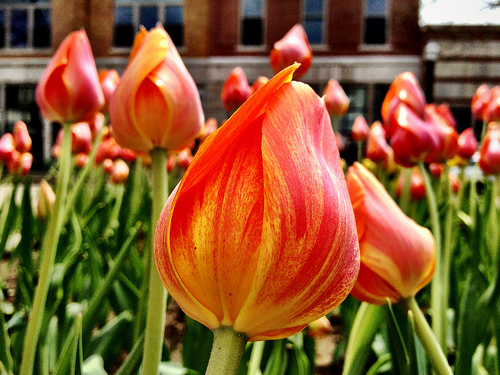
early tulips in downtown Holland

early tulips in downtown Holland, photo by Alissa Holland

The Tulip Time website says that there are 31 days until the annual festival celebrating the city of Holland’s Dutch heritage and the beautiful tulip. The festival runs May 5-12, 2012, but nobody told the tulips. As the photo shows, some of Holland’s 100,000+ tulips are beginning to bloom. They are expected to peak by mid-April, and the city is encouraging tulip lovers to visit now and then come back for the festival. They add that the festival will proceed as planned and even hold out a little hope:

“The city plants mostly late blooming varieties of tulips,” explains Gwen Auwerda, Tulip Time Festival Executive Director. “We’re hoping these late bloomers live up to their name and last into the festival. But, either way, if those arriving in Holland for the Tulip Time Festival take advantage of all the great events, they will not be disappointed.”

Check this photo out bigger and see more in Alissa’s Spring slideshow.

There’s a garden-full of Tulip Time pics on Michigan in Pictures.

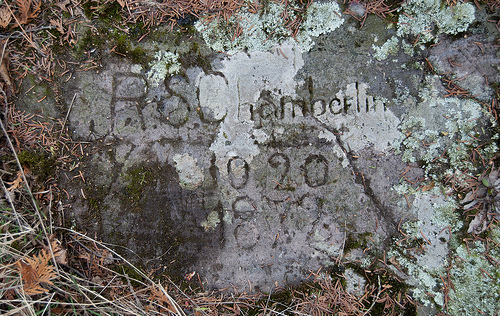
Mystery Monday: Who Was R.S. Chamberlin?

Mystery!

Mystery!, photo by I am Jacques Strappe.

Yesterday Marjorie went hiking on a mountain near Marquette where she came across this carving that reads R.S. Chamberlin 10 20 1872. She writes:

Near the highest point of the mountain was a small outcrop of rock. This was carved into it — though it had been hidden by grass and pine needles until one in our party found it by chance and cleared it all away.

Check it out bigger, see more photos from the day in her slideshow and if you have ideas as to the identity of R.S. Chamberlin, post them here!

PS: Lots more (including a great profile) from Marjorie on Michigan in Pictures!