Middle Island Lighthouse in Lake Huron

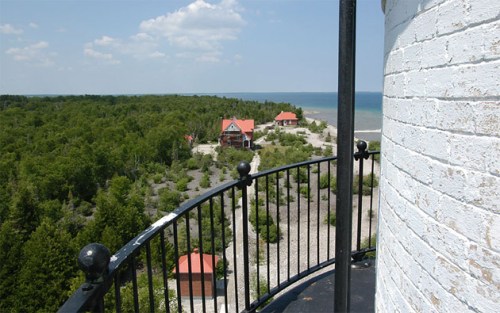
Middle Island Light Station as viewed from the watch room gallery, photo by Terry Pepper

The Middle Island Light Keepers Association (MILKA) and the Great Lakes Lighthouse Festival “Museum” invite you to be a part of history on Monday, May 28, 2012. On that day, the General Service Administration will deliver a quitclaim deed and the U.S. Coast Guard will deliver the key and ownership and responsibility for upkeep, maintenance and preservation to MILKA. To commemorate this historic event, ferry service will be available to Middle Island (weather permitting), where the tower will have its first official opening to the general public. There will be hot dogs, refreshments, a “Joy Ride” Island Tour, tours of Middle Island Light Station and much more!

The Middle Island Lighthouse page at Terry Pepper’s Seeing the Light begins:

Situated approximately 6.5 miles north of Potter Point, Middle Island received its name as a result of its location midway between the North Point of Thunder Bay and Presque Isle. The island had long represented a “triple-edged sword” to mariners. Marking a turning point in the course for vessels making up and down the coast, the island’s lee side also represented an excellent harbor of refuge in which to escape Huron’s fury. However surrounded with shoals with depths of less than six feet on all but its northeast side, the refuge could be hard to find in dark of night or in the thickest weather. In fact, the area was considered dangerous enough that the Life Saving Service built a station on the island in 1881 to help service ships in distress in the area.

As one of the final links in a growing chain of coast lights being constructed along Huron’s western shore, the Lighthouse Board finally recommended that an appropriation of $25,000 be made for a light and fog signal on the Middle Island’s eastern shore in its annual report of 1896. With no appropriation forthcoming, the Board reiterated its request in each of its annual reports for the following six years, until Congress finally responded favorably with the requested appropriation on March 3, 1902.

Read on for more including photos of the station and also see a map with the location of Middle Island Lighthouse. Following the closure of the station, the tower and outbuildings were seriously vandalized. In 1992, a group of concerned citizens in the Alpena area formed the Middle Island Lighthouse Keepers Association in 1992. They converted the fog signal building into the Middle Island Keepers’ Lodge, which opened for business in 2003. Visit that site for photos of the lodge and reconstruction efforts.

Terry Pepper is the Executive Director of the Great Lakes Lighthouse Association and maintains the fantastic Seeing the Light website, a guide to the lighthouses of the western Great Lakes. While he’s appeared as a resource for many of the lighthouse features on Michigan in Pictures, this is the first using his photos!

The sweetest reward

128::365 Happy Mother's Day

128::365 Happy Mother’s Day, photo by the little red hen

“A startled or surprised look from one of you when I spoke sharply rebuked me more than any words could have done, and the love, respect, and confidence of my children was the sweetest reward I could receive for my efforts to be the woman I would have them copy.”
~Little Women, Louisa May Alcott, 1868

Lynn posted this quotation with her photo a few years back. A great sentiment, and a very happy Mother’s Day to all you Michigan moms.

See her photo on black and see more in her Thoughtful Sunday Quotes slideshow.

150,000 photos and one big morel!

Weekend Find

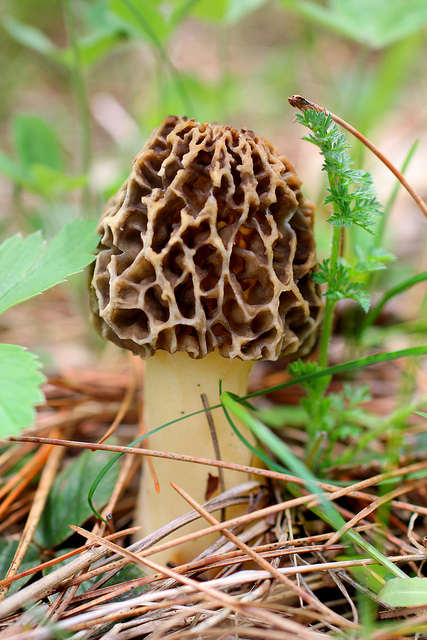
Weekend Find, photo by LadyDragonflyCC – See through my Eyes!

The Absolute Michigan pool on Flickr reached a major milestone that we almost missed: the 150,000th photo was added to the group by Christine aka LadyDragonflyCC!! The 100,000th photo was added 2 years ago. At that time there were about 2400 people in our group which has now grown to almost 3200 people. The group was started way back in August of 2005 and you can go back to the beginning right here.

See Christine’s photo bigger and see more in her tasty morel slideshow.

Speaking of morels, don’t miss the annual Mesick Morel Mushroom Festival today through Sunday (May 11-13) and the National Morel Mushroom Festival next weekend (May 17-20) in Boyne City.

Movement, from the Detroit Electronic Music Festival to today

man-hour

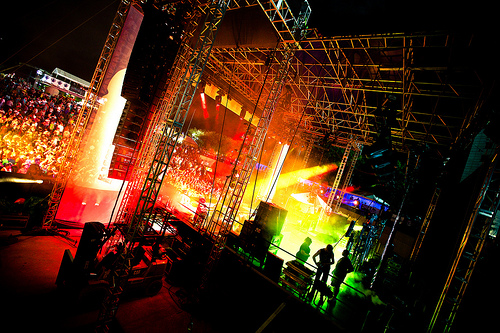
man-hour, photo by TerryJohnston

We were not used to listening to techno outdoors in the day, this was not something that ever happened in Detroit.
~Josh Glazer, 2000 Detroit Electronic Music Festival

Movement (formerly the Detroit Electronic Music Festival aka DEMF) comes to Hart Plaza in Detroit Memorial Day Weekend, May 26-28, 2012. Detroit is widely considered to be the the birthplace of techno, and Movement remains true to those roots. In 2012, 107 acts will perform across five stages with headliners including Zeds Dead, SBTRK, Public Enemy, Claude Vonstroke and Major Lazer.

You can see a great video from 2011 at the link above and you are heartily encouraged to dig into the DEEP story of this festival from 2000 to the modern day at Resident Advisor. It takes you from the first murmurings about a festival celebrating Detroit’s electronic scene, through the planning stages and to the nervous dawn of the first Detroit Electronic Music Festival Memorial Weekend of 2000, all told through photos and the words of the people that have worked on it and followed it through the years:

Richie Hawtin: People who wouldn’t go out to a nightclub, people who had bought a Derrick May record but didn’t really know who was behind it, friends who had stopped going out, people with their kids. The whole family aspect was incredible.

Matthew Dear: Sometime during that first year, I remember walking by a big circle of dancers. Everyone was happy, dancing and watching some guys jit in the center of the circle. Then I realized that the Mayor of Detroit, Dennis Archer was standing on the inside of the circle with his family, smiling, dancing and enjoying the show alongside everyone else.

Phil Talbert: A lot of kids walked up to the Mayor, and said, “You’re the Mayor? I just want to say thank you for doing something for young people.” I think he realized, then, how important it was.

Ernest Burkeen: The Mayor was shocked. Whenever you do a first year event, you’re happy just to make it happen. I never expected the crowds that we saw.

Check this out on black and in Terry’s Movement – DEMF slideshow.

Horseshoe Falls in Munising

Horseshoe Falls Munising

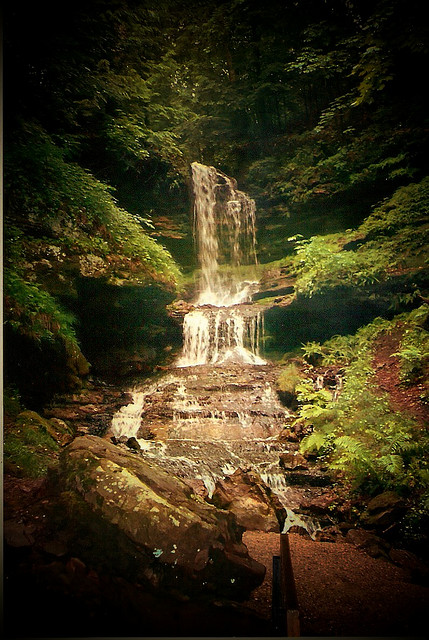
Horseshoe Falls, Munising, photo by maryn0503

UpperMichiganWaterfalls.com says that Horseshoe Falls in Munising is a privately managed waterfall that you can visit for a small fee. They note that over one million gallons of water per day flow over the top of the falls. The source for the waterfall is underground springs which keep the water temperature at a constant 40 degrees all year.

Check this photo out on black and see much more in her Michigan slideshow.

Many more Michigan waterfalls on Michigan in Pictures.

Farewell, Maurice Sendak

Wild Things

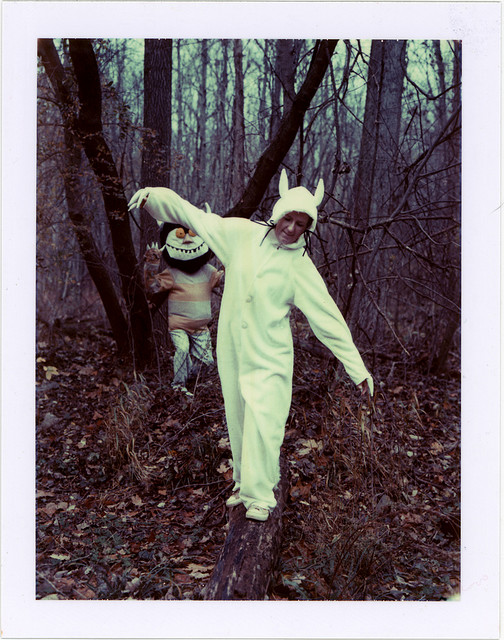
Wild Things, photo by Apocaplops

“Please don’t go. We’ll eat you up. We love you so.”
– Maurice Sendak, Where the Wild Things Are

Beloved children’s author Maurice Sendak passed away yesterday at the age of 83. That makes me very sad.

Check this out bigger and in Erich’s Polaroid slideshow.

May 2012 Full Moon is a Perigee “Super Moon”

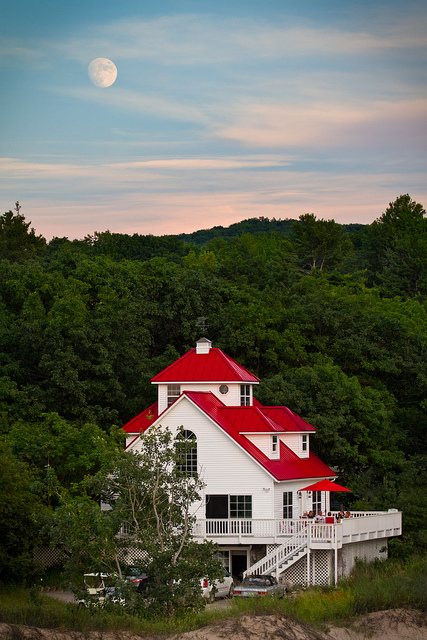
House in the Dunes

House in the Dunes, photo by CJSmith (OutofChicago.com)

According to NASA, at 11:34 PM EDT tonight (Saturday, May 5) the largest moon of the year will become full. It’s a perigee full moon aka a “super moon.” NASA has a great ScienceCast video about the Perigee “Super Moon” that explains it all. It begins:

The full Moon has a reputation for trouble. It raises high tides, it makes dogs howl, it wakes you up in the middle of the night with beams of moonlight stealing through drapes. If a moonbeam wakes you up on the night of May 5th, 2012, you might want to get out of bed and take a look. This May’s full Moon is a “super Moon,” as much as 14% bigger and 30% brighter than other full Moons of 2012.

The scientific term for the phenomenon is “perigee moon.” Full Moons vary in size because of the oval shape of the Moon’s orbit. The Moon follows an elliptical path around Earth with one side (“perigee”) about 50,000 km closer than the other (“apogee”). Full Moons that occur on the perigee side of the Moon’s orbit seem extra big and bright.

Such is the case on May 5th at 11:34 pm Eastern Daylight Time when the Moon reaches perigee. Only one minute later, the Moon will line up with Earth and the sun to become brilliantly full. The timing is almost perfect.

Read on and watch the video for more. May’s full moon was known by Colonial Americans as the Milk Moon. Other names include the Dragon Moon (Chinese), Bright Moon (Celtic), Hare Moon (English) and the Flower Moon (Algonquin).

Chris took this shot in the Silver Lake Dunes. It’s not a May full moon, but it does look pretty cool! Check it out bigger and see some more in his Silver Lake Dunes slideshow.

Ernie Harwell, gone but not forgotten

The Old Ball Game

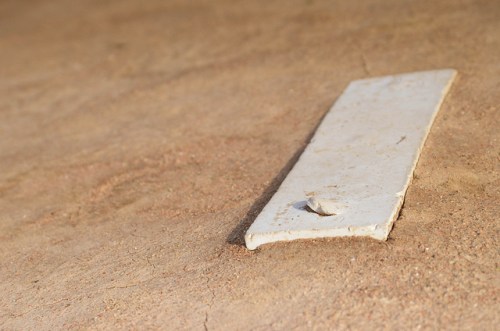
The Old Ball Game, photo by dblstripe

“Ernie (Harwell) is probably the most beloved person who has ever been in Detroit with the Detroit Tigers. He is loved by everybody and rightfully so. He’s a great broadcaster but even a better person. That comes across on his broadcasts.”
~ Detroit Tiger Hall of Famer Al Kaline

Two years ago today, one of the greatest members of the Detroit Tigers organization passed away. It’s no coincidence that Ernie Harwell received a baseball announcer’s highest honor by winning the Ford Frick Award from the Hall of Fame in Cooperstown. Here’s his Hall of Fame induction speech, set to a scrapbook of photos. There’s much more about Ernie Harwell on Michigan in Pictures.

Bryan shot this photo of the pitchers mound at old Tiger Stadium aka Ernie Harwell Park last fall. Check it out background big and in his Detroit slideshow.

We’ll close with words from Harwell’s farewell address that you can read in full at the Baseball Almanac. Click head over to “Ernie” on Absolute Michigan to read about the play about him by Mitch Albom and to see Ernie with thousands of the fans he talks about here…

“Thank you for letting me be part of your family. Thank you for taking me with you to that cottage up north, to the beach, the picnic, your work place and your backyard.

Thank you for sneaking your transistor under the pillow as you grew up loving the Tigers.

Now I might have been a small part of your life. But you have been a very large part of mine. And it’s my privilege and honor to share with you the greatest game of all.”

Omagakii: Frog in Anishinaabemowin

Ribbit Tell'em

Ribbit Tell’em, photo by EEKaWILL

Spring is frog season, and today’s Anishinaabemowin word of the day is Omagakii which means frog. Omagakiins means little frog and Omagakiinsag means little frogs.

Anishinaabemow.in is a very cool (though no longer updated) website that used short videos to teach words and short phrases in Anishinaabemowin. They explain that:

Anishinaabemowin is the traditional language of the Anishinaabe people. It is sometimes referred to as Ojibwe, Ojibway, Saulteaux or Indian by people in the community. Outsiders sometimes refer to it as Ojibwa or Chippewa. On this site we refer to it by the proper name in the language Anishinaabemowin.

Some facts about Anishinaabemowin

  • During the Fur Trade era Anishinaabemowin was referred to as the ‘Lingua Franca’ or trade language of what is now called Canada, meaning at one time if you wanted to conduct business here you had to speak Anishinaabemowin
  • At one time Guiness Book of World Records listed Anishinaabemowin as having the most complex verb structure of any language in the world, a testament to the intellectual capacity of our ancestors
  • A number of English words are adopted from Anishinaabemowing including Totem (used in Freudian studies and to refer to West Coast art) which is adapted from Dodem or clan, Mocassin (leather slipper) which is adapted from Makasin or shoe and countless place names.
  • Anishinaabemowin is spoken in communities from Quebec to British Columbia, From Northern Ontario to the Midwestern United States. The diffusion of speakers means that it is now spoken in places where there never were Anishinaabeg before.
  • Old Anishinaabeg don’t die, they just Maazhiwe.

Check Will’s photo out bigger and also see the Frog slideshow from the Absolute Michigan pool!

True/False (morel)

True | False

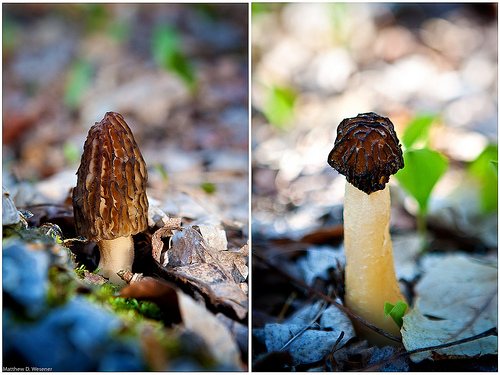
True | False, photo by M_Wesener

When in doubt, throw it out!
~The Mushroom Hunter’s Mantra

When you’re out looking for morels, this is one True or False question you want to get right! The False Morel page at The Great Morel exlains:

The “False Morel” has several species which carry scientific names such as Gyromitra esculenta, Verpa, Hellvella, and Disciotis. The Verpa and gyromitrin species are the most often mis-identified variety. The gyroomitrin is oten referred to as the “red mushroom”, the “beefsteak mushroom” or the “lorchel”. There are several true species of the false morel, and while some will say they can prepare and eat the false morel with no problem, others have a drastically opposite reaction to them. Hence, The Great Morel suggests that you do not attempt to digest this particular mushroom.

Research shows this species of the morel family is said to contain a toxic chemical called Gyromitrin, a toxic and possible carcinogenic chemical.

…The texture or makeup of the cap or head can typically have brain-like features, with folds in the caps, which some might describe as wrinkles, and are often brittle to the touch. The color will appear reddish or a brownish red, and will darken to almost a blackish red as the false morel ages. You can see some of this darkening beginning to take place on the image below. Sizes can vary from 2 inches to 10 inches.

One of the easiest ways of determining the false morel is by slicing it long ways. See the image below of a crosscut sectioning and note the meaty texture of the stem. False morels are not hollow, which is the most definite tip that you have stumbled up one of these ugly bad boys. The false morel shown in this image is also quite heavy as it is almost solid in the stem and meaty, and often referred to as “cottony”. Some expert mycologists go into greater detail in defining the relationship of the cap and the stem.

You can click through for some helpful photos and also check out the morel identification page at MichiganMorels.com.

Check this out bigger and in M Wesener’s slideshow.