Michigan Wild & Scenic Rivers: Au Sable River

Changing Skies over the Au Sable HDR

Changing Skies over the Au Sable HDR, photo by hz536n/George Thomas

It is hereby declared to be the policy of the United States that certain selected rivers of the Nation which, with their immediate environments, possess outstandingly remarkable scenic, recreational, geologic, fish and wildlife, historic, cultural or other similar values, shall be preserved in free-flowing condition, and that they and their immediate environments shall be protected for the benefit and enjoyment of present and future generations.

~Wild & Scenic Rivers Act, October 2, 1968

Michigan’s has 16 Wild & Scenic Rivers. One of these is the Au Sable River. The 23 mile stretch of the river from Mio downstream to the 401 Bridge is the portion that has the National Scenic River designation, considered to offer some of the best canoeing in Michigan. It’s also a blue ribbon trout stream with excellent brown trout fly fishing and holding walleye, pike and bass as well.

With all that going for it, I was surprised by the lack of quality information available online about this river. Sometimes, having to dive a little deeper pays off as it has this morning with Michigan’s Au Sable River: Today and Tomorrow by G. E. Hendrickson. The paper was prepared way back in 1966 for the Michigan Department of Conservation under Gov. George Romney’s administration in conjunction with the Geological Survey and the United States Department of the Interior.

Located in the northern lower peninsula of Michigan, the Au Sable is known for its high water quality, scenery, recreational opportunities, coldwater fishery, and historic and cultural significance. It may just be the. If that were not enough reason to visit the river, the Au Sable is also one of the best canoeing rivers in the Midwest.

Two south-flowing rivers rise in the country north of Grayling. One, the Manistee, turns west to Lake Michigan; the other, the Au Sable, turns east to Lake Huron. Both are famous trout streams, but the Au Sable is perhaps enjoyed and cherished by more people than any other Michigan river. Cool clean flowing water, natural cover, and gravel spawning beds make it an outstanding trout stream. Its natural beauty attracts canoeists, campers, and cabin dwellers.

The upper Au Sable is a young river, as rivers go, having settled down to its present course after the glaciers retreated about 12,000 years ago. It was named by early French explorers, the name meaning “River of Sands.” Following close on the heels of the retreating ice, the earliest Indians moved into Michigan, and possibly into the Au Sable area. The Indians hunted for deer, bear, mastodons, giant beaver, caribou, and other wildlife. They also fished for many species. To the Indians the Au Sable was a source of food and drink and a highway for canoe travel. Early white traders and explorers used the river for the same purposes, while the lumbermen valued it chiefly for transporting logs.

You can read on for a lot more including the story of the extinction of the Au Sable river Grayling and Au Sable River drift boats.

Check this out background bigtacular and see a ton more in George’s Fall & Autumn slideshow.

More of Michigan’s Wild & Scenic Rivers on Michigan in Pictures.
Dogs vs Seagulls (and bacteria)

Untitled

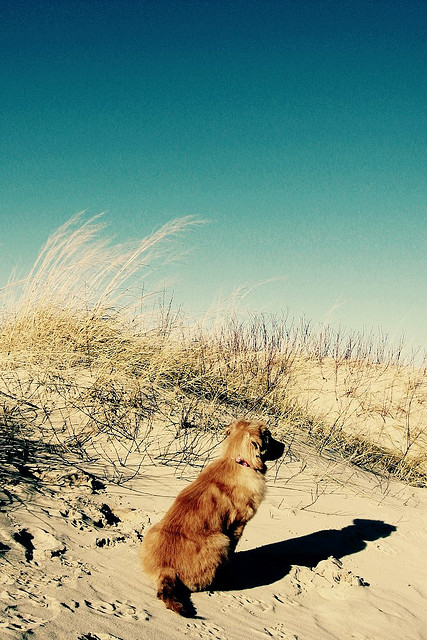
Untitled, photo by jenny murray

The Great Lakes Echo has a feature on an Environmental Science & Technology journal report on how scientists have used dogs to rid a Lake Michigan beach of seagulls. Why do that you ask? While gulls are certainly part of the Great Lakes beach experience, seagull waste contains bacteria that harms water quality & sometimes closes beaches. The test took place in Racine, Wisconsin and they explain:

For eleven days researchers calculated the concentration of different bacteria on the Lake Michigan beach. They measured E.coli and Enterococcus concentrations to calculate fecal contamination. In addition, the study collected information on potentially pathogenic bacteria, which can cause infectious diseases.

Researchers then used two trained border collies with handlers to harass gulls while continuing to survey the water quality.

The dogs prompted the gull population to drop 98 percent, from nearly 670 birds to just fewer than 20.

Fewer gulls meant better water. E.coli bacteria decreased nearly 30 percent with the removal of half the gulls. Before the dogs started working, water samples tested positive for potentially infectious bacteria on seven out of eleven days. After the dogs chased the seagulls, researchers failed to find any contagious bacteria.

Read on for more about this innovative solution.

Check this photo of Dot out on black and see more in Jenny’s dot slideshow.

More beaches on Michigan in Pictures.

A Mere Reflection

A Mere Reflection

A Mere Reflection, photo by Happyhiker4

Mark took this photo 2 years ago today on Boardman Lake near Traverse City.

Check it out on black or jump into his slideshow. He posts mostly on his Mark Lindsay Photography Facebook page these days, so that’s probably the best place to keep up with his work.

More fall color on Michigan in Pictures.

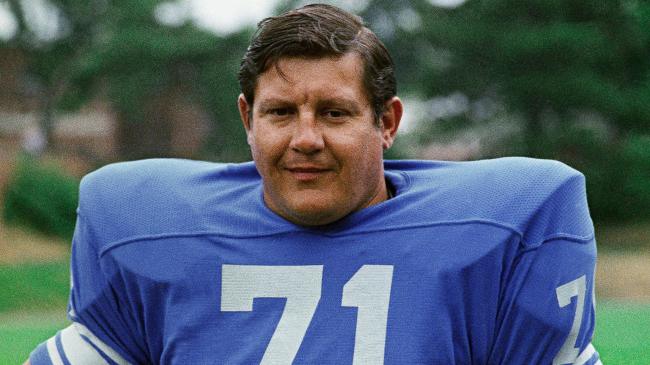
Remembering the Mad Duck, Alex Karras of the Detroit Lions

Alex Karras of the Detroit Lions, 1971 AP file photo

“It takes more courage to reveal insecurities than to hide them, more strength to relate to people than to dominate them, more ‘manhood’ to abide by thought-out principles rather than blind reflex. Toughness is in the soul and spirit, not in muscles and an immature mind.”
~Alex Karras

Yesterday Alex Karras, All-Pro defensive lineman for the Detroit Lions passed away at the age of 77. Karras followed up with a sucessful career as a pro wrestler and as an actor in movies and on TV’s Webster. The New York Times obituary of Alex Karras reads in part:

Karras, at 6 feet 2 inches and 248 pounds — large then but smaller in comparison with today’s N.F.L. linemen — first earned fame as a ferocious tackle for the Lions. He anchored the defensive line for 12 seasons over 13 years, 1958 to 1970.

It was an era when the N.F.L. had abundant talent at the position; Karras’s contemporaries included the Hall of Famers Bob Lilly and Merlin Olsen. But Karras was an especially versatile pass rusher, known around the league for his combination of strength, speed and caginess. His furious approach — Plimpton described it as a “savage, bustling style of attack” — earned him the nickname the Mad Duck.

“Most defensive tackles have one move, they bull head-on,” Doug Van Horn, a New York Giants offensive lineman who had to block Karras, said in 1969. “Not Alex. There is no other tackle like him. He has inside and outside moves, a bull move where he puts his head down and runs over you, or he’ll just stutter-step you like a ballet dancer.”

Karras was named to four Pro Bowls, and he was a member of the N.F.L’s All-Decade team of the 1960s. He was not elected to the Hall of Fame, however, which has sometimes been attributed to the fact that the Lions fielded mostly undistinguished teams during his tenure. In Karras’s only playoff game, the Lions lost to the Dallas Cowboys by the unlikely score of 5-0 in 1970.

Read on at the Times for lots more. Some of my favorite Karras items:

Greensky Hill … and Greensky Bluegrass

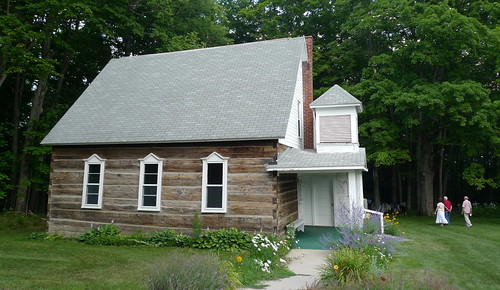
Greensky Hill Indian Mission Church

Greensky Hill Indian Mission Church, photo by jhhymas

Today’s post is in the “Stories I Found When Exploring Other Stories” category. Over on Absolute Michigan today we’re giving away two pairs of tickets to the October Festival at the Commons this Friday night in Traverse City. Greensky Bluegrass is a great band that tours nationally but hails from Michigan, and if you’re interested in seeing them and enjoying this festival in my backyard, click here to check it out & enter to win.

The Michigan Historical Marker text for Greensky Hill Mission via michmarkers.com reads:

Here in the 1840’s the Chippewa Indian missionary, Peter Greensky, established a Protestant mission in an area where legend says Indian chiefs once held their councils. New trees have been planted in an arrangement similar to that of the trees that made up the original council circle. Mission services first were held in a rude building of boughs and bark. In the 1850’s the Indians built the present church. It is a fine example of the old log style construction with hand-hewn timbers and notched corners. Windows, doors, and much of the lumber were brought by canoe from Traverse City to Pine Lake (now Lake Charlevoix) and then carried two miles to this site. Methodist services for the Indian congregation have been held here regularly to the present.

The Greensky Hill Indian Mission United Methodist Church adds that Peter Greensky started his preaching in the Leelanau area in the 1830s, serving as a guide and interpreter for his missionary Peter Doherty before acquiring a following of his own as a strong preacher with great influence among his people. His congregation traveled with him to the Charlevoix area. In 1860 he was put in charge of the all-Indian Pine River Mission, now known as Greensky Hill where he served there until his death in 1866.

June adds that her son-in-law’s mother was Ovenia Greensky Shomin, a direct descendant of the founder of this church. Check this out background big and see lots more photos of the mission and grounds (including details of the logs) in her Greensky Hill slideshow.

More Michigan churches on Michigan in Pictures.

Bobcat or Lynx?

Bobcat

Bobcat, photo by sharona 315 사론아

Today’s post got an assist from 5-year-old Landen, who when I showed him this photo of a ‘bobcat’. After a careful look, he told me “Nope, that’s a lynx.” When I asked how he was so sure, he pointed out the prominent black ear tufts. Sure enough, as How Stuff Works explains on What’s the difference between a bobcat and a lynx? the ears are a big clue:

To begin with, the bobcat looks a bit more like an overgrown house cat than a lynx does. With extra-long tufts of fur on its ears and a shaggy mane of fur around its cheeks, the lynx takes on an otherworldly appearance. The long black ear tufts, which can grow to be almost an inch (2.5 centimeters) long, act as excellent hearing aids, enabling the agile cat to pick up on the soft footsteps of its prey.

A lynx also has larger feet and longer legs than a bobcat to help it navigate the deep snow common in its range. Its big, furry paws act like snowshoes to help this feline chase down food in the winter.

I couldn’t tell whether or not this is a lynx or bobcat, but it’s an interesting bit of knowledge. It’s pretty certain it’s a bobcat as the pic was taken near Howell, and the US Fish & Wildlife Service endangered species list for Michigan lists counties with the highest potential for Lynx presence as all UP counties: Alger, Baraga, Chippewa, Delta, Dickinson, Gogebic, Houghton, Iron, Keweenaw, Luce, Mackinac, Marquette, Menominee, Ontonagon and Schoolcraft.

The UM Animal Diversity Web adds more about lynx, and the Michigan DNR has a guide for distinguishing bobcat & lynx as well. If you do see one, report it to the DNR.

Check this out bigger than a bobcat or on Sharon’s map.

More Michigan animals on Michigan in Pictures including our Bobcat article.

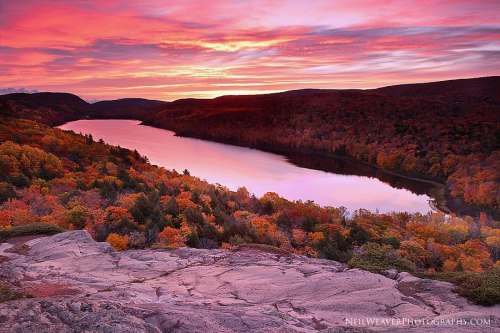
Sunrise at Lake of the Clouds

Sunrise at Lake of the Clouds, Porcupine Mountains, photo by Neil Weaver Photography

Lake of the Clouds is a favorite here on Michigan in Pictures, so it was a happy morning when I found Neil’s great shot of sunrise over the lake.

Head over to Facebook to see it bigger and see more from the UP and elsewhere in Neil’s Landscapes & Lakescapes album.


ArtPrize 2012 Winner: Adonna Khare’s Elephants

Elephants 4

Elephants 4, photo by rkramer62

For the second time in 3 years, a large drawing at the Grand Rapids Art Museum has captured top honors in ArtPrize. mLive reports:

Adonna Khare, a week before the Sept. 19 opening of ArtPrize, installed her 8-foot tall, 35-foot wide drawing “Elephants,” on a second-story wall of the museum.

As ArtPrize unfolded, the artist from Burbank, Calif., continued to add daily to the original triptych, spilling over onto the museum walls with additional figures and more details, as thousands of people every day passed through the ArtPrize exhibition center.

“People would come and sit with me,” she said. “Kids would sit with me, and I could share about art.” More than three weeks later, Khare’s drawing has grown to be 14 feet tall, 40 feet wide, and her purse has grown $200,000 richer.

You can see this background big, check out a wider view of the entire piece or watch Rachel’s ArtPrize 2012 slideshow.

More art on Michigan in Pictures.

Fall Color in the Mitten

Fall Colors-HDR

Fall Colors-HDR by Mi Bob, photo by Mi Bob

Fall color is really kicking in around the state. It’s looking like this weekend may be the optimal time for your color tour, as Michigan’s summer drought might cause an earlier leaf drop.

The Freep has a nice aerial from the UP and reports that Upper Peninsula color is at 60-80%. If you head over to the Marquette Country Facebook, you can see a lot of photos from all across the UP. The West Michigan color report shows 40-50% coverage and they have photos from across the region on their West Michigan Weekly blog. Of course you can also search for “autumn” in the Absolute Michigan pool on Flickr to see the latest as well!

If you’re looking for some ideas on where to go, Pure Michigan fall color tours for everywhere in the state and other ideas for fall travel. This photo was taken near Muskegon, and while Pure Michigan doesn’t have a tour there among their 20+ tours, the West Michigan Tourist Association has a whole bunch of color tours including one that goes along the lakeshore near Muskegon.

Check this out on black and see more in Mi Bob’s Fall in West Michigan slideshow.

There’s lots more barns and fall color on Michigan in Pictures.

Fall is golden in Michigan

DSC01145

DSC01145, photo by ansonredford

One of the greatest treats Michigan offers is the annual fall color show, and I find it’s nice to have a little deeper appreciation about what’s going on inside sugar maples and other trees whose leaves change color in the fall. The Science of Color in Autumn Leaves from the US Arboretum explains that:

During the growing season, chlorophyll is replaced constantly in the leaves. Chlorophyll breaks down with exposure to light in the same way that colored paper fades in sunlight. The leaves must manufacture new chlorophyll to replace chlorophyll that is lost in this way. In autumn, when the connection between the leaf and the rest of the plant begins to be blocked off, the production of chlorophyll slows and then stops. In a relatively short time period, the chlorophyll disappears completely.

This is when autumn colors are revealed. Chlorophyll normally masks the yellow pigments known as xanthophylls and the orange pigments called carotenoids — both then become visible when the green chlorophyll is gone. These colors are present in the leaf throughout the growing season. Red and purple pigments come from anthocyanins. In the fall anthocyanins are manufactured from the sugars that are trapped in the leaf. In most plants anthocyanins are typically not present during the growing season.

Check this out big as a maple tree and in Donald’s autumn slideshow.

Set your background for fall with this photo or find lots more Fall wallpaper on Michigan in Pictures!