The Ghost Keeper of Old Presque Isle Lighthouse

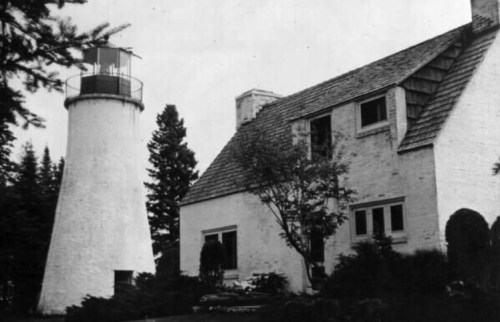
Old Presque Isle Lighthouse, photo courtesy Archives of Michigan

The Lightkeeper’s Ghost tells the tale of George and Loraine Parris who became the beloved caretakers of the Old Presque Isle Lighthouse, running the small museum and giving tours. George was something of a trickster and delighted in playing harmless tricks on visitors. He passed away in 1992, but the story doesn’t end there.

As Loraine was driving to the property on Grand Lake Road, which had a clear view of the lighthouse, she saw that it was illuminated.

She knew that the Coast Guard had rendered this impossible, but there it was before her. By the time that she arrived at the keeper’s house, though, everything was dark. The next day she climbed the steps of the lighthouse to make sure that everything was in order, and she saw that there was no way that someone could have turned the light on. Yet, this same pattern repeated itself again and again. Loraine never said anything about it because she thought that people might think her crazy.

Soon other folks began to see the light, however – a yellowish glow was reported from the lighthouse by several people. Some thought that the light had been put back into operation, but others drove out for a closer look, only to find that it was dark once again.

It was even spotted by members of the Air National Guard, who flew a few missions over the area, and by the Coast Guard, who investigated to make sure that no one could fire the light back up. It had been permanently disabled years before, so there was no way that the light could be shining. Yet it was. Many people believe that the spirit of playful old George is occasionally paying a visit to the lighthouse that he loved so much, just to let folks know that he’s doing just fine and to keep alive the stories of the lighthouse that he loved so much.

Read more about the history of the lighthouse from TexasEscapes.com and learn more about the light and visiting from the Presque Isle Township Museum Society.

This photo from Seeking Michigan and the Archives of Michigan was taken in 1963 at Old Presque Isle Light. See it bigger and check out more of their photos of the old and new lighthouses on Presque Isle.

More ghosts and ghost stories on Michigan in Pictures.

Hunter’s Moon, Harvest Moon, Blood Moon, October Moon

Big Sable Moon Rise

Big Sable Moon Rise, photo by Mi Bob

The Farmer’s Almanac says that October’s moon is the Full Hunter’s Moon or Full Harvest Moon:

This full Moon is often referred to as the Full Hunter’s Moon, Blood Moon, or Sanguine Moon. Many moons ago, Native Americans named this bright moon for obvious reasons. The leaves are falling from trees, the deer are fattened, and it’s time to begin storing up meat for the long winter ahead. Because the fields were traditionally reaped in late September or early October, hunters could easily see fox and other animals that come out to glean from the fallen grains. Probably because of the threat of winter looming close, the Hunter’s Moon is generally accorded with special honor, historically serving as an important feast day in both Western Europe and among many Native American tribes.

Bob took this last October at Big Sable Point Lighthouse. Check it out bigger and see more in his Sunset slideshow.

More on the moon and more of Big Sable Lighthouse on Michigan in Pictures.

Pumpkin Army

pumpkins 3

pumpkins 3, photo by northernlightphotograph

Over on Absolute Michigan our PumpkinPalooza can tell you everything you want to know about pumpkins including some facts from our friends at Taste the Local Difference:

Pumpkins are a member of the cucurbita family, which includes squash, watermelons, and cucumbers. Their origins are believed to have come from Central America. Seeds from related plants have been found in Mexico that date back over 7000 years ago.

Pumpkins were an important food source for Native Americans. They regularly made pumpkin porridge, stew and pumpkin jerky and they made a broth that contained squash blossoms. They also dried pumpkin shells, and then weaved them into mats, which they used for trading. Early pilgrims quickly added pumpkins to their menus and also sent seeds back to Europe. The earliest version of pumpkin pie was made by baking a hollowed out pumpkin that was filled with milk, honey and spices.

Pumpkins are high in potassium, Vitamin A and fiber. They are also a good source of beta-carotene. Pumpkin seeds are rich in magnesium, copper and cholesterol-lowering phytosterols.

Read on for more including recipes and a comprehensive listing of Michigan pumpkin patches.

Check this out bigger and in Tim’s big old Petoskey images slideshow.

Lots more pumpkins on Michigan in Pictures.

Michigan’s Most Haunted: Detroit Masonic Temple

NOTE: Upon further research, it appears that George Mason did not leap to death from the roof of the Masonic, but instead died in bed at the age of 92 in 1948. In my defense, the story of Mason’s suicide has been reported by a number of news outlets!!

The Masonic Temple

The Masonic Temple, photo by kc Jacoby Photography

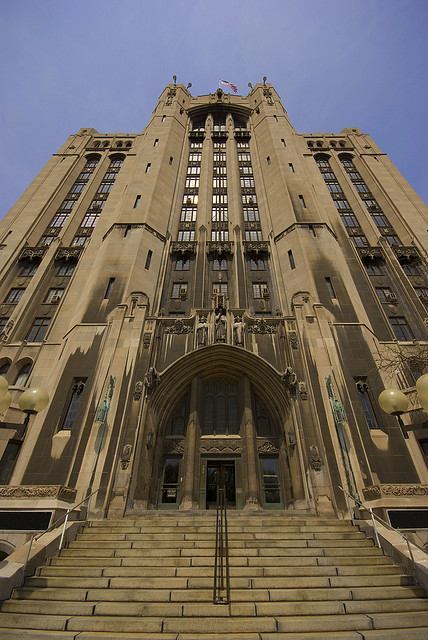
Halloween is fast approaching and the Awesome Mitten has a great post on the Ten Most Haunted Places in Michigan. We’ve visited a few of those places on Michigan in Pictures, but #4 on the list, The Masonic Temple in Detroit, was spooky, cool and new:

Built in 1912 by a wealthy gentleman named George D. Mason, the Detroit Masonic Temple has over 1,000 rooms, and several secret staircases, concealed passages, and hidden compartments in the floors. Mr. Mason went slightly overboard when financing the construction of the building, and eventually went bankrupt, whereupon his wife left him. Overwhelmingly depressed about his financial and personal circumstances, Mason jumped to his death from the roof of the temple. Security guards claim to see his ghost to this day, ascending the steps to the roof. The temple, abundant with cold spots, inexplicable shadows, and slamming doors, is known to intimidate visitors with the eerie feeling of being watched…

Read on for more and share any thoughts you have on these or other haunted Michigan places in the comments below!

The Detroit Masonic Temple is the largest masonic temple in the world, and you can get all kinds of pictures and history including some shots from construction on their website. The theater has its own site as well for events and this weekend they are going Beyond the Other Side.  One note about George Mason is that in addition to the masonic temple, he also designed several other Michigan buildings including the Detroit Yacht Club and the Grand Hotel on Mackinac Island. See Historic Detroit for more.

While it may feel like the Ken Jacoby show with 2 appearances in just a week, his shot was the most brooding of the many interior and exterior photos of the temple in the Absolute Michigan pool. Check it out on black and see more in Ken’s The Masonic Temple slideshow.

More ghostly fun on Michigan in Pictures and also at absolutemichigan.com/ghost!

Michigan Mushrooms: Chicken of the Woods

Chicken of the Woods

Chicken of the Woods, photo by .Larry Page

The Cornell Mushroom Bog is a great resource for mushroom hunters. Their entry on Eating the Chicken of the Woods begins:

David Arora remarks in Mushrooms Demystified that this is one of the “foolproof four” — an unmistakable mushroom. (see below)

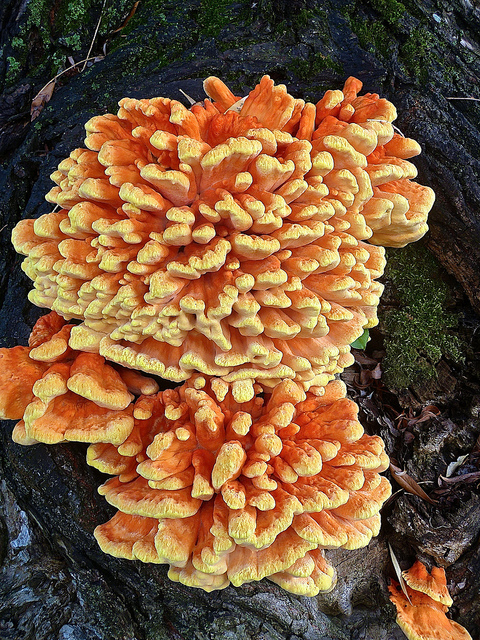
This large, brightly colored fungus is often found in clusters but is occasionally solitary. You may discover this mushroom during the summer and fall but rarely in winter or spring. The top surface of Chicken of the Woods is bright orange which can be either more reddish or yellowish than you see here. It tends to lighten in color near the edges. This mushroom has no gills, instead its bright yellow undersurface is covered with tiny pores. The young Chicken of the Woods is “succulent” and has a mild flavor. Older specimens tend to change color as they develop, as well as become brittle. The young mushrooms have bright yellows and oranges; in age they dull to yellow and then pure white.

A good tree can yield up to 50 pounds, but be wary of older fungi as they toughen and develop a sour flavor! If you have found a specimen worthy of collection, you can harvest the mushrooms and return the next year for another crop. Or cut just the outer edge (about 5 cm of the fungus) and return later in the season for a second helping. Be wary of Chickens growing on conifers (in the Northeast) as they are a different species and can cause poisoning. Chicken of the Woods can make a fine chicken substitute as long as you make sure to fully cook the mushroom.

Chicken of the Woods grows in trees that are either living or decaying. These mushrooms cause a reddish brown heart-rot of wood. If the mushrooms are seen fruiting, you can be sure that the fungus has already attacked the tree. They can destabilize a tree by hollowing out its center–this can be problematic for forest owners. Historically, this fungus was known to damage the wooden ships of the British Naval Fleet.

Read on for more and also see Chicken of the Woods or Sulphur Shelf (Laetiporus sulphureus) from MichiganMorels.com and Laetiporus on Wikipedia.

Check this out bigger, view a zoomed out shot and see more in Larry’s Fungi slideshow.

I realize I should list the foolproof four. In addition to chicken of the woods, there’s also puffballs, chanterelle & morels. (although there are toxic false morels)

More Michigan mushrooms on Michigan in Pictures!

Zombies love Michigan Blood

ZombieDay

ZombieDay, photo by cpcaines

The Annual Grand Rapids Zombie Dash bills itself as the most terrifying night race in the world. Much as in the forthcoming zombie apocalypse, participants are divided into 2 classes, hardy survivors who will run a 5k for their lives a 5k, and members of the zombie horde who will attempt to separate said survivors from said lives. All the details are on the web site, and there’s also a post-race concert.

The event is also raising awareness for a topic near and dear to the un-beating hearts of zombies everywhere and also Michigan citizens. They’re holding early registration where you can also register for Michigan Blood Stem Cell Program at Gazelle Sports in Grand Rapids on Friday the 26th.

According to Barbara Hile, Program Manager for Michigan Blood’s Marrow/Stem Cell Program, “Patients needing blood stem cell (marrow) transplants can only find a suitable match within their family about 30% of the time. The remaining 70% of matches are made between complete strangers via the Be the Match Registry. Therefore, the more young people who join the Registry, the more chances we have of a match for thousands of patients with leukemia, lymphoma, and other blood diseases. A marrow transplant is often the patient’s last, best chance for survival.”

Read more at the link above or at www.BeTheMatch.org/join.

Check this out gruesomely gigantic and see more in cpcaines World Zombie Day, Royal Oak MI 2012 … if you dare.

Interesting (for me) side note: CP added three photos to the Absolute Michigan pool on Flickr and one of them was of my friend Bradley!

Mackinac Island’s Devil’s Kitchen and the Red Geebis

mackinaw island

mackinaw island, photo by amanda vanvels

One of my favorite books as a kid was Lore of the Great Turtle by Dirk Gringhuis. The book has some of the rich legends of Mackinac Island. One is the tale of the Red Geebis and Devils Kitchen, retold by Tehuti_88. It begins:

A long time ago an old man, Aikie-wai-sie, was left behind on Mackinac Island when the rest of the tribe departed for the winter hunting grounds on the mainland. Left behind with him was his young granddaughter, Willow Wand, and the old man was greatly upset that she too would have to remain with him since they had no canoe by which to escape the island. Still, Willow Wand had refused to leave the old man behind, since he was blind and couldn’t fend for himself; but her decision pained him.

“You should have returned with them to the mainland, because Keewenaw will seek you there,” he told her, referring to her beloved.

Willow Wand shook her head. “I’ve left a white deerskin with vermillion spots upon the cliff,” she said. “The fishermen will see it, and Keewenaw will come to rescue us.”

That having been done, they moved up onto a cliff projecting from the side of the bluff, to live upon until they should be rescued. This cliff, and the cave upon it, were just above a cave known as the Devil’s Kitchen, for in this cave lived the Red Geebis, who were cannibal giants. The Geebis were known to roast and eat humans inside this cave, and so Willow Wand and her grandfather had to remain upon their ledge and out of the Geebis’ sight in order to remain safe. Because of this, they could not even go down to the lake for water, even though the shore was just below. They had not been left with much food and so the old man knew that their time there would be rough…

And how. Read on for the rest of the story of Devil’s Kitchen on Mackinac Island.

See Amanda’s photo on black.

More from Mackinac on Michigan in Pictures.

Detroit Tigers are headed to the World Series!

Tigers get ALCS sweep

Tigers get ALCS sweep, photo by Detroit News

Last night the Detroit Tigers completed a 4-0 shellacking of the New York Yankees in the American League Championship Series. Watch the final out of last night’s 8-1 victory from the Tigers and many more video highlights from the celebration.

Wikipedia’s Detroit Tigers entry notes that the Tigers have won the American League pennant 11 times, winning the World Series four of those times in 1935, 1945, 1968, and 1984.

With a lineup that featured four future Hall of Famers (Hank Greenberg, Mickey Cochrane, Goose Goslin and Charlie Gehringer), the Tigers won the World Series in 1935, defeating the Cubs, 4 games to 2. Game 6 concluded with Goslin’s dramatic game-ending single, scoring Cochrane to seal a 4–3 victory.

With the end of World War II and the timely return of Hank Greenberg and others from the military, the Tigers took the 1945 American League pennant. With Virgil Trucks, Hal Newhouser and Dizzy Trout on the mound and Greenberg leading the Tiger bats, Detroit responded in a Game 7 for the first time, staking Newhouser to a 5–0 lead before he threw a pitch en route to a 9–3 victory over the Cubs.

In the 1968 World Series, the Tigers met the defending World Series champion St. Louis Cardinals, led by starter Bob Gibson (who had posted a record 1.12 ERA during the regular season) and speedy outfielder Lou Brock. In Game 7 at Busch Memorial Stadium, Lolich, also pitching on two days’ rest, faced Gibson. Both men pitched brilliantly, putting zeros up on the scoreboard for much of the game. For his three victories that propelled the Tigers to the World championship, Lolich was named the World Series Most Valuable Player.

The Tigers led their division wire-to-wire in 1984, from opening day and every day thereafter, culminating in the World Series championship over the against the San Diego Padres. This had not been done in the major leagues since the 1927 New York Yankees. With the win Sparky Anderson became the first manager to win the World Series in both leagues.

See this photo on black and see more in the Detroit News’ slideshow.

More Detroit Tigers photos & history from Michigan in Pictures!

2012 Michigan wine vintage looking great

41.52 - Evoke: Ooooooh's

41.52 – Evoke: Ooooooh’s, photo by Kc Jacoby Photography LLC

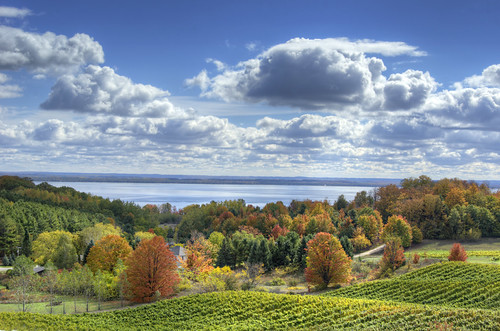
I ran into Ken last weekend in Traverse City, and – like many visitors to the region – he spent some time touring Traverse City’s wine country. The vineyards look great at this time of year and (even better) the grapes in these vineyards and all over the state are defying the general agricultural awfulness. Long, dry summer made this vintage year for wine grapes from Crain’s Detroit Business begins:

Call it global warming or climate change, it doesn’t matter to winemaker Lee Lutes. He calls the past few years of long, warm, dry summers an “exceptional growing season” for his grapes.

Today the head winemaker at Black Star Farms is helping harvest the crop on the winery’s 150 acres on the Leelanau and Old Mission peninsulas.

And while the region’s crop of tart cherries was ruined by the weather’s mood swings in the spring — 80 degrees in March, then frost in May — wine grapes mature later and, for the most part, survived if not thrived. The variety of grapes grown in Michigan are really meant for warmer regions.

Check this out bigger and see more in Ken’s Traverse City slideshow.

More Michigan farms on Michigan in Pictures.

Waterfall Wednesday: Greenstone Falls

All About Fall - Greenstone Falls (Porcupine Mountains State Park - Upper Michigan)

All About Fall – Greenstone Falls (Porcupine Mountains State Park – Upper Michigan), photo by Aaron C. Jors

GoWaterfalling’s minor waterfalls page says:

Greenstone Falls is a small scenic falls on the Little Carp River. The falls is about 20′ wide, and less than 10′ high. This is the most easily reached of the “backcountry” falls in Porcupine Mountains State Park, being about 1/2 mile from the trailhead. The trailhead to the falls is at the end of Little Carp River road. If you continue on the trail for another 2+ miles you will reach the much larger Trappers Falls.

Trappers Falls looks like a pretty cool natural waterslide!

Check this out on black and see more in Aaron’s great Waterfalls slideshow. Aaron has several more waterfall shots on Michigan in Pictures too.

Many more Michigan waterfalls on Michigan in Pictures.