Miners Castle, with ice and kayaks

Miners Castle, with ice and kayaks

Miners Castle, with ice and kayaks, photo by Ann Fisher

The Washington Post has a feature on Lake Superior’s stubborn ice cover:

As of Memorial Day, ice covered 4.5 percent of Lake Superior according to NOAA, and 1.7 percent of the Great Lakes overall (though Superior is the only lake with remaining ice). The recent Great Lakes ice cover is unrivaled in records dating back to the early 1970s.

Ice cover the Great Lakes has been way above normal and, at times record-setting, for months.

In early March this year, the Great Lakes ice extent reached 94.19%, the second most on record for any month, dating back to 1973 in NOAA’s dataset, and most on record so late in the season. In late April, ice still covered nearly one-third of the Great Lakes, the most on record by a large margin so late into spring.

Click through for some photos of people enjoying the ice.

Ann took this last weekend at Miners Castle in the Pictured Rocks National Lakeshore. How cold is that water right now? Michigan Sea Grant’s Coastwatch for the central UP shore of Lake Superior recorded a balmy 36.7 degrees on May 25th!!

View Ann’s photo big as Lake Superior and see more in her 2014 U.P. slideshow.

There’s more Miners Castle and more Lake Superior wallpaper on Michigan in Pictures.

Lilac Season

Lilacs in Spring

lilacs in spring, photo by Laila L

It’s lilac time across most of Michigan, one of my favorite seasons!

Laila took this photo last May – view it bigger and see more in her Flowers slideshow.

Memorials & Memory

U.S. Flag

U.S. Flag, photo by Anne Savage

I hope everyone gets a chance today to remember those they know and those they dont who gave their lives in service to country.

View Anne’s photo bigger and see more of her work at annesavagephotography.com.

You can look back on past Memorial Day posts on Michigan in Pictures including how Michigan was the first state to make Decoration Day a state holiday and Michigan’s role in the creation of Memorial Day.

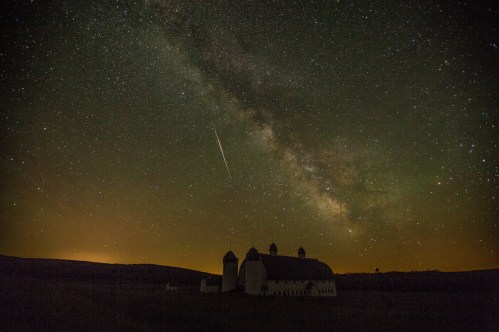
First of its kind: Camelopardalids Meteor over DH Day

Cameleopard Meteor over DH Day Barn

DH Day at Night, photo by Rudy Malmquist

Like many, Rudy stayed up really late to see what the new May Camelopardalids meteor shower would deliver. The answer was “Not a whole lot.” One thing they say is that predictions might have been a bot off and they will put on a show tonight. You can read about the whys and wherefores on EarthSky, but I’d like to make a couple of points.

One is that (as you can see from the photo) the skies last night were jaw-droppingly clear, providing some of the most amazing star gazing in recent memory.

The second (and I think the real payoff) is that those hardy folks who stayed up or dragged themselves out of bed saw an the first act of an event that could take recur for millennia. Having a chance to see the birth of something that operates on a cosmic timescale is pretty darned cool!

View Rudy’s photo of the DH Day Barn in the Sleeping Bear Dunes National Lakeshore bigger and see more in his slideshow.

More meteors on Michigan in Pictures!


Spend World Turtle Day with Common Map Turtles

Northern Map Turtles

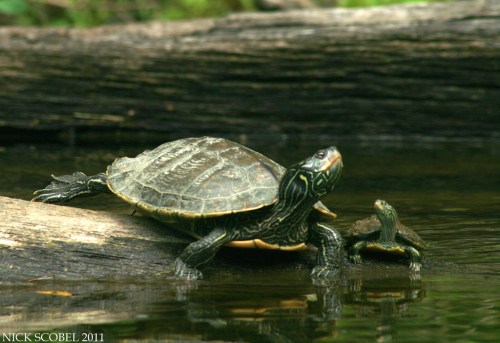
Northern Map Turtles, photo by Nick Scobel

May 23rd is World Turtle Day and Michigan is home to 10 native turtle species. I’ve now profiled 7 (most with Nick’s awesome photography), and you can get the full list at one of the most popular posts on Michigan in Pictures: Know Your Michigan Turtles.

Graptemys geographica (Common Map Turtle, Northern Map Turtle) from the University of Michigan Animal Diversity web says (in part):

Common map turtles get their name from the markings on the carapace. The light markings resemble waterways on a map or chart. The lines on the carapace are a shade of yellow or orange and are surrounded by dark borders. The rest of the carapace is olive or grayish brown. The markings on the older turtles may be barely visible because of darker pigment. The carapace is broad with moderately low keel. The hind of the carapace is slightly scalloped shaped due to the scutes. The plastron of an adult map turtle tends to be plain yellowish color. The head, neck and limbs are dark olive, brown or black with thin yellow, green or orangish stripes. There is also a oval spot located behind the eye of most specimens. There is sexual dimorphism in size and shape. The females are much larger than the males…

The common map turtle is dormant from November through early April. Most of that time is spent under the water, wedged beneath submerged logs, in the bottom mud of a lake or in a burrow. They have been known to change locations in the middle of the winter. They are avid baskers and they bask in groups. They are diurnal, active both in the day and at night. They are also a very wary animal, at the slightest hint of danger they slip into the water and hide. During courtship the male initiates by tapping his long claws on the front of the female but few details are known.

Common map turtles are omnivores. The feeding always takes place in the water. The adult females, due to their large heads and strong jaws eat larger prey than the males. The females consume snails, clams, and crayfish. The males eat aquatic insects, snails, and smaller crustaceans. Both are also known to eat dead fish and some plant material.

Read on for more and also see the Michigan DNR’s page on Common Map Turtles which includes a distribution map.

View Nick’s photo bigger, see more of his Northern Map Turtle photos or just dive into his huge collection of turtle pics! Nick also runs the Herping Michigan Blog that features all kinds of photo-rich features of Michigan frogs, snakes, salamanders and turtles. Definitely check out his Kayaking for Turtles post to see dozens of turtles from several turtle species that he photographed on one river paddle in Northern Michigan.

American Tortoise Rescue, a nonprofit organization established in 1990 for the protection of all species of tortoise and turtle, is sponsoring its 14th annual World Turtle Day™ on May 23rd. The day was created as an observance to help people celebrate and protect turtles and tortoises and their disappearing habitats around the world. Click the link to learn more about turtles and how you can protect them.

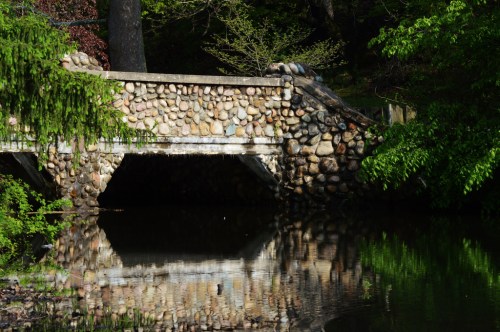
Stone Bridge

DSC_3754

Untitled, photo by erin naylor

One of the fun things about Michigan in Pictures for me is that I get to see interesting and out-of-the-way places like this!

View Erin’s photo background bigtacular and see more in her slideshow.

More bridges on Michigan in Pictures.

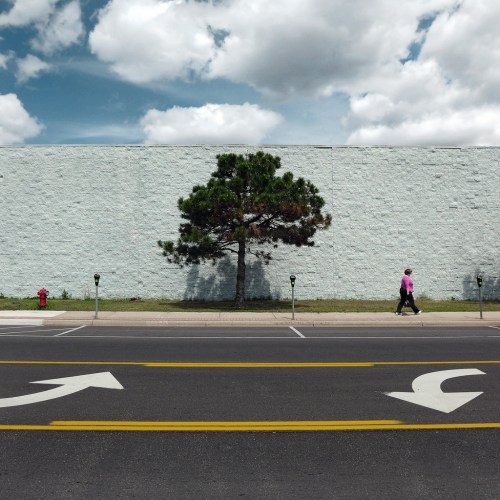
Here & There

Here and There

Here and There, photo by Steve

“From there to here, from here to there, funny things are everywhere!”
~ Dr. Seuss

One of the things a photographer needs is a good eye and Steve has a great one. View his photo bigger or in his slideshow and check out more of his work on Michigan in Pictures.

Old Dock

Old dock III (1 of 1)

Old dock III (1 of 1), photo by Todd Bielby

One day’s ruin is another day’s scenery…

View Todd’s photo background bigtacular and see more including a black & white view in his slideshowFYI, he shot this pic at Forrester Park, about 20 miles north of Port Huron.

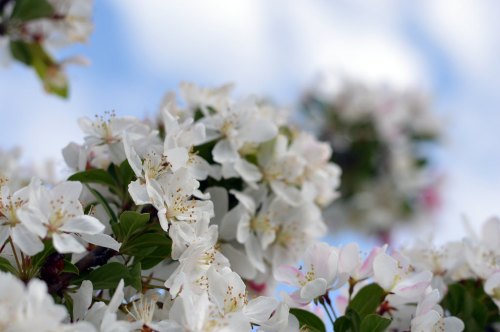
Blossom Time

White Blossoms

White Blossoms, photo by cncphotos

In addition to Michigan in Pictures, I run the website Leelanau.com. The most common question this time of year over there is “When will cherry blossoms be out?” Although this year has been slow going, I was out and about yesterday and caught some of the first blooms of the season. Click that link to see them on Leelanau.com and also a pile of morels!

Visit Traverse City’s cherry blossom section says that the blossoms on the trees last on average of four to five days, but because different parts of the region bloom at different times, it’s a safe bet you can see blossoms for one to two weeks on average if you make the rounds.

View CNC’s photo background bigilicious and see more in his Spring slideshow.

Lots more blossoms and more spring wallpaper on Michigan in Pictures.

The Camelopardalids: A New Meteor Shower for May?

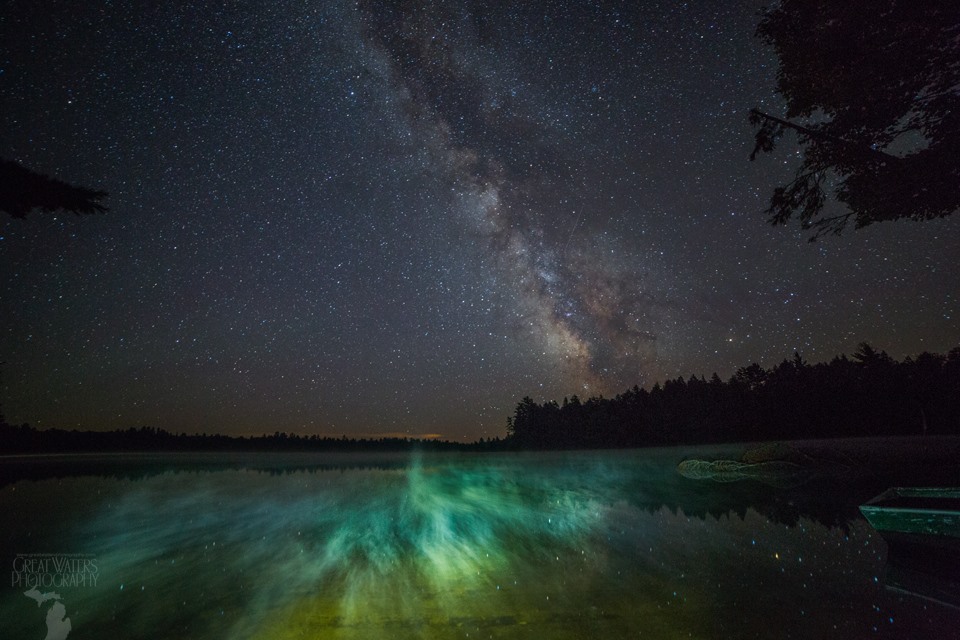
Milky Way Over Twin Lake, photo by Yooper Life Photography

EarthSky has a feature on the possible birth of a new meteor shower in May:

In 2014, an exciting new meteor shower – the May Camelopardalids – might come on the scene. And it’s coming up soon! It’s predicted for the night of May 23-24. This possible shower stems from Comet 209P/LINEAR, discovered in 2004. If the predictions hold true, Earth might be sandblasted with debris from this comet, resulting in a fine display of meteors, or shooting stars on the evening of May 23, and the morning of May 24…

The meteors will radiate from the constellation Camelopardalis (camelopard), a very obscure northern constellation. Its name is derived from early Rome, where it was thought of as a composite creature, described as having characteristics of both a camel and a leopard. Nowadays we call such a creature a giraffe! Since meteor in annual showers take their names from the constellation from which they appear to radiate – and since this meteor shower might become an annual event – people are already calling it the May Camelopardalids.

This constellation – radiant point of the May 2014 meteor shower – is in the northern sky, close to the north celestial pole, making this meteor shower better for the Northern Hemisphere than the Southern Hemisphere.

Click through for lots more about the May Camelopardalis including videos and charts of where to look!

Ken took this photo of the Milky Way over Twin Lake near Grand Marais in 2013. View his photo bigger on Facebook and see more on his Yooper Life Page.

More meteor showers on Michigan in Pictures!