Yellow-footed Chanterelle mushroom

6739 Yellow-footed Chanterelle

6739 Yellow-footed Chanterelle, photo by darylann

MichiganMorels.com says that the Yellow-Footed Chanterelle is a bright yellow mushroom, this is sometimes funnel shaped and:

Time Of Year: Late Spring through early Summer. Once you find an area that produces chanterelles, go back 2 or 3 times within that month. you just might find they fruit in the same area 2, 3 or 4 times!!

Edibility: Delicious and well respected as one of the best edible mushrooms by nice restaurants as well as harvesters. The chanterelle is one of my favourites and I look forward to it as much as morels. One must use caution so as not to confuse it with the poisonous Jack O Lantern. The Jack will have “normal” gills and fruit off of wood.

Habitat: I find them in mixed deciduous woods where sunlight is allowed to reach the ground. They seem to relate to Oak in my area, but I read that they also relate to Maple, Aspen and Pine.

You can read more at Wikipedia’s Chanterelle entry and even order chanterelle mushrooms from Michigan’s own Wild Harvest.

You can see this bigger in Daryl Ann’s slideshow.

The Portage Lake Lift Bridge & Houghton Bridgefest

The Portage Lift Bridge I

The Portage Lift Bridge I, photo by We Are CS.

There are those who believe that the Portage Lift Bridge in Houghton, Michigan looks like two grasshoppers eating spaghetti. There are also those who believe this structure is worthy of celebration. That annual event happens this weekend (June 19-21) and it’s called Bridgefest. It looks like they pack a lot of fun into this weekend long celebration.

Wikipedia’s Portage Lake Lift Bridge entry says:

The Portage Lake Lift Bridge connects the cities of Hancock and Houghton, Michigan, USA, across Portage Lake, a portion of the waterway which cuts across the Keweenaw Peninsula with a canal linking the final several miles to Lake Superior to the northwest. US 41 and M-26 are both routed across the bridge.

The original bridge on this site was a wooden swing-bridge built in 1875. This was replaced by a steel swing-bridge built by the King Bridge Company in 1901. This bridge was damaged when a ship collided with it in 1905. The center swinging section of the bridge was replaced and a similar incident almost occurred again in 1920, but the ship was able to stop by dropping its anchor, which snagged on the bottom of the lake. In 1959, this bridge was replaced, at a cost of about 11-13 million US dollars (sources vary), by the current bridge which was built by the American Bridge Company.

As its name states, the bridge is a lift bridge with the middle section capable of being lifted from its low point of four feet clearance over the water to a clearance of 100 feet (30 m) to allow boats to pass underneath. The Bridge is the world’s heaviest and widest double-decked vertical lift bridge.Its center span “lifts” to provide 100 feet (30 m) of clearance for ships. The bridge is a crucial lifeline, since it is the only land based link between the north (so-called Copper Island) and south sections of the Keweenaw peninsula.

Be sure to check this out bigger and also have a look at Kyle’s Portage Lift Bridge set (slideshow). More photos of the Portage Lift Bridge on Flickr.

Grand Island East Channel Light

Picture Rock Light House

Picture Rock Light House, photo by wlmgram.

The Grand Island East Channel Light entry at Terry Pepper’s Seeing the Light begins:

Grand Island stands at the entrance to Munising Bay, with its south shore long serving as a natural harbor of refuge to vessels seeking shelter from the fury of Superior’s late season storms. So critical was the area considered by mariners that one of the big lakes’ first lighthouses was built on the north tip of Grand Island in 1856, to both warn coasting captains of the northern point of the island and to indicate the safe harbor located to the south. While the lighthouse served both purposes well, it did little to provide assistance to captains making their way through the harbor passages one the east and west sides of the island, through which entry was difficult under conditions of good visibility, and next to impossible under the cover of darkness.

To this end on February 27, 1860, Senator Chandler presented a petition signed by masters, pilots and owners of vessels sailing through the area “praying the erection of two light-houses upon the entrance to Grand Island bay and harbor.”

In addition to being one of the first lights on Lake Superior, it was also one of the first to be decommissioned. Click through to Terry’s site to read on and to see more pictures. He notes that you pass this light if you take the Pictured Rocks Boat Cruise. You can also see a Map to Grand Island light at Lighthouse Friends.

Be sure to check this out bigger and also see Wendy’s slideshow for a few more lighthouse photos.

Hunting trails under Lake Huron

Great lake

Great lake, photo by jpwbee.

Earlier this week mLive reported (thanks Michitwitter) that University of Michigan researchers found evidence of ancient hunters at the bottom of Lake Huron:

Using detailed government data on lake floor topography, a research vessel and a remote mini-rover equipped with a camera, scientists found what they believe are hunting pits, camps and rock structures called caribou “drive lines” on the bottom of Lake Huron.

Drive lines, also called drive lanes, are walls built of rocks that hunters used to lure caribou into ambush. A peculiarity of the deer species is that it readily follows linear cues, even though the rock walls are short enough to step over.

The structures were found on an underwater ridge that – about 9,000 years ago – was a land bridge above water. The 10-mile-wide Alpena-Amberley ridge stretches more than 100 miles from near Point Clark, Ontario, to Presque Isle.

The 1,148-foot “drive line” structure found by U-M researchers closely resembles one previously discovered on Victoria Island in the Canadian subarctic.

Click the link above for an underwater photo and be sure to check it out bigger.

Summertime!

Warm Summer Evening

Warm Summer Evening, photo by limegreen_kayak

I know that a lot of schools have been out for a while and others are on a year-round schedule, but my school gets out today so I hereby designate today as the official start of summer vacation in Michigan.

As my first act as Summertime Stimulus Czar, I direct everyone to pull out a Michigan map, check out a few likely destinations on Michigan.org & Absolute Michigan and try and create some economic impact for Michigan and fun for yourself!

Check this out bigger in limegreen kayak’s favorites! Here’s Summer in the Absolute Michigan pool.

TV Apocalypse

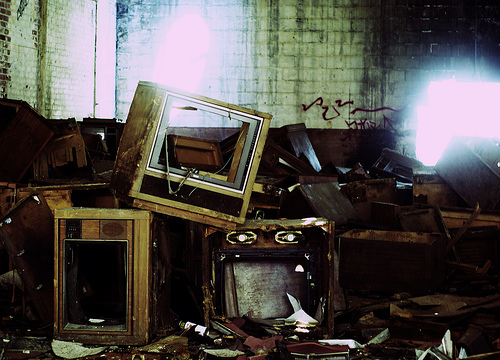
old news, photo by b.plus.

I was talking with a friend yesterday who had tested their old-school TV and converter kit to see if it would make the jump to the new DTV standard tomorrow (June 12, 2009).

Unfortunately theirs didn’t. If you don’t use cable or satellite, you’ll want to check out “Michigan DTV for Me“, a web site created by the Michigan Television Broadcasters to let you know all about the transition and the scheduled tests to let you know if your television is ready for the digital transition. The tests will be conducted simultaneously on every over-the-air television station in each market.

I doubt the televisions above will make that jump. I also doubt that thy’ll be able to tune in the Wings game! Check them out bigger in b.plus’s slideshow.

Chelsea Michigan turns 175 … but where is all the history?

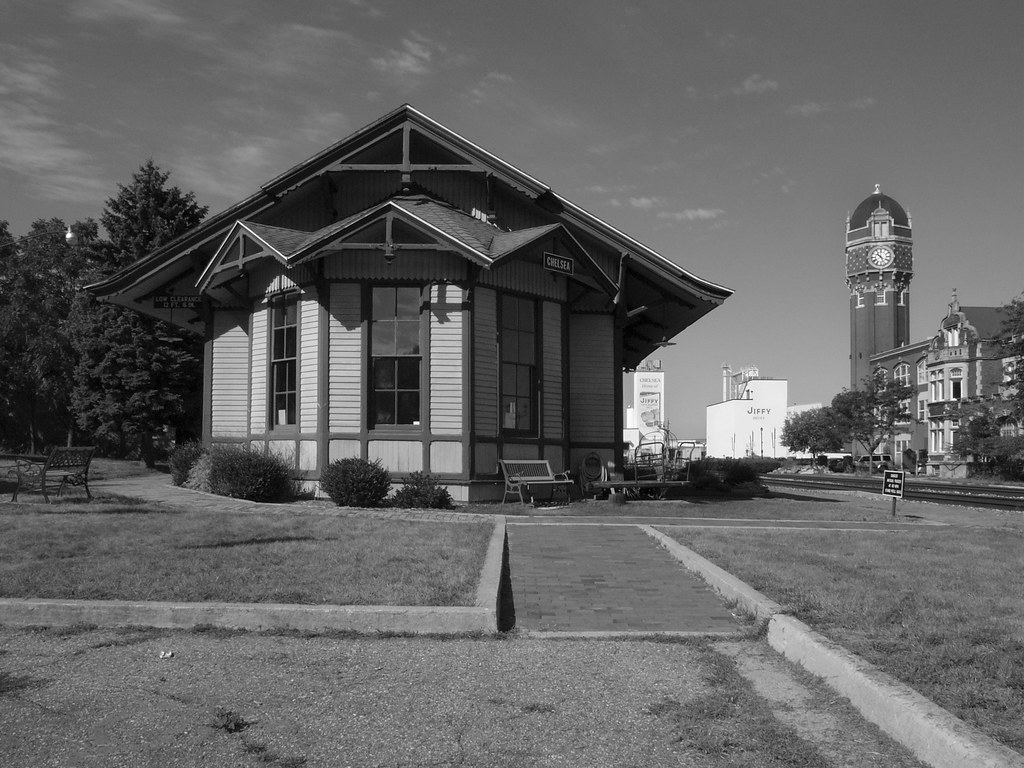
Chelsea Train Station by Jeff & Leyla

Chelsea Train Station by Jeff & Leyla

Chelsea, Michigan holds its 175th Anniversary Celebration June 25-28 with 4 days of events including a parade, youth activities, contests, music and folks in period costumes – family oriented fun.

This is the space where I would normally tell you something about the history of the town, but even the Wikipedia entry for Chelsea, Michigan has almost nothing. The city of Chelsea has little to say. They did have a link to the Washtenaw County guide entry for Chelsea where I learned:

Chelsea was first settled in 1820 by Cyrus Beckwith, along with Elisha and James Congdon.

Elisha Congdon named the community after his hometown of Chelsea, Massachusetts.

The town was literally “put on the map” when the Michigan Central Railroad built a station here in 1850. UPDATE: Searched for the railroad and found a great Chelsea history page.

Today Chelsea is best known as the home of the DaimlerChrysler Proving Ground and of Chelsea Milling Company’s “Jiffy Mix” brand.

Any other facts or links about Chelsea? Share them in the comments!

Jeff says that left to right you’re seeing the Chelsea Train depot (for rent), Jiffy, the Chelsea Clocktower and the Glazier Stove Co. It’s part of his Chelsea & Dexter set (slideshow). Speaking of slideshows, here’s the Chelsea slideshow from the Absolute Michigan pool.

You can check out some photos of the Glazier Stove Company from the Library of Congress.

R.I.P. Tiger Stadium

R.I.P.

R.I.P., photo by Ralph Krawczyk Jr.

Ralph writes:

Supporters of renovating what remained of Tiger Stadium surrendered Monday in a failed court effort to postpone the final demolition, sparking the end of a legacy that began in 1896…

You can read about the demolition in the Freep, watch it on YouTube, check out other Tiger Stadium pictures on Michigan in in Pictures and read Tiger Stadium stories on Absolute Michigan). You can also see more photos of this iconic park in Raph’s Tiger Stadium set (slideshow).

I’m not sure, however, that you can explain to me why Detroit seems hell-bent on demolishing its most prominent pieces of heritage.

Michigan Schooner Festival – September 11-13, 2009

Last light of day...

Last light of day…, photo by Doug Langham.

The inaugural Michigan Schooner Festival will take place September 11-13, 2009 in Traverse City. It will bring together six tall ships in West Grand Traverse Bay for rides aboard the ships, evening cruises, kids activities and more. “Song of the Lakes” will headline the entertainment with a performance on Saturday evening during a progressive-style party on the ships. Get all the details from MichiganSchoonerFestival.org.

The Friends Good Will out of South Haven won’t be there (at least this year) but the image was just too tasty to pass up! Be sure to check this photo out background bigalicious and also in Doug’s Friends Good Will slideshow.

The Painted Turtle in Michigan

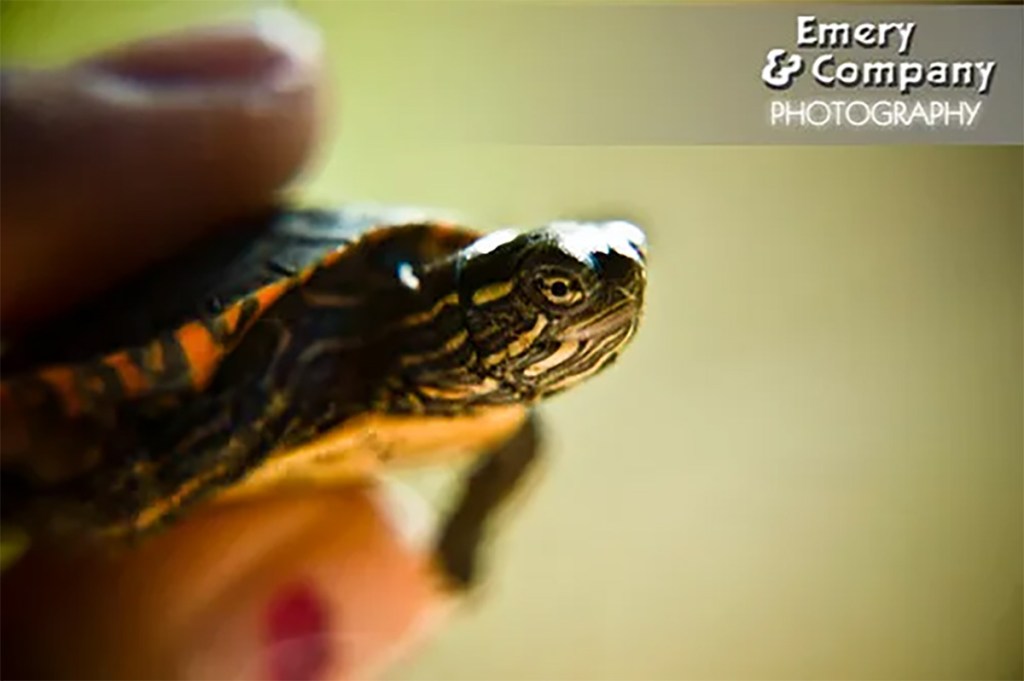
-3, photo by Emery Co Photo.

NOTE: there are two subspecies in Michigan: the Western Painted Turtle and Midland Painted Turtle

When I saw this photo in the Absolute Michigan group, I wondered it it was the right day to talk about painted turtles (I have to be careful after last summer’s TurtleGate incident as you may recall). When I saw the siskokid’s shot of a painted turtle basking in the sun just a few photos later, I figured it was a sign of some sort.

The painted turtle is one of the most common turtles in the US. It’s Michigan’s state reptile and the Michigan DNR’s Painted Turtle page has a map that shows where you can find them in the state. Wikipedia’s Painted Turtle entry notes that turtle nests are the snack bar of the animal world, vulnerable to predation by raccoons, squirrels, chipmunk, woodchucks, skunk, badger, foxes, fish crows, garter snakes, deer, ants, beavers and humans. The UM Animal Diversity web has pictures and information about Chrysemys picta (the painted turtle) and says that:

Painted turtles prefer living in freshwater that is quiet, shallow, and has a thick layer of mud.

Painted turtles are brightly marked. They have a smooth shell about 90 to 250 mm long. Their shell acts as protection, but since the ribs are fused to the shell, the turtle cannot expand its chest to breathe but must force air in and out of the lungs by alternately contracting the flank and shoulder muscles. The painted turtle has a relatively flat upper shell with red and yellow markings on a black or greenish brown background.

See some more photos of this little guy in Emery Co’s slideshow and check out even more in the turtle slideshow from the Absolute Michigan pool!