Leaving … for a little while

Leaving

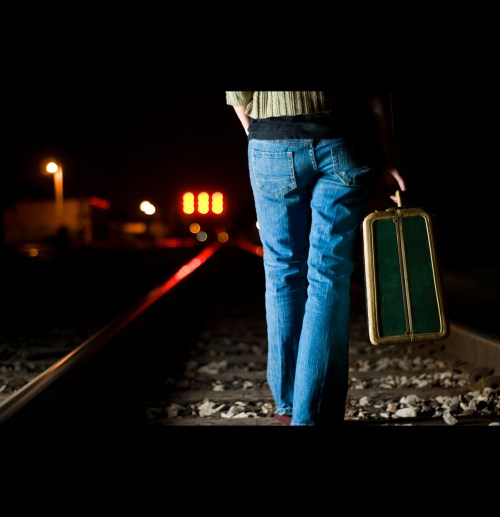
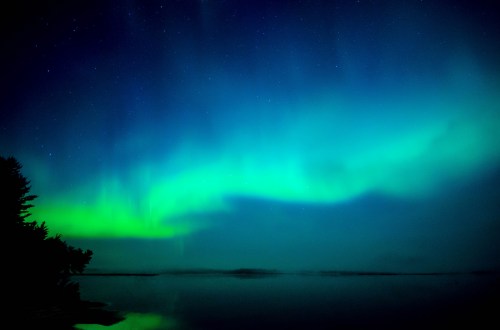
Leaving, photo by Christian Spencer

(but just to be clear, I’ll be back)

I wanted to let you all know that I’m about to embark on a little adventure to Central America for the next couple of weeks. To keep you company while I’m gone, I’ve selected a bunch of photos so you probably won’t notice much in the way of difference. I do apologize if something happens that makes a photo I scheduled seem tone deaf.

Anyway, enjoy my vacation!

View Christian’s photo background big and see more in his Strobist & Concert slideshow.

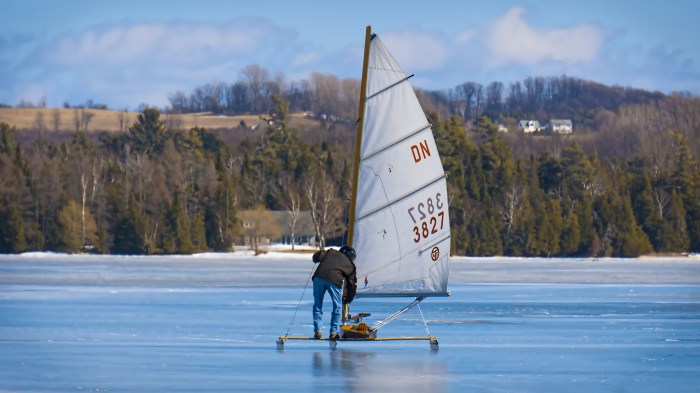
Standing Iceboater

Ice Boating in Leelanau County Michigan

Standing Iceboater, photo by Mark Smith

It’s 8 degrees right now in Traverse City, and while the weeklong run of wintry weather hasn’t been good for such popular pursuits as getting the garden ready, boxing up winter clothes and keeping your house from being declared a Cabin Fever Disaster Area, it has left the ice in many parts of the state just perfect for the sport of ice boating.

Northern Michigan AP News photographer John Russell is a Michigan in Pictures contributor and wrote Ice Boating: An Ancient Sport in a Modern World a few years ago. It begins:

Sailing on frozen surfaces is believed to have its roots in Northern Europe, where goods and people moved around the region on frozen rivers and canals, using simple sails and handmade boats.

The Dutch and others brought iceboating to the Hudson River valley and other places along the East Coast, where miles of frozen rivers made for great sailing during the winter months. Freight and people were commonly moved up and down the Hudson River in huge, slooped-rigged boats.

Ranging in length from 30 – 50 feet, the stern-steering boats are still raced today by the Northwest Ice Yacht Association, having recently celebrated its 100th anniversary.

The ancient sport of sailing on frozen lakes and rivers is alive and well in our state, which has a long and involved history in the sport. Innovations developed in Michigan have enhanced and improved iceboating.

During the winter of 1936-1937, in the hobby shop at the Detroit News, boat builder Archie Arroll, along with Norm Jarrait and Joe Lodge, designed an ice boat they called the Blue Streak 60. Designed to be small enough to build in a garage, and easy enough to be built by anyone, the 12-foot hull design became known as the DN 60, for Detroit News and the 60-square-foot sail.

It is now the largest one-design boat class in the world, with over 8,000 registered boats around the world.

Read on for more including our state’s role in international ice boat racing, some state clubs, safety tips and a couple of photos from John.

Mark took this shot earlier in the week on Lake Leelanau. View it background bigtacular and see more photos (and a couple videos) in his Ice Boats slideshow.

More Michigan iceboating on Michigan in Pictures!

Photographer Friday: Bill Schwab

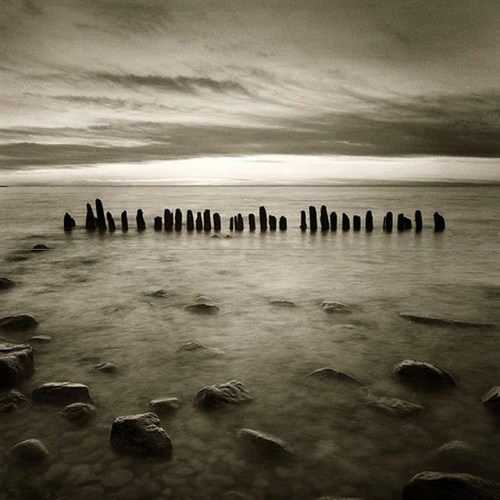
Pier Ruin, Cross Village, 2006

Pier Ruin, Cross Village, 2006, photo by Bill Schwab

One of my favorite Michigan fine art photographers is Bill Schwab, and I still remember the day when I pulled up the Absolute Michigan pool on Flickr to find he’d added some of his photos to the group, including the one above.

This morning I learned that he will be presenting an artist lecture “Across Iceland” for the Charlevoix Circle of Arts:

Fine art photographer, Bill Schwab has been taking photo-expeditions to Iceland since 2009. He will share some of his favorite photographs of Iceland’s harsh, yet beautiful, landscape. Schwab is also the founder of PhotostockFest held annually in Harbor Springs. The Artists Adventure Lecture Series are free and open to the public.

Click above for more on the event and visit the Charlevoix Circle of Arts for more about them. Bill’s PhotostockFest takes place June 18-21 and you can register and get details on workshops and the event at that link.

The photography site RFOTOFOLIO has a great interview Seeing the Beauty: Bill Schwab that starts out:

My father’s side of the family was very much into photography. My Great Grandfather, Frederic C. Lutge had a portrait studio in late 19th and early 20th century Detroit and it branched out from there. My father always had interesting cameras and my uncle had a darkroom. I was fascinated by the gear. Even when I was too young to have a camera, I would draw pictures of them. After cutting them out I would pretend to use them and then draw the pictures “taken” with my cut out cameras and show them to people. Apparently I was hooked at an early age, but it wasn’t until I was twelve that I started processing and contact printing my own film from an old Ansco kit. After that, it is all a blur.

…Growing up in Detroit, pretty much everyone worked in the automobile manufacturing industry and I knew very well at a young age that wasn’t going to be my destiny. I can remember very clearly my dad asking me what I wanted to be at about age five. I said that I would get a job like his and he basically said, no way. Then there was my mom with her unbridled curiosity. She was an early news junky and I seriously think she missed her calling by not going into journalism. The major happenings of the day were right there on the TV during dinner and I was very aware and interested in what was going on. We had subscriptions to Life Magazine and Look and I loved to go through the pages looking at the photographs.

Read on for lots more and some beautiful photos.

View Bill’s photo of the ruins of the pier at Cross Village bigger on Flickr and see lots more from across the state in his Michigan slideshow. You can view and purchase prints at billschwab.com. He’s a good follow on Facebook and also just started up an Instagram @bill_schwab, so you might want to follow along there too!

More Michigan photographers on Michigan in Pictures.

#TBT Detroit Police Radio Prowl Car

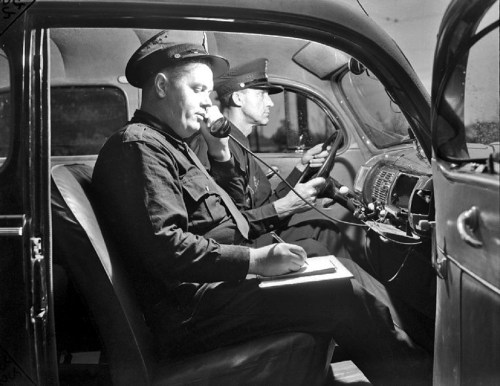
Detroit Police Radio Prowl Car
Detroit Police Radio Prowl Car, photo by Ronnie

I think the guy on the right is replaced by a computer in the 2015 version. About the photo, Ronnie writes:

Before the World War II started in Europe, 1939 was expected to be an exceptional year. America was filled with optimism, and with the Great Depression winding down, the nation was looking forward to what the coming decade of the 1940s would bring. Even the theme of the World’s Fair in New York was billed as “the world of tomorrow,” especially when it came to consumer and industrial electronics. However, for the Detroit Police Department one of the most important technological advancements in the world of law enforcement had become a reality.

Many electronics experts at the turn of the 1920s, said it would take another five decades before you would see two-way radios available for use in motor vehicles. While this philosophy was taken as gospel; several Amateur Radio operators pushed the envelope of experimentation to it’s zenith in their basements, and workshops across America. The fruits of their labor came to the forefront in the mid-to-late 1930s, which proved that two-way radio technology was viable for use by police officers in the field.

Earlier attempts at using two-way radio communications in the Motor City in 1934 had several drawbacks. The biggest was the cost, which was around $700 to equip each vehicle with the very large, and bulky equipment that took up the entire back seat and trunk of the patrol car. Not only did it take up a lot of space, but it really added a lot of weight that was hard on the vehicles’ suspension system.

Read on for more and to see the picture bigger and definitely check out Ronnie’s History photos for 100+ more photos from Michigan’s past with all kinds of great details!

More #TBT and more Michigan history on Michigan in Pictures.

Polling for Parks: Porcupine Mountain Wilderness State Park

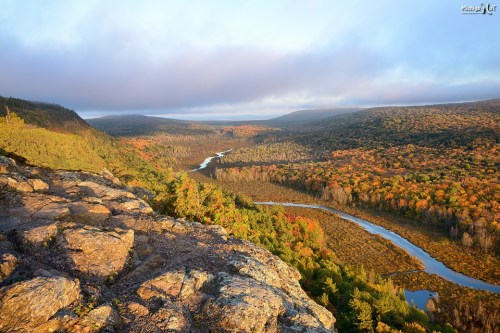
Sunset over Lake of the Clouds, Porcupine Mountains

Sunset over Lake of the Clouds, Porcupine Mountains, photo by John McCormick

USA Today is polling their readers to see what they think the 10 best state parks in the nation are. The entry page for the Porcupine Mountain Wilderness State Park says:

The Porcupine Mountains Wilderness State Park, or the “Porkies” as its known to frequent visitors, encompasses 60,000 acres of lakes, rivers and virgin forest. The park offers camping on the shores of Lake Superior, 90 miles of hiking trails, kayak rentals, mountain biking and, in the winter, access to the Porcupine Mountains Ski Area.

Porcupine Mountains Wilderness State Park – Mich. is currently ranked #2 of 20.

You can click here to vote if you’re so inclined.

John took this evening shot in October 2014 near the east end off the Lake of the Clouds. View it bigger on Flickr, see more staggering photos in his Autumn in Michigan slideshow, and definitely follow him on Facebook at Michigan Nut Photography.

You can click to visit the Porcupine Mountains Wilderness State Park website and get all kinds of Porcupine Mountains rivers, falls and views on Michigan in Pictures.

Signs of Spring #56: Chevrons

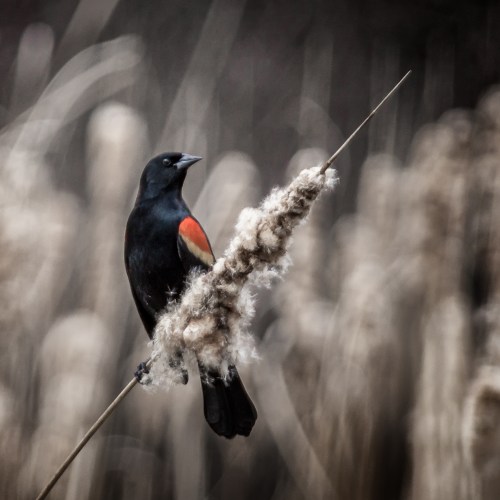
Chevrons

Chevrons, photo by MichaelinA2.PortrayingLife.com

Spring officially arrives today at 6:45 PM, and we are starting to see signs that winter is running out of steam. One of them is the return of Red-winged blackbirds Agelaius phoeniceus about which University of Michigan BioKids says (in part):

These birds are some of the first springtime birds to return from their wintering sites. Once males arrive, they devote their time to defending their territory. The most successful defenders are not necessarily the most aggressive birds. Males that spend more time in, as well as foraging on, their territory are more likely to retain ownership of that territory.

Males with darker colored shoulders do not tend to keep their territories. Typically in the spring, male red-winged blackbirds display in a “song spread.” They fluff their plumage, raise their shoulders, and spread their tail as they sing. As the display becomes more intense, the wings are more arched with the shoulders showing more prominently. Males use this same body display as a threat to other male birds that enter into the male’s territory.

Females will also engage in a “song spread” display directed at each other early in the breeding season. One possibility is that a female will defend a sub-territory within the male’s territory. The female will engage in a “wing flip” display when a disturbance prevents her from returning to her nest full of young.

Red-winged blackbirds are active during the day and migrate between their summer breeding grounds and winter feeding areas. During the winter, red-winged blackbirds aggregate in huge flocks and tend to stay in or near areas where grains and seeds are available to eat.

Read on for more including their ability to help control insect pests.

View Michael’s photo background big and see more in his soon to grow Birds 2015 slideshow.

Many more Michigan birds on Michigan in Pictures.

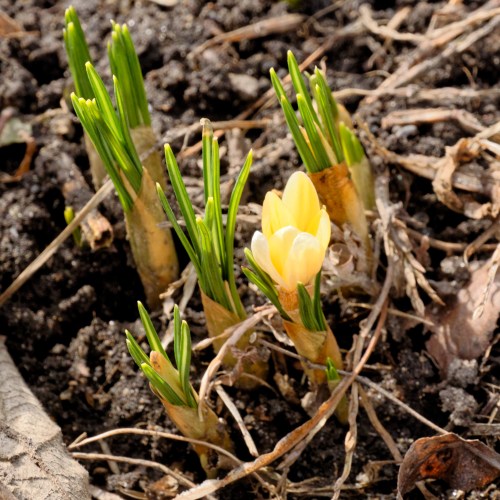
Spring!

Spring

Spring!, Photo by Joel Dinda

View Joel’s photo background bigtacular and then just lay back and watch his massive Flowers slideshow until you too believe in SPRING!

There’s lots more spring wallpaper on Michigan in Pictures.

Fire & Ice

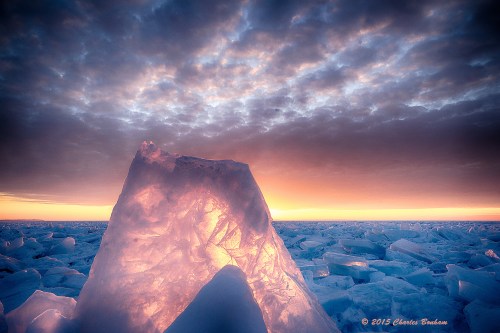
_DSC4701 Fire & Ice

Fire & Ice, photo by Charles Bonham

I keep thinking to myself just one more winter photo … and then there’s one more.

Charles shot this at Gills Pier on the Leelanau Lake Peninsula last week. View it background bigtacular (for real – the detail on the ice in the foreground is staggering) and see lots more Lake Michigan ice and beauty in his awesome slideshow.

More winter wallpaper, more Lake Michigan and more sunsets on Michigan in Pictures.

Feeling Green at the Eben Ice Caves

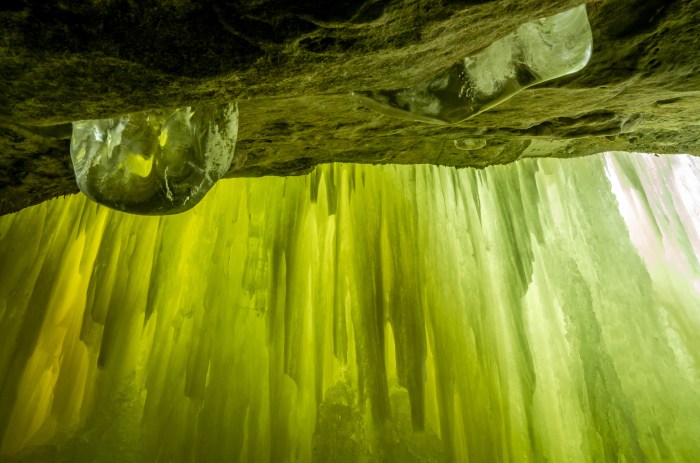
Feeling Green at Eben Ice Caves

Feeling Green, photo by Joseph Snoweart

This weekend features many St. Patrick’s Day celebrations around the state. I hope that if you’re taking part you have a lot of fun, stay safe and remember to be kind to any leprechauns you happen to meet!

View Joseph’s photo from the Eben Ice Caves background bigtacular and see more in his slideshow.

More winter wallpaper and more about the Eben Ice Caves on Michigan in Pictures.

A Conflagration of Storms: The March 13, 1989 Solar Storm

Conflagration of Storms

Northern Lights, photo by Stephen Tripp

Intense colors from the rare Great Aurora painted the skies around the world in vivid shapes that moved like legendary dragons. Ghostly celestial armies battled from sunset to midnight. Newspapers that reported this event considered the aurora, itself, to be the most newsworthy aspect of the storm. Seen as far south as Florida and Cuba, the vast majority of people in the Northern Hemisphere had never seen such a spectacle. 
~Dr. Sten Odenwald

I like to revisit this March 13, 1989 incident documented by Dr. Odenwald in A Conflagration of Storms. In addition to being an amazing display of the aurora borealis, this solar storm took down Quebec’s power network and very nearly much more:

In many ways, the Quebec blackout was a sanitized calamity. It was wrapped in a diversion of beautiful colors, and affected a distant population mostly while they slept. There were no houses torn asunder, or streets flooded in the manner of a hurricane or tornado. There was no dramatic footage of waves crashing against the beach. There were no cyclonic whirlwinds cutting a swath of destruction through Kansas trailer parks. The calamity passed without mention in the major metropolitan newspapers, yet six million people were affected as they woke to find no electricity to see them through a cold Quebec wintry night. Engineers from the major North American power companies were not so blasé about what some would later conclude, could easily have escalated into a $6 billion catastrophe affecting most U.S. East Coast cities. All that prevented 50 million more people in the U.S. from joining their Canadian friends in the dark were a dozen or so heroic capacitors on the Allegheny Power Network.

The Media seemed to have missed one of the most human impacts of the beautiful aurora they so meticulously described in article after article. Today the March 1989 ‘Quebec Blackout’ has reached legendary stature, at least among electrical engineers and space scientists, as an example of how solar storms can adversely affect us. It has even begun to appear in science textbooks. Fortunately, storms as powerful as this really are rather rare. It takes quite a solar wallop to cause anything like the conditions leading up to a Quebec-style blackout. When might we expect the next one to happen? About once every ten years or so, but the exact time is largely a game of chance.

Call it the ultimate Friday the 13th! The whole book The 23rd Cycle:Learning to live with a stormy star is available online, and you can read a lot more from Dr. Odenwald at his website, The Astronomy Cafe or at facebook.com/AstronomyCafe.

View Stephen’s photo bigger and see more in his excellent Northern Lights slideshow.

A whole lot more northern lights on Michigan in Pictures!

PS: Keep an eye on solar storminess and get heads up notifications when the northern lights might be visible at NOAA’s Space Weather Prediction Center.