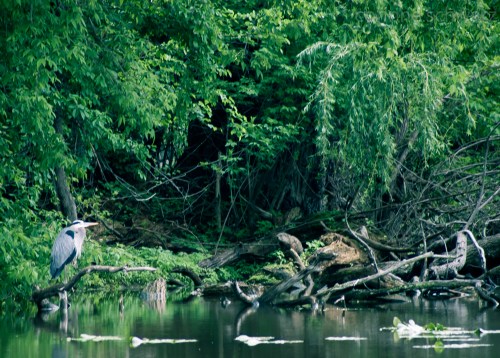
Best Friends in Nature: Heron & Beaver Edition

Heron & Beaver

Heron & Beaver, photo by Corinne Schwarz

Here’s a cool photo from May of 20111 that I never featured for some reason. That reason might have been so I could link to this article from the Birdwatchers General Store in Cape Cod about the symbiotic relationship between beavers & blue herons. It says in part:

It is thought that the Bay State’s famed naturalist, Henry David Thoreau, never saw a Great Blue Heron nest in Massachusetts. Why? It’s partly because there were no beavers living in MA during Hank’s lifetime. Way back in the 1700s, unregulated cutting eliminated the trees beavers needed for survival.

…Today, beavers are once again thriving in MA. That’s not only great news for anyone who enjoys seeing beavers, but it’s great news for Great Blue Herons as well.

I think we all know how beavers operate. They find a secluded stream, cut down a few trees and dam it up. The area behind the dam becomes flooded and turns into a beaver pond. Why do beavers need to go through all the work to build their very own pond? The beavers create a pond so they can have underwater access to their lodge, even when everything is frozen in the winter. However, the newly built pond often entraps large trees, which eventually drown and die. Dead trees growing out of the center of a pond may look eerie to us, but they are magnets to herons. The dead trees provide excellent platforms for the birds to build their nests on. In addition, the water prevents terrestrial predators from munching on the eggs and babies. Between the swampy setting, the dead trees, the bulky stick nests and the gangly herons, the whole scene looks a Gothic nursery, but the birds love it.

Read on for lots more, and for more about these two species, see Know Your Michigan Birds: Great Blue Heron and Castor canadensis, the American beaver on Michigan in Pictures.

View Corrine’s photo background bigtacular and see more in her Water Wheel slideshow.

More spring wallpaper and more “Best Friends in Nature” on Michigan in Pictures.

Happy Mother’s Day, Michigan Mommas

Mother and her ducklings

Mother and her ducklings, photo by Brent Looyenga

A very happy Mother’s Day to all the hardworking Michigan mommas out there!

View Brent’s photo background bigtacular and see more in his Misc slideshow.

PS: I guess this qualifies as another entry in the ever-expanding Michigan in Pictures Duckie Project.

Finally Friday: Michigan Morel Edition

Finally Morels in Michigan

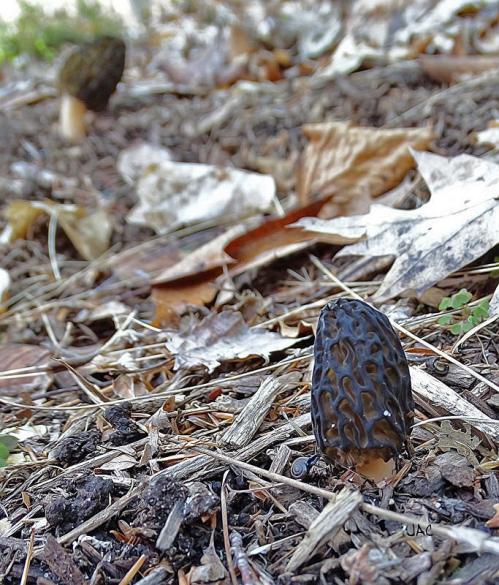
Finally, photo by Julie

Reports of morels are coming in from all across the state. They’ll be celebrating our delicious woodland friends this weekend (May 8-10) at the Mesick Mushroom Festival and next weekend (May 14-17) at the National Morel Mushroom Festival in Boyne City.

If you’re looking for Michigan morel photos and features, click that link for a ton from Michigan in Pictures. Happy hunting!!

Julie says these plus a few others will make a great topping for a ribeye! View the photo bigger and see more in her Spring/Summer slideshow.

Ramps, Wild Leeks, Spring Onion, Allium tricoccum

Wild Leeks

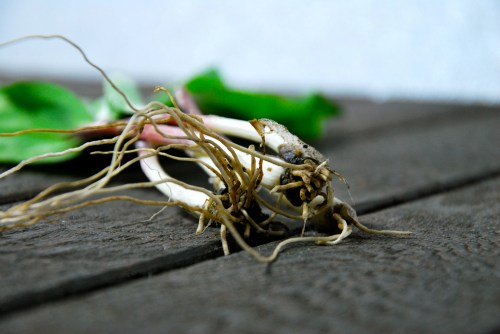
Wild Leeks, photo by CherryCapitalFoods

Here’s some of a Wild Food Wednesday on Wild Leeks I wrote for eatdrinkTC.com. You often find these oniony treasures when you’re morel hunting. Leeks are in the woodse now, and more than one little bird has told me of morels popping around the state as well! 

Whether you know them as ramps, wild leeks, spring onions or by their scientific name of Allium tricoccum, ramps are a wild onion with a delicious & pungent garlicky flavor. Wild leeks are found from as far south as Alabama all the way up into Canada. To the south, they are more commonly known as ramps while in the north, wild leek is more common. Wikipedia’s page on Allium tricoccum says that “ramps” comes from the English word ramson, a common name of the European bear leek (Allium ursinum) that is related to our American species.

Regarding harvesting, Ramp-age at the Earthy Delights blog says:

Good ramps or wild leeks should have two or three whole bright green leaves with the small white bulb attached by a purplish stem. The leaves are generally about 6 inches long, although ramps tend to be harvested at a somewhat earlier stage than are wild leeks. Depending on where you get them, ramps or wild leeks may be still muddy from the field or all cleaned and trimmed. The key is that they be fresh. Yellowing or withering in the leaves is a sign that they have gone too long.

A papery wrapper leaf (and some dirt) may surround the bulb and should be pulled off as you would with scallions. Trim away any roots along with their little button attachment. The entire plant is now ready for eating.

Once ramps / wild leeks have been cleaned, store them in the refrigerator tightly wrapped to keep them from drying out (and to protect the rest of the contents of the fridge from the heady aroma). They should keep for a week or more, but use them as soon as possible after harvest.

Some wild leek facts & lore:

  • Leeks were prized by the ancient Greeks and Romans and were especially revered for their beneficial effect upon the throat. The Greek philosopher Aristotle credited the clear voice of the partridge to a diet of leeks, while the Roman emperor Nero supposedly ate leeks everyday to make his voice stronger. (World’s Healthiest Foods)
  • The name of Chicago originates from “Checagou” (Chick-Ah-Goo-Ah)means “wild onions” in the Potawatomi language. The area was so named because of the smell of rotting marshland and wild leeks that covered it. (Earthy Delights)
  • Wild leeks are high in Vitamins C and A, and are full of healthful minerals. And they have the same cholesterol-reducing capacity found in garlic and other members of this family. (Earthy Delights)
  • The entire plant is edible and leaves, especially when young, are delicious when sauteed. (my kitchen)

View this photo background bigtacular and see more in Cherry Capital Foods’ Spring Hollow Farms slideshow.

I’m especially happy to feature today’s photo because we buy incredible lettuce, greens and duck & quail eggs from Richard & Diana of Spring Hollow Farms of Buckley. If you see them at the Traverse City Farmer’s Market, be sure to buy a bag or two of their spring mix!

More Michigan food and more spring wallpaper on Michigan in Pictures.

Waterfall Wednesday: Lower Hungarian Falls

Lower Falls

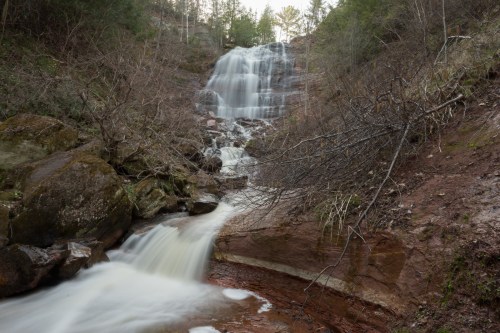
Lower Falls, photo by eahackne

It’s Wednesday so let’s make friends with one of Michigan’s 200+ named waterfalls. GoWaterfalling.com’s page on Hungarian Falls says:

Just downstream of the middle falls is the lower falls. This is a 50 foot drop over sheer cliff face. This is a frustrating waterfall. In low water conditions, the water is spread so thinly across the cliff that it is not especially scenic. It is also hard to get a clear view of the falls. You can get to the top of the falls fairly easily, but cannot see a whole lot. Getting into the gorge for a better view is difficult, especially when the water is flowing, as the ground is likely to be wet and snow and ice may still be present. But when the water is high, this is one of the most impressive waterfalls in Michigan.

Just downstream of the lower falls a side stream falls into the gorge. This stream carries even less water than Dover Creek and probably only has a significant amount of water during the spring melt.

The falls are easy to reach. From Route 26 in Hubbel turn west onto 6th street. A dirt road forks off of 6th street to the left. Take this road. It climbs up pretty steeply. Take the first left that you can, and this will lead you to a small parking area. A trail follows the gorge upstream to the falls. The middle falls is the easiest to reach. There are trails on both sides of the gorge, and a bridge crosses the creek between the middle and upper falls. Another bridge crosses the creek well downstream of all the falls. There is no real trail to the lower falls.

View Eric’s photo bigger on Flickr and see more views of Hungarian Falls right here!

Lots more Michigan waterfalls on Michigan in Pictures.

Pothole Proposal

Beyotch

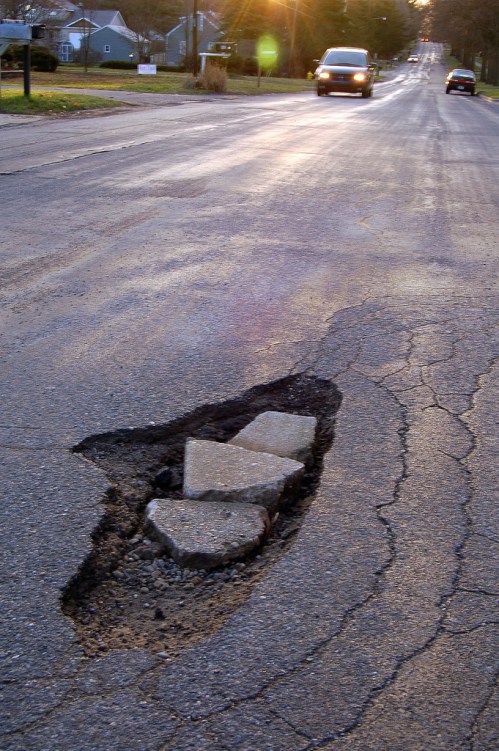
Beyotch, photo by Daniel E. Johnson

Ah Spring, when a young Michigander’s fancy turns to … potholes. They are on the ballot across the state today, but if you’re anything like me, whether or not Michigan’s Proposal 1 will help fix our crumbling roads is anything but clear.

One of my favorite sites is Ballotopedia, a nonpartisan website that provides accurate and objective information about politics at the local, state, and federal level. Their entry for the Michigan Sales Tax Increase for Transportation Amendment (Proposal 1) summarizes the numbers:

Proposal 1 is estimated to cost households, on average, between $477 and $545 in additional taxes per year. Households eligible for the Earned Income Tax Credit would save between $24 and $69 in taxes per year. The costs to households is contingent upon household incomes, future fuel prices and consumer choices, with those driving more or owning more cars paying more. The condition of Michigan’s transportation infrastructure costs motorists, on average, $539 to $686 per year and, according to TRIP, upwards of $1,600 in metro areas.

Read on for a whole lot more including the pro and con arguments, supporters and detractors and assessments of the truth in ad claims about the measure. A couple more resources are Bridge Magazine’s summary of Proposal 1 and Jack Lessenberry’s take on the issue from Michigan Radio that says that although voters he spoke with believe that our roads are horrible and we need to spend more:

They just do not trust their government. Several people asked, “If we vote for this, how do we know they won’t just steal the money and use it for something else?’

Many of them remember, or have heard about the promises made when the original Michigan lottery was passed in the early 1970s. The voters were told that the profits would go for education. That was a key factor in getting voters to approve legalized gambling.

But while the lottery proceeds did indeed go to education, the lawmakers took away the money they had been spending on education and used it for other things. That still rankles people, some of whom weren’t even alive at the time.

View Daniel’s photo bigger and click for lots more of his Grand Rapids photos.

The Great Michigan Earthquake of 2015

Its the Strt of the Breakdown

It’s the Start of the Breakdown, photo by Cherie

If I had a photo of the aftermath of Saturday’s 4.2 magnitude earthquake centered near Kalamazoo available to me,  I’d post it here. Since I don’t, here’s the kind of damage you wouldn’t see. mLive offered some facts about Michigan earthquakes, saying (in part):

When a 4.2 earthquake struck Michigan on Saturday, May 2, the common reaction was: Earthquake? In Michigan? Seriously?

The surprise was not misplaced. Earthquakes in Michigan are rare and tend to be minor. In fact, Saturday’s quake was the state’s most powerful earthquake since 1947.

The quake occurred about 12:20 p.m., with an epicenter about five miles south of Galesburg in Kalamazoo County.

Michigan has “very small probability of experiencing damaging earth­quake effects,” the Federal Emergency Management Agency says.

In fact, most tremors felt in Michigan originate elsewhere.

Michigan normally does not have earthquakes, the state’s emergency preparedness web page says. “However, we can suffer effects from earthquakes in neighboring states that have a higher likelihood of them.”

Michigan’s strongest earthquake on record occurred on Aug. 9, 1947, about 35 miles from the epicenter of Saturday’s quake.

The 1947 had a magnitude of 4.6 and was centered near Coldwater. It damaged chimneys and cracked plaster over a large area of south-central Michigan and was felt as far away as Muskegon and Saginaw and parts of Illinois, Indiana, and Wisconsin.

Read on for some more facts about Michigan earthquakes.

View Cherie’s photo background big and see more in her slideshow.

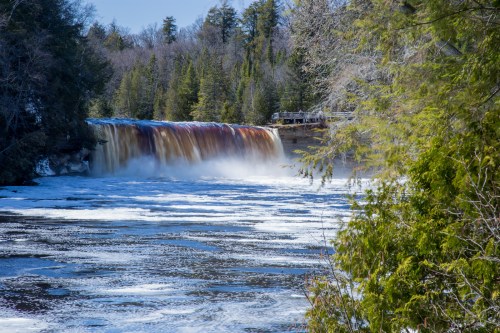
Spring at Tahquamenon Falls

Tahquamenon Falls

Tahquamenon Falls, photo by ptrefftz

Hey beautiful!

View the photo background bigtacular and see more including some beautiful night sky photos in ptrefftz’s slideshow.

More Spring wallpaper on Michigan in Pictures.

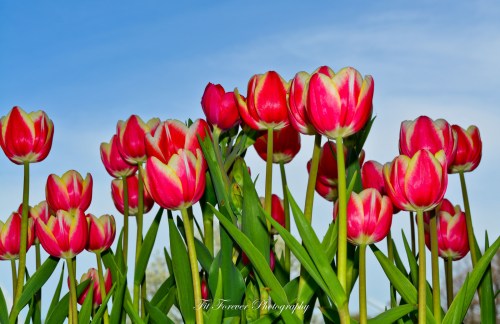
Tulips, Tulips, Tulips

Tulips, Tulips, Tulips

Tulips, Tulips, Tulips, photo by Dawn Williams

Holland’s annual Tulip Time starts this Saturday (May 2) and continues through May 9th. The annual celebration features parades, music, displays of Dutch Heritage and of course tulips, 4.5 million of them!

Dawn took this photo last year. See it background bigtacular on Flickr and check out more of her Tulip Time photos.

More tulips & Tulip Time and more spring wallpaper on Michigan in Pictures.

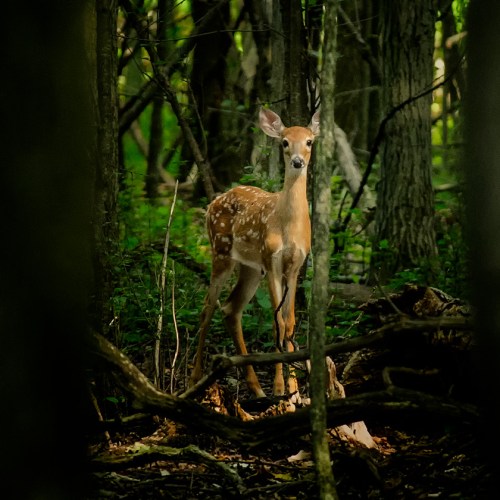
Almost Too Curious: Fawn Facts

Almost Too Curious

Almost Too Curious, photo by MichaelinA2

In honor of this great shot of a curious Whitetail fawn, here are some fawn facts gathered from the the UM Animal Diversity Web and the Michigan DNR and two hunting sites, The Whitetail Deer and Tinks.

  • The whitetail fawn loses its spots by the end of October of the same year it was born, or within 3 to 4 months after birth.
  • As the spots disappear, the fawn’s coat also changes from its reddish color to a grayish winter coat. The buck fawn’s face grows a bit darker in color but the belly remains white.
  • Deer tend to live in female-led family groups of up to 25 deer and may live to ten years or more.
  • When playing together, fawn games are suggestive of children’s games like tag. Mock fighting, aggressive postures, and scent marking helps fawns refine social behaviors.
  • Young males leave their mother after one year, but young females usually stay with their mother for two years.
  • The area where the fawn is born normally becomes its adult habitat.
  • Male fawns grow pedicles (the attachment point for antlers) that are typically about one inch in length.
  • Fawns that live past the first week have a good chance of surviving to adulthood.

Check it out bigger and see more in Michael’s 2013 Animals slideshow.

More nature on Michigan in Pictures.