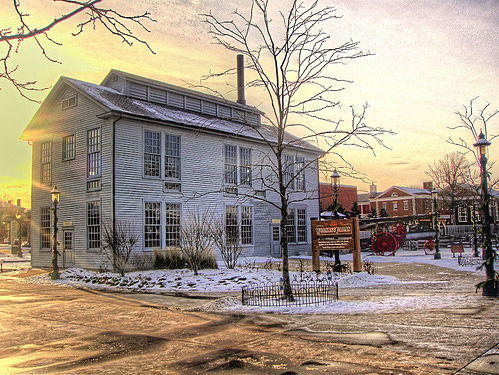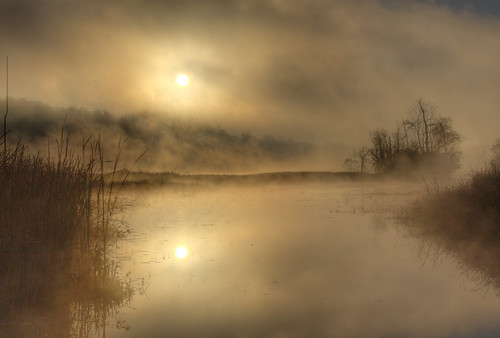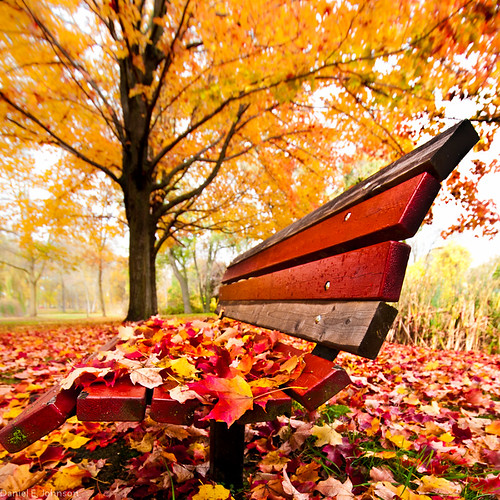
A little trip up north… and Thomas Story Kirkbride

2 Doors Down by Carolyn Gallo

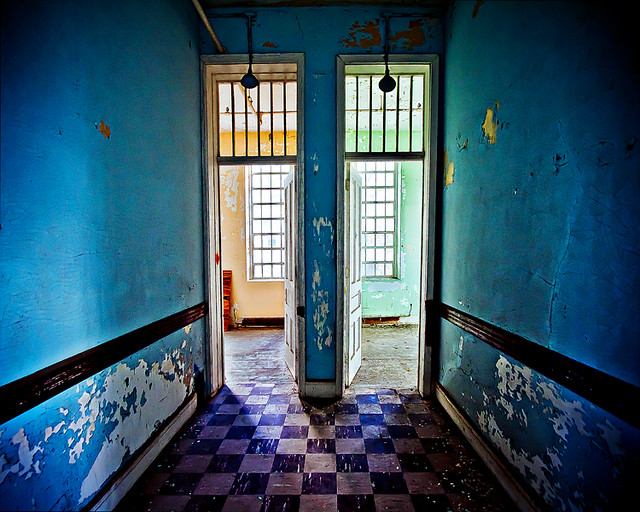
Last weekend, I had the good fortune to lead a photo walk for a group of Michigan photographers at the place where I work, the The Village at Grand Traverse Commons in Traverse City. We were touring the as yet un-renovated parts of what was known as Building 50 when it was the Traverse City State Hospital. Also known as the Northern Michigan Asylum for the Insane and the Traverse City Regional Psychiatric Hospital, the building was a Kirkbride Institution, designed by Dr. Thomas Story Kirkbride.

Kirkbride was a Pennsylvania Quaker and founding member of the Association of Medical Superintendents of American Institutions for the Insane who developed a concept of treatment known as the Kirkbride Plan. This plan proposed a particular way of housing patients that included segregating by severity of mental illness and fresh air and natural light where possible:

It was believed crucial to place patients in a more natural environment away from the pollutants and hectic energy of urban centers. Abundant fresh air and natural light not only contributed to a healthy environment, but also served to promote a more cheerful atmosphere. Extensive grounds with cultivated parks and farmland were also beneficial to the success of an asylum. Landscaped parks served to both stimulate and calm patients’ minds with natural beauty (enhanced by rational order) while improving the overall aspect of the asylum. Farmland served to make the asylum more self-sufficient by providing readily available food and other farm products at a minimal cost to the state.

Patients were encouraged to help work the farms and keep the grounds, as well as participate in other chores. Such structured occupation was meant to provide a sense of purpose and responsibility which, it was believed, would help regulate the mind as well as improve physical fitness. Patients were also encouraged to take part in recreations, games, and entertainments which would also engage their minds, make their stay more pleasant, and perhaps help foster and maintain social skills.

There’s lots more from Kirkbride Buildings where the author has done some spectacular scholarship and created an excellent resource for these amazing structures. The Kirkbride System produced a photographic environment of uncommon richness that is evident in the slideshow from the group A little trip up north…, the Flick slideshow for the “atripupnorth2010” tag and in the streams of the photographers in the group. They also visited some wineries and other spots in the area.

As an added bonus, and unlike many of Michigan’s ruins, the Village at Grand Traverse Commons is actively being redeveloped. In fact, this week a crew began work to restore much of the North Wing where we toured!

See this photo bigger in Carolyn’s Photogs Up North slideshow.

Search Kirkbride on Michigan in Pictures for more about the history of this remarkable place.

Message in a Bottle

Untitled, photo by JRI Photos.

Just a castaway, an island lost at sea
another lonely day, no-one here but me
~The Police

Check this out bigger in Jeremy’s slideshow and have a great weekend!

Happy Birthday, Greenfield Village and The Henry Ford!


Soybean Lab Agricultural Gallery – Greenfield Village, Dearborn, Michigan, photo by cmulou

You don’t really think about “light” having an anniversary, but today is the 131st anniversary of Thomas Edison’s invention of the electric light. Light’s Golden Jubilee Honors Thomas Edison and Dedicates a Museum from The Henry Ford Museum relates that today features another birthday:

On October 21, 1929, Henry Ford hosted an elaborate celebration in Dearborn, Michigan, in honor of his friend Thomas A. Edison. Known as Light’s Golden Jubilee, the date marked the 50th anniversary of Edison’s invention of the electric light. Ford also planned his event as a dedication of his own lasting tribute to Thomas Edison and to American innovation, the Edison Institute of Technology (later renamed Henry Ford Museum) and Greenfield Village. Here, Henry Ford had moved the Menlo Park, New Jersey, laboratory where the inventor made his discovery so many years before.

The RSVPs for Light’s Golden Jubilee began pouring in to Ford Motor Company by early October 1929. Prominent businessmen like John D. Rockefeller, Jr. and J.P. Morgan, scientist Marie Curie, inventor Orville Wright, and humorist Will Rogers were among those who enthusiastically accepted Ford’s invitation to be part of the landmark event.

A t 10 o’clock that morning, President Herbert Hoover, Henry Ford and Thomas Edison arrived at Smiths Creek depot at Greenfield Village on a steam- powered locomotive, much like the one on which Edison had sold papers as a youth. They were met by invited guests that numbered more than 500. The crowd roared their approval and congratulations as Edison , Hoover and Ford stepped from the train to begin the day’s festivities…

Read on and also see some photos from the opening gala at the Henry Ford.

Check this photo out bigger in cmulou’s Winter at Greenfield Village slideshow and Happy Birthday to one of Michigan’s coolest museums!!


Why is it called Indian Summer anyway?

indian summer

indian summer, photo by paulh192.

“The air is perfectly quiescent and all is stillness, as if Nature, after her exertions during the Summer, were now at rest.”
~John Bradbury, 1817

We’ve had a spectacular October, and that had me wondering about the term “Indian summer.” Wikipedia has some thoughts on Indian summer, but I thought the best work was done by William R. Deedler, Weather Historian for the National Weather Service Detroit/Pontiac in Just what is Indian summer and did Indians really have anything to do with it?. He writes:

It can be defined as “any spell of warm, quiet, hazy weather that may occur in October or even early November.” Basically, autumn is a transition season as the thunderstorms and severe weather of the summer give way to a tamer, calmer weather period before the turbulence of the winter commences.

The term “Indian Summer” is generally associated with a period of considerably above normal temperatures, accompanied by dry and hazy conditions ushered in on a south or southwesterly breeze. Several references make note of the fact that a true Indian Summer can not occur until there has been a killing frost/freeze.

The earliest known use of the term was in 1778 by Frenchman St. John de Crevecoeur who wrote:

Sometimes the rain is followed by an interval of calm and warmth which is called the Indian Summer, its characteristics are a tranquil atmosphere and general smokiness. Up to this epoch the approaches of winter are doubtful; it arrives about the middle of November, although snows and brief freezes often occur long before that date.”

But does it have anything to do with Native Americans? Some thoughts Deedler shares are that Native Americans chose that time of year as their hunting season, that natives made use of the dry, hazy weather to attack settlers before winter set in, and the prejudicial notion that immigrants equated Indian Summer to “fools” Summer, given the reliability of the weather. One curious idea is:

…not at all in the American Indian “camp” of theories, was put forward by an author by the name of H. E. Ware, who noted that ships at that time traversing the Indian Ocean loaded up their cargo the most during the “Indian Summer”, or fair weather season. Several ships actually had an “I.S.” on their hull at the load level thought safe during the Indian Summer.

In any case, this is a welcome phenomenon, and one of the best reasons I know to live in Michigan!

Check this out background big and in Paul’s slideshow.

More Michigan Fall Wallpaper from Michigan in Pictures.

Rock River Falls in the Rock River Canyon Wilderness Area

Rock River Falls

Rock River Falls, photo by gkretovic.

Regular readers of Michigan in Pictures know that  Go Waterfalling is the source for Michigan waterfall information. Their Rock River Falls entry says:

This wild waterfall is hidden in the Rock River Wilderness Area north of Chatham. Reaching it will require you to drive down some old logging roads and hike a mile or two along some ill defined trails, but if you are looking for a good waterfall adventure it is worth it.

Rock River Falls is in the Rock River Wilderness Area in the Hiawatha National Forest, which is just north of Chatham. This area is not well marked, but finding the falls is not too hard.

There’s detailed directions at the link above there and Greg also has this photo on his map. See it bigger along with a few other views in his slideshow

Many more Michigan waterfalls on Michigan in Pictures!

Morning Light at Reeds Lake

Morning Light
Morning Light, photo by rdmegr

This photo was taken this weekend at Reeds Lake in East Grand Rapids.

Check it out bigger in rdmegr’s Reeds Lake slideshow.

More Michigan lakes from Michigan in Pictures.

Drink Michigan Wine!

glowing globes

glowing globes, photo by aimeeern.

We’re at the tail end of Regional Wine Week. The folks at drinklocalwine.com say:

In the global economy, we are lucky to be able to drink wine and eat food from anywhere. Yet increasingly the trend is away from giant agribusiness and toward a restoration of local farms as we insist on produce and meat “from around here.” Vineyards are farms. Local wine should be part of the local food movement. Wine Country is Everywhere.

Indeed. The Michigan Wine & Grape Council has this to say about Michigan’s exploding wine industry:

  • About 2,000 acres are devoted to wine grapes, making Michigan the eighth state in wine grape production in the nation.
  • Vineyard area has increased more than 60% in the last 10 years.
  • Michigan’s 73 commercial wineries produce more than 1 million gallons of wine annually, making Michigan 13th in wine production. The vast majority of production is from Michigan-grown grapes.
  • Wineries are popular tourist destinations, attracting more than 800,000 visitors annually.
  • We have four wine trails that provide concentrated wine touring experiences: Lake Michigan Shore Wine Trail, Leelanau Peninsula Wine Trail, the Southeast Michigan Pioneer Wine Trail and the Wineries of Old Mission Peninsula
  • The wine industry contributes $300 million annually to Michigan’s economy.
  • All that, plus a lot of it is really, really good!!

Drink Michigan Wine … another way to help this state be all it can be!

Check this out bigger and in Amy’s slideshow.

More Michigan wine from Michigan in Pictures and also check out lots of articles about Michigan wine & wineries from Absolute Michigan.

Stairway to Heaven

Stairway to Heaven

Stairway to Heaven, photo by sl33stak.

Check this out big as a barn and in Jamie’s Buildings & Structures slideshow.

More Michigan barns on Michigan in Pictures!

Down By The River Side in Grand Rapids

Down By The River Side

Down By The River Side, photo by photoshoparama – Dan.

Gonna lay down my heavy load, down by the river side.
~Sister Rosetta Tharpe

While ArtPrize is over, there’s still plenty to entertain the eye and ease the mind in Grand Rapids. Check out these fall color touring ideas from the Grand Rapids CVB.

Check this photo out bigger in Dan’s colors slideshow.

Much more fall color on Michigan in Pictures.

October the 13th: Michigan Haunted Houses, Corn Mazes & Scary Attractions

Jason Voorhees

Jason Voorhees, photo by hardyc.

Hold on, man. We don’t go anywhere with “scary,” “spooky,” “haunted,” or “forbidden” in the title.
~Shaggy from Scooby-Doo

Over on Absolute Michigan, our Fearsome Finder of Frights has once again compiled his annual list of Michigan haunted houses, corn mazes and scary attractions. There’s a bunch of cool Halloween facts as well, so click over … if you dare.

Check this out bigger and in Chris’s super spooky Halloween/Horror slideshow.

More Halloween fun on Michigan in Pictures!