Eastern Black Walnut and Thousand Cankers Disease

Walnut Tree, Looking Up (Michigan)

Walnut Tree, Looking Up (Michigan), photo by Philosopher Queen.

Just a little Editor’s note rant to say that I grew up with a simply gorgeous black walnut tree in my yard, and it really upsets me when I have to write about yet another species that I love under threat of destruction by our out-of-control ecology. Some days it feels like all we’ll have left is squirrels, asian carp, emerald ash borers and kudzu. Also, sorry this is so long … I just kept learning stuff.

The Great Lakes Echo has a feature on Thousand Cankers Disease that attacks black walnut trees. The disease is caused by the walnut twig beetle and a newly identified fungus, geosmithia morbida, that act together to destroy walnut trees and is especially deadly to eastern black walnut. Both beetle and fungus prefer warm weather, and the theory is that it could be spreading north because of temperature. It has already been found in Pennsylvania, and Michigan and other states have a quarantine. (we know how well that worked for ash trees though)

Wikipedia’s entry for Juglans nigra aka Eastern Black walnut says that black walnut is a deciduous, flowering tree in the hickory family that is native to eastern North America. It can reach heights over 100 feet, growing tall and straight in the forest or spreading with a large crown in the open. The history of black walnut at the Walnut Council says that:

The tree once grew abundantly in the eastern bottomland forests, where the soil was deep and rich. Trees 150 feet tall with 50-foot clear stems and 6-foot diameters were not uncommon. Black walnut was the number one prized fine hardwood in America at a time before the use of veneers. Early colonists exported the wood to England from Virginia as early as 1610. Solid walnut wood was used in every sort of homemade furniture imaginable, during the Colonial and Federal periods, but rarely was the fine grain appreciated. Most pieces were covered with a coat of paint. The rage for walnut as a fine furniture wood occurred in a period from 1830-1860, during the popularity of the Empire, Victorian, and Revival styles. Unfortunately by this time, black walnut wood was already becoming scarce.

During pioneer times in the Midwest states, black walnut was still very abundant, although the extremely large trees were already gone. The tree was often cut for rudimentary things as split rail fences. Millions of railroad ties were made from walnut, since it resisted rot when in contact with the soil…

Black walnut never faltered in its use as gunstock material. It is unsurpassed, since no other wood has less jar or recoil, it doesn’t warp, shrink or splinter, and it is light in proportion to its strength. The smooth, satiny surface makes it easy to handle. The U.S. Government used black walnut gunstocks for generations and it is still the favored wood for shotguns and rifles used by hunters and sportsmen.

In a 1993 Michigan forest inventory, it was estimated that there are about 8.5 million walnut trees in Michigan’s forests. Mike has a nice detail of walnuts on the tree, Julie has a cool shot of a cardinal in a walnut tree, and you can see a gorgeous photo of a walnut tree in France on Wikipedia that really shows the spread of the tree and is big enough to make a great background! There are also some photos and drawings in the USDA Plant Profile for black walnut. If you have a wheelbarrow full of walnuts, you might want to read about growing & harvesting walnuts or watch this video. And finally, if you’re looking to plant some walnut trees, click that link!

View Cynthia’s photo on black and in her Trees slideshow.

MSU Spartans face Wisconsin Badgers in first-ever Big Ten Championship!

SPARTANS!

SPARTANS!, photo by Mario.Q
Drew Sharp writes that while the Legends and Leaders divisions were designed to showcase “the Big Four” of UM, Ohio State, Nebraska and Penn State, it’s two of the afterthoughts who meet in the first ever Big Ten title game this Saturday night (Dec 3) at 8:17 PM on FOX.

With a record of 7-1, MSU won the Legends Division this year. Their wins included a surprise upset in the first meeting with the Wisconsin Badgers, and you can relive the miracle catch on YouTube. You might also enjoy MSU Head Coach Mark Dantonio’s press conference yesterday and this preview from Green & White.

Mario took this shot at the MSU/Wisconsin game. Check it out bigger and in his slideshow.

More MSU on Michigan in Pictures!

Brighter Days Ahead

Brighter Days Ahead

Brighter Days Ahead, photo by Kim.Kozlowski.

Great sentiment, great photo. Learn about the Renaissance Center on Michigan in Pictures.

Check it out bigger and in Kim’s Detroit Slideshow.

Central Lake, Then & Now

Central Lake Then and Now [Explored]

Central Lake Then and Now [Explored], photo by Beccah79

Beccah took this shot of downtown Central Lake, and says the B&W version shows the town as her grandpa would have seen it when he came downtown to do his shopping.

Be sure to check it out bigger and see more in her Flickriver.

Under the Gaze of an Owl

Gaze 3903-11

Gaze 3903-11, photo by StacyN – MichiganMoments

This month has been pretty owl heavy. More about the Snowy Owl from November 2008 on Michigan in Pictures.

Stacy says that this was her first wild snowy owl sighting. She spent all afternoon watching it and is in LOVE. See it bigger and see all her shots from this encounter in her The Visitor slideshow.

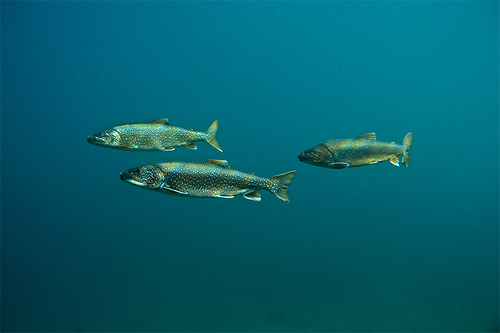
Three Trout

Three Trout, Photo by Christopher Morey

The Watershed Center advocates for clean water in Grand Traverse Bay and protects its 1,000-square-mile watershed across Grand Traverse, Leelanau, Antrim and Kalkaska counties. Today’s photo by Christopher Morey was the winning shot from their 2011 photography contest. You can see a few at that link and see all of them and meet the photographers at the Art of the Watershed opening reception next Thursday (Dec 1) from 5-8 PM.

More of Christopher’s work can be seen at MichiganFreediving.com and at Michigan Freediving on zenfolio. About this photo, he writes:

This picture was taken near the end of October off the north breakwall of Clinch Marina. In fall, as water temps drop into the upper forties, the Lake Trout come in to spawn. They are quite challenging subjects for photography, requiring very long, completely motionless breathholds in cold water.

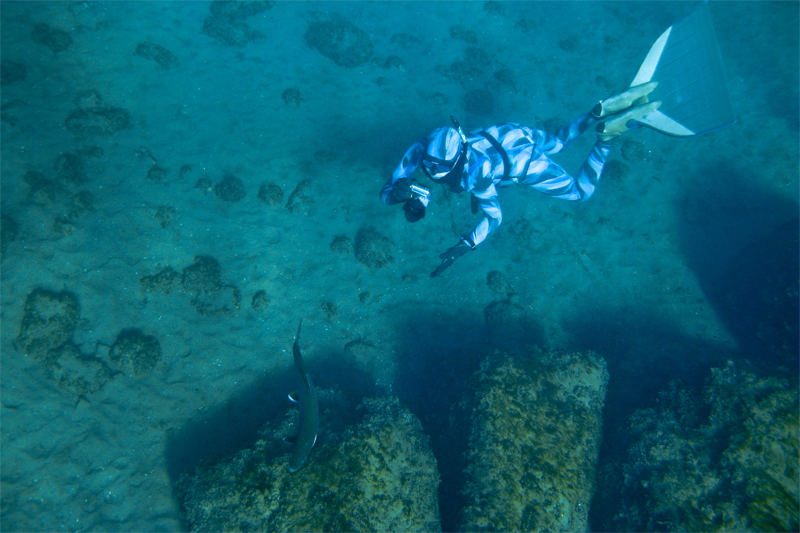
I spent quite a bit of time observing these fish before I finally figured out how to get near them with some consistency. My first attempt at implementing my strategy took place at the cooling intake cribs from the old power plant, about 300 yards off the open space and about 33 feet deep.

With a school barely in sight near one of the cribs I dove directly down. Kicking perhaps 3 times with my monofin, I let myself slowly glide the remaining distance; like a carp settling to the bottom. The sight of me disappearing behind the crib was too much for them and two large Lake Trout appeared overhead, quickly swimming very close. (click this photo by Alicia Higham to see it bigger)

The one I got the best shot of was so close it would not fit in my wide-angle lens.

Since then I’ve noticed, usually about once a year, that they sometimes inexplicably come very close, as if recognizing me. I wonder about this, since these are always older fish and since they live to be nearly 30.

More fish on Michigan in Pictures.

That old chestnut: American Chestnuts in Michigan

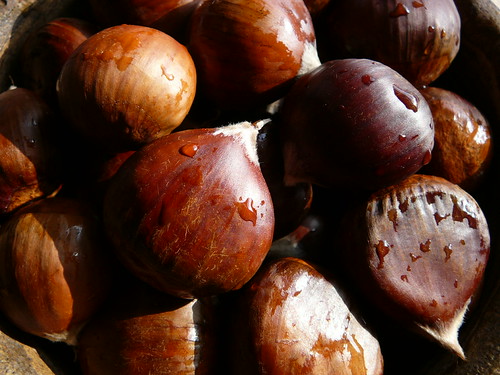
Beautiful Chestnuts

Beautiful Chestnuts, photo by jpwbee.

Happy Thanksgiving everyone!

Wikipedia’s entry for the American Chestnut (Castanea dentata) explains that this large, deciduous tree of the beech family was once one of the eastern United States dominant hardwoods before it was nearly wiped out by chestnut blight. Curiously enough, one of the few pockets to survive were some 600 to 800 large trees in northern lower Michigan. I couldn’t find much about these trees other than that reference, so if anyone knows something about that, post it in the comments!

I do know that Chestnut Growers, Inc. is a 37 member cooperative based in Michigan with members in Lower Michigan and Washington state. Their page on sweet chestnuts says that:

In Europe, chestnuts are consumed in a wide variety of dishes, from soups, stews, and stuffing to fancy deserts. Matter of fact, chestnut flour is the secret to many of the fancy French pastries. In other parts of the world, such as China, the chestnut is a staple food in the peoples’ diet. Chestnuts have about half the calories of other nuts and have the lowest fat content of all the main edible nuts. Chestnuts have only four to five percent fat as compared to sixty-two percent for the hazelnut and seventy-one percent for the pecan. In composition and food value, the chestnut, with its high carbohydrate content of about seventy-eight percent, is more akin to cereal grains, such as wheat, than to nuts with a low carbohydrate content. Since chestnuts are starchy rather than oily, they are readily digestible when roasted or boiled.

Read on for more and suggestions on cooking. They take orders for fresh chestnuts and ship beginning in October, and are at farm markets through the fall. You can also but them online through Michigan-based Earthy Delights. I found a recipe for Michigan chestnut pie that looks tasty too.

Julie bought these Michigan-grown beauties at Zingermans. Check them out background bigalicious and see more in Julie’s Food slideshow.

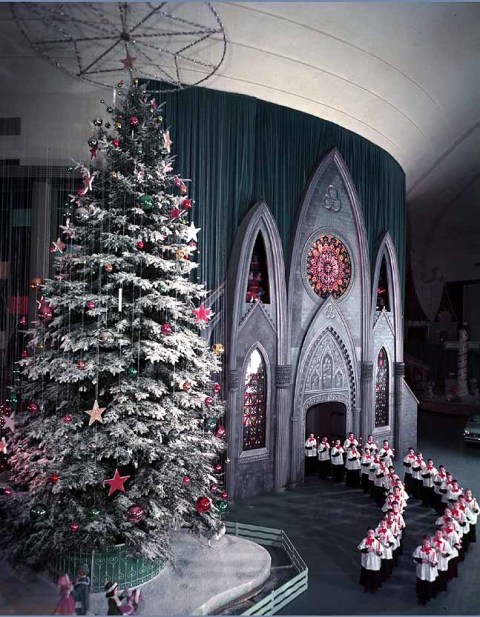
Ford Rotunda Building at Christmas 1961

Ford Rotunda Building at Christmas 1961

Ford Rotunda Building at Christmas 1961, photo by kbreenbo.

Today on Absolute Michigan, we’re featuring the Ford Rotunda and the annual Christmas Fantasy. The feature on the Rotunda in the Detroit News tells how it burned in 1962 and explains:

Over the nine years the Christmas Fantasy was held, almost 6 million people visited it. Thousands of Detroiters had their first visit with Santa at the Rotunda, and memories of Story Book Land and the miniature circus mingle with childhood memories of stockings by the fireplace and cookies for Santa.

Check this out on black and see more in Karen’s Ford Historic Archives slideshow.

All Star, Cy Young, MVP, Tiger

PITCH!

PITCH!, photo by robmelody

“Obviously pitchers are not just written off all of a sudden because they’re pitchers.”
~Tiger Pitcher Justin Verlander

Our feature on Absolute Michigan on Verlander’s MVP victory explains that Verlander is only the second player in baseball history to capture a Rookie of the Year, Cy Young and Most Valuable Player award over his career and finished this season with pitching’s Triple Crown.

Check it out background big!

Pere Marquette Beach, Muskegon

Pere Marquette 4

Pere Marquette 4, photo by kmoyerus.

Here’s one of a fantastic series of black & white photos from Pere Marquette Beach in Muskegon taken after it had been swept smooth by the surf.

In 2011, Pere Marquette Beach was named one of the nation’s Blue Wave Beaches by the Clean Beach Coalition along with Esch Beach & South Manitou Island in the Sleeping Bear Dunes National Lakeshore and Sand Point Beach in Pictured Rocks National Lakeshore. Of course there’s no doubt that Michigan has miles and miles more pristine beaches, but this is still something to shout about.

Check it out background big, in kmoyerus’ peremarquette slideshow or on their map.

More great beaches on Michigan in Pictures.