Pls send rainbows đź™Ź

Double rainbow! by Tom

Double rainbow! by Tom

Michigan is drowning right now in some of the worst rains on record. Every day for the last two weeks, from Midland to Grand Rapids to Traverse City, my feed has been full of images of people losing everything to flooding. PLEASE send rainbows.

Just so this post isn’t a totally depressing send-off for your weekend, let me call in one of my favorite websites, Atmospheric Optics. Regarding secondary rainbows or “double rainbows” they say that the secondary is nearly always fainter than the primary, with colors reversed and more widely separated:

Light can be reflected more than once inside a raindrop. Rays escaping after two reflections make a secondary bow.

The secondary has a radius of 51Âş and lies some 9Âş outside the primary bow. It is broader, 1.8X the width of the primary, and its colours are reversed so that the reds of the two bows always face one another. The secondary has 43% of the total brightness of the primary but its surface brightness is lower than that because its light is spread over its greater angular extent. The primary and secondary are are concentric, sharing the antisolar point for a center.

Tom took this near Alma back in 2014. See his latest on Flickr & check out more Michigan rainbows on Michigan in Pictures!

Support Michigan in Pictures with Patreon

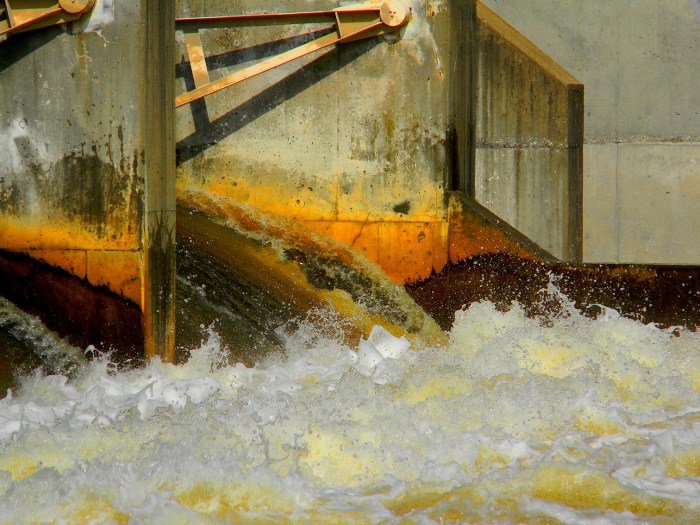
Dam Shame: Michigan’s aging dams put thousands at risk

Rusty Dam and Spillway on the Huron River by Ann

Rusty Dam and Spillway on the Huron River by Ann

The New York Times notes that although no one died in last week’s flooding of Midland due to dam failures, thousands were evacuated, homes and businesses were inundated, and floodwaters spilled into a chemical plant and Superfund site. They continue that little has been done to address the looming national hazard of aging dams like those that failed in Michigan.

In November 2019, The Associated Press reported that 19 dams in Michigan, including the first of the dams to breach, were in unsatisfactory condition and presented high hazards, meaning their failure can cause loss of life. The events of last week should not have come as a surprise, and it is only a matter of time before a catastrophic dam collapse will occur somewhere in the United States. The combination of aging and poorly maintained dams and extreme, climate-caused flooding presents potentially deadly risks for people downstream.

…In Michigan, Gov. Gretchen Whitmer said experts characterized the flooding that led to the recent dam failures as a 500-year event — something that would have a one in 500 chance of occurring in any given year. If we consider dams in the eight-state Great Lakes region older than 60 years (most have a design life of 50 years) that are in counties with a population larger than 500,000, 317 dams are classified as having a high potential for hazard in a failure. The chances of one or more of these dams experiencing a 500- or 1,000-year flooding event in a year would be 47 percent and 27 percent — which strikes us as pretty high.

The Great Lakes region exhibits approximately 10-year cycles of rainfall and is currently near record high levels. Extreme rainfalls are happening much more frequently in the region than in the past 100 years. What is being done to prepare for potential flooding and dam failures?

The state and the federal government have multiple offices that assess dam safety. What we lack is an overall strategy to fix the problem and the requisite financial resources. Rehabilitating dams with high hazard potential will cost an estimated $3 billion for federal impoundments and another $19 billion for nonfederal ones — a cost that vastly exceeds current spending.

We need a real plan and real money, and we need them soon.

Read on for more in the NYT & head over to Bridge Magazine for an in-depth exploration of the 2020 Midland flooding.

Ann took this back in 2011. View more in her Flickr.

Support Michigan in Pictures with Patreon

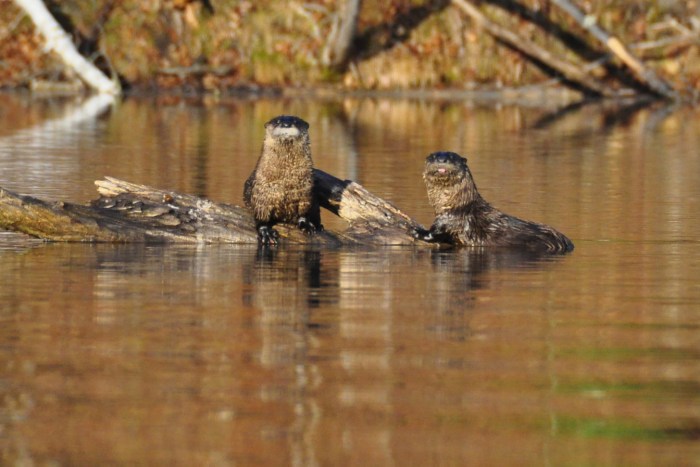
Say hello to North American river otters on World Otter Day!

Otters by Brent West

Otters by Brent West

Today (May 27) is International Otter Day, created by the International Otter Survival Fund to raise awareness of their work protecting, conserving, and caring for otters everywhere. Environment Michigan shares five great things about Michigan native otter, the North American River Otter:

1. They’re good fishers
Otters spend most of their life around water, and fish typically make up the majority of their diet. These members of the weasel family travel vast distances along waterways and over land to fish other areas. They’re good explorers, often setting up multiple dens away from their homes to find the best fishing spots.

2. They’re good swimmers
River otters’ sinuous, streamlined bodies and long tails propel them through water with ease. They can turn on a dime while swimming, and hold their breath underwater for up to eight minutes. With populations in nearly every state in the U.S., their thick, warm and waterproof coats allow them to swim in very cold environments.

3. They have fun
River otters are playful animals, and as far as we can tell, they’re often having a good time — swimming, fishing, sliding, wrestling, chasing each other, and just generally having a blast. We hope to be so lucky this summer!

4. They play a key role in aquatic ecosystems
River otters need clean, watery habitat with plenty of prey, so they are a key indicator of the health of a waterway. River otters are not found in highly-polluted watersheds.

5. When we appreciate river otters, we also appreciate clean water
In the face of pollution and uncontrolled development, river otters were once eradicated from many portions of the country. Conservation, re-introduction efforts, and national legislation like the Clean Water Act have helped bring them back from the brink.

Though river otters have returned to much of their historic range, their overall population today is estimated at only 100,000. To protect the river otter, we must protect our rivers, lakes, and streams from pollution and destruction. River otters give us just one more reason – a very cute reason – to stand up for our waterways.

Brett took this way back in 2010. See more in his Random photo album.

Support Michigan in Pictures with Patreon

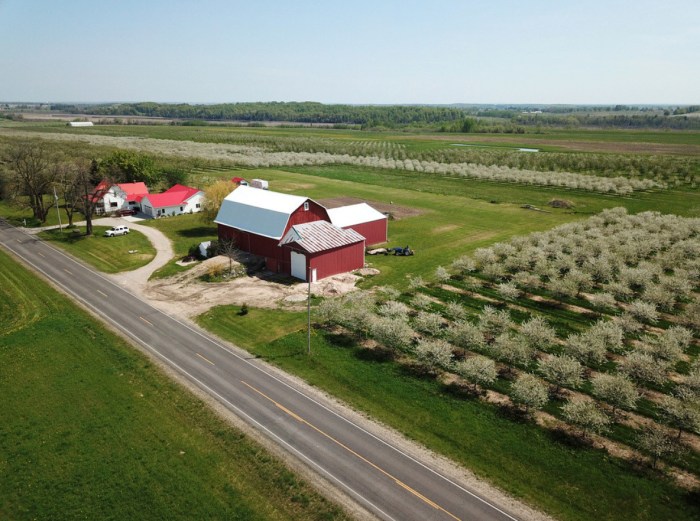
Looking over Elk Rapids cherry blossoms

Elk Rapids Cherry Orchards

Drone shot by Julie

Here’s a great drone photo that Julie took this weekend near Elk Rapids. She says that blossoms are just breaking out up there. See more great photos on her Flickr.

Support Michigan in Pictures with Patreon

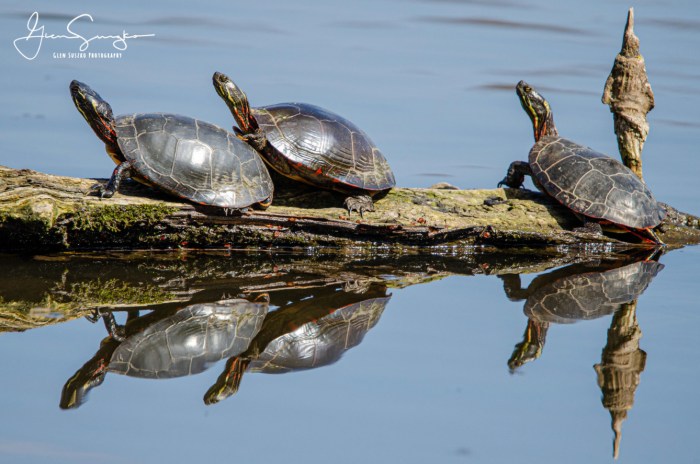
Reflections on World Turtle Day!

Reflections (Turtles) by Glen Suszko

Reflections (turtles) by Glen Suszko

I know I said I was taking the weekend off, but May 23rd is World Turtle Day, one of my favorite days! It was created by the good people at American Tortoise Rescue to help people celebrate and protect turtles and tortoises and their disappearing habitats around the world.

Every year I’m happy to report that one of the most popular features on Michigan in Pictures remains Know Your Michigan Turtles that I wrote back in 2013 and have added to through the years with photos and articles about every one of Michigan’s 10 native turtle species including our most common one, the painted turtle.

The UM Animal Diversity web has pictures and information about Chrysemys picta (the painted turtle) and says that:

Painted turtles prefer living in freshwater that is quiet, shallow, and has a thick layer of mud.

Painted turtles are brightly marked. They have a smooth shell about 90 to 250 mm long. Their shell acts as protection, but since the ribs are fused to the shell, the turtle cannot expand its chest to breathe but must force air in and out of the lungs by alternately contracting the flank and shoulder muscles. The painted turtle has a relatively flat upper shell with red and yellow markings on a black or greenish brown background.

Painted turtles may live as long as 35 to 40 years, but most will not survive for this long

Glen took this photo last month at Stony Creek Metropark. Visit his Flickr for lots more photos!

Support Michigan in Pictures with Patreon

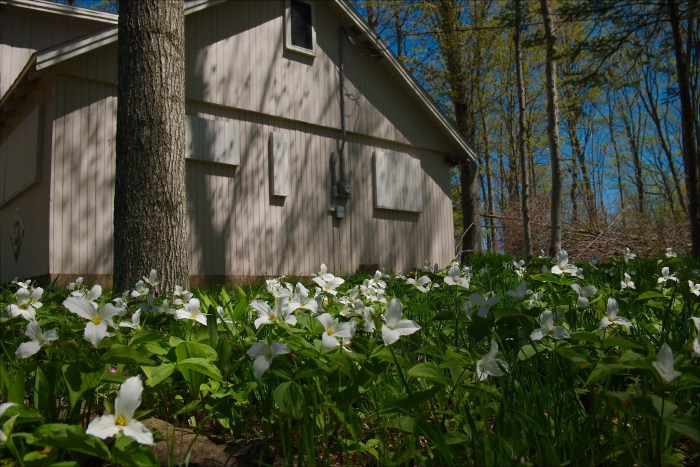
Trilliums Gone Wild

Trilliums Gone Wild by Kent Babb

Trilliums Gone Wild by Kent Babb

Michigan in Pictures is going to take a break for Memorial Day Weekend. I hope you all have a safe & enjoyable weekend!

See more of Kent’s photos on his Flickr & learn more about trillium on Michigan in Pictures.

Support Michigan in Pictures with Patreon

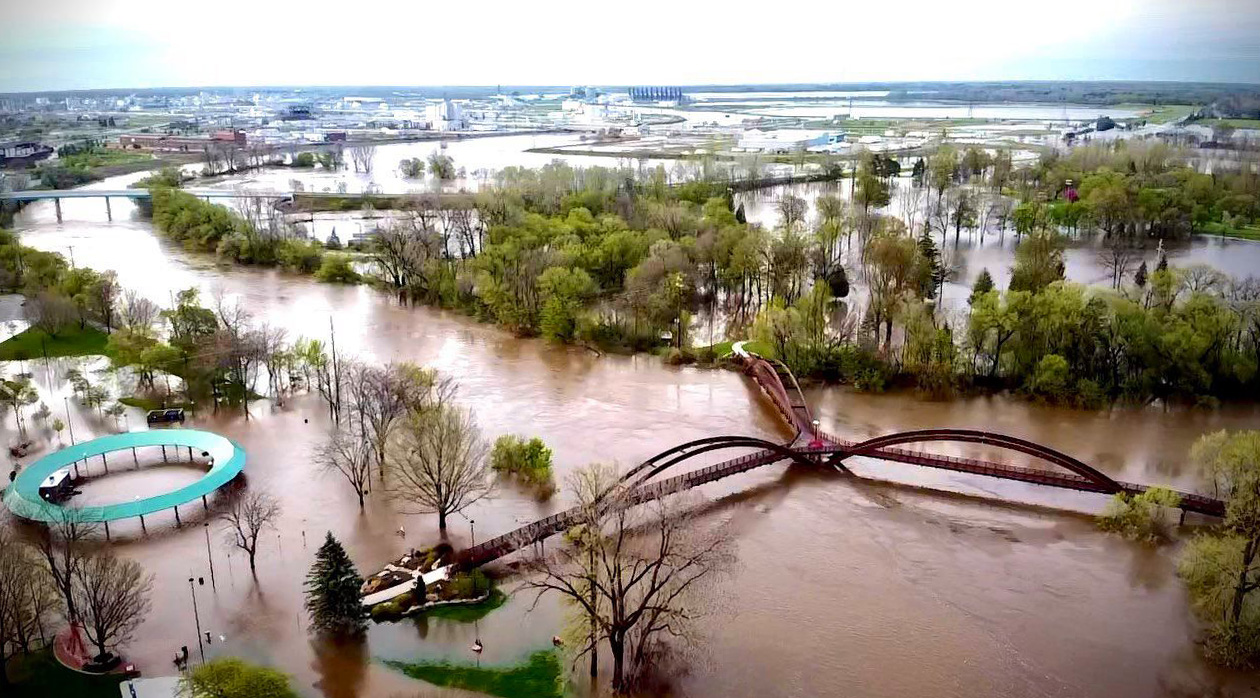
Midland Under Water: Record Flooding in May 2020

2020 Flooding in Midland MIchigan by City of Midland

2020 Flooding in Midland by City of Midland

“While the 1986 flood was a 100-year flood, what we’re looking at here is an event that is the equivalent of a 500-year flood. It’s something that is extremely rare, extremely catastrophic and quite dangerous.”
– Midland City Manager Brad Kaye

The Detroit Free Press reports that by the time you’re reading this, downtown Midland could be under 9 feet of water as the result of two dam breaches on the Tittabawasee River:

Urging residents to evacuate and saying downtown Midland could be under 9 feet of water by Wednesday afternoon, Gov. Gretchen Whitmer late Tuesday declared a state of emergency for Midland County after the Edenville and Sanford dams breached.

Speaking during a press conference late Tuesday, Whitmer said parts of the city of Midland, the village of Sanford, Edenville Township and Dow Chemical had been or were being evacuated. She said officials were working to evacuate residents in Tittabawassee, Thomas and Saginaw townships on Tuesday evening.

…Whitmer said at a 10 p.m. briefing Tuesday that state officials expected the worst over the next 12-15 hours with as much as 9 feet of water in downtown Midland, the largest city in the area with about 40,000 residents and the home to Dow Chemical.

“This is unlike anything we’ve seen before… but this is truly a historic event that’s playing out in the midst of another historic event,” Whitmer said, referring to the coronavirus pandemic which has led to stay-at-home orders throughout the state and the deaths of more than 5,000 people.

Several dams upstream of Midland along the Tittabawassee had either been breached or were releasing water uncontrollably after 4 to 7 inches of rain fell Sunday and Monday, including the Edenville and Sanford dams on Tuesday, forcing the evacuation of thousands of people in mid-Michigan.

Read on for much more in the Freep & you can also tune in for a live Facebook update from the city later today. Here’s some photos & a drone video of the flooding via mLive:

Support Michigan in Pictures with Patreon

Facing uncertainty, Michigan begins to re-open

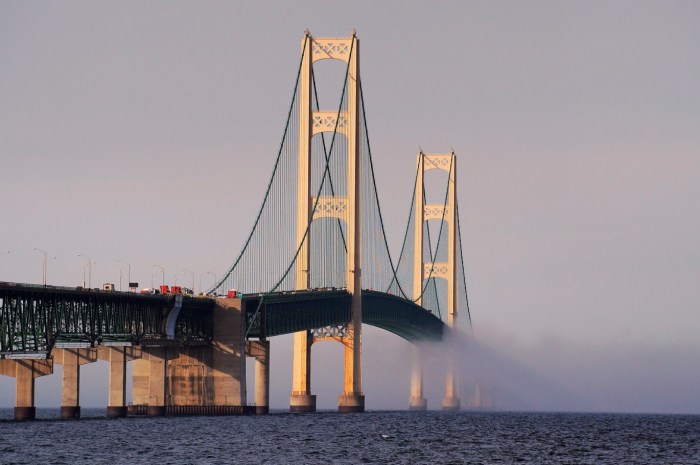
Mackinac Bridge by Daniel L

Mackinac Bridge by Daniel L

Yesterday, Michigan Governor Gretchen Whitmer signed an Executive Order allowing for the reopening of retail, business & office work that can’t be done remotely, and restaurants and bars with limited seating for northwest Lower Michigan and the Upper Peninsula.

The two regions are both in the northern part of the state—specifically, MERC regions 6 and 8, as detailed in the governor’s MI Safe Start Plan to re-engage Michigan’s economy. The partial reopening will take effect on Friday, May 22. Cities, villages, and townships may choose to take a more cautious course if they wish: the order does not abridge their authority to restrict the operations of restaurants or bars, including limiting such establishments to outdoor seating.

…“The data shows that these regions in Michigan are seeing consistent encouraging trends when it comes to the number of cases, deaths, and the percent of tests that are positive for COVID-19,” said MDHHS Chief Deputy for Health and Chief Medical Executive Dr. Joneigh Khaldun. “It’s important to note that these businesses must take special precautions to protect Michiganders. I also encourage everyone to continue to wear a mask in public, maintain a 6 foot distance from others, and to remain vigilant in washing their hands often. This will help prevent a second surge in cases in our state.”

All businesses that will reopen in regions 6 and 8 must adopt the safety measures outlined in Executive Order 2020-91. That means they must, among other things, provide COVID-19 training to workers that covers, at a minimum, workplace infection-control practices, the proper use of PPE, steps workers must take to notify the business or operation of any symptoms of COVID-19 or a suspected or confirmed diagnosis of COVID-19, and how to report unsafe working conditions. Restaurants and bars will also have to limit capacity to 50% of their normal seating, to keep groups at least six feet from one another, to require their servers to wear face coverings, and to follow rigorous disinfection protocols.

Read more at Michigan.gov and please stay safe AND keep others safe by wearing a mask. In addition to it being the law, you wearing a mask reduces the chance of infecting someone else by almost 70%!

Lots more in Daniel’s massive Michigan photo gallery on Flickr.

TONS more about the Mighty Mackinac Bridge on Michigan in Pictures.

Support Michigan in Pictures with Patreon

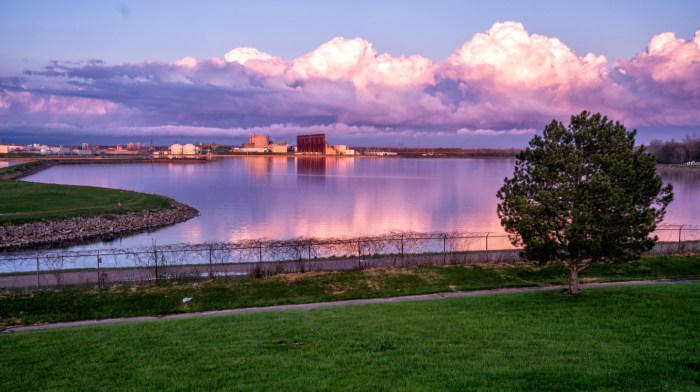
Sunset at the Cloud Factory

Sunset at the Cloud Factory by Charles Bonham

Sunset at the Cloud Factory by Charles Bonham

Charles took this photo on Friday evening at Midland’s Whiting Overlook Park. See more on his Flickr.

Support Michigan in Pictures with Patreon

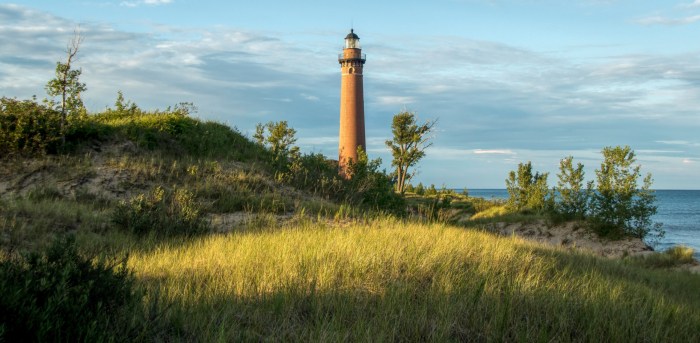
An easy ride at Little Sable Point Lighthouse

Little Sable Point Lighthouse by Kevin Povenz

Little Sable Point Lighthouse by Kevin Povenz

Terry Pepper’s Seeing the Light has a bunch of information about the history of Little Sable Point Light:

Congress appropriated $35,000 for the project, and 39 acres of land were selected on which to construct the new Light station. The construction of a light at Little Point Sable was destined to be a daunting task, since the location was distant from any area of supply, and there was a total absence of roads to the site. Work began in April 1873 with the construction of a dock at the beach and temporary housing for the construction crew.

A pile driver was towed to the point, and in accordance with Poe’s plan, 109 one-foot diameter pilings were driven into the sand to a level nine feet below the surface in order to form a solid base on which to build the tower. Twelve feet of cut stone was then carefully laid atop the pilings to provide a solid base for the tower’s brickwork. The brick walls had a thickness of five feet at the base, tapering to a thickness of two feet at its uppermost. With the advent of winter, the crews were removed from the point, and work had to wait for the next spring.

…Being built of a particularly hard and durable type of brick, the decision was made to leave both the tower and ancillary structures in a natural, unpainted condition, since it was expected they would withstand the rigors of the weather without deterioration. This was no doubt a decision which sat well with Keeper Davenport, as painting was an activity in which the authorities held considerable stock, and he found himself in the enviable position of not having that millstone around his neck every year!

…It did not take long before mariners began complaining that the natural brick coloration made the tower difficult to see during daylight hours. As a result, the tower was painted white on September 24, 1900, and thereafter, keepers assigned to the tower would be stuck with the drudgery of the annual painting ritual.

…With the station unmanned, the Coast Guard began to see the ancillary buildings as a liability, and in the first half of 1955 a crew arrived at the station and demolished everything but the tower.

The tower remained in its white painted condition until 1977, when once again seizing the opportunity to reduce the ongoing maintenance costs associated with constant painting, a crew arrived at the station, and sandblasted the tower. Once again, James Davenport’s easy ride was exposed to the light of day!

More from Terry Pepper’s Seeing the Light.

Kevin took this back in July of 2016. See many more great shots in his Lighthouse gallery.

More Michigan lighthouses on Michigan in Pictures.

Support Michigan in Pictures with Patreon