Taken by the RenCen colors

RenCen

RenCen, photo by DetroitBikeBlog.

DetroitBikeBlog says: This weekend I pulled my broken old Sony Camera apart and then carefully put it back together again. Amazingly this cured the C13 fault that’s had it on a shelf for 2 years. So I went out to today to try a few shots with its toy-camera fisheye! This is the east aspect of the RenCen, I’ve always been taken by the colors along here.

Gotta see it bigger … or on black … or bigger on black. ;)

The Argus Camera Company of Ann Arbor, Michigan

Hey Argus fans – here’s a post with information about the Argus Museum and an event they are having!

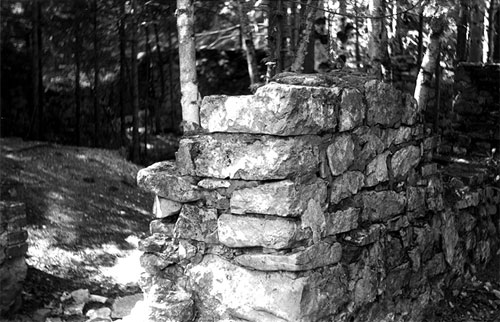
Old Foundation by Mark O’Brien

Lighthouse ruins at Cheboygan State Park, MI, taken with Argus C3 by Mark O’Brien

It’s apparently O’Brien week here on Michigan in Pictures. Yesterday we had a photo from Marjorie and then I received an unrelated email from her dad. He was passing along a request from Bob and Mary Kay Berg of Palindrome Productions:

Our production company, Palindrome Productions, is working on a short film about the Argus Camera Company, originally based in Ann Arbor, MI. To supplement our video footage, we are currently looking for still photos taken by Argus cameras models from 1936 to 1960.

If you have family photos (everyday events, family vacations, recitals, holidays) or photos of Ann Arbor, please contact us no later than Friday, April 13, 2007 at palindromevideo@aol.com.

I’ve never been one to look a gift blog post in the mouth, so without further delay – and with copious thanks to Mark for the links – I bring you:

About the Argus Camera Company of Ann Arbor, Michigan

Argus C3 by Luke HWikipedia’s very much incomplete entry on the Argus Camera Company says:

Argus is an American maker of cameras and photographic products, founded in 1936 in Ann Arbor, Michigan. Argus originated as a subsidiary of the International Radio Corporation (IRC), founded by Charles Verschoor. Its best-known product was the C3 rangefinder camera, which enjoyed a 27-year production run and became one of the top-selling cameras in history. The company’s Model A was the first low-cost 35 mm camera in the United States.

The link above for the Argus C3 (aka “The Brick”) is much more complete and says the simple design and ready availability of the C3 makes it widely used even today. While that entry says the C3 was responsible for establishing 35mm, Stephen Gandy of CameraQuest hands that title to the first camera Argus made – the Argus A, declaring:

Argus SS Notches by ReyGuyIn MY always not so objective mind at least, the Argus A is undoubtedly the 2nd most important 35mm camera of all time– second only to the Leica A. If you think about it, that’s a pretty amazing legacy for a simple little Bakelite camera from a Michigan USA radio factory. It really is.

How does Argus deserve this impressive ranking? Easy, they bribed me. Unfortunately, not with money. Argus paid me off in Photographic Heritage. Building on the astounding sellout success of the Argus A, Argus sold MILLIONS of Argi, thereby establishing 35mm as the serious Amateur’s film format of choice in the largest photography market in the world, America.

If you are interested in repairing, collecting or just learning more about any of the Argus camera models and their accessories, look no further than the Argus Collectors Group. You can get a quicker overview of the Argus line over at Mark’s Argus Cameras Page. Mark also took visit to the Argus Museum located at the old Argus Factory in Ann Arbor and (go figure) he took some photos.

There are a TON of very cool Argus camera advertisements (I learned that Galileo was a 17th century Argus and am definitely going to get an Argus A to take to the next World’s Fair), some detail shots of the cameras on his projects page and the results of a Spring Fever Argus photo contest over at Alexander Rawles argoflex.com. Speaking of photos , you can see some shots of the camera and from the cameras in the Argus Rangefinders Group on Flickr.End of the gumshoe's day by Olivander

You might also want to check the local bookstore for a copy of Argomania: A Look At Argus Cameras And The Company That Made Them by Henry Gambino. The promotional copy explains:

Argus’ founder, Charles Verschoor, did not establish an empire, as did George Eastman. Nor did he enjoy a particularly long tenure as the head of the company he founded. Unlike Oscar Barnack, he did not invent anything particularly new, yet he had a tremendous impact on the photographic industry. He revolutionized the scope of the industry, not only from a technical standpoint, but even more so from a marketing perspective.

Additional photo credits:

Argus C3 by Luke H

Argus SS Notches by ReyGuy (part of a great set of detail shots of Argus cameras)

End of the gumshoe’s day by Olivander

Paying tribute to Michigan’s architecture

Mason County Courthouse, Ludington, MI

Mason County Courthouse, Ludington, MI, photo by I am Jacques Strappe.

Michpics regulars may remember Marjorie O’Brien from her profile last year.

Given her passion for architecture and wandering the state of Michigan, it should come as little surprise that she has developed the Michigan Architecture Blog where she photographs and discusses everything from the red sandstone of Marquette to the fantastic details of the UM Law Quad.

Be sure to check out the above photo bigger!

Spring Training with emjsmith and the Detroit Tigers

Untitled, photo by emjsmith.

So I’m just going to blog a quick spring training photo from emjsmith today…

…and then an hour later, there I was, happily dizzy in a pile of baseball pics. I though about an amazing action shot, an even more amazing action shot, 103.3 MPH tuning up or even a shot of Joker Marchant Stadium in Lakeland. I finally settled on this one of Craig Monroe fiving the faithful because (for me at least) this is what spring training is all about: ballplayers warming up for the season and having enough time to pay a little attention to those who pay so much attention to them. If you have some time, check out her great slideshow of Detroit Tiger Spring Training photos.

Em shoots the Class A Midwest League for MLB, so be sure to tune in during the season. You can see more of her baseball pics at her blog and other work at Emily Smith Photography.

Opening day is Monday, April 2nd (details at Absolute Michigan)

A Challenge for Michigan

Dead River Fog

Dead River Fog, photo by bgreenlee.

Brad took this photo at Dead River Basin, north of his hometown of Ishpeming, Michigan.

I saw this photo several days ago and was struck by its richness. For me – maybe for anyone who has ever stood next to a glass calm and still Michigan lake on a late summer morning – this picture holds an armload of images. The way the shore floats in and out of focus in the slowly moving mist … the haunting call of a loon … the splash of fat trout. All of this and so much more.

Further to the north – too far to walk in a day but not all that far – are the Yellow Dog Plains, one of the fronts in a battle that if lost, would change this image of Michigan forever.

The Yellow Dog is not the only front though. Consider White River, where Michigan’s water is poured out to the rest of the world, never to return. Or all the inland lakes where exotic zebra mussels have poured in, sterilizing them of other life. And countless other places and ways that our rivers, lakes, streams, ponds, wells and wetlands face the pressure that comes where a resource is not valued.

This is probably the point where right around 50% of brains will want to shut off and wander off, thinking “Here comes another environmentalist rant.” While I am a huge fan of the environment (which I like to think of as my life support system) this isn’t about politics.

This is about money.

Tourism is Michigan’s second largest industry. Unlike extractive industries like acid mining or water bottling that send most of the revenue away from Michigan, tourism sends income rushing through our local economies, generating business profits (and tax revenues) along with many jobs in hotels, motels, B&Bs and cabins, restaurants, shops, outfitters, galleries, musicians and countless other industries. Economists talk about “the multiplier effect”, describing how one dollar pays for a room for the night, then morning coffee, afternoon canoe rental, evening dinner and fifty more things before it moves along.

That dollar has a future from the moment it is laid on the counter. The other dollar doesn’t.

This is not only about money though.

I have chosen to make my lifelong home in Michigan for the same very simple reason that I made this web site: I am hopelessly in love with the beauty of Michigan. From the towering face of the Pictured Rocks to the corn stalk stubbles in the next field, I am head over heels for Sweet Mama Michigan and I cannot bear to see her carved up and sold off.

Even in our hour of need, I hope we can all agree that it is precisely this beauty, this richness of water and wild that is among Michigan’s greatest treasures.

It’s in that hope (and also for pay) that I worked with others to make a challenge to all of you: Make a short video that tells why we should protect Michigan’s water.

We call it the Save the Wild UP Video Challenge and I invite you to learn more about it.

PS: Apologies to Brad for tacking all on this on to what could have been a simple post of a great photo.

PPS: Those of you who are Flickrites might want to check out the Save the Wild UP Challenge group.

PPPS: Apologies also for any over-preachyness. I promise to try and keep it to a minimum.

Sunset for Winter: Lake Sixteen Lifesaver

Lake Sixteen Lifesaver

Lake Sixteen Lifesaver, photo by Arace.

Let’s close the door on winter with this HDR photo of the sunset over Lake Sixteen (Orion, MI) by Chris Arace. Chris recommends that you view large.

If you like this, you might enjoy his HDR set.

World Water Day in the world’s water headquarters

Michigan and the Great Lakes from Space

Provided by the SeaWiFS Project, NASA/Goddard Space Flight Center, and ORBIMAGE (via Wikimedia)

I am not even going to tell you how long I agonized over the perfect photo with which to mark World Water Day. Water is one of the things that defines Michigan above all others. Industries may come and go, but (assuming we can take care of it) Michigan’s water is forever.

Here’s hoping…

stacking the river raisin

stacking the river raisin

stacking the river raisin, photo by postpurchase.

The photographer says this is an experiment stacking multiple frames of short exposure taken in daylight in order to emulate a longer exposure without the use of filters. (from Manchester, MI)

The Eben Ice Caves

Columns of Ice, Eben Ice Cave

Columns of Ice, Eben Ice Cave, photo by John Clement Howe.

This photo is one of a nice set titled At the Ice Cave of Eben taken in March of 2007 (or view slideshow of the Eben Ice Caves). A document from a field trip led by Dr. John Anderton of the Northern Michigan University Department of Geography explains:

The Eben Ices Caves are located just a few miles north of the little town of Eben, within the Rock River Canyon Wilderness Area (RRCW). The RRCW, which became a Wilderness in 1987 as a part of the Michigan Wilderness Act, is located approximately 15 miles west of the town of Munising, MI, within the Munising Ranger District of the Hiawatha National Forest. It comprises 4,460 acres and contains outstanding natural features including Rock River, Silver Creek and Ginpole Lake. Within its interior there are two short user-developed trails (totaling about 1.75 miles) leading to Rock River Falls and the Eben Ice Caves. An estimated 1,700 people visit the area annually (USFS records) …

The Ice Caves are not true caves at all. They consist of walls or vertical sheets of ice that form across the face of overhanging rock outcrops. In the summer, small unimpressive waterfalls and groundwater seeps may found along the overhangs. In the winter, however, the water hits the cold air, drips downward under the influence of gravity and freezes, creating spectacular ice caves. Each winter they look a little different, but typically there are openings in the ice that allow you to walk behind the ice walls.

The rock overhangs, where the ice caves form, consist of outcrops of Munising Formation (Cambrian) with a capstone of AuTrain Formation (Ordovician). The outcrops are found along the south side of the valley of Silver Creek, which is part of a network of secondary glacial drainage channels that formed during the Marquette Advance (about 10,000 years ago). Theses secondary drainage channels flowed easterly into the AuTrain-Whitefish Channel, a primary glacial meltwater channel that flowed south to the Lake Michigan basin. Groundwater naturally seeps from these rocks, providing the water necessary to form the ice caves in the winter.

For directions and more info, check out Rock River Falls & Rock River Canyon Wilderness Area (Hunts’ UP Guide) and Visit The Eben Ice Caves (Marquette Country CVB).

time traveling in downtown detroit

time traveling

time traveling, photo by paulhitz.

With a little help from Ye Olde Photoshoppe, Paul takes us:

back in a time when things were simple … a few Detroit Classics in this one:

Why stop at time traveling? You can also zoom on the area via Google maps.