Detroit … Exposure

Detroit

Detroit, photo by JoeJoeSmoe.

Five photographers will be at the Exposure.Detroit show next Friday. Only four had been featured on Michigan in Pictures and I couldn’t have that, so here’s one of my favorite photos from Joe Alisa aka JoeJoeSmoe. The photo is from fall of 2006 – be sure to check out Joe’s photography site for more pics!

Exposure Detroit show poster…and because I can’t resist, here’s more Detroit manhole covers from Drainspotting.

Exposure.Detroit Presents!

When: November 9th 7pm-10pm
Who: Cris Rea, Joe Alisa, Ralph Krawczyk Jr., Rhonda McElroy, Sue Fraser
Where: The Bean & Leaf Cafe, Royal Oak
Music by: Theatre of the Absurd

A Letter from Downstream

In the Michigan Immense Public Park, photo by Andy McFarlane

In the Michigan Immense Public Park, photo by Andy McFarlane

Welcome to a “Soapbox Saturday” on Michigan in Pictures, where your host takes you a little ways past “ain’t it cool” towards “ain’t it a shame.” Don’t worry though – it’s still cool. If it doesn’t seem cool – please click the photo above. I figured that since I was going to be sharing some personal feelings, I probably should use one of my own photos. This photo of my daughter exploring something on the Lake Michigan beach was taken a few years ago at the base of Pyramid Point in the Sleeping Bear Dunes National Lakeshore. I had posted it in gratitude to the Michigan Supreme Court for upholding our right to walk the Great Lakes shore.

Flash forward to the present day when Michigan’s regulators appear poised to permit the first metallic sulfide mine in Michigan. Several years ago, my friend Dick Huey and a few others started a group called Save the Wild UP when Kennecott Minerals, a subsidiary of mining giant Rio Tinto (one of the world’s largest polluters), began the process of securing a permit for a sulfide mine north of Marquette. The proposed mine is located directly under the Salmon-Trout River on the wild and beautiful Yellow Dog Plains. This is state land, our land, and the Salmon-Trout flows just a few miles through it and then empties into Lake Superior. Over that time I’ve been working for them to maintain their web site and have learned a thing or two about “acid mining”.

Iron and copper mining are things that helped forge the character of the Upper Peninsula. You can think of traditional mining as picking the chocolate chips out of a cookie. Sulfide mining is like getting the sugar out of a cookie – a chemical rather than mechanical process that yields a dust as a by-product. If this dust mixes with water and air, it forms sulfuric acid aka battery acid. There has never been a sulfide mine with the potential to pollute ground or surface water that failed to do so. Sulfide mining has polluted 40% of the watersheds in the West, and you can read more of the facts about metallic sulfide mining at Save the Wild UP (has a nice video if you prefer).

Sulfide Mining waste in PennsylvaniaA process with 100% failure rate of protecting water located directly under a pristine river that flows into the largest body of freshwater in the world seems like a bad idea. When you realize that they also plan to blow the sulfide dust into the air and that there are hundreds of other prospected sites waiting in the wings, it becomes terrifying. Michigan and the UP have a lot of challenges right now, but something we do have going for us is our water and wild places and the tourism dollars and jobs they generate. The picture to the right is a result of sulfide mining from Sudbury, Ontario. Multiply that across Michigan’s Upper Peninsula and consider how many thousands of tourism jobs and millions of tourism and tax dollars might be lost.

One of the people who has considered this is a wonderful musician named Daisy May. She has donated a song called A Letter from Downstream to Save the Wild UP and I hope you take the time to listen to it and see the photos that folks have shared about what Michigan’s water means to them.

If you’re a Flickr member, consider adding a photo to the Downstream group.

Justice & Monroe

Justice & Monroe

Justice & Monroe, photo by nofunk.

…in Downtown Grand Rapids. Part of Nolan’s Grand Rapids set.

I found places where they say “The historic Justice & Monroe building in Grand Rapids” but I can’t find any history. Anyone know anything about this very cool looking building?

raven hill

raven hill

raven hill, photo by Latitude 45.

Every couple of days I look to see what people are looking at on Michigan in Pictures. The Michigan Wallpaper page is always at the top, and you can count on seeing favorites like Slumpy and the Big Boy Graveyard and The Southdown Challenger in there.

And just about every day in the fall – including today – Martin’s Fall Leaves photo is right there, reminding me to go look at his great photos of Petoskey and nearby.

Wisdom of the crowd I guess.

This photo might be from the Raven Hill Discovery Center near East Jordan.

UPDATE: Martin let me know that it’s from the Raven Ridge Nature Preserve of the Little Traverse Conservancy, which was purchased by the Conservancy and the Discovery Center. Click that link to see a cool map (select Raven Ridge) and learn a little more about this and other preserves!

suspense

suspense

suspense, photo by jamelah.

Part of her Autumn set (slideshow)

The Haunting of Seul Choix Point Lighthouse

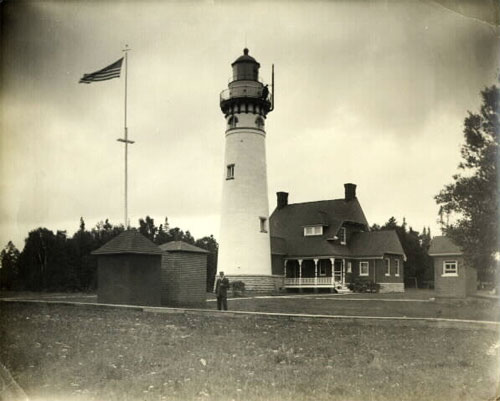
Seul Choix Point Lighthouse; Schoolcraft County

Seul Choix Point Lighthouse; Schoolcraft County, photo courtesy Archives of Michigan

Dave Wobster has an excellent article on Seul Choix at boatnerd.com that begins:

Hundreds of years ago, moving the across this region was a different story. Native Americans and French explorers were traveling in canoes and later small ‘Mackinac’ boats. It was readily apparent that along the 75 mile stretch, from the Straits of Mackinac to today’s Manistique, there was only one place to seek refuge from the storms that often sweep up Lake Michigan. Realizing that the bay near the present day Port Inland was their only choice, the French named the place Seul Choix, the French name for ‘Only Choice’. The French pronunciation is “Sel-Shwa”, while locally the name is spoken as “Sis-Shwa”.

He goes on to document the history, touching upon a ghost story that is fleshed out in The Keeper of Seul Choix Point by Ken Rudine:

Joseph Willie Townsend was the keeper there from 1902 to 1910 when he died in that upstairs bedroom. His body was drained and prepared for his wake which was held in the basement. He lay in state in the parlor until his relatives could assemble from other locations. He was buried nearby in a cedar coffin. Joseph was a cigar smoker in life, but his wife refused to let him smoke in the house. Now cigar smoke is often smelled in the house, as if Townsend now enjoys what his wife forbade.

The article tells other tales about the haunting, and you can get more information about this lighthouse (including an aerial view that shows the setting) at the Seul Choix Point Light web site. Beware! The site is “haunted” as well – by a song you cannot shut off … mu-hu-hahaha! There are a couple of children’s books based on these stories (well, probably minus the embalming part) called The Captain & Harry by Jan Langley.

You can also see more historical photos of Seul Choix Point Lighthouse at the Archives of Michigan and view modern-day photos of Seul Choix Light on Flickr (slideshow). Since I’m not sure that anything I linked to has good directions to the lighthouse (which is located near the ghost town of Fayette about 10 miles east of Manistique), here’s the Seul Choix page from Exploring the North.

Monocle Lake, Hiawatha National Forest

Monocle Lake, Hiawatha National Forest

Monocle Lake, Hiawatha National Forest, photo by UofMBlonde415.

This photo is one of a number of photos Beth took on Saturday in the Straits & Soo.

Hunt’s Guide to the UP has this to say about Monocle Lake:

The centerpiece of this attractive natural area in the Hiawatha National Forest is 172-acre Monocle Lake. It’s stocked for fishing with walleye, bass, pike, and perch. There’s a beach, boat launch, and picnic area with charcoal grills. Lots of improvements, including a floating fishing dock and hard gravel paths, make Monocle Lake outstanding for handicapped people.

A two-mile hiking trail loop starts at the picnic area and goes through natural hardwoods intermixed with some very old white pines and hemlocks. The trail’s first 1,100 feet are fully accessible, including the boardwalk carrying the trail across a wetland and beaver dam … Ospreys (also called fish hawks) have a nest in the area, so it’s not unusual to see them catching fish in the wetland shallows.

There’s more about the lake on the Hiawatha National Forest Monocle Lake Campground page, but I couldn’t find the answer to my question of how Monocle Lake got its name. If you know, please share it in the comments!!

More photos in the Michigan Fall Wallpaper series.

Tahquamenon Falls double exposure(detroit)

Upper Falls

Upper Falls, photo by rckrawczykjr.

Ralph recently returned from an autumn trip to the UP (slideshow). When I saw his double exposure of Tahquamenon’s Upper Falls, I knew I wasn’t going to be waiting any longer to give a shout out to the next Exposure.Detroit show.

Exposure Detroit show posterExposure.Detroit Presents!

When: November 9th 7pm-10pm
Who: Cris Rea, Joe Alisa, Ralph Krawczyk Jr., Rhonda McElroy, Sue Fraser
Where: The Bean & Leaf Cafe, Royal Oak

If you can, be sure to show up to see work from Ralph and the other very fine photographers in the show!

See more Tahquamenon Falls photos on Michigan in Pictures and don’t miss other photos in the Michigan Fall Wallpaper series.

The Mean Streets of Allegan

The Mean Streets

The Mean Streets, photo by Brian.H.

Brian is a member of the Allegan Camera Club.

Wikipedia’s entry for Allegan says that Allegan has a population around 5,000 and is the county seat of Allegan County. It was apparently also named by Michigan historian Henry Rowe Schoolcraft in 1837 to sound like a Native American word.

Neither Wikipedia or the City of Allegan have much to say about the meanness of Allegan’s streets.

There’s Nothing Like a CMU Sunset

Theres Nothing Like a CMU Sunset

Theres Nothing Like a CMU Sunset, photo by brandonjb.

This photo from a Central Michigan Chippewas football game is part of Brandon’s The Life and Times At CMU set.

Central Michigan University is located in Mt. Pleasant and their CMU History page says:

Central opened its doors in 1892 as the Central Michigan Normal School and Business Institute. At that time, few of the state’s teachers received any formal training in teaching. School founders made teacher training their mission in founding the state’s second normal school.

Thirty-one students attended classes in second-floor rooms over an office on the corner of Main and Michigan streets in downtown Mount Pleasant. Most students at the time were eighth-grade graduates, attending the “Normal” for a few weeks or months prior to beginning their careers as teachers. Within the first two years, land was acquired and a $10,000 Normal School Building was constructed where Warriner Hall now stands.

In their virtual photo & video tours they have a photo of Kelly/Shorts Stadium and you can at a ton of information on the CMU Chippewas at cmuchippewas.com.