Bald Eagle in Michigan

Eagle turning

Eagle turning, photo by Deirdre Honner

I think this is one of the best bald eagle photos I’ve ever seen. The Michigan DNR’s bald eagle page explains that before European settlement, bald eagles probably nested in all regions of Michigan.

In the early 1900s they were described as being “generally distributed,” but “nowhere abundant.” A decline through the early and mid-1900s was probably related to slow but consistent loss of suitable habitat and available food, and predator control by humans. These eagles are so disturbed by the presence of humans near their nest that they may be induced to abandon the nest, or even chicks that have already hatched. By 1959, the species was considered, “largely restricted to the northern half of the state.”

…Nests are usually constructed near seacoasts, lakes or large rivers to be near their most common food supply: fish. Although they are quite capable of catching their own, sometimes even wading in shallow water to stalk fish like herons, they have often been seen stealing fish from other birds such as osprey. When fish are not available, such as in winter, eagles will also feed on waterfowl, small mammals (up to rabbit-size) and carrion (even road-kill).

During Michigan winters, bald eagles are seen throughout the state (almost all counties), while they nest mainly in the Upper Peninsula (especially the western portion) and the northern portion of the Lower Peninsula. These eagles don’t really migrate, they just move south enough to stay ahead of the ice and congregate near open water. Immature birds may move further south.

Lots more about bald eagles at All About Birds and you can also view recent Michigan bald eagle sightings.

Check this out background big and see more including a shot of the eagle in flight  in Deirdre’s slideshow.

More Michigan birds on Michigan in Pictures.
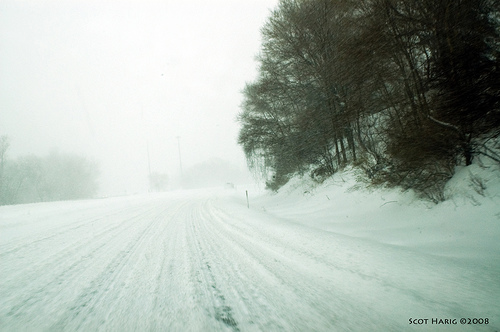
Winter Driving? There’s a school for that…

Winter Driving

Winter Driving, photo by p912s (Scot)

On Absolute Michigan we just updated a feature on the Winter Driving School offered at Michigan Tech. It has some great tips and a very nice video that can help to make you a better winter driver today – click here to check it out!

Check this out background big and see more in Scot’s Winter slideshow.

The Ruins of the Cheboygan Point Lighthouse

Cheyboygan Lighthouse

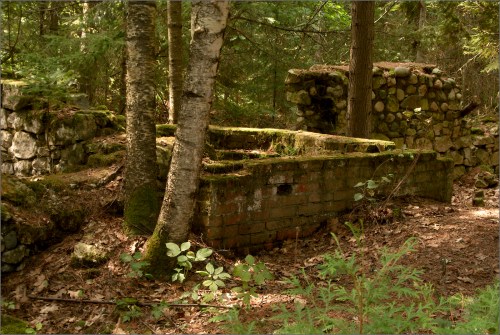
The Cheboygan Point Lighthouse Ruin, photo by joeldinda

Terry Pepper’s Seeing the Light has information about the ruins of the Cheboygan Main Light Station, explaining:

Located directly across the three mile width of the Straits from the southernmost point of Bois Blanc Island, the eastern prominence of Duncan Bay marked a natural turning point for vessels entering the Straits, and the growing bounty of Lake Michigan beyond.

On December 21, 1850, Congress appropriated the sum of $4,000 for the purchase of a 41.13 acre reservation on what would become known as “Lighthouse Point” at the western end of Duncan Bay for the construction of the first Cheboygan light station … The tower was evidently poorly located, as high water was found to be undermining the stone foundation soon after construction. Fearing collapse was imminent, in 1859 the newly-formed Lighthouse Board decided to build a new station and demolish the original tower, only eight years after its construction.

The replacement station, was similar in design to that built at Port Washington the following year, consisting of a combined keeper’s dwelling and tower, with the tower located at the north apex of the hipped roof. The tower stood thirty-one feet above the foundation, and was capped with an octagonal iron lantern into which the Fresnel from the old tower was carefully relocated. The lights’ thirty-seven foot focal plane provided a twelve mile range of visibility, thereby providing coverage throughout the Straits.

Read on the story of how the second lighthouse ultimately met its end and some great old photos of the lighthouse. It’s located in Cheboygan State Park.

Joel writes that they walked the park’s Yellow Trail to the long (2 miles in the park) beach and walked along Lake Huron’s Mackinac Strait. View his photo background bigtacular, see it on his map and check out more great shots in his Cheboygan slideshow.

Many more Michigan lighthouses on Michigan in Pictures.

I Love Ice

I Love Ice_0746

I Love Ice_0746, photo by Mike Hainstock

As long as it’s not under my tires, I love ice too.

Check this photo out on black and see more in Mike’s spectacular ice slideshow which includes some photos from the soon-to-form Eben Ice Caves.

More ice on Michigan in Pictures.

211 West Fort Street, Detroit

211 Fort Detroit

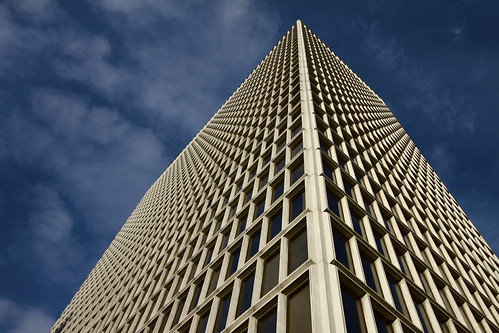
211 Fort Detroit, photo by Mark Hall Aka Mark The kid

Wikipedia says that 211 West Fort Street is a 27 story skyscraper that was completed in 1963. Current tenants include the Detroit Economic Club, the Bankruptcy Court of the Eastern District of Michigan and the United States Attorney.  If you’re a measuring sort of person, it’s the 18th tallest building in Detroit, right after the David Broderick Tower.

Check this out big as a building and see more in Mark’s slideshow.

More architecture on Michigan in Pictures.

Tamiasciurus hudsonicus alias American red squirrel alias Pine Squirrel

pine squirrel in winter coat

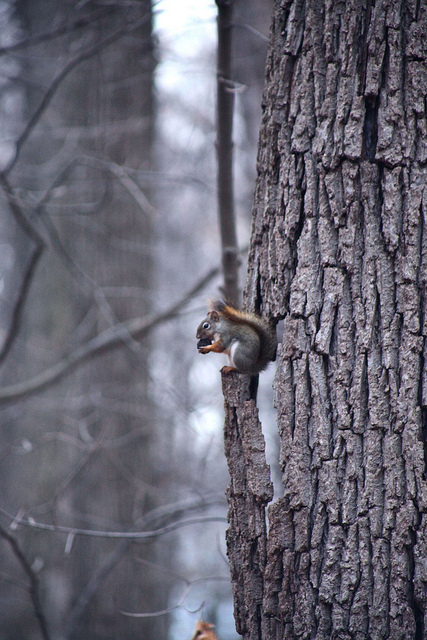
pine squirrel in winter coat, photo by jb goodwater

The University of Michigan Museum of Zoology Animal Diversity Web is a massive online database of animal natural history, distribution, classification and conservation biology. Their entry for  Tamiasciurus hudsonicus red squirrel says (in part) that:

Red squirrels occupy northern boreal coniferous forests abundant with conifer seeds, fungi, and interlocking canopies … Populations of red squirrels occur in different habit conditions due to the vastness of their range. They occur in both temperate and polar environments and are considered to be primarily arboreal. They can be found in a mixed variety of forests including coniferous, deciduous, and mixed forests and they are also able to thrive in suburban and urban settings, as long as cool, coniferous forests with dense, interlocking canopies and abundant fungal resources are present.

Red squirrels differ from other tree squirrels by their deep reddish color, territorial behavior, and their smaller body size. They are less than 30% the size of grey squirrels (Sciurus carolinensis). While size and pelage color can vary geographically, they generally have a reddish back and white underside that is demarcated by dark lateral lines, which are especially visible in summer. A white eye ring is present year-round and tufted ears are during the winter.

Read on for a whole lot more including photos, lifespan (5 years average), how they communicate and mark their territory, and what they eat (and what eats them).

Check this photo out background bigtacular and see more in Joshua’s slideshow.

More squirrels on Michigan in Pictures.

What’s around the corner in 2013?

What's around the corner?

What’s around the corner?, photo by johnmcgrawphotography

A new year always holds a lot in the way of promise and possibilities. If you have any predictions or hopes for the great state of Michigan in 2013, please share them in the comments.

See it on black and see a couple more shots in John’s University of Michigan slideshow.

Wishing you all the very best in 2013!

Enjoy your New Year’s Eve!

086

086>, photo by mark5032001

Here’s hoping everyone has a safe & fun New Year’s Eve as we all bid farewell to 2012 and enjoy the first moments of 2013!

View this photo from Bay City’s 4th of July celebration on black and see more in Mark’s photos from Bay City.

Michigan in Pictures turns seven

seven

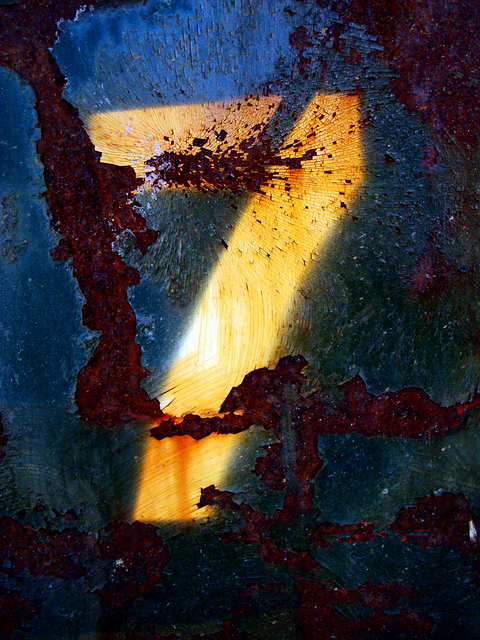
seven, photo by Hilarywho

On December 30, 2005 I posted A Pond in Bald Mountain, the first photo on Michigan in Pictures. Seven years and 2,187 photos later it’s still going strong.

Thanks to all of you for giving me a reason to do this every day!

Check Hilary’s photo out on black and count it out in her numbers slideshow.

More posts about michpics!

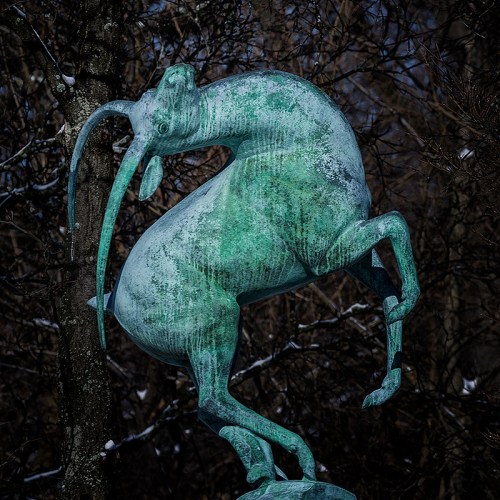
Deco Dance: Leaping Gazelle by Marshall Fredericks

Deco Dance

Deco Dance, photo by MichaelinA2

One of Michigan’s most renowned artists was Marshall Fredericks. He’s well known for the Spirit of Detroit sculpture, but this artist who spent much of his life in Michigan created many public works. Wikipedia’s entry for Marshall Fredericks has this to say about Leaping Gazelle:

This sculpture was the first commissioned work for which Marshall Fredericks was paid. In 1936, the sculpture won first prize in a national competition, and as a result, Fredericks became well known as a public sculptor. Since the gazelle is not native to Michigan, Fredericks made four animals that are, and placed them around the gazelle on Belle Isle. These animals are the otter, grouse, hawk and rabbit. Fredericks sculpted the gazelle in a characteristic movement called wheeling, which is when an animal quickly changes direction while being pursued by a predator.

The Leaping Gazelle is one of the most duplicated of Fredericks’s sculptures.

This particular sculpture is located near the entrance of the Detroit Zoo, one of many Fredericks sculptures on the Detroit Zoo grounds.

Also, I’ve been meaning to post a really cool exhibit that’s currently at the Dennos Museum in Traverse City titled Sketches to Sculptures, Rendered Reality: Sixty Years with Marshall M. Fredericks:

An exhibition of 31 small sculptures and 36 related drawings and sketches that showcases the creative process of Fredericks both as designer and sculptor. From simple pencil sketches to presentation drawings, the creative mind of Fredericks is on display as he transforms two-dimensional ideas on paper into three-dimensional sculptures. While many of the drawings in this exhibition resemble the final sculpture they would become, others only hint at elements of their outcome or point to a different outcome entirely. This exhibition is comprised of four genres that represent most of Fredericks’ work: architectural, commemorative, spiritual and whimsical. The exhibition was organized from the collections of the Marshall M. Fredericks Sculpture Museum at Saginaw Valley State University.

It includes some very cool maquettes – small, scale models of the finished Fredericks sculptures that are really amazing!

View Michael’s photo on black and see more in his Design, Special Settings, Lifestyle slideshow.

More sculpture on Michigan in Pictures.