Men at Work, Snowshoe Edition

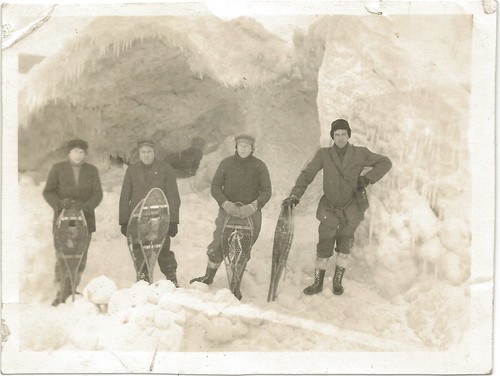
Real Photo Men at Work with Snow Shoes Winter Ice and Snow location Unknown 4-1 2 x 3-1 2 size

Real Photo Men at Work with Snow Shoes Winter Ice and Snow location Unknown, photo by UpNorth Memories – Donald (Don) Harrison

Don Harrison collects and sells postcards. His Flickr features some really great old postcards, mostly from Michigan. Check this photo out background bigtacular and see many more in Don’s Winter slideshow.

More postcards on Michigan in Pictures.

Bond Falls in black & white

Bond Falls

Bond Falls, photo by wingsfan1705

Michigan in Pictures has a number of photos from Bond Falls, but there’s always room for one more. ;)

Check this out background bigtacular and see more including some detail shots in Kim’s slideshow.

More black & white photography on Michigan in Pictures.

White-Footed Mouse

ANIMALS

ANIMALS, photo by John E Heintz Jr

The University of Michigan Animal Diversity Web says (in part) that Peromyscus leucopus white-footed mouse:

White-footed mice are found throughout most of the eastern United States. The easternmost part of their range extends from Nova Scotia in the north to Virginia in the south. They occur as far west as Saskatchewan and throughout the plains states, extending through eastern Mexico to southern Mexico and the Yucatan peninsula.

White-footed mice live in a wide variety of habitats but are most abundant in warm, dry forests and brushlands at middle elevations. They are the most abundant small rodent in mixed forests in the eastern United States and in brushy areas bordering agricultural lands. In the southern and western portions of their range they are more restricted in distribution, occurring mainly in wooded areas and semi-desert scrub near waterways. In southern Mexico they occur mainly in agricultural areas. They build nests in places that are warm and dry, such as a hollow tree or vacated bird’s nest. Their home ranges vary from 1/2 to 1 1/2 acres with 4 to 12 mice per acre.

…Most white-footed mice live for one year in the wild. This means that there is an almost complete replacement of all mice in the population from one year to the next. Most mortality occurs in the spring and early summer.

White-footed mice are primarily nocturnal. They are mainly solitary and are territorial, though adjacent home ranges do overlap. White-footed mice climb and swim well. Peromyscus leucopus individuals have keen homing instincts. In experiments in which they were captured and let go 2 miles away, they found their way back to where they were captured. When the young are threatened, the mother carries them to safety one at a time by holding them by the neck with her teeth.

A distinctive behavior of P. leucopus is drumming on a hollow reed or a dry leaf with its fore paws. This produces a prolonged musical buzzing, the meaning of which is unclear.

Read on for more and for pictures. Also (if you’re not the sort who will be disturbed by seeing a video of an indoor mouse) see this video of a mouse drumming on a plastic hose.

Check this out on black and see a series of these little guys in John’s Animal Photography slideshow.

More animals on Michigan in Pictures.

Pancake Ice

Pancake Ice

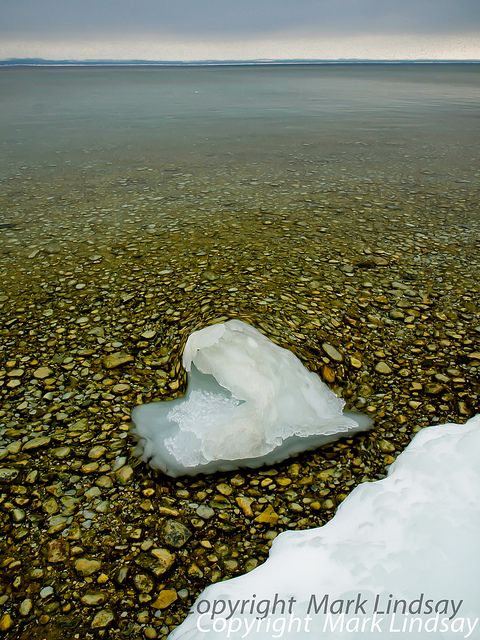
Pancake Ice, photo by ChiliFrei64

I believe that Daniel took this photo in Lexington. Check it out background bigtacular and see more in his Water slideshow.

More ice on Michigan in Pictures.

Winter Study: Observing Wolves & Moose on Isle Royale

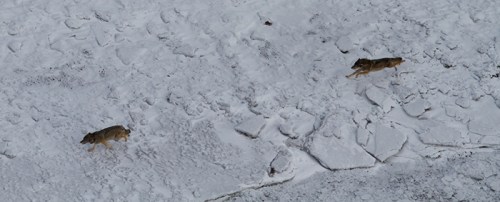
Isabelle being chased by her assailant

Isabelle being chased by her assailant, photo by isleroyalewolf.org

A couple of weeks ago a reader sent me a link isleroyalewolf.org. The website documents the interactions of the island’s wolf & moose population as their decades long dance unfolds on this remote, wilderness island. Their overview explains:

Isle Royale has offered many discoveries… how wolves affect populations of their prey, how population health is affected by inbreeding and genetics, what moose teeth can tell us about long-term trends in air pollution, how ravens give wolves a reason to live in packs, why wolves don’t always eat all the food that they kill, and more. The wolves and moose of Isle Royale also frequently reveal intimate details of their daily life experiences and they have inspired numerous artistic expressions. If we pay attention, they all tell us something important about our relationship with nature. These insights and discoveries are all presented here for you.

Building on the graph above and to develop a deeper understanding, here is more on the history of wolves and moose on Isle Royale. Moose first came to Isle Royale in the early 20th century, and for fifty years, their numbers fluctuated with weather conditions and food abundance. Wolves first arrived in the late 1940s by crossing an ice bridge from Canada. The lives of Isle Royale moose would never be the same.

Every winter since 1958, a team of researchers has spent numerous weeks at Isle Royale observing the lives of these wolves and moose and reporting back. Now they offer a website with photos and detailed reports, a fascinating tale that I encourage you to follow. Today’s photo is from the edition I began with – It’s Complicated. A snapshot:

Isabelle’s signal was surprisingly close. By the time we saw her, she was running for her life, north along the beach of Rainbow Cove. She was being chased by Pip’s two companions. Pip was nowhere in sight. While those two wolves have been eating regularly, Isabelle may not have had a decent meal in weeks, perhaps longer. Isabelle’s half-mile lead was reduced to nothing in just a few minutes.

Definitely read on for photos and a gripping account of these wolves battling and follow the whole 2013 Winter Study as it unfolds (sign up for their email).

More wolves on Michigan in Pictures.

Frosted

Natures Weeping Willow Drapes

Natures Weeping Willow Drapes, photo by LadyDragonflyCC

Christine writes:

Hoar Frost (also called radiation frost or hoarfrost or pruina) refers to the white ice crystals, loosely deposited on the ground or exposed objects, that form on cold clear nights when heat is lost into the open sky causing objects to become colder than the surrounding air. A related effect is flood frost or frost pocket which occurs when air cooled by ground-level radiation losses travels downhill to form pockets of very cold air in depressions, valleys, and hollows. Hoar Frost can form in these areas even when the air temperature a few feet above ground is well above freezing. Nonetheless the frost itself will be at or below the freezing temperature of water.

Hoar Frost may have different names depending on where it forms. For example, air hoar is a deposit of hoar frost on objects above the surface, such as tree branches, plant stems, wires; surface hoar is formed by fern-like ice crystals directly deposited on snow, ice or already frozen surfaces; crevasse hoar consists of crystals that form in glacial crevasses where water vapor can accumulate under calm weather conditions; depth hoar refers to cup shaped, faceted crystals formed within dry snow, beneath the surface.

Check it out background bigtacular and see more in her Winter 2013 slideshow.

More winter wallpaper on Michigan in Pictures.

Hop on the bus, Gus

Ann Arbor Greyhound depot

Ann Arbor Greyhound depot, photo by MI photographer

A line from one of my favorite Paul Simon tunes is a good enough excuse to share this cool video of the band Galactic featuring Corey Glover performing 50 Ways to Leave Your Lover.

See MI Photographer’s photo bigger and see more in his Michigan Scenes slideshow.

More from Ann Arbor on Michigan in Pictures.

Melt a frozen heart on Valentine’s Day

Valentine Ice

Valentine Ice, photo by Happyhiker4

Happy Valentine’s Day to everyone and here’s hoping that love finds its way into your day and life!

Check Mark’s photo out on black and see more magical winter shots on Mark’s Facebook!

View past Valentines Days on Michigan in Pictures.

MNA Memorial Falls aka Twin Falls

Memorial Falls in Winter (pano)

Memorial Falls in Winter (pano), photo by nasunto

GoWaterfalling’s page on Memorial Falls in Munising says:

MNA Memorial Falls is in Munising, off of H-58. Some of the locals refer to this waterfalls as “Twin Falls”. This is a very seasonal waterfall and is often dry. However when the water is flowing, which may only be after a good rain or when the snow is melting, you will be treated to a very pretty gorge with two waterfalls in it. MNA Memorial Falls is owned by the Michigan Nature Association and it is open to the public.

…Two streams empty into this gorge, but the second one likely only has water after or during a good rain. One very interesting feature of this gorge is a “window” in the walls between the two falls. You can crawl through this window, or just walk around it. You can see each of the waterfalls through this window.

Another nice thing about this waterfall is its proximity to Tannery Falls. The trail from Nestor streets forks just before it descends into the gorge. The trail to the right leads to the base of the falls. The trail to the left leads to H-58, about 100 feet away from the stairway to Tannery Falls, so you can visit both falls on the same hike.

In the winter both of these falls turn into ice columns that are tackled by the ice climbers. Despite their low volume of water, each of these falls manages to produce a very impressive column. Every winter Munising hosts an ice climbing festival. After the festival the ice columns look like they have been attacked by woodpeckers. There are many other interesting ice formations to see in the area.

Read on for more and definitely click through to see a pic of a person beside the 40′ fall and a shot of the “window”. Also see Memorial Falls at the Waterfall Record.

Check this out background big and see more in Nina’s Michigan Waterfalls slideshow. If you look carefully, you’ll see another photographer in the shadows!

There’s many more waterfalls on Michigan in Pictures including the above-mentioned Tannery Falls.

Cyanocitta cristata, the Blue Jay

Blue Jay in Winter

Blue Jay in Winter, photo by AcrylicArtist

The UM Animal Diversity Web entry for Cyanocitta cristata blue jay says (in part):

Blue jays are bright blue on top and whitish gray on the belly and chin. They have a gray-blue, feather crested head, which they can raise and lower. The feathers on their wings and tails are bright blue with white and black bands. Blue jays also have a collar of black feathers across the throat and continuing around the head. Their bills, legs, feet, and eyes are black. Males are just a little larger, on average, than females.

…Blue jays are very aggressive and noisy birds,driving other birds away from food sources and their territories. In the winter, Blue jays hide far more food than they can eat, perhaps to remove food from their territories to discourage intruders. They are also partially migratory, and in the fall they can be seen traveling in flocks of more than a hundred birds.

…Blue jays are omnivorous. They feed on fruits, nuts, seeds, insects, mice, frogs, and will rob other nests for small songbirds and bird eggs. To eat nuts, blue jays hold them with their feet and then crack the shell with their bill. Blue jays in captivity have been known to fashion tools in order to get at foods. Blue jays will also steal foods from other birds by frightening them into dropping what they have. They cache foods, such as seeds, for later use.

Read on for much more (including photos)  and don’t miss a previous feature, Things you may not know about Blue Jays.

Check this out background bigtacular and see more in Rodney’s Animals slideshow.

Many more Michigan birds on Michigan in Pictures.