Photos of the Tax Day Eclipse in Michigan

Tax Day Eclipse by Kevins Stuff

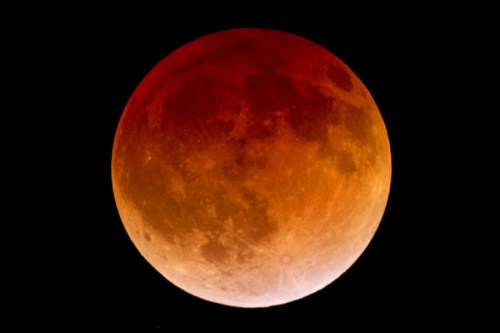
Tax Day Eclipse, photo by Kevin

Here in Traverse City, the weather thoughtfully brought us snow because, well, April, amiright? Thankfully, others were not so unfortunate. If Michigan in Pictures had a house astronomer, it would certainly be Kevin, and thankfully he wasn’t so unlucky. He writes:

The full moon of April lies fully eclipsed in the Earth’s shadow on a cold & snowy April morning in West Michigan.

The Full Moon of April is called the “Full Pink Moon”. The grass pink or wild ground phlox is one of the earliest widespread flowers of the spring. This year it is also the Paschal Full Moon; the first full moon of the spring season.

About the image…

I had been waiting for this eclipse for a while, having seen my last one in 2008. Unfortunately it didn’t look like the weather was going to cooperate. The day before we had temperatures in the high 60’s with rain and thunderstorms, and the cold front went through Monday morning and dropped the temps into the 30’s. And then it started snowing in the afternoon.

I remained cautiously optimistic, and around 2.30am I could just barely see the moon through the clouds. I took a chance, packed up my cameras, and headed east to my astronomy club’s observatory. When I got there, it was completely cloudy, but I went up and opened the dome and attached my camera to one of the telescopes anyway.

Totality began just after 3.00am, and suddenly about 10 minutes later the clouds parted – I could easily seen the eclipsed moon, the star Spica nearby, and the planet Mars off to the right. I immediately started shooting, and took images at intervals – especially around mid-totality – until the clouds came in around 4.15am. That was fine, as totality ended about 10 minutes later.

I closed up, packed up, and went home. Images downloaded to the computer, quickly scanned for good ones, and here is one of the best. I’ve got a few wide-field ones I’ll put up later.

View Kevin’s photo bigger and see more in his Lunar Eclipse – April 15, 2014 set and in his massive Astronomy slideshow.

More eclipses and more on the moon at Michigan in Pictures. We’ll add links in the comments when we find more media about last night’s total eclipse.
Lunar Eclipse Tonight!

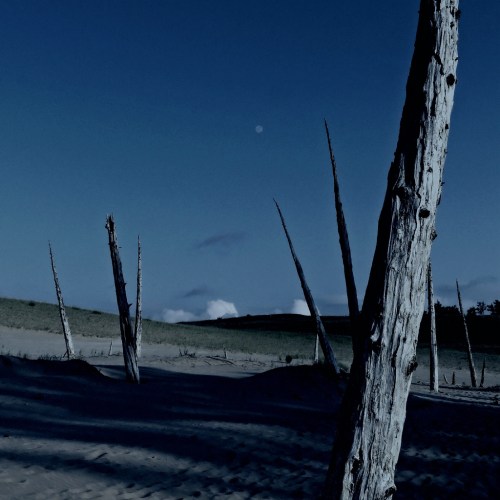
Inside the Ghost Forest

Inside the Ghost Forest, photo by jimflix!

There’s an eclipse of the full moon tonight! It begins at 2 AM Eastern time with the total eclipse lasting 78 minutes and starting about 3 AM. While the forecast is not great, it looks like there’s a chance that those brave souls who trade sleep for a shot at viewing the eclipse won’t be disappointed.

Eastern Daylight Time (April 15, 2014)
Partial umbral eclipse begins: 1:58 a.m. EDT on April 15
Total eclipse begins: 3:07 a.m. EDT
Greatest eclipse: 3:46 a.m. EDT
Total eclipse ends: 4:25 a.m. EDT
Partial eclipse ends: 5:33 a.m. EDT

If you’re up in the Sleeping Bear Dunes area, they are having a star party tonight. If anyone knows of other viewing gatherings, post them in the comments! If the eclipse ends up getting clouded out locally, you can always take to the net and watch via the live stream from the Griffith Observatory. As I wrote about last week, this eclipse is the first of four total eclipses without a partial in between known as a Lunar Tetrad.

This photo is of the ghost forest on Sleeping Bear Point created when sand of the world’s largest shifting sand dune covered living trees.

View Jim’s photo background bigtacular and see more in his Sleeping Bear Dunes slideshow.

More of the moon and more dunes on Michigan in Pictures!

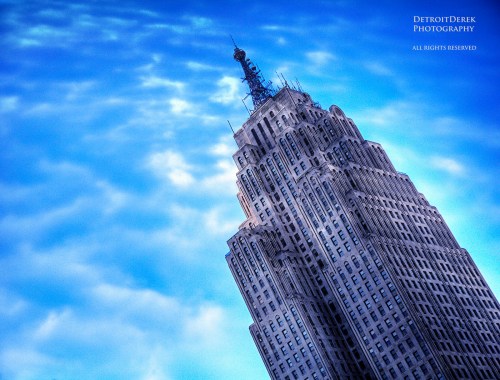
Hundred Mile High City: Detroit’s Penobscot Building

Hundred Mile High City by Detroit Derek


Hundred Mile High City, photo by Derek Farr

When I saw Derek’s photo, I remembered that I had posted a photo of the Penobscot several years ago. I found that photo has been deleted from Flickr and therefor from Michigan in Pictures as well. So here then is the definitive Penobscot post.

The Wikipedia entry on the Penobscot Building says:

Upon its completion, it was the eighth tallest building in the world and the tallest outside New York City and Chicago. Like many of the city’s other Roaring Twenties buildings, it displays Art Deco influences, including its “H” shape (designed to allow maximum sunlight into the building) and the sculptural setbacks that cause the upper floors to progressively “erode”. The building’s architect, Wirt C. Rowland, also designed such memorable Detroit skyscrapers as the Guardian Building in the same decade. At night, the building’s upper floors are dramatically lit in floodlight fashion, topped with a red sphere.

Although the Penobscot Building has more floors than Comerica Tower at Detroit Center (45 above-ground floors compared to Comerica Tower’s 43), Comerica’s floors and spires are taller, with its roof sitting roughly 60 feet taller than Penobscot’s (566′). The opulent Penobscot is one of many buildings in Detroit that features architectural sculpture by Corrado Parducci.

The Penobscot Building served as a “compass” for pilots in airplanes during its early years, due to its position of facing due north. The building also served as an inspiration of sorts for the Empire State Building in New York City, and many individuals worked on the construction of both towers.

The Penobscot Building web site says that the building serves as the fiber-optic hub for the entire Detroit area and touts it as the place for office space. You might also enjoy Historic Detroit’s page on the Penobscot Building, the Emporis page on the Penobscot and this 3D model of the Penobscot Building for Google Sketchup.

View Derek’s photo bigger and see more in his massive Detroit slideshow. He says the title of his photo came from the Ocean Colour Scene song, Hundred Mile High City.

More architecture on Michigan in Pictures.

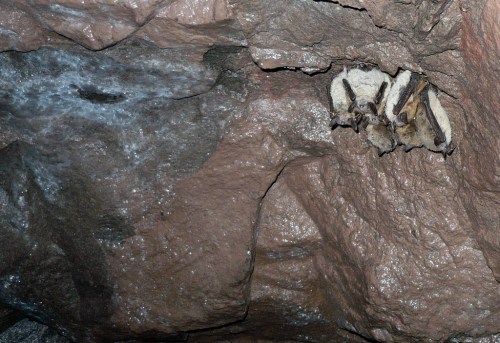
Bad news for Michigan bats: White-nose syndrome found

Bats of Copper Country

Bats of Copper Country, photo by GollyGforce – Living My Worst Nightmare

In “A sad day” for Michigan bats: White-nose syndrome found in 3 counties, Michigan Radio reports:

The Michigan Department of Natural Resources today confirmed the presence of white-nose syndrome in three counties: Alpena, Dickinson and Mackinac.

White-nose syndrome is blamed for the deaths of six million bats in 27 states and five Canadian provinces since 2006. In some places where the fungus outbreak has taken hold, 90% of the bats have died.

“We anticipated that this day would come. It’s not unexpected. But it’s still a sad day,” says Dan O’Brien, a state wildlife veterinarian. “Once this fungus gets into a bat hibernacula it’s going to be there, current evidence suggests, for a long time.”

The fungal disease could have a big impact on Michigan’s economy. Wildlife biologists estimate bats have a roughly $1 billion impact on the state’s agriculture industry by eating harmful insects.

The DNR adds:

“At this point, there is no effective treatment for WNS and no practical way to deliver the treatment to millions of affected bats even if treatment existed. Rehabilitation of bats is prohibited in Michigan because of the potential for the exposure of humans to rabies,” said O’Brien. “The best thing the public can do when they find a dying or dead bat is to leave it alone and keep children, livestock and pets away from it.”

Bat die-offs can be reported through an observation report on the DNR website at www.michigan.gov/wildlife or by calling the DNR at 517-336-3050.

View G’s photo big as a batcave and see more in her In the Wild slideshow.

More animals on Michigan in Pictures.

Twain

Twain by Ralph Krawczyk Jr

Twain, photo by Ralph Krawczyk Jr

If it’s your job to eat a frog, it’s best to do it first thing in the morning. And If it’s your job to eat two frogs, it’s best to eat the biggest one first.
~Mark Twain

View Ralph’s photo bigger and see more in his iPhone 5s slideshow.

There’s much more photographic goodness from Ralph on Michigan in Pictures.

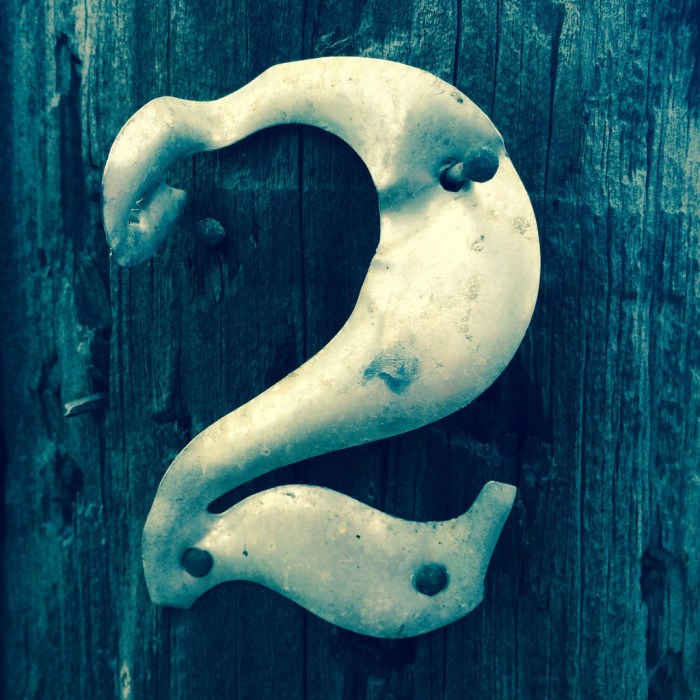
Equinox to Equinox, 2014

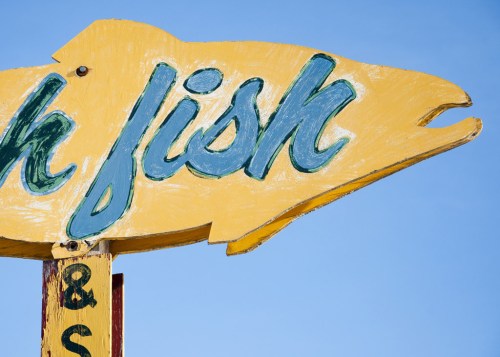
Thill's-Fish-Market-by-Jorie-Obrien

 Day Two, photo by Jorie O’Brien

Jorie started her Equinox to Equinox series on March 20th – click the link to follow along until, I imagine, September 23rd.

There’s more from Jorie on Michigan in Pictures including a multi-day profile that’s really worth your time.

PS: This is Thill’s Fish House in Marquette, and excellent place to buy fresh, Lake Superior fish in the Marquette harbor.


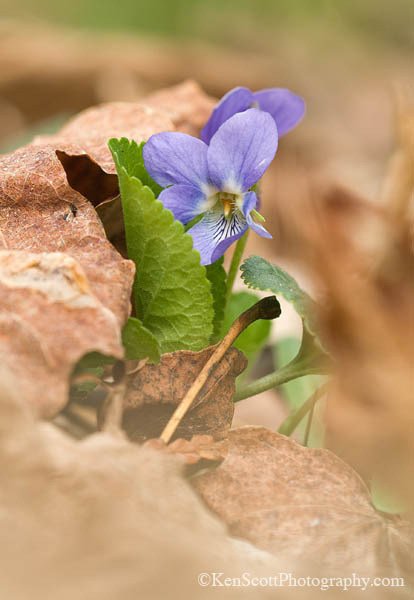
Common blue violet (Viola sororia)

Coincidentally enough, I just found out that Ken will be doing the next Glen Arbor Art Association Talk About Art this Thursday, April 10, 7:30 p.m. at the GAAA in Glen Arbor.

Spring Speak ... violet

Spring Speak … violet, photo by Ken Scott

Today’s post comes via eatdrinkTCMichigan is the second most agriculturally diverse state in the U.S. and that diversity doesn’t stop at the market! Our woods are alive with tasty and nutritious food if you know where to look. In our Wild Food Wednesdays we’ll tip you off to seasonal goodies and give you a recipe or two so you can enjoy the meal as much as the hike to find it!

In many years, we will have seen Viola sororia (Common blue violet) in the woods and often in our lawns by now. Violets can be found in a variety of soil conditions, from moist and even swampy deciduous forests to drier forests (though not usually near pines). The flowers and young leaves are delicious! The Culinary Violet page at the American Violet Society says (in part):

Both the flowers and leaves in fresh and dried forms have been standard fare in Europe and other areas in the world since before the 14th century. Fresh flowers are most often used for garnishing and crystallizing, The pungent perfume of some varieties of v.odorata adds inimitable sweetness to desserts, fruit salads and teas while the mild pea flavor of v.tricolor and most other viola combines equally well with sweet or savory foods, like grilled meats and steamed vegetables. The heart-shaped leaves of the v. odorata provide a free source of greens throughout a long growing season. They add texture to green salads when young and tender. Later in the season, slightly tougher, older leaves are cooked with other potted herbs and greens in soups, stews and stir-frys.

Violets aren’t just another pretty face. They are loaded with phytochemicals and medicinal constituents that have been used in the treatment of numerous health problems from the common cold to cancer. The late Euell Gibbons even referred to them as “nature’s vitamin pill (1).” A 1/2 cup serving of leaves can provide as much vitamin C as three oranges.

You can see some more photos and a county distribution at the Herbarium of the University of Michigan and get a lot more, including recipes, from eatdrinkTC!

Ken took this shot in March of 2012. See it on Flickr and see more in his Flowers slideshow!

More flowers and more food on Michigan in Pictures!

Spring, Back in the Good Old Days

DSC09329

Untitled, photo by Donald Anson

By “Good Old Days” I mean April 2011.

View Donald’s photo background big and see more in his awesome Flowers slideshow.

For the flower-deprived, there’s lots more flowers and more spring wallpaper on Michigan in Pictures too!

Blood Moon kicks off the Lunar Eclipse Tetrad

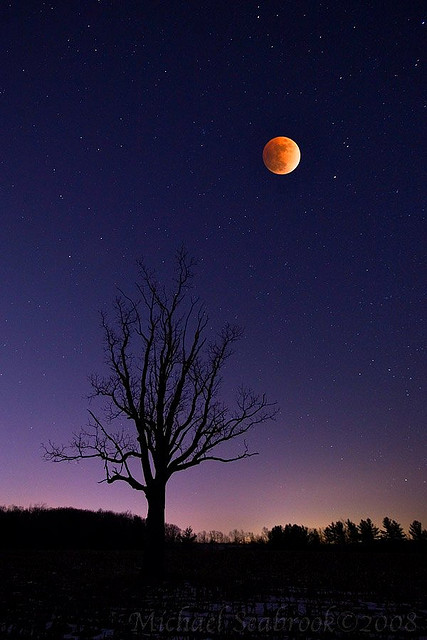
Shadow Moon by Michael Seabrook

Shadow Moon, photo by Michael Seabrook

For as long as we know, celestial signs have been read to signify calamity and change, and apparently the total lunar eclipse in the early morning hours of April 15, 2014 that kicks off a two-year tetrad of lunar eclipses is no exception.

In What is a Blood Moon? on one of my favorite blogs, EarthSky, Bruce McClure and Deborah Byrd explain (in part) a subject you might be hearing about this week:

We’ve been receiving a number of inquiries about Blood Moons in 2014 and 2015. The Blood Moons most people are asking about are not part of astronomy. Their origin is religious, at least according to Christian pastor John Hagee, who wrote a 2013 book about Blood Moons. However, both astronomers and some proponents of Christian prophesy are talking about the upcoming lunar tetrad – a series of total lunar eclipses – which begins on the night of April 14-15, 2014. We at EarthSky don’t have any special knowledge about the purported Blood Moons of Biblical prophesy. But, since they’re moons, and since people are asking us, we wanted to reply.

The full moon nearly always appears coppery red during a total lunar eclipse. That’s because the dispersed light from all the Earth’s sunrises and sunsets falls on the face of the moon at mid-eclipse. Thus the term blood moon can be and probably is applied to any and all total lunar eclipses…

Both astronomers and followers of certain Christian pastors are talking about the lunar tetrad of 2014-2015. What is a tetrad? It’s four successive total lunar eclipses, with no partial lunar eclipses in between, each of which is separated from the other by six lunar months (six full moons)

We’re not experts on prophecy of any kind. But we’ll tell you what we know about the new definition for Blood Moon that has raised so many questions recently.

From what we’ve been able to gather, two Christian pastors, Mark Blitz and John Hagee, use the term Blood Moon to apply to the full moons of the upcoming tetrad – four successive total lunar eclipses, with no partial lunar eclipses in between, each of which is separated from the other by six lunar months (six full moons) – in 2014 and 2015. John Hagee appears to have popularized the term in his 2013 book Four Blood Moons: Something is About to Change.

As if we didn’t have enough to look forward to on April 15th! Read on for lots more. The four eclipses are this one, October 8 2014 and April 4 & September 28, 2015. Here’s the eclipse viewing times for Michigan – times for other time zones can be found on EarthSky.

The April 15th eclipse begins at 2 AM Eastern time when the edge of the moon first enters the amber core of Earth’s shadow. Totality occurs during a 78 minute interval beginning around 3 o’clock in the morning on the east coast, midnight on the west coast. Weather permitting, the red moon will be easy to see across the entirety of North America.

Eastern Daylight Time (April 15, 2014)
Partial umbral eclipse begins: 1:58 a.m. EDT on April 15
Total eclipse begins: 3:07 a.m. EDT
Greatest eclipse: 3:46 a.m. EDT
Total eclipse ends: 4:25 a.m. EDT
Partial eclipse ends: 5:33 a.m. EDT

Michael took this photo of the lunar eclipse on February 20, 2008. View it bigger and see more in his The Moon slideshow.

More of the moon on Michigan in Pictures!

Pink Daffodils

Pink Daffodils by Alissa Holland

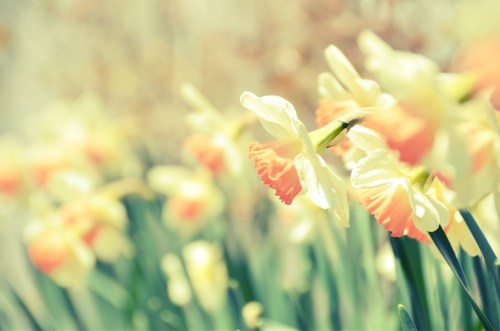
Pink Daffodils, photo by Alissa Holland

We can dream, right?

View Alissa’s photo bigger and see more in her How My Garden Grows slideshow.