HOWELL, MICHIGAN – This morning, Ann Arbor based University of Michigan and East Lansing’s Michigan State University announced a historic merger that will create the largest university on the planet, known simply as “MU”.
“We stand midway between two storied colleges to create the greatest of them all,” stated MU co-President Lou Anna Simon as she welcomed an estimated 11,110 alumni, honorees, and angry sports fans to what will be the main campus of MU in Howell. “MU will become the largest college in the U.S. and instantly the leader in medicine, science, arts, and of course – sports.”
Her fellow co-President Mark Schlissel “Today we put aside our differences to crush all other universities with the aggregated research, industry partnerships, academic synergies, and the combined athletic might that two nationally powerful programs can bring to bear.”
Although barely hours old, the new school has already been ranked #1 for the upcoming football, basketball and cancer research seasons.
Reactions of fans of the two programs contacted ranged from “confused” to “enraged” while the entire state of Ohio pretty much just broke down and cried.
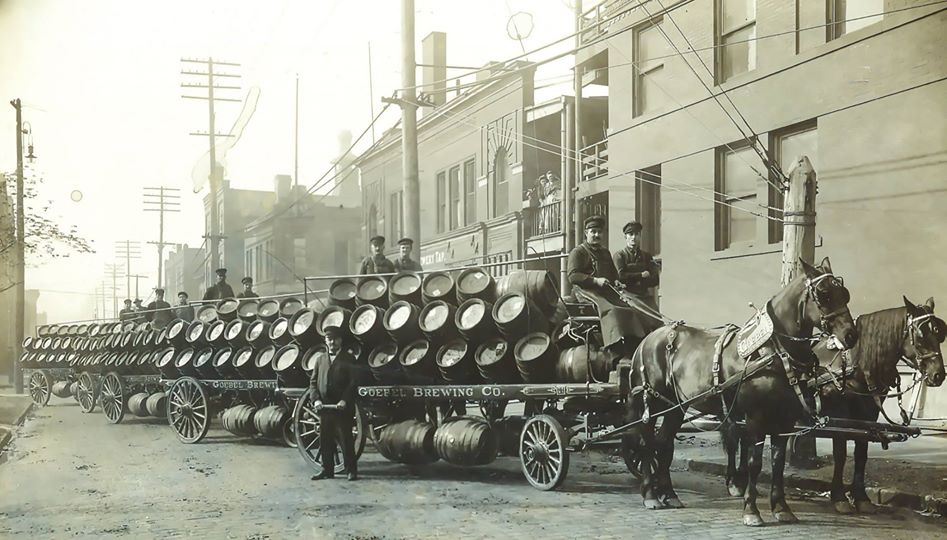
SE Detroit MI Heavily laden Beer Wagons prepare to leave the Goebel Brewery to quench the thirst of late 19th century Detroiters … AWESOME Photo from my good friend David V. Tinder and his friends at the U of M Clemens Library “Tinder Collection”.
Goebel Brewing Company was a brewing company in Detroit, Michigan from 1873 to 1964 eventually acquired late in its existence by Stroh Brewery Company. The beer was locally popular in Detroit from the company’s inception, but grew in popularity and was eventually available in many states for a brief period in the 1940s, with an ad campaign in Life magazine that featured restaurant ads from many famous eateries around the country using Goebel beer as an ingredient. The beer, billed as a “light lager”, was golden in color, and was noticeably drier than most everyday beers of the era. Their longtime mascot was a bantam, called Brewster Rooster, who wore attire with Goebel’s logo, and the beer was a long-time sponsor of Detroit Tigers baseball broadcasts on radio.
Prohibition forced the closure of the brewery in 1920 though the space was rented out to various industries. In 1932 the company was reorganized. Though Prohibition was repealed in 1933 the brewery would not begin new production until the Spring of 1934. Otto Rosenbusch, the retired brewmaster from Stroh Brewery Company, was brought on to help Goebel compete against his old employer at Stroh’s and his son Herman who was the head brewer there. Upon the elder Rosenbusch’s passing in 1935, Charles Elich, the brewmaster at the Pabst Brewing Company agreed to become both the brewmaster and superintendent at Goebel.
You can also check out some old Goebel cans and be sure to watch the commercial below – it’s a gem and an early example of a brewery marketing to women.
Scott Falls is one of the easiest waterfalls to access in the Upper Peninsula. It is just east of the Au Train river and right on highway M28. Just across the highway is a roadside park complete with vaulted toilets, water, charcoal grills, picnic tables, and beach access. Scott Falls couldn’t’ be in a more convenient location.
I believe that many of us in the Upper Peninsula have found childhood memories of Scott Falls. Personally, I remember those warm summer days when my mother would take us for a swim at the roadside park. Of course we would be covered in sand from walking up the beach afterward, so mom would take us across the road and make us rinse off in Scott Falls. We would play in the water and have an adventure in the cave behind the falls. As a kid, sitting in that cave when the train comes through is amazing! I’m sure that many of us have shared similar experiences.
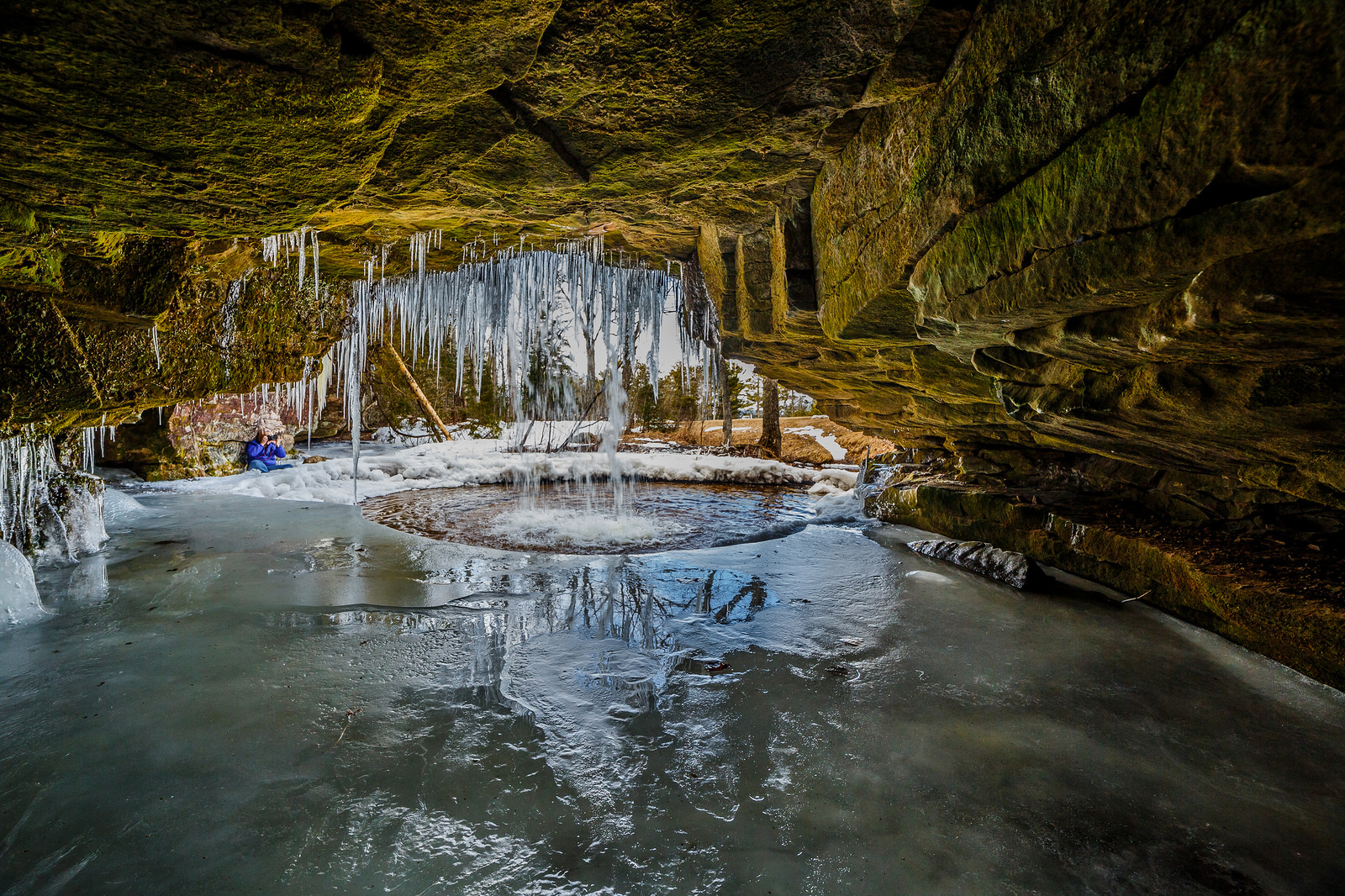
Click through for more! Regarding the photo, Mike writes:
This is how I prefer to see my world. A magical place, begging to be explored and enjoyed. I’m so lucky to have a partner that not only lets me, but comes along and enjoys it as I do.
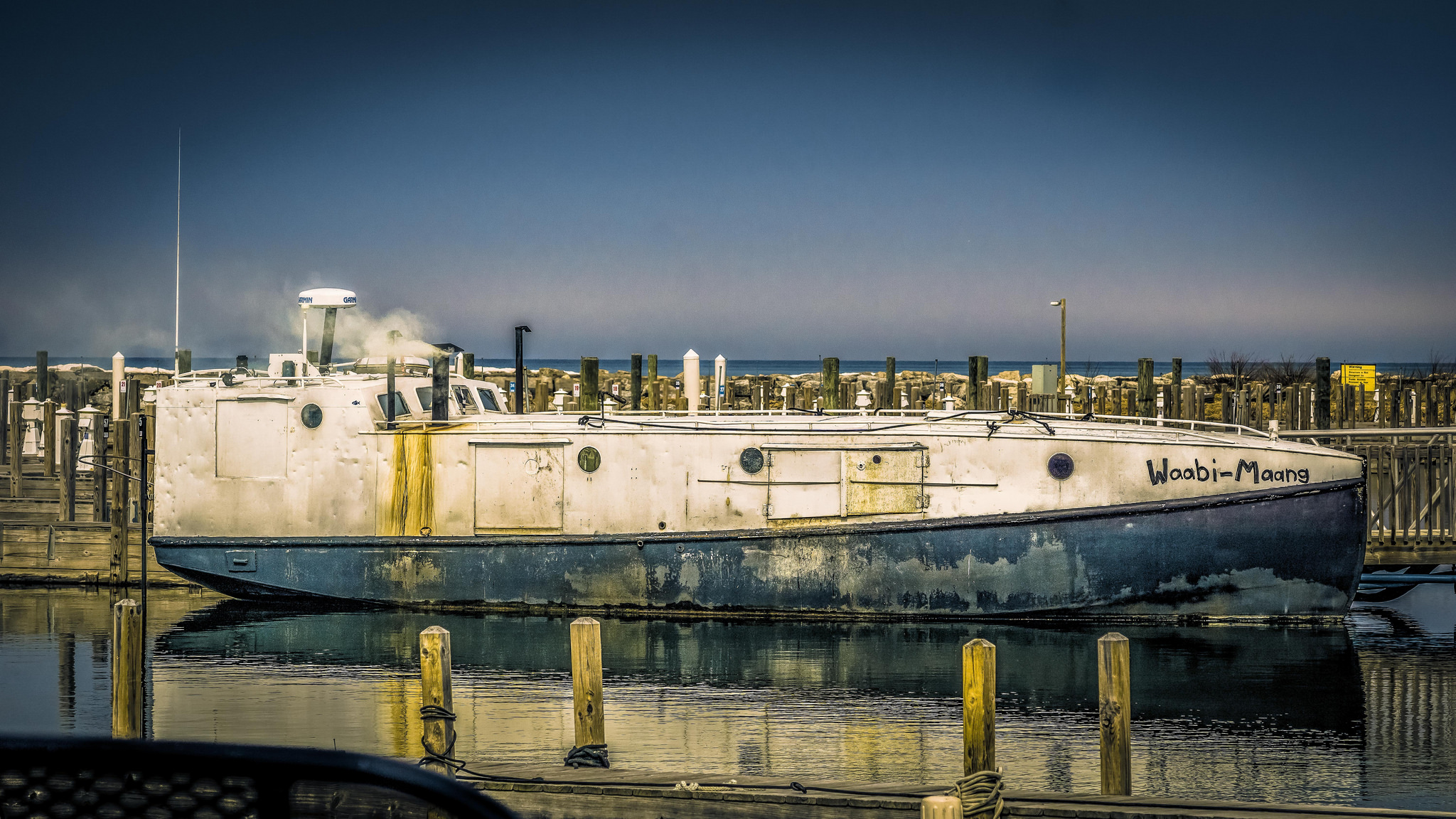
Here’s a shot from last week in my hometown of Leland by Mark Smith who writes:
The tribal fishing boat Waabi-Maang (White Loon) fires up for another fishing season in Leland, Michigan. I have been fooling around with a vintage lens here .. quite a trip! (if you look closely you can almost see the storm coming – 8 inches of snow tonight. Thanks, Spring.)
View Mark’s photo background big and see more in his slideshow.
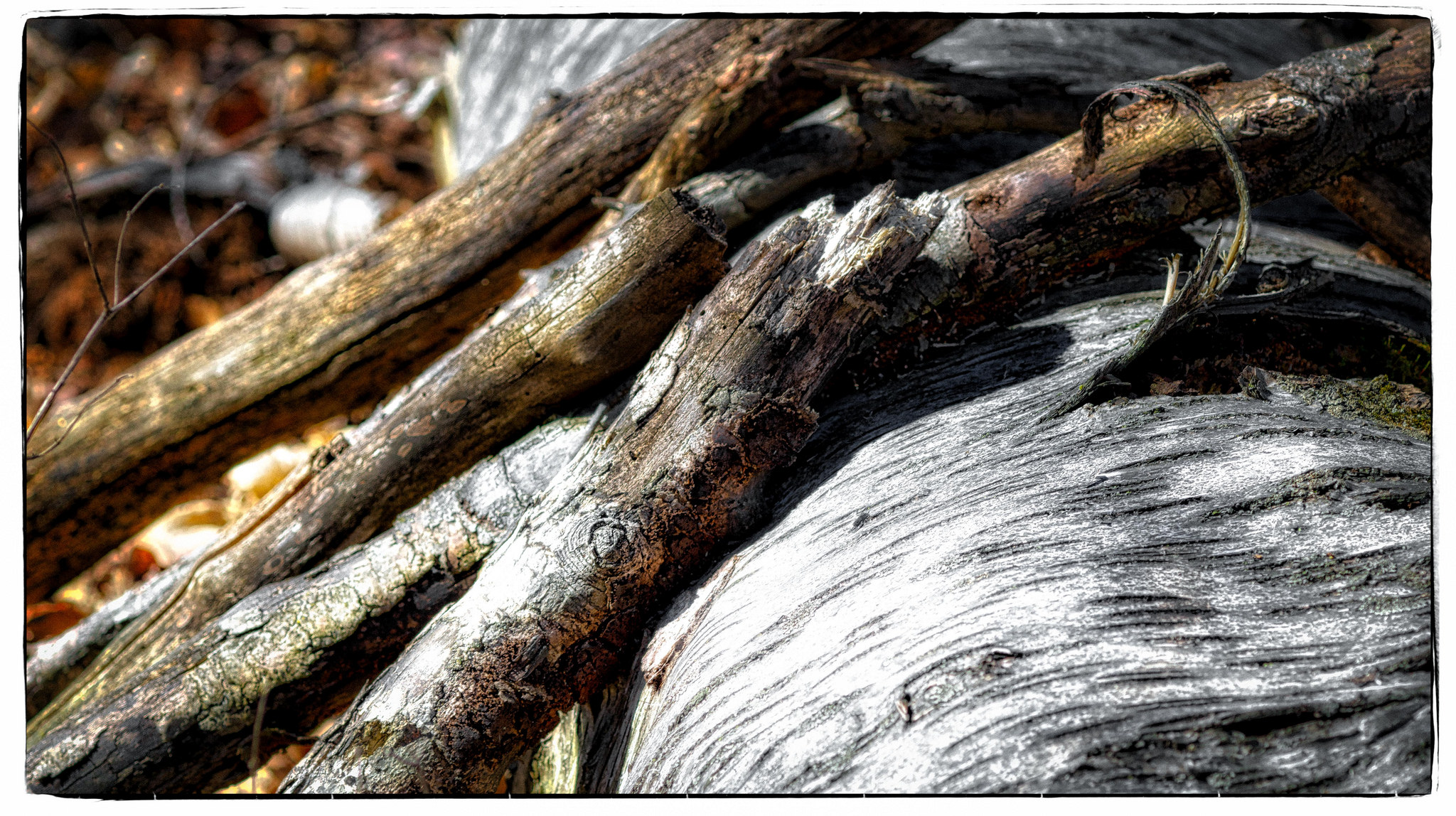
PS: The lens is a Contax Sonnar 2890 – here’s another photo “Branches to Branches” that Mark took with it.
I’m actually forced to write about Michigan because as a native of that state it’s the place I know best. ~Jim Harrison
I found out last night that Jim Harrison passed away. In addition to being a noted Michigan author, Jim was one of my father’s best friends and a frequent (often late-night) visitor to my house.
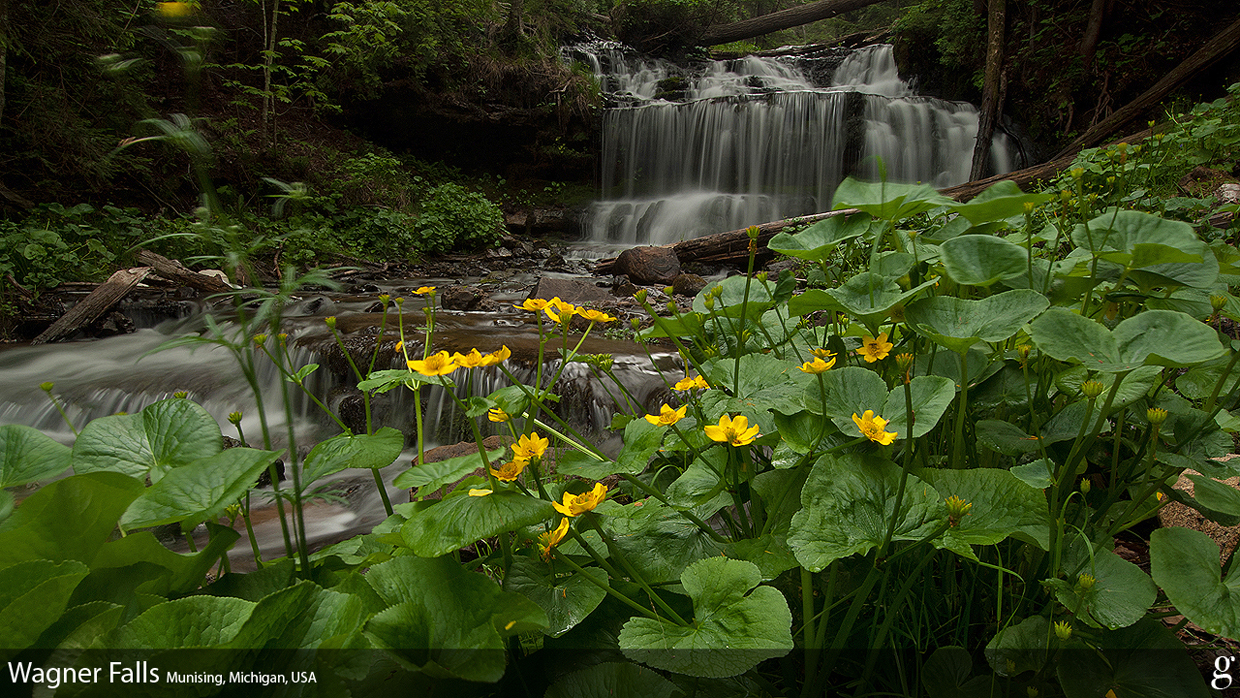
This scenic waterfall is nestled amongst virgin pine and hemlock trees. There is a small parking area and a half-mile trail with an observation deck overlooking the falls.
Gowtham adds:
Yet another can’t miss it thing in an area that’s filled with can’t miss it things, Wagner Falls lends itself to a very easy and short hike through the woods. While the picturesque falls take the cake, plethora of wild flowers along and off the trails (through Spring, Summer and may be even Fall; e.g., Gay Wings, Trout Lily) are an added bonus!
View his photo background big and see more in his slideshow.
PS: I’m pretty sure the flowers in the foreground of this May 2012 shot are marsh marigolds.
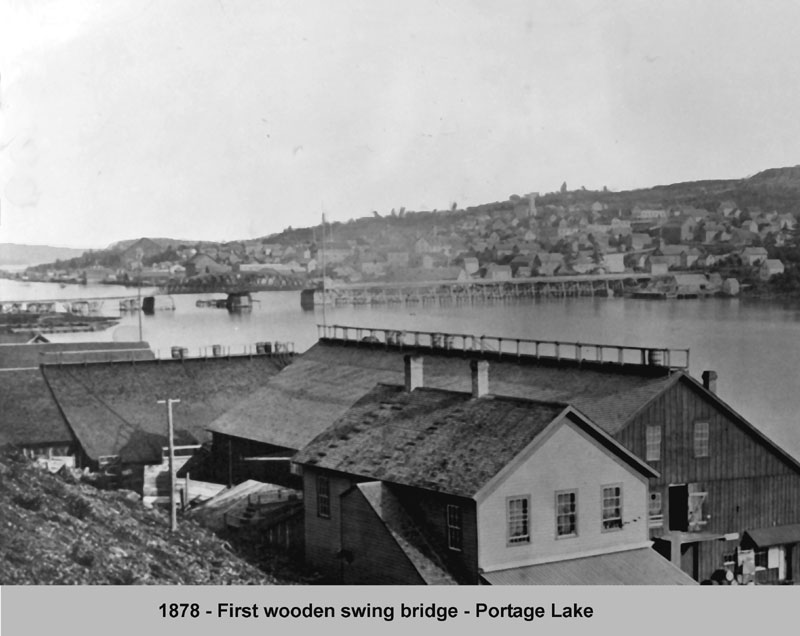
In 1897, the Mineral Range Railroad Company built a new iron swing type bridge, replacing the old wooden bridge. This bridge also featured a two lane roadway, with a railroad crossing underneath. New reconstructed support cribs were also sunk. But on August 15, 1905, disaster struck, when the steamer Northern Wave (Mutual Transit Lines), en route to the Quincy Smelter to pick up copper ingots, smashed into the center section, destroying much of it. The mishap was apparently caused by a mixup in signals.
Original Portage Wooden Swing Bridge Taken from the north side of Ruppe Dock and Warehouse in Hancock, 1878
The bridge would be replaced one year later, again with an iron bridge, and center swing section, and a control house above the roadway, over the center turnstile. This new bridge would have 118 ft. of clearance on the north maritime passage, and 108 ft. on the south side passage. (Newspaper accounts of the period, gave maritime traffic at 6,000 bridge openings per year, and up to 40 daily train crossings per day, both of which began to taper off by 1920). Although almost struck again in 1940 by the Steamer Maritana (Hutchenson Lines), it narrowly avoided the collision by dropping its anchors which caught the submarine telephone cables, stopping it just short of the bridge. (This would happen again 20 years later). Light signaling was added during WWII, to augment the steam whistles already in use. The bridge served the communities until 1960.
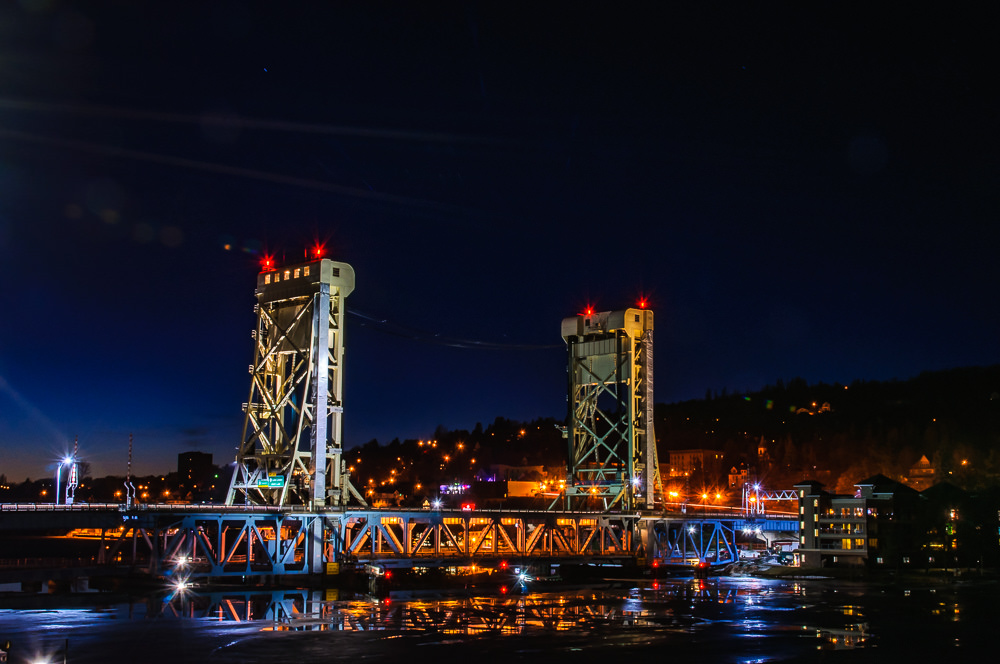
In the late 1950s, the Michigan Department of Transportation began studies on how best to replace the aging bridge, with a more modern one, that would accommodate the now much larger ships plying the waterway. It was decided to build what would be become the worlds heaviest aerial lift bridge, which was under construction by 1959, just to the West of the then current bridge. This new bridge, with 4 traffic lanes above, and a railroad crossing below, had its ribbon cutting on Saturday, June 25, 1960. But it almost didn’t happen. During the night before, the Steamer J.F. Schoelkoff (American Steamship Company), traveling westward, signaled for the bridge to open, but the signals were not acted on. Dropping all their anchors, they snagged the submarine telephone cables in an eerie repeat of 20 years previously. Onlookers for the ribbon cutting ceremonies were treated to the spectacle of a large freighter jammed crossways in the waterway, just a quarter mile from the Bridge. Area phone service was disrupted for nearly three days. Telephone service to the bridge, and marine radios were installed shortly. That incident not withstanding, the new Portage Lake Lift Bridge continues to well serve the area, as the possibility of adding yet another new bridge may be explored.
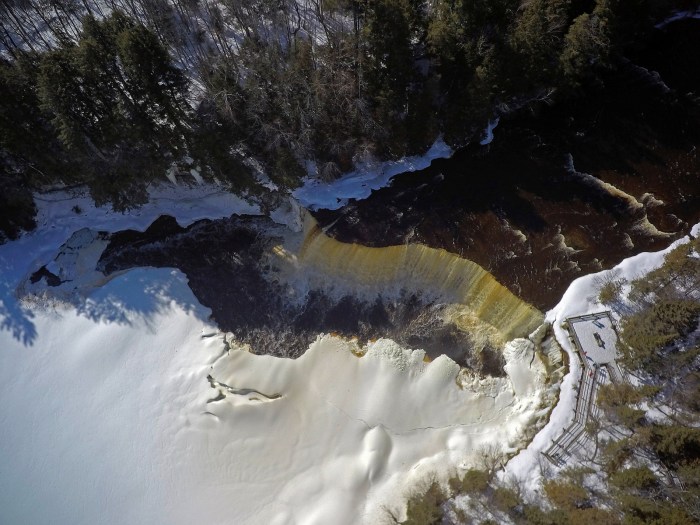
Julie got this cool shot of the Tahquamenon Falls throwing off winter’s grip at the beginning of the month. Now it looks like winter is going to strike back. Via the Detroit news and Sara Schultz, meteorologist with the National Weather Service in White Lake, a winter storm is arriving today:
“We’re looking at the heaviest snowfall north of Saginaw, in the Thumb area and then to the north and west of that, and then of course the lower northern Michigan areas, where they could see six-plus inches of snow.”
A winter storm watch will be in effect Wednesday morning through early Thursday evening for areas north of Interstate 69, Schultz said.
“We’re looking at areas south of I-69 as mostly rain,” she said. “Between Flint and Saginaw, we’re looking at accumulation of snow and ice; just some light accumulation.”
Schultz cautioned that the forecast remains flexible as the storm enters the state. “That rain/snow line along I-69, if it shifts just a little it could throw off everything,” she said.
“A glooming peace this morning with it brings; The sun, for sorrow, will not show his head: Go hence, to have more talk of these sad things; Some shall be pardon’d, and some punished: For never was a story of more woe Than this of Juliet and her Romeo.” ~William Shakespeare
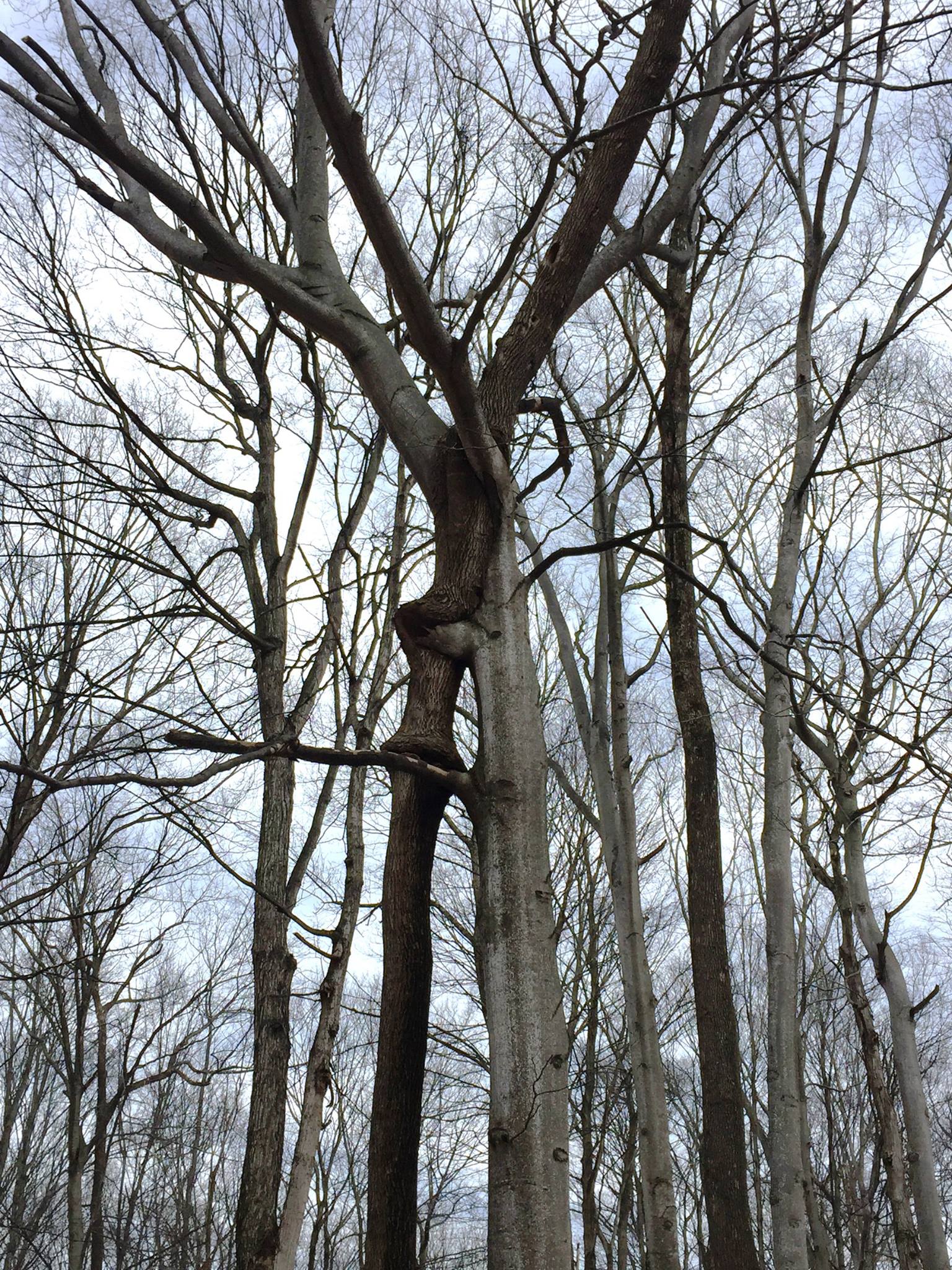
The two hugging trees on the trail to Treat Farm share a similar fate to the star crossed lovers, Romeo and Juliet. The beech scale brings a fungus that is deadly like a poison, and kills off the American beech trees. The Emerald Ash Borers pierce the hearts of the ash trees to take the nutrients.
Invasive species have made their way to the fair Lakeshore of Sleeping Bear Dunes. You can help prevent the spread by purchasing local firewood, and burning it within the local area.
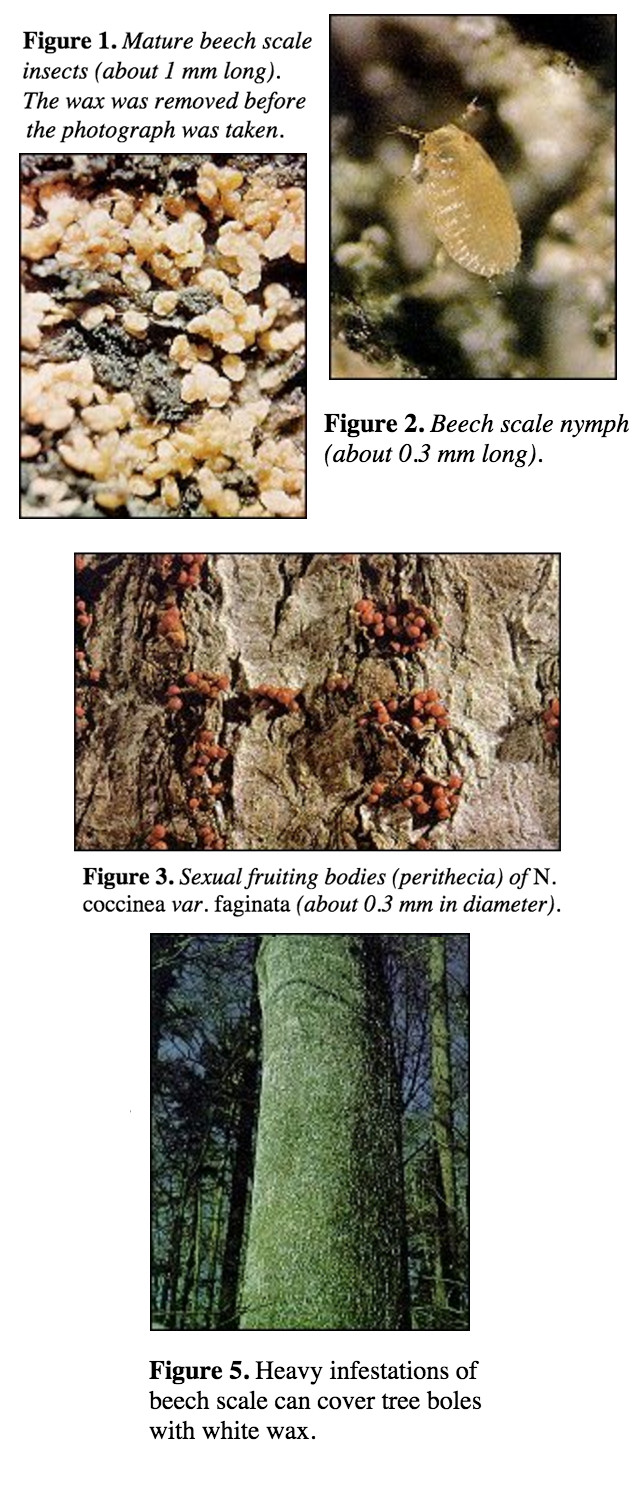
Beech bark disease is one of the latest exotic pest problems to plague Michigan forests. Beech bark disease refers to a complex that consists of a sap-feeding scale insect and at least two species of Nectria fungi. Beech bark disease begins when American beech (Fagus grandifolia) becomes infested with beech scale (Cryptococcus fagisuga Lind) (=Cryptococcus fagi Baer.). The tiny scale insects, found on the tree trunk and branches, feed on sap in the inner bark. White wax covers the bodies of the scales.
When trees are heavily infested, they appear to be covered by white wool. Minute wounds and injuries caused by the scale insects eventually enable the Nectria fungus to enter the tree. Nectria kills areas of woody tissue, sometimes creating cankers on the tree stem and large branches. If enough tissue is killed, the tree will be girdled and die. Other trees may linger for several years, eventually succumbing to Nectria or other pathogens. Some infected trees will break off in heavy winds — a condition called “beech snap.” Dense thickets of root sprouts are common after trees die or break.




 Michigan in Pictures