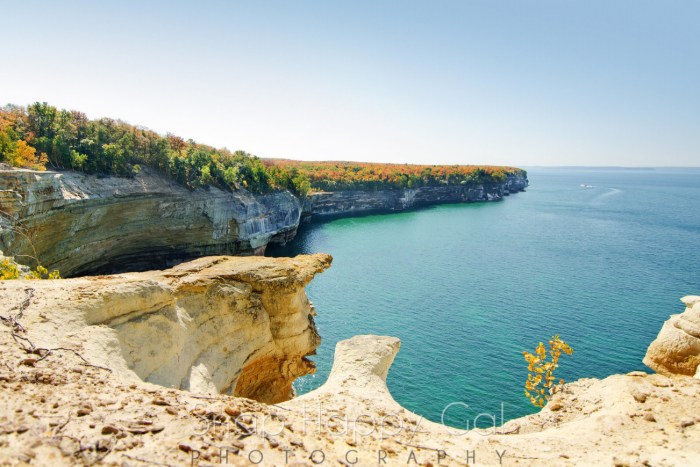
Happy 48th Birthday, Pictured Rocks National Lakeshore!

Pictured Rocks Caves by Heather Higham

Pictured Rocks Caves by Heather Higham

Central Michigan University’s Clarke Historical Library says that on October 7, 1972 Pictured Rocks National Lakeshore was officially dedicated:

Authorized by Congress in 1966 as the nation’s first national lakeshore, Pictured Rocks National Lakeshore today encompassed over 73,000 acres of multicolored sandstone cliffs, beaches, sand dunes, waterfalls, inland lakes, wildlife and the forest of the Lake Superior shoreline. Stretching from Munising to Grand Marais, the park is a four season destination attracting everyone from hikers to campers, hunters, and casual visitors. The park is managed by the National Park Service and welcomes over four hundred thousand visitors each year.

Heather took this photo back in 2014. See more in her Pictured Rocks gallery and for sure follow her at SnapHappyMichigan on Instagram & at snaphappygal.com!

Support Michigan in Pictures with Patreon

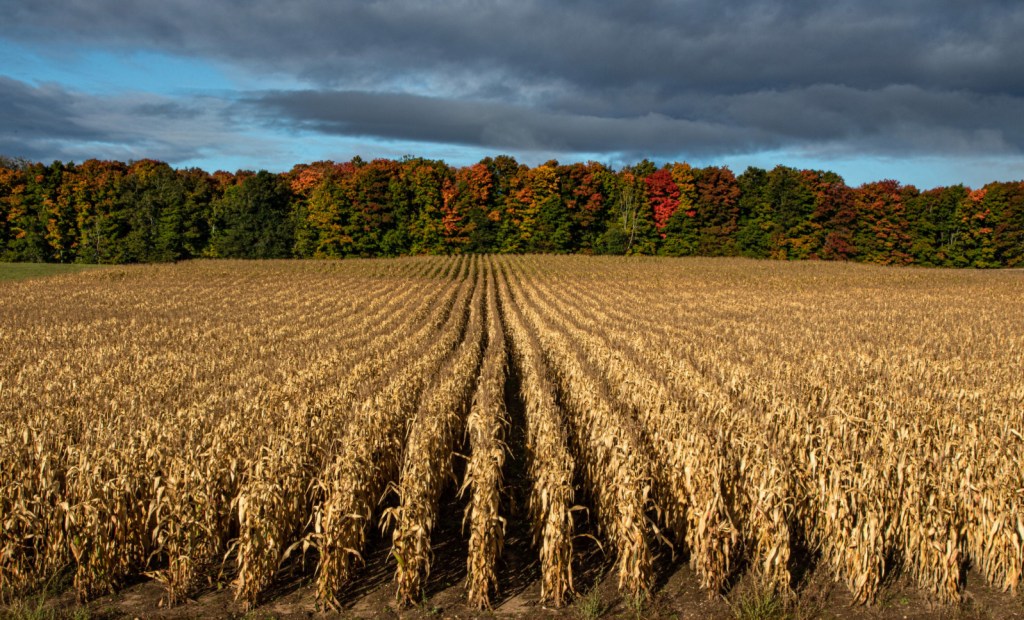
Autumn Corn

Autumn Corn by Laurent Fady

Laurent caught a beautiful Michigan fall scene last week. See more in his Fall in Northern Michigan gallery.

Support Michigan in Pictures with Patreon

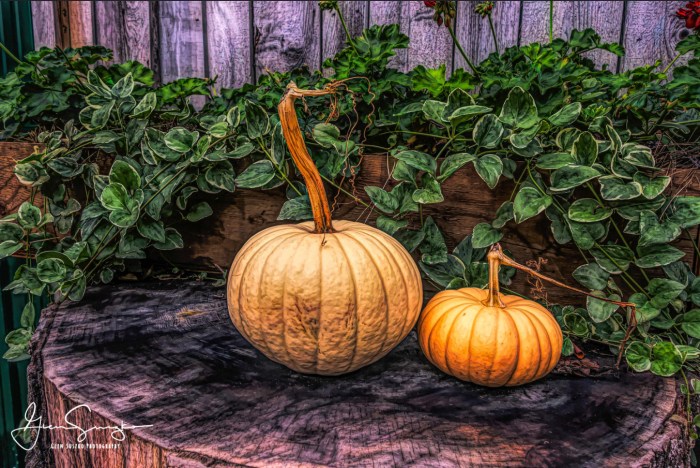
Eastside Pumpkins

Pumpkins by Glenn Susko

Pumpkins by Glenn Susko

Welcome to October!

Glen took this last month on an Eastside Camera Club outing. See more on his Flickr.

Support Michigan in Pictures with Patreon

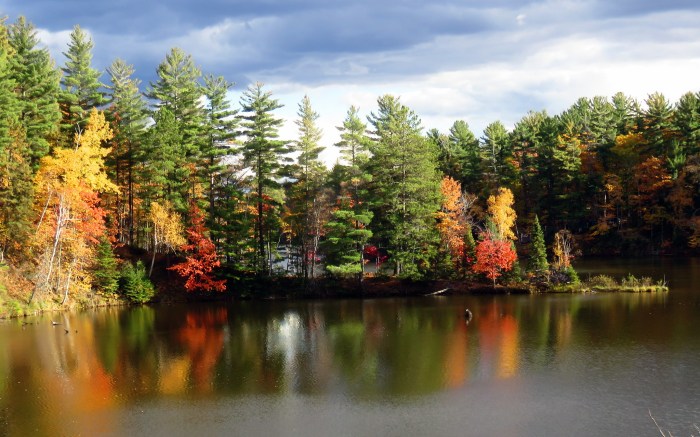
Reflections on Fall Color

Reflected colors by Ann Fisher

Reflected colors by Ann Fisher

“How beautifully leaves grow old. How full of light and color are their last days.”
– John Burroughs

Ann took this photo back in October of 2015 on the Dead River, just west of Marquette in the Upper Peninsula. See more in her 2015 U.P. Gallery.

Support Michigan in Pictures with Patreon

Michigan’s Fall Color is Just Down the Road!

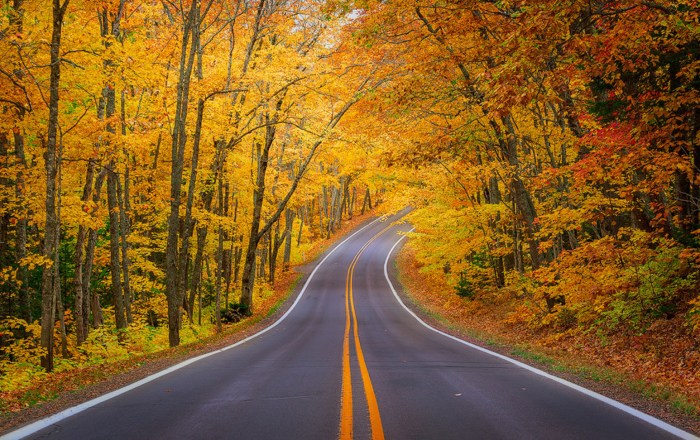
US-41 by Wu Lan

US-41 by Wu Lan

mLive shared an update on Michigan’s fall color progression that says in part:

The frost and freezing temperatures for two or three days in a row last week have sparked the fall colors. A leaf’s nutrition supply is cut off from the main tree with a freeze. The underlying color pigments in the leaf then emerge for our fall splendor.

The western half of the Upper Peninsula has about 50 percent of total fall color. The eastern U.P. is around 25 percent changed now. The northern third of Lower Michigan has 25 percent to 50 percent fall color. The southern half of Lower Michigan runs from 10 percent to just spotty color from north to south.

You can also check out Pure Michigan’s Interactive Fall Foliage Map & definitely check out past fall color on Michigan in Pictures from more cool photos including the science behind fall color!

Wu took this photo back in 2015 on US-41 US-41 near Copper Harbor on the UP’s Keweenaw Peninsula. See more on their Flickr!

Support Michigan in Pictures with Patreon

Monarchs, Milkweed & Michigan

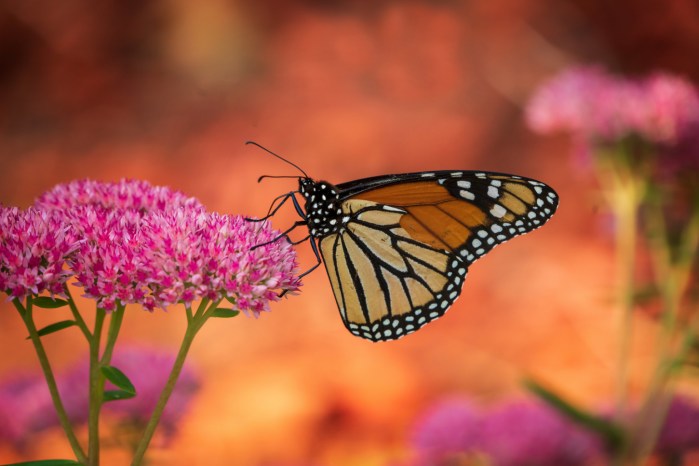
Monarch with Red Mulch Background by Charles Bonham

Monarch with Red Mulch Background by Charles Bonham

The GT Pulse has an in-depth interview with Cyndie Roach if the GT Butterfly House and Zoo in Williamsburg outlining the generation spanning migration of the monarch butterfly from the Oyamel fir forests of Mexico to Michigan:

…They fly over the Gulf with their first stop being in the Texas panhandle area.

“They land there, take a break, and breed by the millions, lay eggs, and then they die. That super generation has lived all winter and is now ready to make that trip to Texas. So that first generation born in the United States will know to start flying north when they’re born.”

The entire butterfly birthing process takes 30 days. Part of the inherent will to go north has to do with milkweed. It’s the plant that signals them home.

“It’s the single host plant, meaning the caterpillar needs to eat it to become a butterfly. They’re looking for milkweed to lay their eggs on. We don’t even have Milkweed growing yet in the early parts of spring. It doesn’t come up until May and June, so what’s great is that as our spring comes on and things start to get warmer, that’s what’s welcoming the monarch to the area.”

The second generation of monarchs that were born in Texas makes it to the midline of the States, roughly around the Rocky Mountains where their babies will be born, and like their parents and grandparents before them – they’ll know to keep flying north.

“By the time they reach us we’re looking at the third generation typically. So it’s their grandchildren we’re now seeing arrive in Michigan.”

Remember that milkweed Cyndie was talking about? Northern Michigan provides milkweed that some of those third-generation monarchs will use to lay their own eggs. So the butterflies that are going back down to Mexico are the fourth generation of those first butterflies coming from the Oyamel fir forests.

“That’s why it’s so important that we as Michiganders, specifically up here in Northern Michigan, provide as much milkweed habitat as we can for these amazing creatures. We play such an important role, because not only are we the ones who see them come in in the spring, but we help them create a lifecycle.”

Milkweed plays an important role in aiding the monarchs in their generational journey, but also, being cautious with fertilizer and lawn care products. The monarch butterfly population has declined 90 percent over the past two decades, which is directly related to the milkweed population being destroyed.

Read on for lots more, check out the Michigan DNR page on Monarch butterflies & for sure plant milkweed if you can!

Charles took this last week. Head over to his Flickr for lots more!

Support Michigan in Pictures with Patreon

Altar to Fall

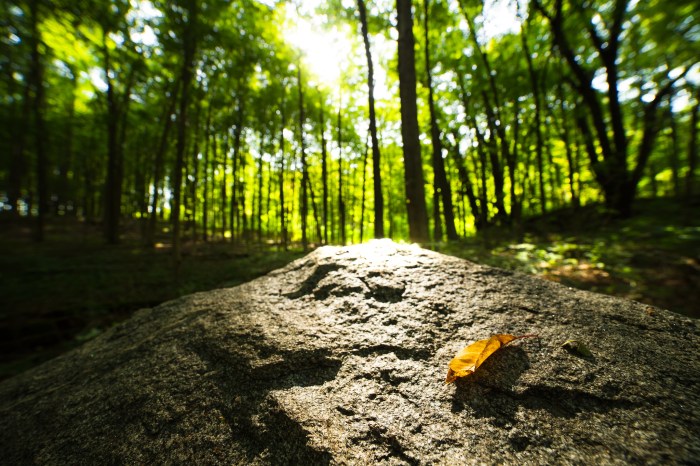
Altar by Bill Dolak

Altar by Bill Dolak

Bill writes “On this, the altar to the last day of summer: the sacrificial leaf that will bring on fall,” so if anyone is sad summer’s over, Bill’s the man to talk to. ;)

Of course if you’re excited for apples, autumn’s colors & of course, pumpkin spice, mad props to Bill! Check out more in Bill’s Kalamazoo River Valley Trail album & enjoy the season!

Support Michigan in Pictures with Patreon

At All Costs

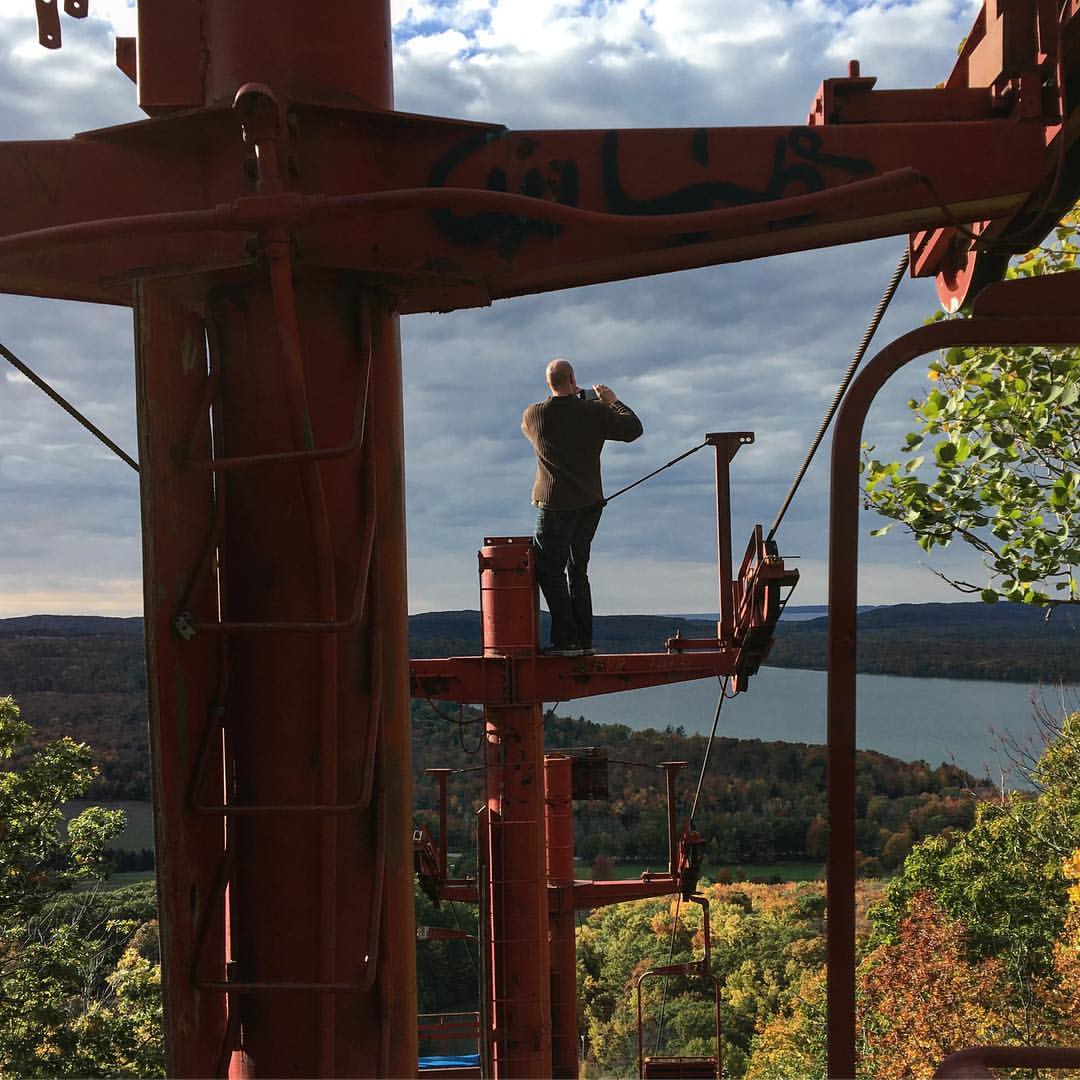
At All Costs (Sugar Loaf, 2016) by Andrew McFarlane

Most of the photos on Michigan in Pictures are someone else’s, but every once in a while, I’ll sprinkle in one of mine. I took this several years ago at Sugar Loaf Mountain Resort on the Leelanau Peninsula. The guy’s wife told me that he works on the really tall power lines and (clearly) has absolutely zero fear of heights.

I should probably add that if you want to support Michigan in Pictures, you can share it with your friends and also consider a small donation on my Patreon.

I often get pushback when I post things of people doing things that are dangerous, so let me stress:

  1. Do not try this.
  2. You probably aren’t up to it.
  3. Sugar Loaf is now closed to access (when I went, it was still owned by the people who owed me $8k).
  4. Gravity can kill you!

Have a great weekend & stay safe!

Support Michigan in Pictures with Patreon

On a Clear Day on the Manitou Passage


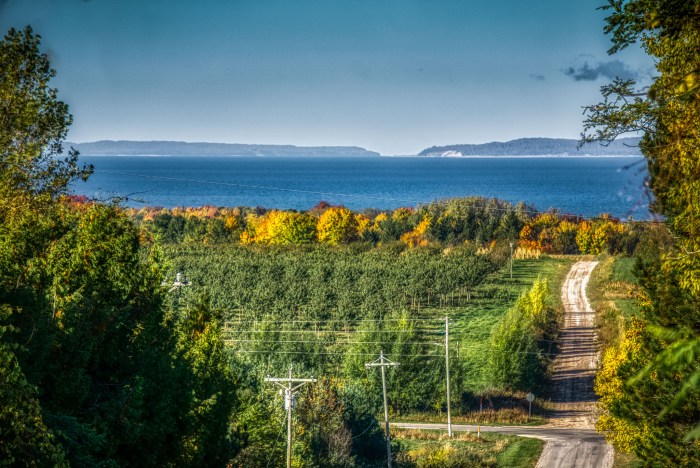
On a Clear Day, photo by Mark Smith

…You can see forever, right out to the Manitou Islands and beyond.

This photo by Mark Smith from yesterday afternoon shows just how incredible fall color on the Leelanau Peninsula. It shows South Manitou Island (left) and North Manitou Island on Lake Michigan off the western shore of the Leelanau Peninsula.

The islands were among the first European settlements in the area in 1847 due to ample timber and a deep water harbor. The stretch of water between the islands and the mainland was known as the Manitou Passage and well used by ships seeking respite from high winds and storms. More about North & South Manitou Islands on Leelanau.com’s Manitou Islands page.

View Mark’s photo background bigtacular and see photos from this area by Mark and others on the Flickr photomap!

More fall wallpaper on Michigan in Pictures!

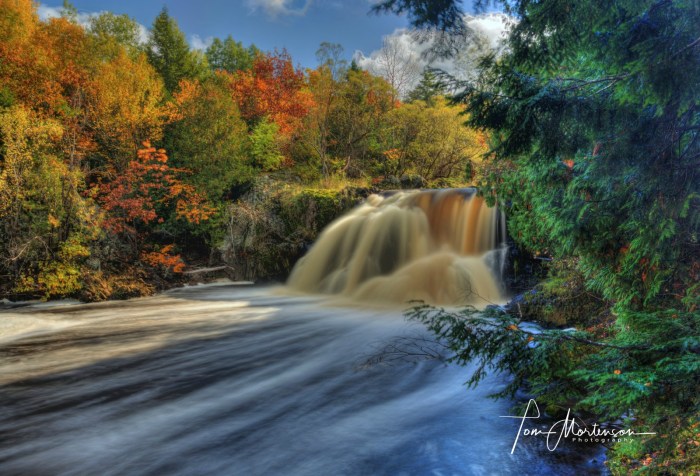
Waterfall Wednesday: Fall at Interstate Falls

Interstate Falls, photo by Tom Mortenson

GoWaterfalling’s entry for Interstate Falls/Peterson Falls says (in part):

This waterfall is located on the Montreal River just a few miles upstream of Saxon Falls. The Montreal River forms part of the border between Michigan and Wisconsin so the falls is technically in both states, and can be visited from either state, but it is most easily visited from the Wisconsin side.

There seems to be some confusion about what this waterfall is named, or at least I am confused. Some sources refer to this as Peterson Falls, and the sign on the highway says “Peterson Falls”. However others say that this falls is Interstate Falls and that Peterson Falls is a smaller waterfall upstream of Interstate Falls. I have decided to go with Peterson Falls until I learn otherwise.

Read on for directions & more info.

View the photo background big and see more in Tom’s Upper Michigan slideshow.

More waterfalls on Michigan in Pictures and more Fall Wallpaper!