Underwater vibe at Belle Isle Aquarium

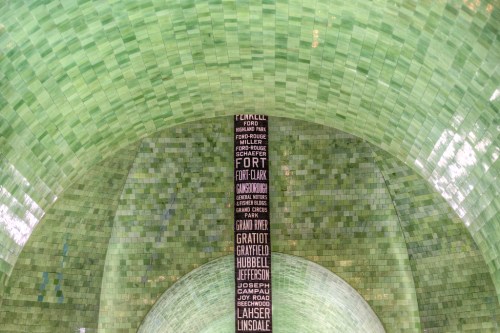
Belle Isle Aquarium

Belle Isle Aquarium, photo by MichellePhotos2

Dan Austin of HistoricDetroit.org has an incredibly comprehensive history of the Belle Isle Aquarium. He writes, in part:

Clarence M. Burton, in his history on the city of Detroit, attributes the idea of an aquarium to Rep. David E. Heineman, who had visited Naples, Italy, and studied that city’s Anton Dorhn Aquarium.

…The firm of Nettleton & Kahn drew up the plans for the buildings. The building’s price tag: $165,000 (about $4.06 million today). At the time of its opening, the aquarium was among the six largest in the world. Its high-tech equipment allowed for the keeping of both seawater and fresh-water marine life and the keeping of the right water temperatures in the tanks. The water was recycled through the tanks because, it was said, that fish survive better in water they’ve been in before. Originally, a 8,531-gallon center tank with a railing around it occupied the center of the building. It was topped off with filtered water that snaked through 5 miles of pipes.

Kahn outfitted the interior with sea-green glass tiles to give visitors the feeling that they were in an underwater cavern. Forty-four tanks filled with critters from the Great Lakes and the world’s oceans line the walls. Combined, the tanks contained 5,780 gallons of water. Magnificent pillars and other details compliment the soaring arched ceilings, as high as three stories in the center of the building. A classroom sits near the main entrance.

The front of the slender, brick building features an elaborate Baroque entrance with carvings of dolphins and a grotesque of Neptune, the Roman god of water. In the center is the city’s seal showing the two maidens and the Detroit motto, “Speramus meliora; resurget cineribus” — “We hope for better things; it will rise from the ashes.” Below that, the word “aquarium” is carved in capitalized, bold letters. The intricate details are sometimes masked by robust ivy that covers the front of the building.

When opening day finally came on Aug. 18, 1904, Detroiters were champing at the bit to take a peek. By the time dawn rolled around, the line numbered into the thousands and stretched from the aquarium’s front door all the way, across the bridge, back to East Jefferson Avenue. More than 5,000 people visited on the attraction’s first day. Some half a million would gaze into its tanks its first year.

Read on for much more that takes you through nearly a century of operation as one of the largest freshwater collections, decline in the latter part of the 20th century, shuttering in 2005 and re-opening in 2012. Definitely check out his gallery of Belle Isle Aquarium photos too!

Today the aquarium is run by the Belle Isle Conservancy and open on Saturdays from 10 AM – 3 PM with free admission and parking.

View Michelle’s photo bigger and see more in her Detroit slideshow.

PS: The Kahn above is of course noted Detroit architect Albert Kahn, and Michigan in Pictures has a great shot of the same room at the aquarium in 1905.
What Are You So Afraid Of?

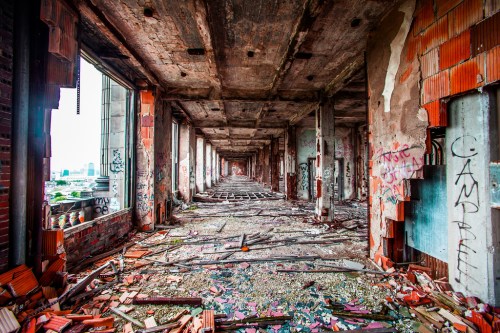
What Are You So Afraid Of?

What Are You So Afraid Of?, photo by Thomas Hawk

If there’s a King of Flickr, it’s probably Thomas Hawk. One of his projects is to document the 100 Largest American Cities, and back in June of 2010 he visited Detroit. His massive #11 Detroit, MI slideshow is heavy on the ruin of the Motor City but I think you’ll really appreciate it!

View this photo from Michigan Central Station background bigtacular and see more in the slideshow above and at ThomasHawk.com.

Roar

Roar

Roar, photo by Matt Gowing

Just sayin’.

Check Matt’s photo out background bigilicious and see more in his Street slideshow.

And oh yeah – go Tigers!

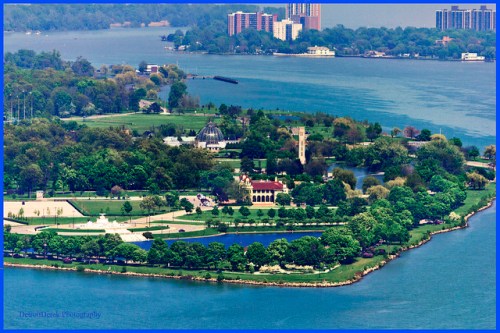
Belle Isle to become state park?

Belle Isle Beauty

Belle Isle Beauty, photo by DetroitDerek Photography

The Detroit News reports that Governor Rick Snyder has made a deal with Detroit Emergency Manager Kevyn Orr for the State of Michigan to lease Belle Isle for 30-60 years:

Under the deal, Detroit will not receive any direct monetary payment for the lease, but state operation of Belle Isle is expected to save the cash-strapped city $4 million to $6 million annually, officials said. The state also plans to apply for grants to invest $10 million to $20 million in the park’s aging infrastructure.

The deal also gives the council, which was largely sidelined when Orr took over City Hall in March, the chance to approve the lease or offer an alternative plan that would save the same amount of money.

Starting Jan. 1, Detroiters and other state residents would be required to have Michigan’s $11-a-year Recreation Passport on their vehicles to enter the park. Pedestrians, bicyclists and individuals using public transportation could get onto the island for free.

The president of the Belle Isle Conservancy said the lease agreement is “a very important step” toward keeping the park in the public’s hands at a time when city assets are being targeted for liquidation in Detroit’s historic bankruptcy.

Under Michigan’s Emergency Manager Law, the Detroit City Council has 10 days to approve the lease or propose an alternative that would save the same amount of money or more. Read on for more.

About his photo Derek writes:

Taken from a few miles away ( 3.4 miles I believe ) on the 63rd floor of the Rencen, Detroit’s Belle Isle Park is one of the most popular summer destinations in the city. The land was purchased in 1879 and opened to the public 10 years later – the park itself was designed by Frederick Law Olmstead, the designer of New York City’s Central Park. Admission is free but on a hot summer day get there early or all the best spots on this 982 acre island will be taken. It is America’s largest City-Owned Island Park.

Check his photo out bigger and get an idea of how cool this island park is in his Belle Isle slideshow.

PS: Go back in time at Belle Isle on Michigan in Pictures.

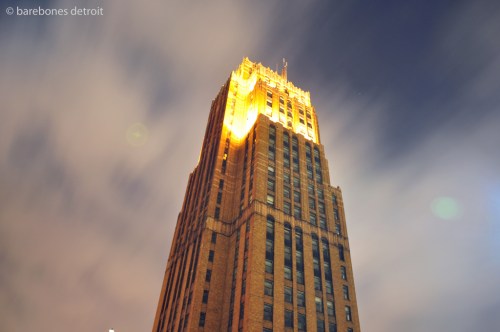
Sunshine on the Stott: Detroit’s David Stott Building Purchased

Untitled
Untitled, photo by BareBonesDetroit

Last week the David Stott Building, Detroit’s 13th tallest skyscraper, sold at auction for just under $9 million. Historic Detroit’s page on the David Stott Building begins:

A towering Art Deco structure honoring Detroit’s flour king, the David Stott Building stretches 38 stories above Capitol Park at the corner of State and Griswold streets.

Construction began on June 1, 1928. The tower cost $3.5 million to build – the equivalent of $46.3 million today, when adjusted for inflation, according to the Bureau of Labor Statistics.

The Stott opened on June 17, 1929, on what had been the sites of the Garrick Theatre, Hodges Building and the Whitney Office Building. It was designed by the architectural firm of Donaldson & Meier, though Henry Meier had died more than a decade earlier. The general contractor was the Martin & Krausmann Co.

The 436-foot tower was first conceived in 1921, and 22 sets of plans were drawn up before a winner was picked. The property was not particularly wide considering the building’s height, which created headaches for Donaldson and led him to go with a tall, slender design.

The tower is made of reddish-orange brick – faced on the first three floors with marble — and limestone, and has several setbacks that taper as the building climbs. “As the new David Stott Building rises a tall, slender but substantial mass of old rose colored brick, it makes a spectacle that arrests the attention and causes the spectator to view it in detail from the sidewalk to the uppermost of its 38 stories,” the Detroit News wrote in June 1929. “The tendency of architectural style in office buildings the country over is toward more lively colors — more lively, but still dignified, warm, pleasing to the eye.”

Read on for more of the history of this hard-luck structure and DEFINITELY click through to view their gallery of historic photos of the David Stott Building – it’s great! You can also follow the listing and sale of the Stott Building at Curbed Detroit.

Check it out bigger and see more in BareBones Detroit’s Rooftops slideshow.

More architecture on Michigan in Pictures.

We have met the enemy and they are ours: The Battle of Lake Erie

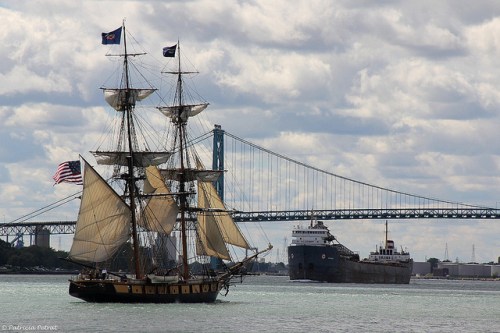
Flagship Niagara

Flagship Niagara, photo by Trish P. – K1000 Gal

“We have met the enemy and they are ours; two ships, two brigs, one schooner, and one sloop.”
~Commodore Oliver Hazard Perry

September 10, 2013 is the Bicentennial of the Battle of Lake Erie, a critical battle that helped turn the tide of the War of 1812. The Flagship Niagara page on the Battle of Lake Erie relates:

On September 10, 1813, nine small ships – six of them, including Niagara, constructed at Erie – defeated a British squadron of six vessels in the Battle of Lake Erie. A pivotal event in the War of 1812, it led to regaining Detroit, lost at the war’s outset, and lifted the nation’s morale.

The U.S. Brig Niagara is a two-masted, square-rigged sailing vessel. In 1813, she had a crew of 155 men and boys who manned her sails, 18 carronades and two long guns. The crew was organized into two watch sections (port and starboard) for routine duties while underway. More experienced sailors were stationed aloft, while others under the direction of petty officers manned the rigging which controlled the sails from deck. In battle, men also manned the guns and carronades. Boys carried the black powder charges from the magazine to the guns. Marines and soldiers were assigned to the fighting tops on the masts where they could fire their muskets on the enemy ships. Officers directed setting sails, firing cannon, and maneuvering the brig in response to orders from the captain.

…On September 10th, 1813, the British under Commodore Robert Heriot Barclay and the Americans under Perry met in battle near Put-in-Bay, Ohio. Perry’s flagship, Lawrence, engaged the British ships Detroit and Queen Charlotte, while the Niagara, for unknown reasons, did not close the enemy.

After the Lawrence was completely disabled, with most of her crew wounded or killed, Perry transferred by boat to the undamaged Niagara, hoisted his battle flag – “DONT GIVE UP THE SHIP” – sailed her into close action, broke the British battle line, and forced Barclay to surrender. In the aftermath, Commodore Perry wrote his famous report to General William Henry Harrison, “We have met the enemy and they are ours; two ships, two brigs, one schooner, and one sloop.”

You can…

Trish wrote that the Flagship Niagara was in Detroit a year ago for Navy Week to commemorate the bicentennial of the War of 1812. Detroit was chosen as a host city because of its direct link to the War of 1812. The city was an important military outpost in the war — but mainly for the British, who tricked the commander of Fort Detroit into surrendering the city without a shot and occupied it for more than a year. She also says to note the authentic 1812 U.S. flag!

Check her photo out bigger and see more in her Detroit slideshow.

More ships & boats on Michigan in Pictures.

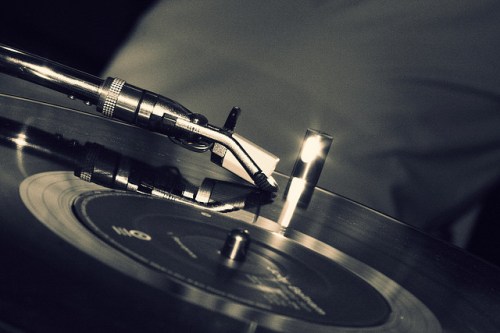
a language we all understand

a language we all understand

a language we all understand, photo by mlephotos

About this photo she shot a few years ago at the Detroit Electronic Music Festival, Meghan writes:

Detroit has produced some of music’s most highly regarded and historically important figures. Home to the Queen of Soul, Motown, the birth of techno, numerous top 40 hits and one-hit wonders, Detroit’s musical influence can be heard around the world in every genre of music. Detroit artists and musicians have won countless awards, topped the Billboard charts, sold millions of records, and many have been inducted into the Rock & Roll Hall of Fame. Legendary and iconic artists Marvin Gaye, Diana Ross, Stevie Wonder, Madonna, Eminem, Kid Rock, Iggy and the Stooges, MC5, Ted Nugent, Bob Seger, The White Stripes, Kevin Saunderson, Juan Atkins, Derrick May, Parliament featuring George Clinton, and The Romantics all emerged from the area. Rock on, Detroit!

With a heritage like that, it’s no surprise that music is a $1 billion a year industry in Motown. Click the link for the story from Crain’s Detroit Business.

Check her photo out bigger and see more in Meghan’s i like {my fave 30} slideshow.

Labor Day traditions in Detroit

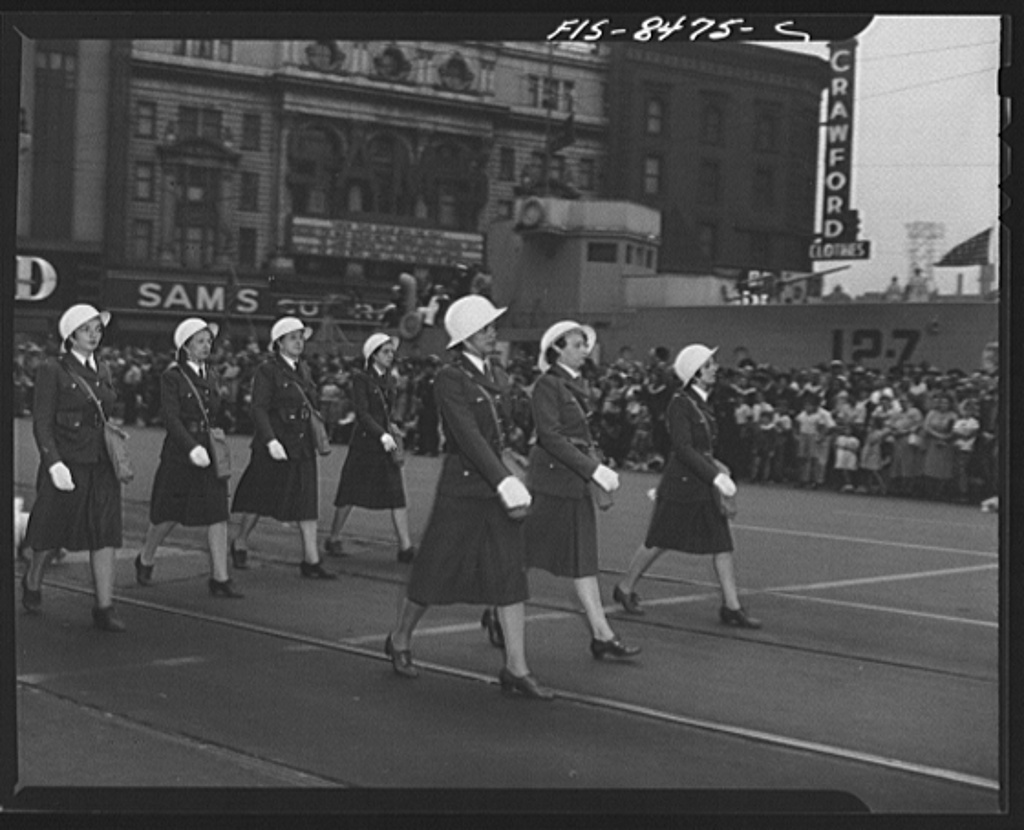
Labor Day 1942

The Detroit News Feature “Holiday for Labor” that provides an excellent look at the traditions of labor and labor day parades in Detroit:

The Detroit Trade Assembly’s labor parades in 1865 formed a part of established parades and gatherings on national holidays, such as the Fourth of July or Washington’s birthday. The unions gathered at Campus Martius, each carrying a banner with a name and symbol of their occupation. Many wore all white with matched hats or aprons. The names of their unions sound a bit quaint today: blacksmiths, iron molders, ship carpenters, caulkers, joiners, coopers, cigar packers, tailors, broommakers, stovemounters, bricklayers, shoemakers, painters, bakers, tinsmiths, cabinet makers, and saddle, trunk and harness makers.

In all about 9,000 people were involved and ended up having parties “gypsy-style” in the Bella Hubbard Grove at Vinewood and 25th Street, with shuttle trips to Belle Isle and Grosse Ile and moonlight excursions to Lake Erie on the ship T.F. Park.

…At that time, almost everyone worked at least 10 hours a day and, for many, 12 hours. Huge strikes for eight-hour work days shook the nation, and independent labor political parties surfaced in community after community. Many of the strikes and parades drew thousands and ended in violence.

…In those years, Labor Day was seen as a welcome holiday for working men and women who labored before the concept of sick days, paid leave, weekends and paid vacations. A Detroit News editorial from Sept. 5, 1927 put it this way:

“In America no man need be apologetic because he works; he needs to explain if he does not. Accordingly, Labor Day is not the peculiar property of some group, but is the holiday which recognizes that this great country of ours with all its glorious achievements, ideals and purposes is a vindication of a whole people’s pride in labor.”

Read on more MUCH more!

This is part of a series of photos taken at the 1942 Labor Day Parade in Detroit by Arthur S. Siegel. Check them all out at the Library of Congress.

Lots more Labor Day on Michigan in Pictures.

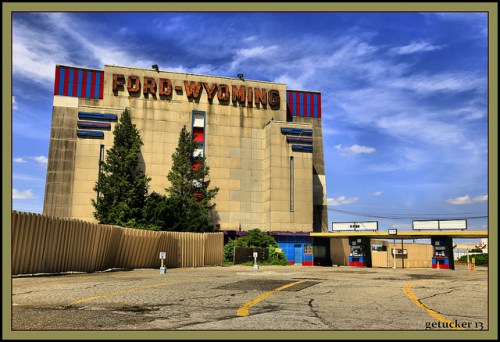
Ford-Wyoming Drive-in Theater in Dearborn

_MG_2576 tmlF

Ford-Wyoming Drive-in, photo by Gallopping Geezer

When I first saw this pic I thought it was yet another abandoned drive-in, but it turns out that the Ford Drive-in in Dearborn is open nightly with 5 screens! Their website just lists movies, but the Ford Drive-in entry at Cinema Treasures explains:

Opened in 1950, as a single-screener, with a colossal, late Streamline-style screen, the Ford-Wyoming could originally accommodate around 750 cars. It also once advertised a kiddie playground and boat rides for children.

The drive-in was acquired by Wayne Amusements in 1981, and by 1990, and grown to five screens. Another four screens were built during the early-1990’s.

Today, the still-very popular drive-in is the largest in the United States, parking-wise, with space for over 3,000 cars. (The largest drive-in screen-wise is the Thunderbird in Fort Lauderdale, Florida with 13 screens).

The Ford-Wyoming is open year-round, a rarity for drive-ins, and supplies car heaters along with speakers during the winter season.

Screens 6-9 were closed and demolished in May 2010, and in June 2010 it was renamed Ford Drive-In

WaterWinterWonderland has an entry with tons more information and photos  of the Ford-Wyoming Drive-in including some nice aerial views.

Check Gary’s photo out big as a drive-in screen and see more in his Ford-Wyoming slideshow.

More Michigan movie pics on Michigan in Pictures including a feature on another metro Detroit drive-in, the Wayne Drive-in.


Remembering Michigan author Elmore Leonard

Detroit-Author-Elmore-Leonard

Elmore Leonard, The Dickens of Detroit, photo courtesy Archives of Michigan

“After 58 years you’d think writing would get easier. It doesn’t. If you’re lucky, you become harder to please. That’s all right, it’s still a pleasure.”
~Elmore Leonard

Legendary Michigan author Elmore “Dutch” Leonard passed away Tuesday at the age of 87. Leonard was the author of many best-selling crime novels including Get Shorty, Freaky Deaky and Killshot. Another great Michigan author, Jim Harrison, wrote:

“Elmore was the opposite of the loudmouthed, big shot novelist. He was graceful, fairly quiet and poignantly intelligent. We have lost our best. No one wrote better dialogue in America.”

The photo above appeared in The Dickens of Detroit from Seeking Michigan on Leonard’s birthday (October 11, 2011). They do a nice job of hitting the highlights of an illustrious career:

Leonard was born in New Orleans in 1925. He has made the Detroit area his home since 1934, when his family moved there. The city of Detroit often serves as the main character in his novels. As a result, fans often refer to Elmore Leonard as the ‘Dickens of Detroit.”

Leonard graduated from University of Detroit Jesuit High School in 1943. He then immediately joined the Navy, where he served with the Seabees. After his service, he enrolled at the University of Detroit and graduated in 1950 with a degree in English and Philosophy. Leonard started his writing career as a copywriter at the Campbell-Ewald Advertising Agency. Writing on the side, he was able to publish his first novel, The Bounty Hunters in 1953. In his early career, he focused on writing pulp Westerns, because that was what was selling at the time. Leonard eventually moved on to specialize in crime fiction and suspense thrillers. A large number of his books have been turned into movies or television programs.

Critics praise Leonard for his effective use of dialogue and the gritty realism in his books. His unique ear for dialogue and the ability to capture it on the page is rarely matched. Concise and plot driven, his stories are stuffed with colorful characters and tricky, often humorous plot twists.

Read on for more. Here are a few of the best features I found – please feel free to post more in the comments: