Message in a Bottle from Tashmoo Park

tashmoo park

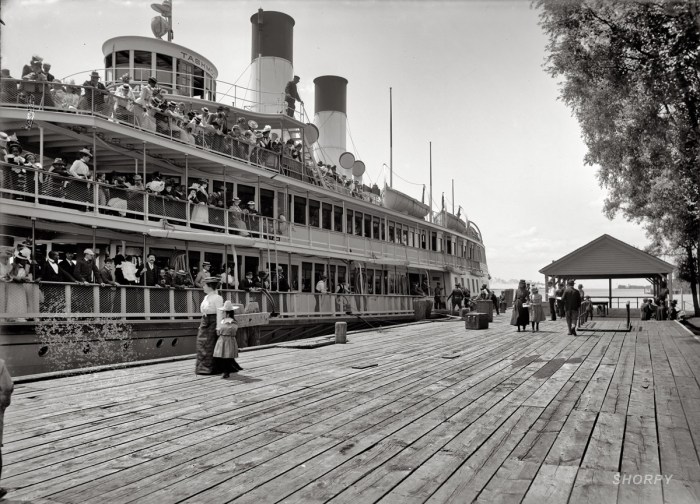
Tashmoo at the Dock, 1900, photo courtesy shorpy.com

The Daily Mail reports on an almost 100-year-old find:

Selina Pramstaller was 17-years-old and Tillie Esper was 23-years-old when they visited an amusement park on Harsens Island in Michigan alongside the St Clair River in 1915 and decided to commemorate the day with a message in a bottle.

That message- ‘having a good time at Tashmoo’- was found almost 97 years later by diver Dave Leander.

Click through for more on the find and some pictures. You can see more pictures and read something about this once popular amusement park on Harsens Island that closed for good in 1951 at waterwinterwonderland.com.

Check this out background bigtacular (or buy a print) and see many more old photos from Detroit and elsewhere at shorpy.com. About the boat, they explain:

The Detroit River excursion steamer SS Tashmoo, a sidewheeler, stopped at Tashmoo Park on the St. Clair Flats on trips between Detroit and Port Huron. A high point in the boat’s eventful 36-year life was the night in 1927 that she broke free of her moorings in a winter storm and headed downriver on her own. Her end came in 1936, when she hit a submerged rock and sank.

Con Foster and the Bijou By the Bay

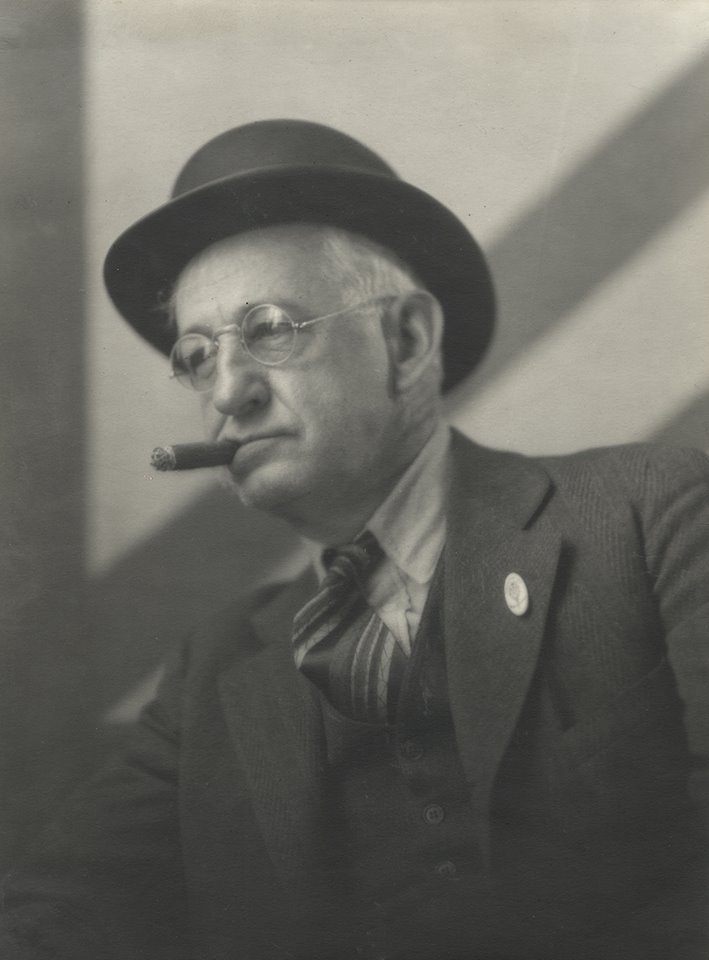
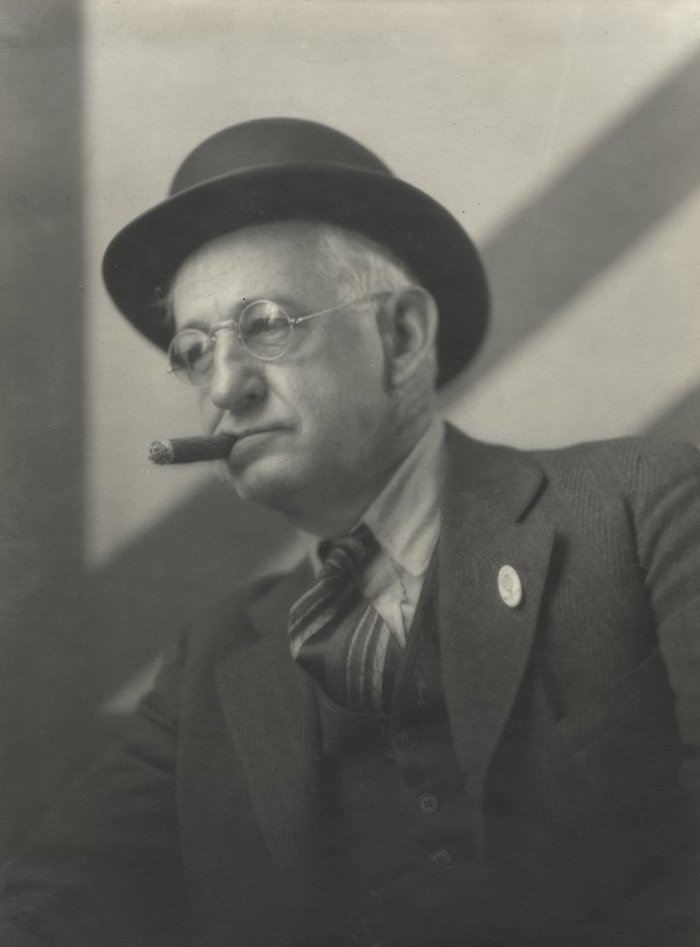
Con Foster

I have to confess: I am a huge fan of Michael Moore. One of the reasons has nothing to do with politics or his films. Almost 10 years ago, Michael did something that I didn’t think possible. He galvanized support, spent and raised money and brainstormed to lead a vast & diverse army of volunteers to restore the theater of my childhood, the State Theatre in Traverse City. While the successful and wildly entertaining Traverse City Film Festival has been a huge driver of the theater’s comeback, many overlook how his dedication to the movie-going experience created a theater that hundreds of people every day enjoy as part of a vibrant downtown experience. Of course after the Motion Picture Association of America tapped the State as #1 on their list of the best theaters in America, that number has probably gone down.

All this is a rather long-winded way of introducing Michael’s latest Traverse City cause, restoring the empty Con Foster Museum as a new theater – the Bijou By the Bay.  The story starts with Conrad “Con” Foster:

Manager of the State Theatre when it was originally known at the Lyric Theatre, he first arrived in Traverse City in July of 1917 as an employee of Fitzpatrick-McElroy Company to run and operate the Lyric. A true showman with a passion for the movies, one of the first things he did upon arrival was install a “newer and brighter” screen as part of his commitment to make the Lyric “equal to any motion picture house in the state.” It is this commitment to presentation the State Theatre continues today.

Born in Boston, Massachusetts on March 21, 1875, Foster was not a Traverse City native, but the community embraced him and he quickly made the area his home. After less than a year in Traverse City, Fitzpatrick-McElroy transferred him to a new theater post in Wisconsin, and Foster spent the next six years heartsick, petitioning the company to bring him back.

Foster’s pleas were answered in April 1924 when he returned to Traverse City to resume his post at the Lyric. He placed an ad in the Record Eagle expressing his delight, writing:

“My ambition has been to return to Traverse City, since they made me leave, to operate what I think is the most beautiful theater in our circuit. I have come to love the city, its good natured folks, and have often told my wife that Traverse City is the place to make a home. So it is with great pleasure that I can announce that my longings have been realized and I have again been transferred to the best little city in the world.”

Over the course of the next sixteen years, Foster worked tirelessly to make the Lyric the best theater in Michigan. Ahead of his time, in the spring of 1929 Foster had the foresight to bring “talkies” to the Lyric, installing the latest state-of-the-art sound technology and film projectors in Traverse City. At that time, sound technician Walter Beck claimed this was the smallest city in the country, to his knowledge, to have installed this modern equipment.

Foster’s impact extended far beyond his movie house and into all aspects of civic life. He encouraged and promoted Cherry Festival programs, patriotic presentations and educational speakers. He knew the Lyric was more than a just movie theater, but an important gathering space for the community. Serving as head of the Chamber of Commerce, City Commissioner and even Mayor, Foster was committed to serving his community.

Foster managed the Lyric until he died suddenly of a heart attack in 1940. The city mourned his loss, with a tribute in the Record Eagle claiming, “When Con Foster died this morning a part of Traverse City died with him, not a physical part, but a spiritual part.” Downtown businesses closed for his funeral and the Lyric reopened afterward to screen Gone with the Wind.

Foster also created Clinch Park, which is home to the proposed theatre. Find out more and how to donate at Bijou By the Bay.

More Traverse City on Michigan in Pictures!

Michigan Stereoscopy and the National Stereoscopic Association Convention

Diag at University of Michigan 3d card

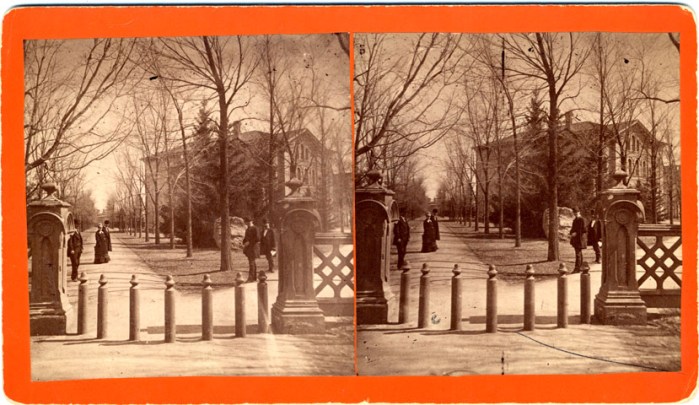
Central Campus, diagonal, with fence posts, photo courtesy UM Bentley Library

Michigan in Pictures regularly features  awesome historical postcards from Don Harrison of UpNorthMemories.com. Don emailed me the other day to let me know that the 39th National Stereoscopic Association Convention will be held in Traverse City next month (June 4-10, 2013).

The event features speakers, workshops, 3D image competitions, exhibitions and a huge 3D Trade Fair where you can view and purchase equipment and photographs. While there’s no specifically Michigan tie, I thought it was pretty cool that Brian May, CBE, PhD, FRAS is one of the featured speakers. You may know Brian as the guitarist of Queen, but he apparently postponed a career in astronomy, returning to astrophysics in 2006. He’s also a life-long stereoscopy enthusiast.

Regarding stereoscopy, Wikipedia’s explains:

Stereoscopy (also called stereoscopics or 3D imaging) is a technique for creating or enhancing the illusion of depth in an image by means of stereopsis for binocular vision. The word stereoscopy derives from the Greek “στερεός” (stereos), “firm, solid” + “σκοπέω” (skopeō), “to look”, “to see”.

Most stereoscopic methods present two offset images separately to the left and right eye of the viewer. These two-dimensional images are then combined in the brain to give the perception of 3D depth. This technique is distinguished from 3D displays that display an image in three full dimensions, allowing the observer to increase information about the 3-dimensional objects being displayed by head and eye movements.

The photo above shows the Diag at the University of Michigan. You can see it bigger along with dozens more from all across Michigan in the Bentley Library’s Michigan in 3D Stereoscopic Cards gallery.

For a real treat, request your free 3d glasses from the Civil War Trust and check out the 3D images of the photos!

Gorge Falls on the Black River Scenic Byway

gorge falls-black river, gogebic county, MI

gorge falls-black river, gogebic county, MI, photo by Northwoods Apparition

I’m always happy when someone shares a photo of a waterfall I’ve never seen. Michigan in Pictures has a ton of Michigan waterfall photos, so it’s not often that this happens! The GoWaterfalling.com entry for Gorge Falls explains:

Gorge Falls is named for the deep and narrow gorge above and below the falls. This was my personal favorite of Black River Scenic Byway waterfalls. It is also one of the easier waterfalls to visit, being only a short distance from the parking area. There are a fair number of stairs to the falls overlook. It is only a short walk upstream to see Potawatomi Falls.

I do not know how hard it would be to get to the east side of the gorge, or what the views are like.

The Black River Scenic Byway starts north of US 2 near Bessemer. There are signs on US 2. Gorge Falls is about 14.5 miles north of US 2. The scenic area is on the right and is clearly marked.

Click through for more and see a map of the Black River Scenic Byway.

Check Kirk’s photo out background bigtacular and see more great shots in his slideshow!

Sault Ste. Marie International Railroad Bridge

international railroad bridge, sault ste. marie, ontario / michigan

international railroad bridge, sault ste. marie, ontario / michigan, photo by twurdemann

The Library of Congress page on the Sault Ste. Marie International Railroad Bridge that spans the Soo Locks from Michigan to Canada at St. Marys Falls explains that:

The Sault Ste. Marie International Railroad Bridge has nine camelback truss spans crossing the St. Marys River with bascule and vertical lift bridge components crossing the American Locks at the St. Marys Falls Canal. It is the only bridge in the United States known to include these three types of spans in a single structure to use an interlocking mechanism to connect the leaves of the double-leaf bascule span.

It is Michigan’s most significant railroad bridge from an engineering history standpoint and is eligible for listing in the National Register of Historic Places.

Click through for some great old photos of the bridge and explore the various sections through Historic Bridges.

Check this photo out on black and see more great shots in twurdemann’s Sault Ste. Marie 2012-2013 slideshow.

More Michigan bridges on Michigan in Pictures.

April 4th: The Battle for Wexford County

manton-michigan

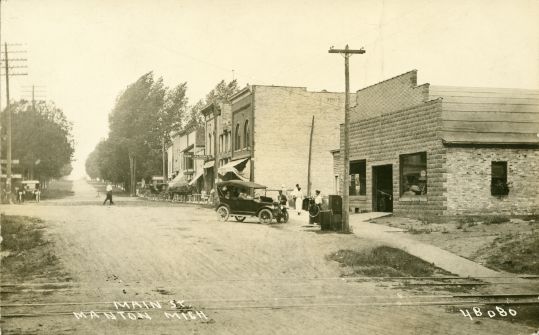
Main Street in Manton, circa 1915, photo courtesy Seeking Michigan

Battle for Wexford County by Brenda Irish of Seeking Michigan begins:

The fight for the Wexford County seat is a story of bribery, corruption, intimidation, inebriated county officials and the organization of illegal townships to boost votes.

Cadillac’s decade-long struggle for the county seat came to a head on April 4, 1882, when ballots were cast throughout the county to determine whether the coveted prize should be moved from Manton to Cadillac. Twelve months earlier, residents of Cadillac and Manton had united to remove the county seat from Sherman to Manton. Now Cadillac was determined to secure the prize for itself.

Feeling duped by Cadillac, Manton residents were furious. A couple of townships destroyed their ballots, refusing to make a return. But when the “official” count of the April 4 vote was totaled, the results were overwhelming: 1,363 “yes” voters favored moving the county seat to Cadillac, while 309 voted “no.”

In the early dawn following the election, a train left Cadillac with the sheriff and twenty “specially deputized” men and headed to Manton to collect the county property. Legend has it that the train backed quietly into a sleeping Manton, coming to a halt in front of the courthouse. Within a half hour, most of the county records and much of the furniture was aboard the train. As the Cadillac faction attempted to remove the first of three safes from the courthouse, however, Manton residents awoke…

Read on at Seeking Michigan for the contested conclusion and more photos from Wexford County.

More history on Michigan in Pictures.

Locally Known as “the Bowl”

Locally Known as "the Bowl"

Locally Known as “the Bowl”, photo by karstenphoto

EDIT: Wow I really messed this one up, sleepily citing an article that gave the dune’s age in the millions of years. Thanks to Tom Burrows for the catch. Let’s see if this information on coastal dunes from the DNR makes more sense:

Michigan’s glacial history provides an explanation for the formation of dunes. The Great Lakes dune complex is relatively young, in terms of geological time. As recently as 16,000 years ago, Michigan was covered with glacial ice thousands of feet thick. This glacial ice contained a mix of boulders, cobbles, sand, and clay. During glacial melting, this deposit was left and is known as glacial drift.

This glacial drift is the source of sand in most of Michigan’s dunes. The sands were either eroded from glacial drift along the coast by wave activity or eroded from inland deposits and carried by rivers and streams. Only the hardest, smallest, and least soluble sand grains were moved. Waves and currents eventually moved these tiny rocks inland, creating beaches along the Great Lakes shoreline.

…Blowouts are saddle shaped or U shaped (parabolic) depressions in a stabilized sand dune, caused by the local destabilization of the dune sands. Blowouts, which originate on the summit or windward face of a dune, are often rapidly formed by the wind, creating narrow channels and exposing plant roots. Blowouts can create interruptions in the shape of parallel dunes that may result in deeply carved indentions called parabolic dunes. It is the combination of interwoven parallel dune ridges and U shaped depressions, including parabolic dunes, that characterizes the classic dunes from Indiana, northward to Ludington, in Michigan.

Awesome Michigan wrote a little about The Bowl at Holland saying:

The Bowl is an gigantic sand bowl, resembling a sort of concave desert. Along with the other dunes and Lake Michigan itself, The Bowl was carved out of the earth by glaciers millions of years ago and was likely a small lake before drying up. Standing at the center of The Bowl and being surrounded on all sides by enormous walls of sand is quite breathtaking. The landscape is truly like no other. This awesome sight alone makes a trip to Laketown a summer necessity and a great, relaxing place to bring friends and family.

You can also check in there on Foursquare. Here’s another shot from the bowl from all the way back in 2007. Amazing to me how long Michigan in Pictures has endured – thank you all for staying with me!

Check Stephen’s photo out big as the Bowl and see this and many more in his FILM! slideshow.

More dunes on Michigan in Pictures.

crashing to Earth

crashing to Earth

crashing to Earth, photo by .brianday

Brian suggests the Cinematic Orchestra’s Outer Space to accompany this photo. View it on black and might I suggest queuing up the song above and digging into his Gray Matter slideshow.

More amazing work from Brian Day on Michigan in Pictures.

Ice on the Chippewa River

_JMC5873aw

_JMC5873aw, photo by Jeff Caverly

Wikipedia’s Chippewa River (Michigan) says that the river runs 91.8 miles from its beginning in northeast Mecosta County in the village of Barryton to where it flows into Big Cranberry Lake in southwest Clare County. It’s a tributary of the Tittabawassee River and part of the Saginaw River drainage basin.

To learn more about the river and some of the natural preserves on the river, visit the Chippewa River Watershed. You can also check out the Chippewa River Water Trail.

Get Jeff’s photo background bigtacular and see more in his slideshow.

More Michigan rivers on Michigan in Pictures.

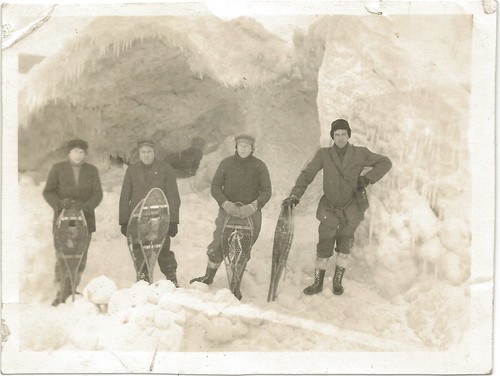
Men at Work, Snowshoe Edition

Real Photo Men at Work with Snow Shoes Winter Ice and Snow location Unknown 4-1 2 x 3-1 2 size

Real Photo Men at Work with Snow Shoes Winter Ice and Snow location Unknown, photo by UpNorth Memories – Donald (Don) Harrison

Don Harrison collects and sells postcards. His Flickr features some really great old postcards, mostly from Michigan. Check this photo out background bigtacular and see many more in Don’s Winter slideshow.

More postcards on Michigan in Pictures.