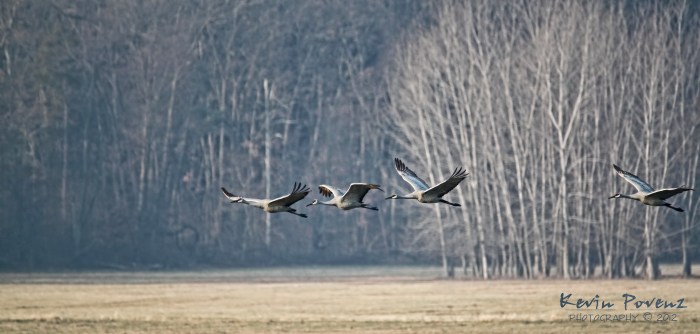
Sandhill cranes in the crosshairs

Sandhill Cranes by Kevin Povenz

Sandhill Cranes by Kevin Povenz

My commentary: While I completely support hunting & have to admit “ribeye in the sky” has a certain appeal, this seems very very stupid. If human beings have demonstrated anything over the last 100 years, it’s that we are legitimately terrible stewards of nature. 

The Great Lakes Echo shares news that politicians in both Wisconsin and Michigan are working to create a hunting season for eastern sandhill cranes:

A Michigan legislative resolution to encourage the Natural Resources Commission to explore the possibilities of issuing tags for cranes was introduced but not adopted. Wisconsin has gone further, where lawmakers introduced a bill in October to require the state Department of Natural Resources (DNR) to issue permits to eligible hunters for the birds.

If either of these measures passes, it would be the first time the bird has been hunted legally in its breeding grounds since the species was nearly hunted to extinction in the early 1900s.

…Their low birth rate, paired with increased habitat loss and overhunting during the early 1900s, led to its eradication from a number of Great Lakes states, including Illinois, Ohio and Indiana. By the 1930s, there were only 25 breeding pairs in Wisconsin, according to population counts at the time.

Researchers from the University of Wisconsin, like Mark Berres, claim that near-extinction means that the eastern sandhill crane still has problems with genetic diversity, which makes it more susceptible to overhunting.

Tons more in the Echo

Kevin took this photo of sandhill cranes in flight way back in December of 2012. See more in his massive Birds gallery on Flickr & for sure head over to his Flickr for Kevin’s latest photos!!

Support Michigan in Pictures with Patreon

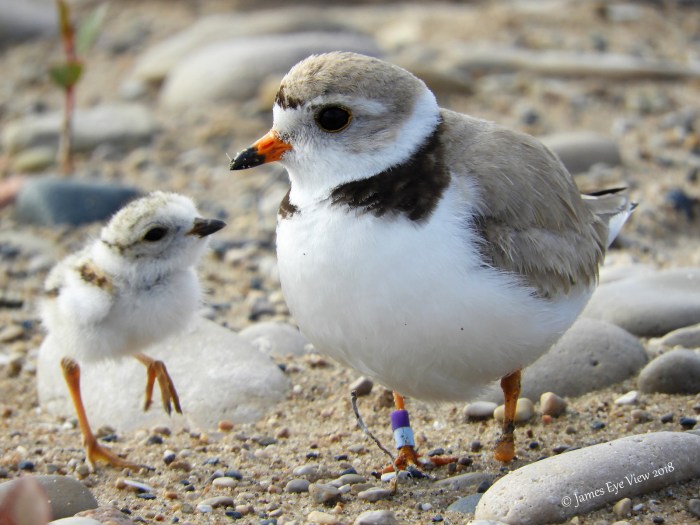
Of rockets & plovers

Piping Plovers by JamesEyeViewPhotography

Piping Plovers by JamesEyeViewPhotography

“Musk is a very smart man. But he either was ignorant of the ecology out there or he felt his project was so much more important that it really didn’t matter what he did to the area.”
-Texas environmentalist Jim Chapman.

This article about the impact of Elon Musk’s Space X launchport on its neighbors spiked my blood pressure this morning. It’s bad enough hearing the dashed retirement dreams of Celia Johnson, a former Michigan social worker. The realization that it also impacts piping plovers, a beloved & endangered seasonal resident of the Great Lakes State, turned my anger up to 11:

The company’s presence, while welcomed by local politicians lured by the promise of taxable income and employment opportunities, has become a nightmare for many residents and wildlife conservationists attempting to protect the sensitive habitat surrounding the development.

Since SpaceX started construction in late 2015 and testing rockets in 2019, explosions have showered debris across previously unspoiled tidal flats and blown out residents’ windows, including Johnson’s. Rare species of birds like the piping plover and mammals have dwindled, and intense periods of construction and testing have closed off public access to the beach for more days than were authorized by the Federal Aviation Administration, which has federal oversight of the development. The company has also installed bright floodlights to illuminate the road and construction site.

…“This is a very important area for migratory birds as it’s a huge stopover area,” said Jared Margolis, a senior attorney at the Center for Biological Diversity, who submitted comments to the FAA questioning the legality of the SpaceX expansion. “Even a power plant would be concerning. But here you have giant rockets powered by methane that tend to explode, causing debris and noise impact, and we want to make sure the impacts are mitigated.”

Amid the constant construction noise, truck traffic, enormous floodlights over the site and debris from explosions, some species have already dwindled at an alarming rate, said David Newstead, director of the Coastal Bird Program for the Coastal Bend Bays & Estuaries Program, a nonprofit group that works to protect the area’s bays and estuaries.

Newstead conducted a study of the local population of piping plovers, sparrow-sized shorebirds that nest and feed in coastal sand and are protected under the Endangered Species Act. He found that the population halved from 2018 to 2021, correlating closely with the intensity of SpaceX operations in the area.

Read more at NBC News & here’s hoping the tiny piping plover can weather the storm. Tou can read more about them in this Leelanau.com piping plover article featuring another photo from James!

James took this photo back in the summer of 2018 in the Sleeping Bear Dunes National Lakeshore, one of the primary nesting areas for piping plovers. See more in his Summer gallery & for sure view and purchase his work including 2022 calendars on his website.

Support Michigan in Pictures with Patreon

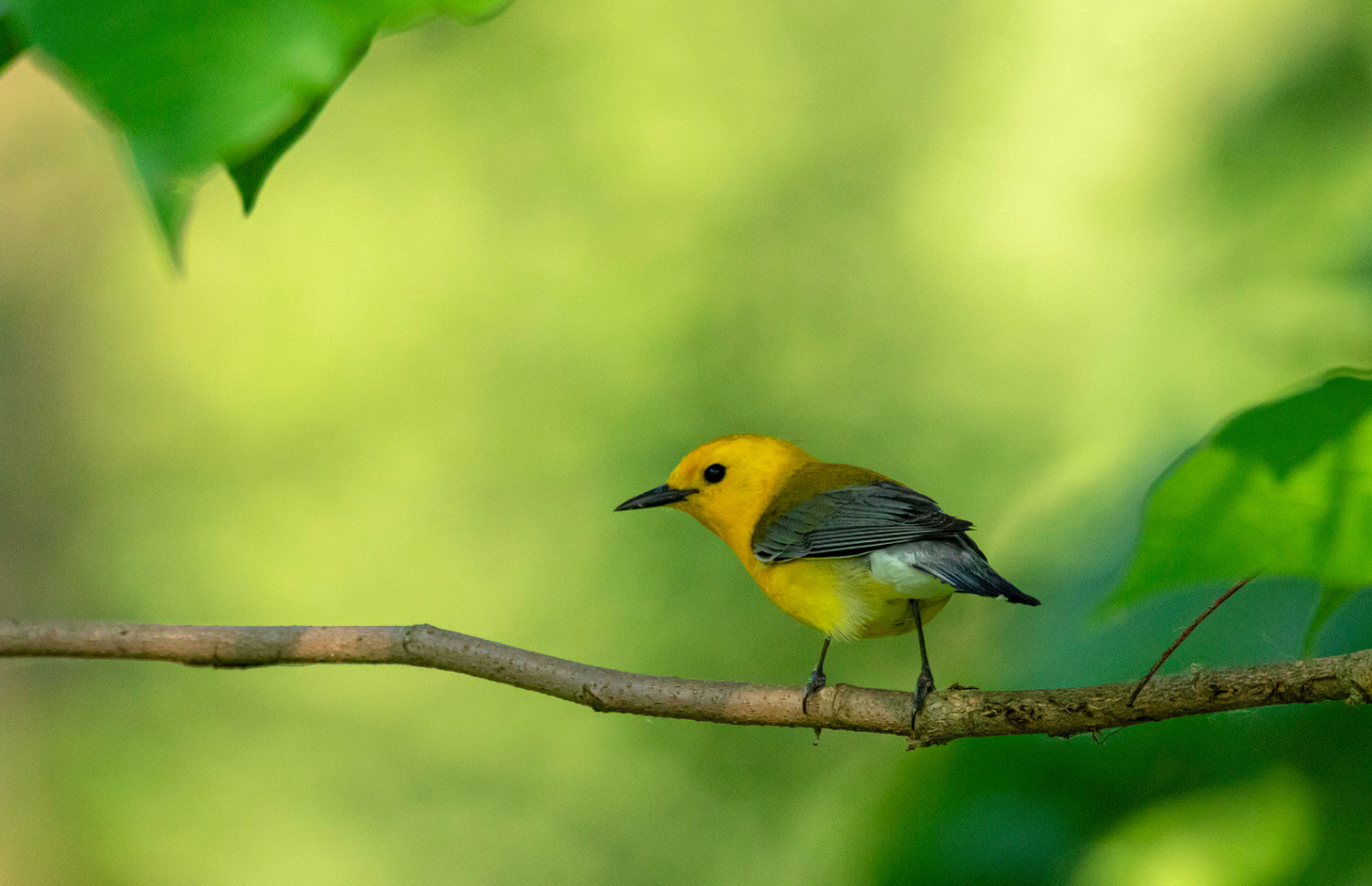
Prothonotary Warbler bringing the yellow

Prothonotary Warbler. by Kevin Povenz

Prothonotary Warbler by Kevin Povenz

All About Birds shares that the Prothonotary Warbler got its name from the bright yellow robes worn by papal clerks, known as prothonotaries, in the Roman Catholic church. 

Kevin took this photo back in June at Grand Ravines North Park. See more in his Birds gallery on Flickr!

Support Michigan in Pictures with Patreon

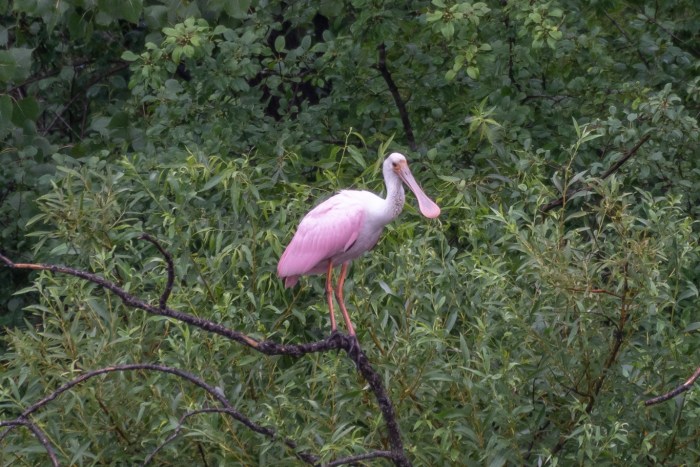
Roseate Spoonbill in Michigan

Roseate Spoonbill in Michigan by Bill VanderMolen

Roseate Spoonbill in Michigan by Bill VanderMolen

The Detroit Free Press reports that bird-watchers are flocking to Saline in hopes of seeing this rare roseate spoonbill:

This is the first record of a roseate spoonbill in Michigan, said Molly Keenan, communications and marketing coordinator at Michigan Audubon in an email to the Free Press.

Michigan DNR biologists believe the bird either escaped from a local zoo or is very confused, according to a Facebook post from Saline police.

Roseate spoonbills are typically found on the Gulf Coast, in the Caribbean and in Central and South America, but they have been spotted in neighboring states, said Benjamin Winger, curator of birds at the University of Michigan Museum of Zoology and an assistant professor in the Department of Ecology and Evolutionary Biology.

“It was really only a matter of time before one was documented in Michigan,” he said.

In the late summer, it’s normal for young water birds such as spoonbills, herons and storks to wander, Winger said.

“Sometimes, they wander a bit too far,” Winger said.

I’m not gonna definitively tell you to believe the zoologist over the DNR, but I am gonna look hard at the DNR & ask if they remember their decades of denial around cougars in Michigan.

Bill took this photo at Washtenaw County Wilderness Park. You can see another angle (with an egret) right here & see 211 more feathered finds in his Bird Life List gallery on Flickr.

Support Michigan in Pictures with Patreon

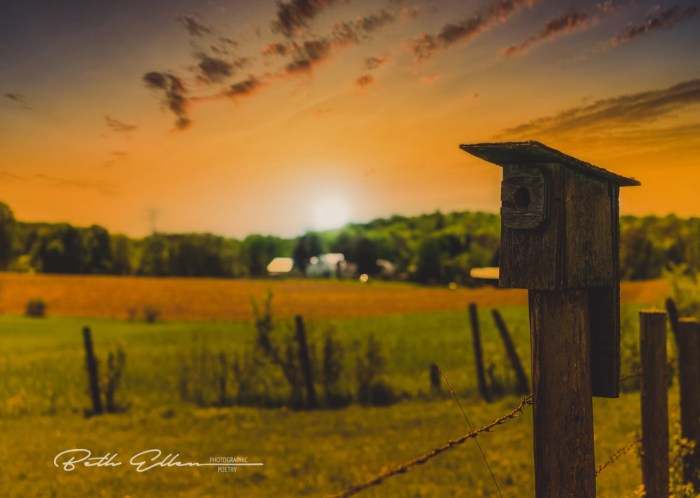
(Tiny) Home for Sale

Home for Sale! by Fire Fighter's Wife

Home for Sale! by Fire Fighter’s Wife

Like much of the rest of the country, Michigan has been seeing skyrocketing home prices.

Beth may have found a solution, but she notes that the neighbors always leave their sprinklers on, which is a little bit annoying but also a source of constant irrigation. 😂 See more in her landscape gallery on Flickr!

Support Michigan in Pictures with Patreon

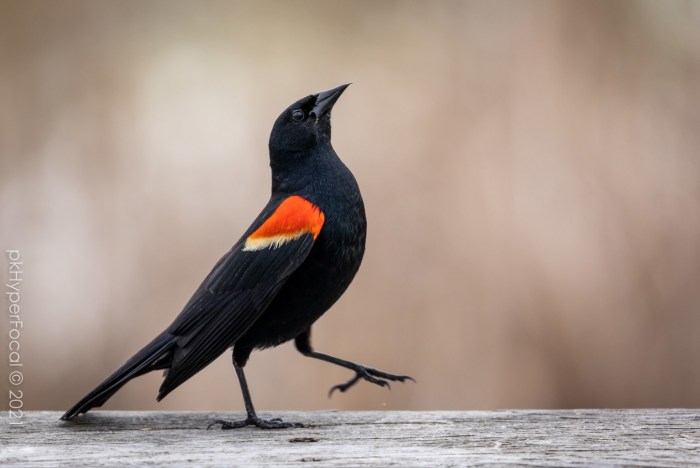
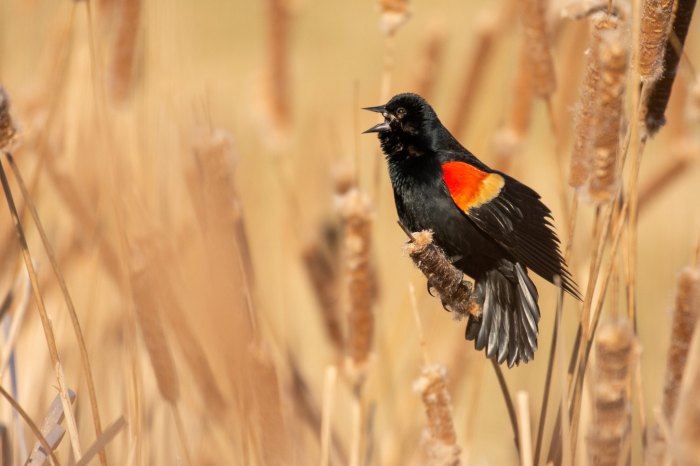
Marching at the Marsh

Marching at the Marsh by PKHyperFocal

Marching at the Marsh by PKHyperFocal

This dude definitely has swag! Here’s a few mostly male facts about red-winged blackbirds from the excellent All About Birds website:

The Red-winged Blackbird is a highly polygynous species, meaning males have many female mates – up to 15 in some cases. In some populations 90 percent of territorial males have more than one female nesting on their territories. But all is not as it seems: one-quarter to one-half of nestlings turn out to have been sired by someone other than the territorial male.

Male Red-winged Blackbirds fiercely defend their territories during the breeding season, spending more than a quarter of daylight hours in territory defense. He chases other males out of the territory and attacks nest predators, sometimes going after much larger animals, including horses and people.

The oldest recorded Red-winged Blackbird was 15 years, 9 months old. It was banded in New Jersey in 1967, and found alive, but injured in Michigan in 1983. It was able to be released after recovering from its injuries.

PK caught this red-winged blackbird on patrol last week. See more in their Feathers gallery on Flickr

Read up on Red-winged Blackbirds on Michigan in Pictures!

Support Michigan in Pictures with Patreon

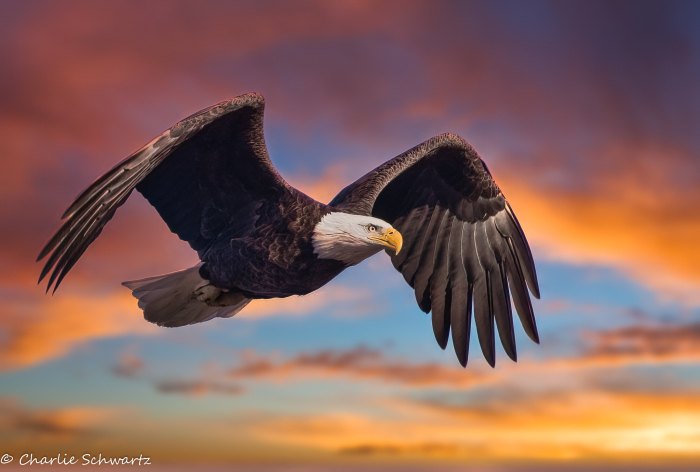
Sunset Eagle

Sunset Eagle by cncphotos

Sunset Eagle by Charlie Schwartz

I think this is the best bald eagle photo I’ve ever seen.

See more in Charlie’s Birds album on Flickr!

Support Michigan in Pictures with Patreon

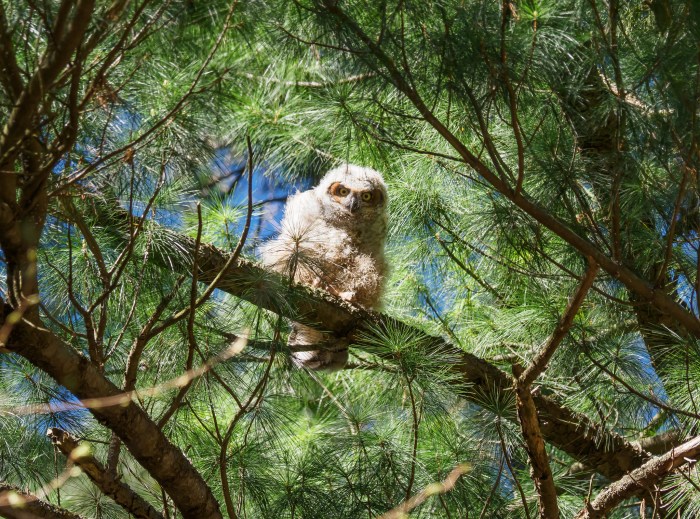
Great Horned Owlet

Great Horned Owlet by David Marvin

Great Horned Owlet by David Marvin

David writes:

A Great Horned Owl (Bubo virginianus) family has made Fenner Nature Center its home this spring. A wee downy owlet is currently hopping from tree branch to tree branch in the dense stand of white pine trees (Pinus strobus) on the northeast side of the property.

Video of the owlet and a couple brief appearances by its parents.

Due to the density of the foliage and the height at which the owls are perched, lighting has been a challenge when photographing and capturing video of these majestic birds.

Head over to David’s Flickr for more photos of this cute little ball of fluff!

More owls on Michigan in Pictures!

Support Michigan in Pictures with Patreon

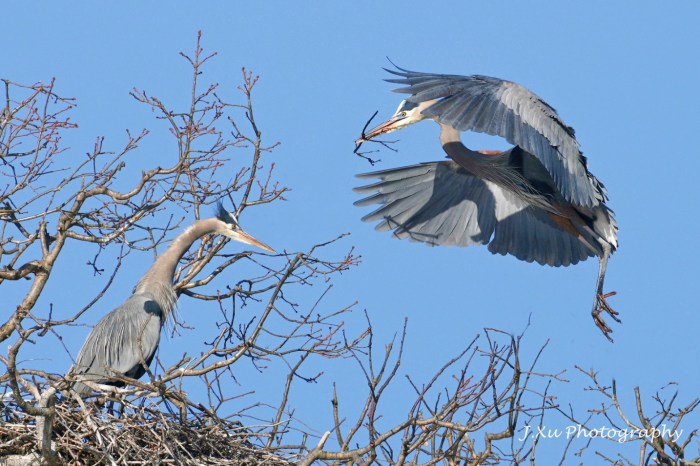
Construction Season: Blue Heron Edition

Perfect Shadow by Jiafan(John) Xu

Perfect Shadow by Jiafan(John) Xu

Jiafan definitely got the perfect shadow in this shot of a pair of herons building their nest. Head over to his Flickr for more shots of this industrious pair!

Support Michigan in Pictures with Patreon

Signs of Spring: Red-winged Blackbirds

Red winged Blackbird by Reji TV

Red-winged Blackbird by Reji TV

One of my favorite signs of spring in Michigan is hearing the calls of red-winged blackbirds. I started hearing them last week in northern Michigan & just saw these pics today in our Absolute Michigan group on Flickr. The University of Michigan Museum of Zoology’s Animal Diversity Web listing for Agelaius phoeniceus (red-winged blackbird) tells us:

The range of red-winged blackbirds extends from southern Alaska at its northern most point, to the Yucatan peninsula in the south and covers the greater part of the continent reaching from the Pacific coast of California and Canada to the eastern seaboard. Winter ranges for red-winged blackbirds vary by geographic location. Northern populations migrate south to the southern United States and Central America beginning in September or October (or occasionally as early as August). Most western and middle American populations are non-migratory.


Red-winged blackbirds roost and breed in a variety of habitats, but tend to prefer wetlands. They have been known to live in fresh and saltwater marshes. On drier ground, red-winged blackbirds gravitate towards open fields (often in agricultural areas) and lightly wooded deciduous forests. In winter red-winged blackbirds are most often found in open fields and croplands.

…As migratory birds, red-winged blackbirds share many characteristics with related species. They are strong fliers that will often migrate in flocks of a thousand or more. Roosting is often communal, resulting in large, centralized populations. Red-winged blackbirds are largely diurnal, spending most of their day foraging. Males defend territories during the mating season. As the mating season progresses, both males and females will spend more time within their territory or the territory of their mate. Although fighting among red-winged blackbirds is not all that common, even among males, it is known to occur. Males chase females at top speed during breeding season. Because of their broad range and tendency to colonize large roosting areas, red-winged blackbirds are extremely common, and are easy to find in the mating season when singing and sexual displays make them more visible.

This great web resource includes many more photos and blackbird calls. Go there!

Reji TV took this photo near Auburn Hills. See more in their Birds gallery on Flickr.

Support Michigan in Pictures with Patreon