Birds of Michigan: Osprey

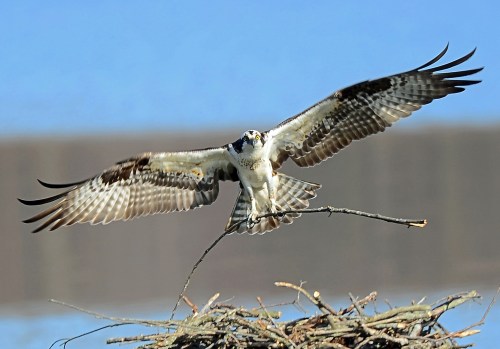
Osprey Building a Nest

Osprey Building a Nest, photo by Rodney Campbell

All About Birds from the Cornell Lab of Ornithology is the internet’s best resource for bird information. Their entry for Osprey (Pandion haliaetus) says that osprey are one of the largest birds of prey in North America and one of the most widespread birds in the world, found on all continents except Antarctica. More about osprey at Wikipedia and at Pandion haliaetus (Osprey) from the UM Animal Diversity web.

The Michigan DNR’s Osprey page begins:

The “fish hawk” is brown above and white below, and files with a distinct bend in its wing at the “wrist.” Their feet are equipped with spiny scales and long talons that give them a firm grip on slippery fish, their only prey. Ospreys usually select tall trees in marshes along streams, lakes or man made floodings. They will adapt to artificial nesting platforms. This “help” from humans, along with the restriction of certain harmful pesticides, has helped ospreys recover from the drastic population reductions seen in the 1950s and ’60s. The Nongame Wildlife Fund located 166 pairs in 1988, up from the 81 counted in 1975.

They ask for help in reporting osprey sightings in southern Michigan. Also check out Osprey Watch of Southeast Michigan.

Rodney took this photo of an osprey building its nest in Milford.

MichiganOsprey.com is a great local resource and adds:

Like Bald Eagles, Ospreys often reuse old nests, adding new material to them each season. Ospreys prefer nests near water, especially in large trees, but will also nest on artificial platforms. Ospreys three years or older usually mate for life, and their spring courtship begins a five-month period when they raise their young.

View it background bigtacular and see more in his Birds slideshow.

Michigan in Pictures has lots more Michigan Bird photos!!
Kingfisher Friday: The Belted Kingfisher

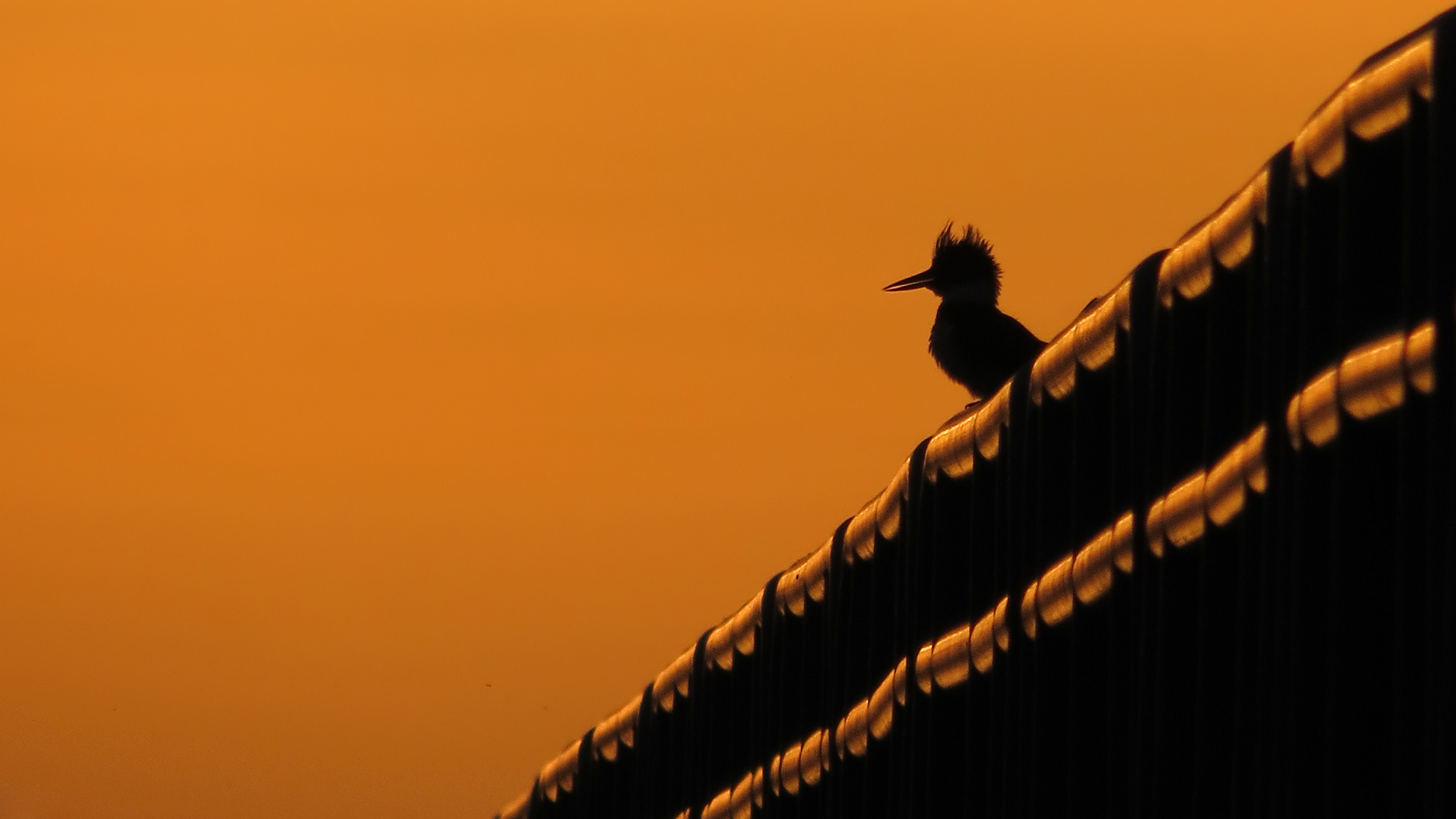
Kingfisher HD Friday

Kingfisher Silhouette HD Wallpaper, photo by John Britt

All about Birds says that the Belted Kingfisher is:

A common waterside resident throughout North America, the Belted Kingfisher is often seen hovering before it plunges headfirst into water to catch a fish. It frequently announces its presence by its loud rattling cry.

It breeds along streams, rivers, lakes, and estuaries with banks for nest holes. The breeding distribution of the Belted Kingfisher is limited in some areas by the availability of suitable nesting sites. Human activity, such as road building and digging gravel pits, has created banks where kingfishers can nest and allowed the expansion of the breeding range.

View John’s photo background big and see more in his Northern Michigan – Seasons, Sunrises, Beaches, Waterfalls, Mountains slideshow.

More Michigan Birds from Michigan in Pictures.

Signs of Spring #56: Chevrons

Chevrons

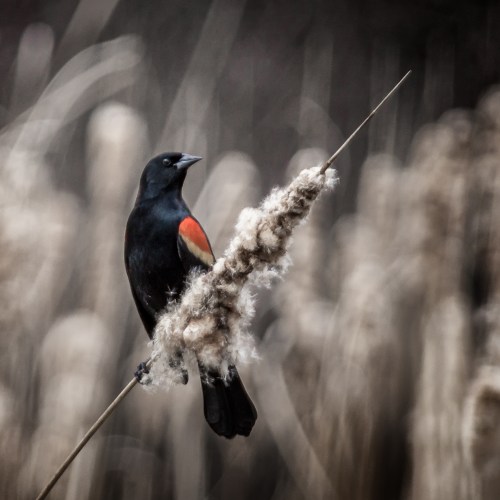
Chevrons, photo by MichaelinA2.PortrayingLife.com

Spring officially arrives today at 6:45 PM, and we are starting to see signs that winter is running out of steam. One of them is the return of Red-winged blackbirds Agelaius phoeniceus about which University of Michigan BioKids says (in part):

These birds are some of the first springtime birds to return from their wintering sites. Once males arrive, they devote their time to defending their territory. The most successful defenders are not necessarily the most aggressive birds. Males that spend more time in, as well as foraging on, their territory are more likely to retain ownership of that territory.

Males with darker colored shoulders do not tend to keep their territories. Typically in the spring, male red-winged blackbirds display in a “song spread.” They fluff their plumage, raise their shoulders, and spread their tail as they sing. As the display becomes more intense, the wings are more arched with the shoulders showing more prominently. Males use this same body display as a threat to other male birds that enter into the male’s territory.

Females will also engage in a “song spread” display directed at each other early in the breeding season. One possibility is that a female will defend a sub-territory within the male’s territory. The female will engage in a “wing flip” display when a disturbance prevents her from returning to her nest full of young.

Red-winged blackbirds are active during the day and migrate between their summer breeding grounds and winter feeding areas. During the winter, red-winged blackbirds aggregate in huge flocks and tend to stay in or near areas where grains and seeds are available to eat.

Read on for more including their ability to help control insect pests.

View Michael’s photo background big and see more in his soon to grow Birds 2015 slideshow.

Many more Michigan birds on Michigan in Pictures.

Fireproof? Michigan’s bald eagles full of flame retardants

Bald Eagle by Kevin Povenz

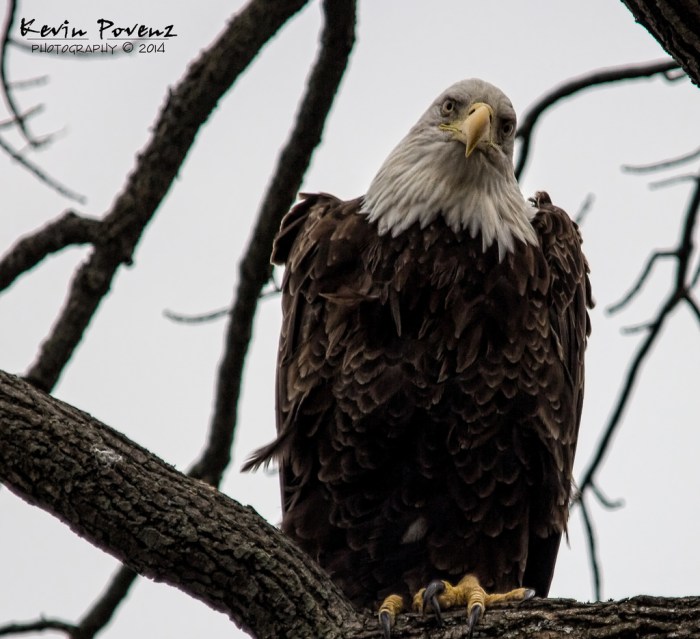
Bald Eagle, photo by Kevin Povenz

Sorry. I like to start the weekend on a better note usually, I hope you have a good one.

Environmental Health News recently ran a story bluntly titled Michigan’s bald eagles full of flame retardants. It says (in part):

Michigan’s bald eagles are among the most contaminated birds on the planet when it comes to phased-out flame retardant chemicals in their livers, according to new research.

The study, published last month in the Journal of Great Lakes Research, found that the top predators in the Great Lakes are highly exposed to banned flame retardants, still widespread in the environment.

Michigan’s population of bald eagles is stable, but the compounds have been linked in other birds to impaired reproduction, weird behavior and development, and hormone disruption.

“While the sensitivity of eagles to PBDEs has yet to be determined, there is a possibility that the exposures reported here may be associated with sub-clinical effects,” Nil Basu, an associate professor at McGill University who led study while at the University of Michigan, said in an email.

More than four decades ago, companies started putting polybrominated diphenyl ethers, PBDEs, into furniture cushions, electronics and clothing in an effort to slow the spread of flames if they catch fire.

…The chemicals “are everywhere,” Basu said. “They build up in the food chains so that top predators – such as bald eagles – accumulate high levels.”

Flame retardants have been found in birds all over the world – from the United States to China.

Read on for lots more about a sad story for these amazing animals. Oh, and don’t forget. Humans are a “top predator” too!

About this photo from last November, Kevin wrote:

Went down by the Grand River to see if any eagles were around. Now the conditions were not the greatest, quite windy, grey overcast skies and light mist in the air. But I haven’t been out all day so I said to myself that I just got to do this. Well I got to see the Eagles and this one just looked at me with the expression like “why are you here on such a crappy day”

Kevin is far and away the master bald eagle photographer in the Absolute Michigan pool on Flickr – heck, I just featured one of his eagle photos a couple of weeks ago. View his photo bigger and see many more of his really great Michigan bald eagle photos on Flickr.

Lots more about bald eagles on Michigan in Pictures.

Costa’s Hummingbird #0001

Costa's Hummingbird - Michigan

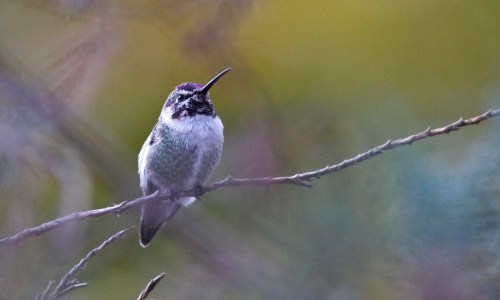
Costa’s Hummingbird, photo by Zak Pohlen

The other day I was browsing through the Sleeping Bear Birding Trail (SBBT) website and I came across a report that in November of 2014, the first Michigan sighting of a Costa’s Hummingbird was recorded. They write:

Michigan’s first Costa’s Hummingbird was found at the feeder of Jan and Ron Joslyn in Onekama just at the start of the SBBT off from M-22. The bird had been coming to the feeders for a couple weeks when the Joslyn’s called the Lake Bluff Audubon center concerned about the cold weather and the bird’s future.

I stopped at the Joslyn’s on Saturday November 1st and literally got weak in the knees when the bird appeared at the feeder and showed its purple gorget. I knew this was a first state record and with help from Caleb Putnam, Adam Byrne and Allen Chartier we were able to ID the bird.

Read on for more about the bird and also see this news report.

Where the story gets even cooler is that I went to Flickr and was able to find this photo of the bird, which Zak allowed me to feature. View it bigger and see more in his Birds of Michigan slideshow.

You can see more shots of the hummingbird on Flickr including several from Allen Chartier.


Home Improvement: Bald Eagle Edition

Nest Builder by Kevin Povenz

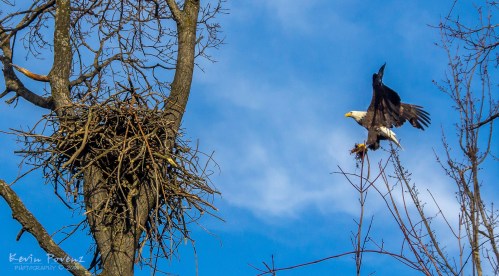
Nest Building, photo by Kevin Povenz

Kevin took this shot of a bald eagle building a nest in late December near the Grand River in Ottawa County. The State of Michigan’s page on bald eagles says (in part):

During Michigan winters, bald eagles are seen throughout the state (almost all counties), while they nest mainly in the Upper Peninsula (especially the western portion) and the northern portion of the Lower Peninsula. These eagles don’t really migrate, they just move south enough to stay ahead of the ice and congregate near open water. Immature birds may move further south.

When bald eagles reach maturity (at four to five years of age), they select a mate, with whom they probably mate for life. In captivity, they have been known to live to 50 years, but in the wild, they probably don’t reach much more than 20 years of age.

The beginning of the breeding season, from mid-February to mid-March, consists of the establishment of a territory, nest building and mating displays. The mating “cartwheel” display begins high in the air with the two birds darting and diving at each other, until they lock talons and drop in a spinning free fall, until the last possible moment when they separate. The nest is usually located in the tallest tree in the area, often a white pine or dead snag. They are usually made of sticks with a lining of grass and moss. Nests may be added to each year until they reach enormous sizes, up to ten feet in depth and 20 feet across.

Read on for more and have a look at this encouraging chart of the steadily rising number of eagle nests in Michigan. Also check out this page of bald eagle sightings in Michigan for ideas of where to look near you!

View it bigger on Flickr, get more pics of these eagles at his Grand River North Ravines tag and see more in his Birds of Prey slideshow.

More eagles on Michigan in Pictures!

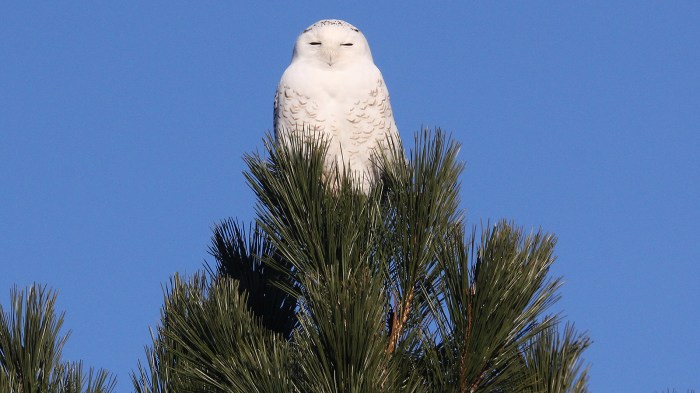
Snowy Topper

Michigan Snowy Owl Winter

snowy12-28-4, photo by Dan Lockard

What’s on top of your tree this year? Right now in the Absolute Michigan photo group, we’re seeing a ton of snowy owls. While these arctic owls are not found in the summer, we are in their winter range, as the Michigan DNR’s Winter Visitors page shares:

Just because the leaves have fallen from the trees and there is a chill in the air is no reason to put away your binoculars. Winter offers unique viewing opportunities. Many of our summer resident birds migrate to warmer summer climates. Still, there are several species of birds that migrate from Canada and find Michigan the perfect winter temperature. Winter is the only time several of these species can be found in Michigan.

Two of the largest migrants are the snowy owl and the great gray owl. Snowy owls can be found moving into Michigan during winter when the food supply on the arctic tundra is in short supply. Snowy owls have been recorded as far south as Lansing, Michigan. Because they rarely see humans on their northern homes, they are not timid and can be easily viewed for long periods of time.

Friday’s Sault Star reported that about three dozen snowys were sighted during the annual Audubon Christmas Bird count on December 20th. That’s more than average. We’ll know if this is an irruption year after all the bird count numbers are released in January.

View Dan’s photo taken near Muskegon background big and see lots more (including a couple shots of the great gray owl) in his awesome Owls slideshow.

Lots more snowy owl pictures & information (including a couple more by Dan) in the Michigan in Pictures archives!

Biodiversity is not a dirty word

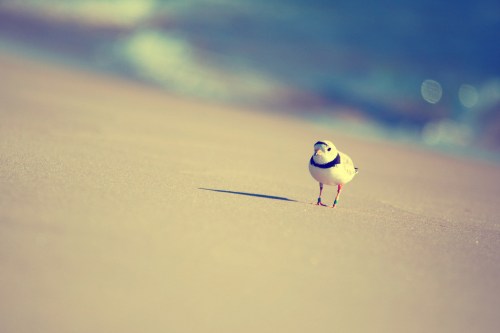
Piping Plover

Untitled, photo by Anna Lysa

Sorry to mess up your holiday week with a bit of advocacy on the behalf of Michigan’s natural environment, but yesterday via Michigan Radio I learned of the very disturbing Senate Bill 78 that’s headed to Governor Snyder for signature or veto. The bill would forbid DNR from preserving biodiversity in forests and parks:

More than 130 scientists and the state’s environmental groups are calling on Gov. Rick Snyder to veto a bill they call anti-science. The bill would forbid the Michigan Department of Natural Resources from protecting native wildlife and plants on the pure merits of protecting nature.

  • The bill would prohibit the Department of Natural Resources from managing state lands for biodiversity.
  • It would prohibit the agency from managing forests for restoration.
  • It would end work to eliminate invasive species.
  • It would strike from the law the finding that most losses of biological diversity are the result of human activity.

Read on for more, and here’s the text of Senate Bill 78. If you’re so inclined, feel free to tell Gov. Rick Snyder what you think. I know that messages to our elected officials really do make a difference.

View Anna Lysa’s photo from July of 2012 at Ludington State Park bigger and see more in her Michigan slideshow.

PS: As I read it, piping plover would not be impacted by this as the species with just 8,000 adults is federally protected. I just picked them because they’re a recognizable species that has benefitted from extensive preservation efforts, some of them in the Sleeping Bear Dunes National Lakeshore in Michigan.

Here’s the piping plover and more of Michigan’s endangered plants and animals on Michigan in Pictures.

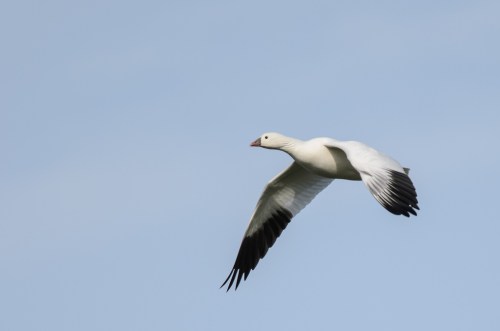
Ross’s Goose

Ross's Goose

Ross’s Goose, photo by jsommer2

A few weeks ago there was a bit of a question as to the duckishness of a sleeping duck I posted, so I spent a lot of time looking at ducks & duck-like birds. One of them showed up in the photo group so without further delay…

The All About Birds entry for Ross’s Goose (Chen rossii) says:

A tiny white goose with black wingtips, the Ross’s Goose is like a miniature version of the more abundant Snow Goose. It breeds in the central Arctic and winters primarily in central California, but it is becoming more frequent farther east.

Prior to the 1950s the Ross’s Goose was confined to well-defined breeding and wintering areas, with few seen as strays. Since that time the species has been expanding eastward, both on the breeding and wintering grounds. The change in breeding distribution has resulted in more contact and subsequent hybridization with the Snow Goose.

The female Ross’s Goose does all of the incubation of the eggs. The male stays nearby and guards her the whole time. The female covers the eggs with down when she leaves the nest. The down keeps the eggs warm while she is away and may help hide them from predators.

More including photos and identification tips at All About Birds.

Check jsommer’s photo out background big and view the slideshow for more photos including a shot of this goose with some much bigger Canadian geese!

Many more Michigan birds on Michigan in Pictures!

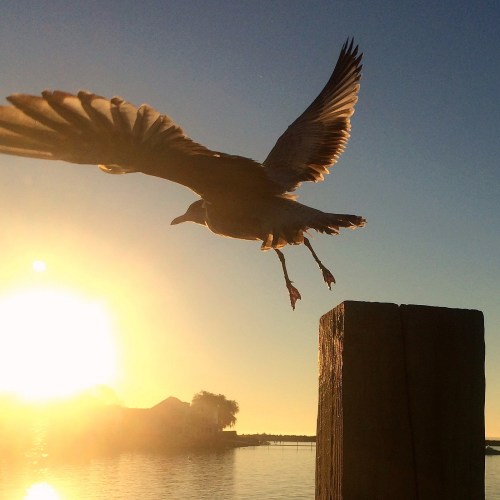
Sunrise Flight

Sunrise Flight

Sunrise Flight, photo by ptpomber

Safe & quick flights … and travels of any kind this weekend. Speaking of flight, if anyone can identify the bird from yesterday, that would be great!

View ptpomber’s photo bigger and see more from Mackinac Island including some very cool winter shots in his slideshow.