The story of the Irish Hills Towers

Irish Hills Towers

Irish Hills Towers, photo by dt10111.

The Wikipedia entry for the Irish Hills Towers says that these wooden observation towers were constructed along US-12 in the Irish Hills region in northern Lenawee County as the result of a curious competition along the lines of the skyscraper frenzy in New York:

In the early 1920s, the Michigan Observation Company sought places of high elevation to erect fifty foot high enclosed platforms to boost tourism. In southern Michigan, a tower was placed atop Bundy Hill in Hillsdale County, Michigan and officials sought a knoll in the heart of the Irish Hills in Lenawee County. A farmer who owned half of the knoll, Edward Kelly, turned down the company’s offer to purchase his portion of the land. The adjoining land owner, Thomas Brighton, consented the sale of his plat, and construction of the Irish Hills Observatory commenced.

The opening of the Irish Hills Observatory was announced by The Brooklyn Exponent in September 1924. In a gala celebration on October 4 and October 5, hundreds of people ascended the hill and tower to gaze upon the rolling landscape and crystal blue lakes in all directions. Kelly seemed spited by the exploitation of the MOCs venture, and protested by erecting his own tower. By the end of November, 1924, his own observation platform was in place, just feet away from the MOCs structure, and several feet higher.

The Michigan Observation Company responded by adding a second observation enclosure to the top of its own facilities, now designated as the “Original Irish Hills Tower”. Kelly proceeded to add a raised platform to his “Gray” tower (named as such because of its gray-painted exterior), an act which brought the two edifices to an even height. The MOC informed Kelly that if he attempted to compete with more height given to his tower, they would tear down their own and construct a metal observatory so large that Kelly’s efforts would be nullified. He conceded, and turned his efforts instead to drawing more revenue to his creation.

In the 1950s Frank Lamping purchased both and added a gift shop. The towers closed in 2000.

Here’s a cool postcard from the 1930s of the view from Irish Hills Towers, a sweet photo from Matt Callow and a few photos showing different views of the towers. You can see the location on Waymarks.

See this bigger right here and in Daniel’s Buildings set (slideshow).

More Michigan roadside attractions from Michigan in Pictures!

Moonstruck by Lightning

moonandbarn

moonandbarn, photo by Aunt Owwee.

Spring is storm season in Michigan, and where there’s storms, there’s often lightning. One of my favorite blogs, The Everyday Adventurer, has a post about lightning rods that I’ve been meaning to feature. I was waiting for a nice spring storm to rumble through but it looks like the April showers are sleeping in this year.

Wikipedia’s Lightning rod entry explains Ben Franklin’s US invention of the lightning rod (which appears to have been invented in Russia 20 some years before). Like many new inventions, it drew criticism. Here’s what Rev. Thomas Prince, the rector of Old South Church in Boston, said in his 1755 sermon titled Earthquakes the Works of God and Tokens of His Just Displeasure:

“…the more points of Iron are erected round the Earth, to draw the Electrical Substance out of the Air; the more the Earth must needs be charged with it. And therefore it seems worthy of Consideration whether any part of the Earth, being fuller of the terrible Substance, may not be exposed to more shocking Earthquakes. In Boston are more erected than anywhere else in New England; and Boston seems to be more dreadfully Shaken. O! there is no getting out of the mighty Hand of God! If we think to avoid it in the Air, we cannot in the Earth: Yea it may grow more fatal…

Check out this Michigan lightning slideshow from Flickr and be sure to check this out bigger.

Here’s hoping your buildings remain lightning free!

Photos of Michigan Central Station

Michigan Central Station

Michigan Central Station, photo by Grant Zoschnick Photography.

On Tuesday the Detroit City Council passed a resolution for expedited demolition of Michigan Central Station alias Michigan Central Depot alias MCS alias Detroit’s largest ruin.

David Kohrman’s Forgotten Detroit has tons of historical photos and a detailed history of Michigan Central Depot that begins:

When the old Michigan Central Depot burned on December 26, 1913 the still unfinished structure off of Michigan Ave. was called into service. Designed by noted hotel architects Warren & Wetmore and engineers Reed and Stem, the MCS was an exceptionally beautiful building. The style of choice was beaux-arts neoclassical. Flanking massive arched windows were pairs of Corinthian columns, a hallmark of the style. Inside the rooms were modeled after an ancient Roman bathhouse, particularly the massive main waiting room. With an impressive vaulted ceiling this room was the most imposing in the building.

All Aboard: A Retrospective of the M.C.S. is a fantastic look at Michigan Central Station as it was in 1973 and as it is now. Be sure to check this one out.

Michigan Central Station on Wikipedia notes that the building was designed by the Warren & Wetmore and Reed and Stem firms who also designed New York City’s Grand Central Terminal.

Here’s the Michigan Central Station slideshow on Flickr. In Exposure Detroit, many of the photographers whose work is featured in that slideshow are discussing the city council’s vote and how to save MCS and the Save Michigan Central Station Group.

You might also like Detroit’s Michigan Central Station from Michigan in Pictures and watch this great old video on YouTube.

Be sure to check Grant’s photo out bigger and see more of his shots from Michigan Central Station (slideshow).

UPDATE (April 14): Heather Pennington has cool post titled Save Michigan Central Station in which she has some photos and eloquently wonders:

There is much debate on what should be done with this amazing structure. What cannot be debated is the fact that there are countless other structures that are “dangerous, open to the elements, and open to trespassers”. There are so many houses, and former businesses that are abandoned and burned that should be torn down for the safey of the city. The Detroit Fire Department lost one of its own last year when Walter Harris died after the roof of a charred vacant house collapsed on him (read article from Fire Rescue 1 here). Why???

Wouldn’t it cost less than $3.6M (that the city does not have) to demolish vacant and burned homes?

Let’s take some time to clean up the rest of the city; make it safe for all that live, work, and play here. And in the meantime, let’s try to find a reasonable fate for Michigan Central Station.

Detroit’s Lafayette Building to meet the wrecking ball

Towering Sections, photo by SNWEB.ORG Photography, LLC.

Yesterday Crain’s Detroit reported that the Detroit Economic Growth Corp. has issued a request for proposals to demolish the Lafayette Building. The building has been vacant for 12 years and although numerous people have explored renovating it, none decided to go through with it. Once concern with demolition is that American Coney Island and Lafayette Coney Island both abut the Lafayette building (photo).

Over on Flickr, southofbloor writes:

The Lafayette bldg is an early skyscraper at the corner of Lafayette and Shelby in downtown Detroit, stretching to Michigan Ave. It was built in 1923, and closed a few years ago, just in time for the Book-Cadillac Hotel to open up. The abandoned building is one of a few in town designed by C. Howard Crane, a remarkable theatre architect, and the plan of the building is one of those spectacular charcteristics unique to Detroit, sort of modified wedge shaped triangular flatiron, crowned with a great classical cornice.

You can get more at Wikipedia’s Lafayette Building entry, Emporis.com and at Skyscraper page. Here’s a link to the Lafayette Building on Absolute Michigan’s Map of Michigan.

SNWEB has some more photos of the Lafayette Building (slideshow). See a bunch more photos in this Flickr slideshow for the Lafayette Building in Detroit including a cool angle from Allan M and this gorgeous photo of the cornice by dropsheet.

Broken light

Broken light

Broken light, photo by Photo Jimbo.

When light breaks, Michigan photographers fix it.

Bigger in Jimbo’s slideshow.

Royal Oak, Michigan

Royal Oak, Michigan

Royal Oak, Michigan, photo by paulhitz.

Be sure to check Paul’s photo out bigger and see more of Royal Oak photos in his slideshow. You can also check out about 400 more Royal Oak photos from the Absolute Michigan pool.

On their History page, the City of Royal Oak explains that:

In 1819, Michigan Gov. Lewis Cass and several companions set out on an exploration of Michigan territory to disprove land surveyors’ claims that the territory was swampy and uninhabitable. The beginning of their journey seemed to support those claims until they reached a desirable area of higher ground near the intersections of Main, Rochester and Crooks Roads. Here they encountered a stately oak tree with a trunk considerably wider than most other oaks. Its large branches reminded Cass of the legend of the royal oak tree, under which King Charles II of England took sanctuary from enemy forces in 1660. Cass and his companions christened the tree, the “Royal Oak.” And so Royal Oak received its name.

As early as 1891, when Royal Oak was a small village, there were only a few hundred residents. In the 10-year span from 1900 to 1910 the population grew to over 1,000. By the time Royal Oak was incorporated as a city in 1921, the population had exploded to over 6,000. This was due in large part to new jobs created by the booming auto industry. The development of the super highway, Woodward Avenue, led to greater population expansion. Woodward Avenue replaced the old Indian road, Saginaw Trail, as the connection between Detroit, Pontiac, Flint and Saginaw, making Royal Oak more accessible. Today, the 28-mile Woodward Avenue (M-1), bridging 10 communities from the Detroit River north to downtown Pontiac, holds the honorary designation of Michigan Heritage Route. The designation was awarded because of the historical and cultural significance of some 350 sites along Woodward Avenue, including 42 historic churches.

You can get tons more great Royal Oak history & historic photos from Historic Royal Oak by Dr. David G. Penney.

Wikipedia’s Royal Oak entry says that as of 2000, the city had a total population of 60,062, making it Michigan’s 18th largest city. Michigan in Pictures has a lot of photos that involve Royal Oak (apparently there’s some sort of Photographic Guild that exhibits there).

Check out Royal Oak on Absolute Michigan’s Michigan Map.

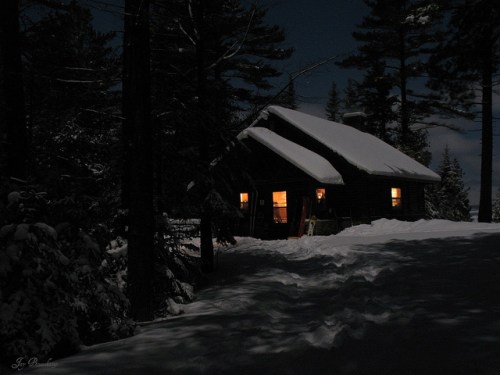
Fourteen Foot Shoals Cabin

14 foot shoal cabin

Fourteen Foot Shoals Cabin, photo by DIsnowshoe

DIsnowshoe has some beautiful photos of this cabin at Cheboygan State Park (slideshow).

The web site for Cheboygan State Park has more about the cabins and also their rustic teepees.

I love Michigan in Pictures

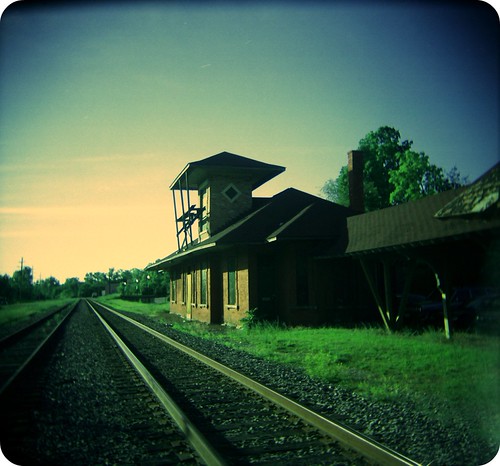
Holga_04_15.jpg, photo by Andy Tanguay

I think that Michigan in Pictures is the best web site that I have ever been involved with. Then again, my response to “You’ve won a trip to Milan!” would probably be “Milan, Michigan?”

One of the happiest parts of my life is that I get to spend some time every day looking at photos about Michigan from some amazing photographers and then learning about the subjects of the photographs and often times the people behind the lens. I’m very grateful for all that the photographers and readers contribute to make Michigan in Pictures what it is. Thanks!

The random background of the day on my computer is this photo from Andy’s Hardcore 313 set. This picture is of an abandoned train station station in Ypsilanti. It might be the same Ypsilanti train station where Presidents Ulysses S. Grant & Martin Van Buren delivered speeches and where Charles J. Guiteau, the assassin of President Garfield, was thrown off the train when the conductor found out he didn’t have a ticket.

Then again, it might be just an abandoned train station. You can view it bigger on white, or in Andy’s photostream.

Edit: Almost forgot! I did this post about Michigan in Pictures so I could link to it from the new Absolute Michigan group on Facebook.

The Future turns 100

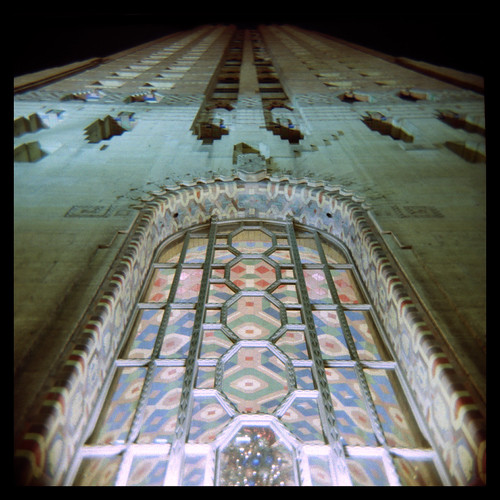
The Guardian Building

The Guardian Building, photo by Ralph Krawczyk Jr.

The Futurist Manifesto by Italian poet Filippo Tommaso Marinetti was published on February 20, 1909 in Le Figaro. Futurism rejected the past and celebrated speed, machinery and industry … and also war, violence, pollution, misogyny, the triumph of technology over nature and likely influenced fascism.

Futurism influenced many other twentieth century art movements, including Art Deco, Vorticism, Constructivism, Surrealism and Dada. Futurism as a coherent and organized artistic movement is now regarded as extinct, having died out in 1944 with the death of its leader Marinetti, and Futurism was, like science fiction, in part overtaken by ‘the future’.

Ralph says that this is a 1 minute + exposure with cable release Holga modification. Best viewed large. You can do that in his Holga Goodness slideshow. You can learn more about The Guardian Building in Detroit from Michigan in Pictures.

Getting ready for Valentine’s Day

Building_Silhouette

Building_Silhouette, photo by jmsmith000.

All across the state husbands, wives, lovers and friends are thinking about what to do for Valentine’s Day.

If you’re one of those folks, you might want to head over to Absolute Michigan to check out our thoughts on Celebrating Valentine’s Day the Michigan way (with bonus song!) and also the Mondo Valentine’s Day Rundown.

More photos from Jeffrey on his photography web site.