i heart detroit and i heart michigan

i heart detroit

i heart detroit, photo by mlephotos.

Some people I talk to are not fans of Valentine’s Day.

I’ve always thought of Valentine’s Day as a celebration of everything and everyone I love and that has always made it one of my favorite holidays.

How about you? Love it? Hate it? Only in it for the chocolate?

Check this photo out bigger in Meghan’s heart slideshow or see what the whole Absolute Michigan pool hearts.

Hope you have a wonderful weekend.

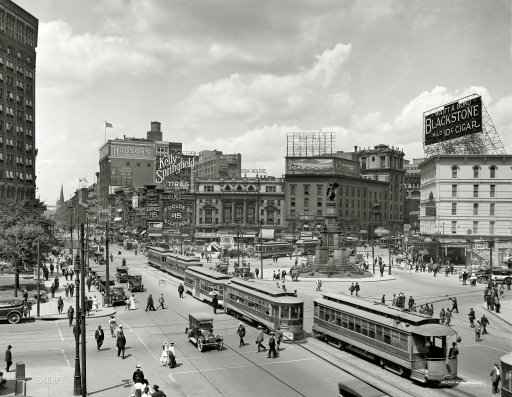
Detroit’s Golden Age: Looking up Woodward Avenue

Looking Up Woodward Avenue, c 1917, photo by Detroit Publishing Company

Thanks Chris Sebok for today’s find and happy birthday to Michigan!

This dry plate glass negative comes from the Detroit Publishing Company. Check out more photos from the Detroit Publishing Company archive and purchase prints from Shorpy’s!

This photo inspired mLive to put together a fantastic photographic timeline feature they titled Photos of Detroit’s Golden Age: The other side of ‘ruin porn’. It begins:

Detroit these days is not exactly the model of a great American city. While still vibrant and beautiful in several areas, the Motor City isn’t what it used to be, and we’re not here to lie or sugarcoat it.

Those abandoned buildings that have been thrust into the world’s spotlight through photo galleries by the likes of Time and Slate are real and a major part of Detroit’s landscape today.

But a few months ago, we came across a different kind of photo from Detroit (above), one that showed the city as a bustling metropolis full of people and booming businesses — in 1917.

People seemed to love it just as much as they loved those Detroit “ruin porn” photos.

Read on (and see some video) at mLive and check the comments at Shorpy’s too!

Where To Now?

Where To Now?

Where To Now?, photo by Mike Lanzetta.

Mike took this photo yesterday at Michigan’s largest ruins, Michigan Central Station in Detroit. Check it out bigger in the Exposure.Detroit slideshow or in the MCS slideshow on Flickr.

Seeing this and other photos prompted me to look back in on TIME Magazine’s Assignment Detroit (?) to see what one of the nation’s largest media outlets was thinking about the future of Michigan’s largest city.

They have been exploring how people in the city are grappling with the profound challenges in Detroit including rising budget deficits in the face of soaring costs, reduced public services, unemployment and  also (according to Detroit Mayor Dave Bing) a failure by many to recognize just how serious the situation is. In many ways, these are the same issues that folks in other places in Michigan are dealing with.

One feature that caught my eye and that I really feel offers the kind of thinking that it will take to raise Michigan from its current depths is Can farming save Detroit?. They talk with Detroit businessman and millionaire John Hantz, who envisions:

A large-scale, for-profit agricultural enterprise, wholly contained within the city limits of Detroit. Hantz thinks farming could do his city a lot of good: restore big chunks of tax-delinquent, resource-draining urban blight to pastoral productivity; provide decent jobs with benefits; supply local markets and restaurants with fresh produce; attract tourists from all over the world; and — most important of all — stimulate development around the edges as the local land market tilts from stultifying abundance to something more like scarcity and investors move in. Hantz is willing to commit $30 million to the project. He’ll start with a pilot program this spring involving up to 50 acres on Detroit’s east side. “Out of the gates,” he says, “it’ll be the largest urban farm in the world.”

…But still there’s the problem of what to do with the city’s enormous amount of abandoned land, conservatively estimated at 40 square miles in a sprawling metropolis whose 139-square-mile footprint is easily bigger than San Francisco, Boston, and Manhattan combined. If you let it revert to nature, you abandon all hope of productive use. If you turn it over to parks and recreation, you add costs to an overburdened city government that can’t afford to teach its children, police its streets, or maintain the infrastructure it already has.

Faced with those facts, a growing number of policymakers and urban planners have begun to endorse farming as a solution. Former HUD secretary Henry Cisneros, now chairman of CityView, a private equity firm that invests in urban development, is familiar with Detroit’s land problem. He says he’s in favor of “other uses that engage human beings in their maintenance, such as urban agriculture.” After studying the city’s options at the request of civic leaders, the American Institute of Architects came to this conclusion in a recent report: “Detroit is particularly well suited to become a pioneer in urban agriculture at a commercial scale.”

Can you see the halls of massive ruins like Michigan Central Station, the Packard Plant or any of the countless other abandoned buildings across the state filled with green growth and warm light? Michigan is already a leader in agricultural diversity, producing an amazing array of crops. Rampant unemployment is a huge drain on our public services. Why not try and recover some of what we’re spending everywhere in Michigan by putting folks to work growing food and paying them in part in food?

Definitely check it out and offer your thoughts in the comments.

Blue Reflections: Comerica Tower loses Comerica

Blue reflections

Blue reflections, photo by eYe_image.

Crain’s Detroit reports that Comerica Inc. will move its remaining Detroit employees out of Comerica Tower at 500 Woodward and renovate a building it owns on Lafayette Avenue. The move follows Comerica’s moving of its HQ to Dallas and will leave the building 70% vacant. It does allow some enterprising entity to put their name on the 2nd tallest building in Michigan.

Wikipedia’s Comerica Tower entry says that:

The building was designed by noted architects John Burgee & Philip Johnson, partners influential in postmodern architecture. One Detroit Center was constructed from 1991 to 1993. To form a stylistic link to the past, it was designed in a historicist fashion, with Flemish-inspired spires.

…The building is famous for its postmodern architectural design topped with neo-gothic spires. It uses a large amount of granite. Sometimes called a “twin gothic structure”, for its pairs of spires, it is oriented North-South and East-West (as named on a plaque along the Windsor waterfront park). One Detroit Center won the Award of Excellence for its design in 1996.

A twin tower dubbed Two Detroit Center was proposed to be built directly east of the tower when the One Detroit Center was proposed, but a soft office market killed the plans, and Two Detroit Center was put on hold, indefinitely.

The photo shows the Renaissance Center (GM headquarters and Michigan’s tallest skyscraper) with Comerica Tower reflected. Be sure to check it out bigger and in Larry’s Abstract Architecture set (slideshow).

You might also enjoy the Comerica Tower slideshow from the Absolute Michigan pool.

The William Peter Mansion in Columbiaville

William Peter Mansion
William Peter Mansion, photo by Sentrawoods

The latest in our series of Mansions Where You Can Spend the Night features the William Peter Mansion. The William Peter Mansion Bed & Breakfast site says that:

William Peter came to Columbiaville in the mid 1800’s as a German immigrant working for the lumber industry. Though he was young and spoke little English, he was a man who worked hard, saved big, and took advantage of the opportunities that came his way.

In 1852 he married a girl by the name of Roxannea Clute. Just 17 at the time her father strongly disapproved of the union due to Peter’s citizenship. Having no other choice the couple decided to elope. They worked hard over the years and built much of the town we know as Columbiaville. With business interests in the town of Toledo the couple decided to move. It was there that they bore and raised two children, Harriet and Alvin.

In 1892 the Peter’s decided to move back to Columbiaville and the Mansion was begun. The materials used in the Mansion’s construction came from Peter’s own lumber yards. Peter’s hired craftsmen and artists from all over to finish the woods and paint the walls and ceilings with gorgeous designs, birds, and flowers. The sixteen room Mansion took four years to complete.

The Mansion possesses a unique architectural style featuring the cubic form of the Italiante which was popular during that time. The main hall and entrance feature a rich paneled oak on the walls with a beautiful parquet floor made from hard oak. Mr. Peter was an expert on timber and enjoyed surrounding himself with its fine specimens.

You can see it bigger and check out the historic marker from Sentrawoods.

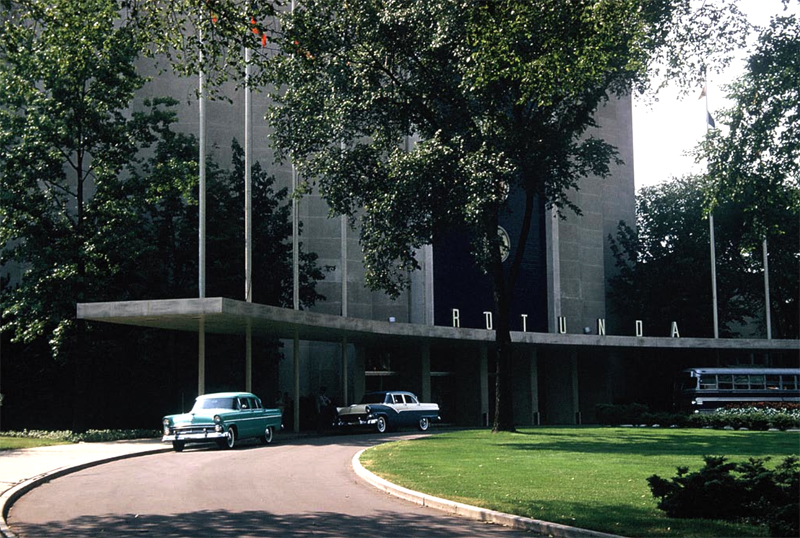
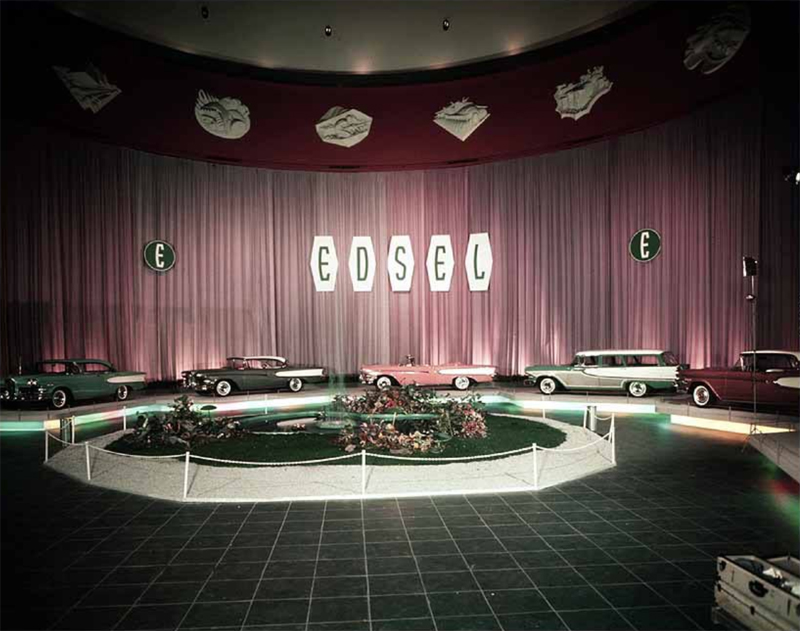
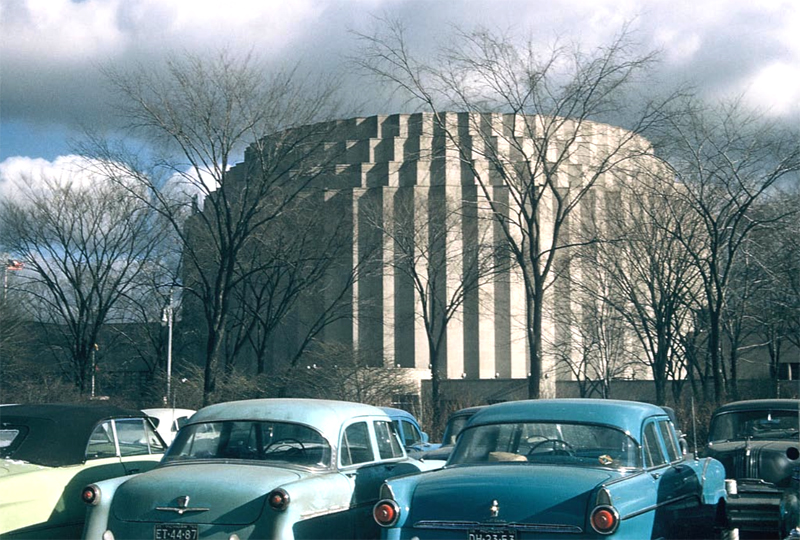
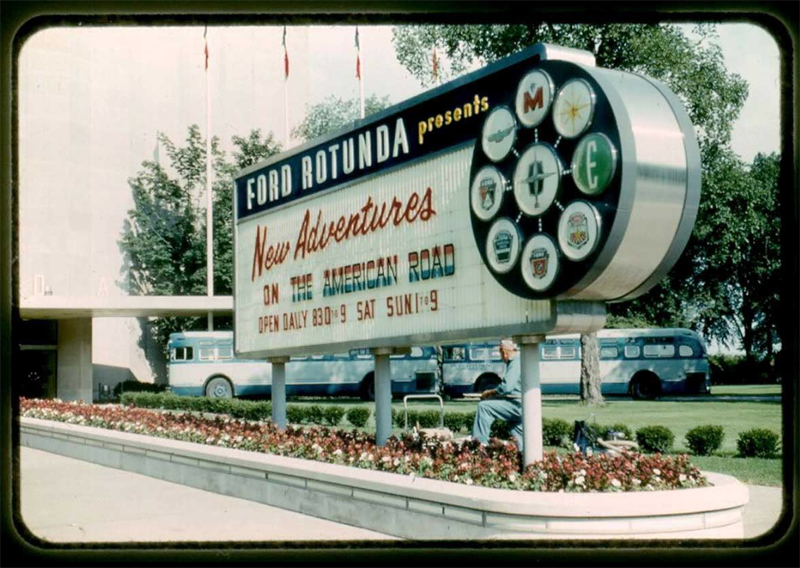
The Ford Rotunda

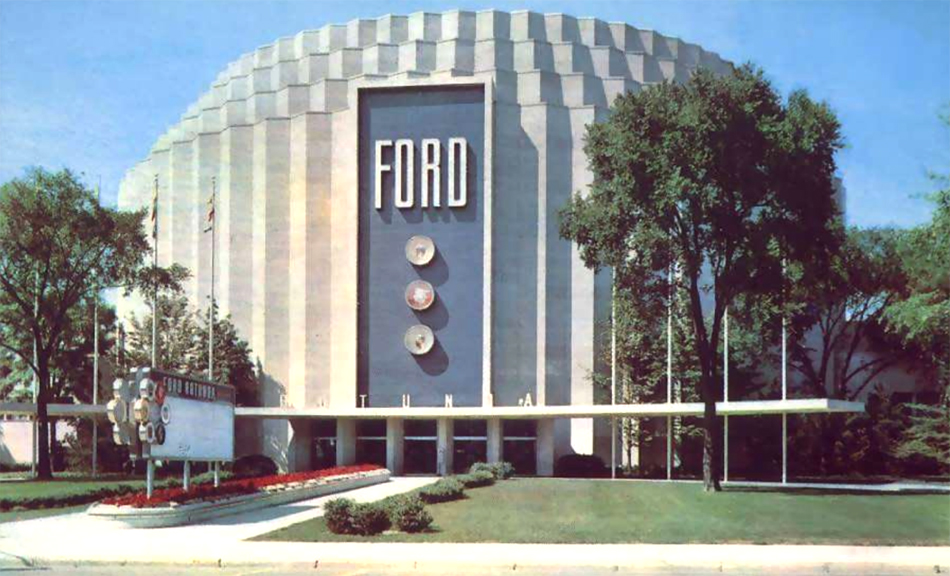
The Ford Rotunda – Dearborn, Michigan, photographer unknown

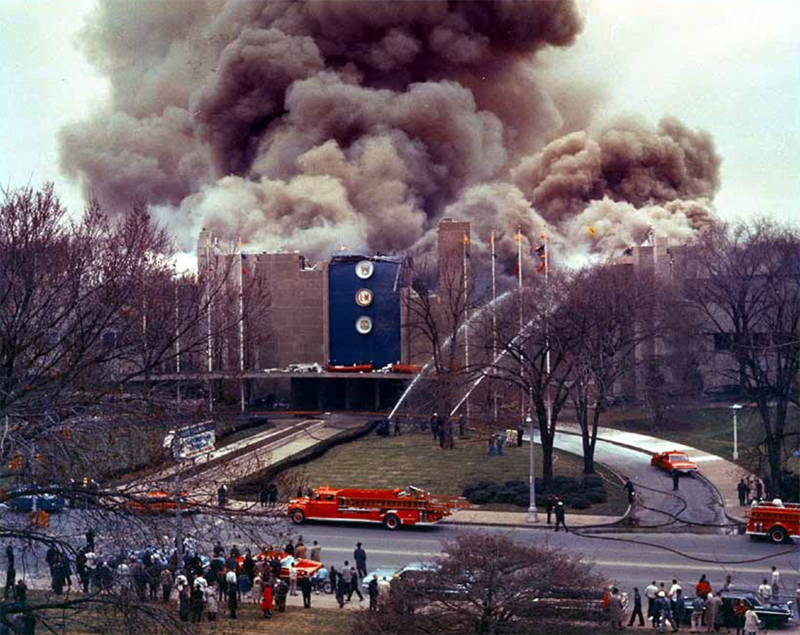
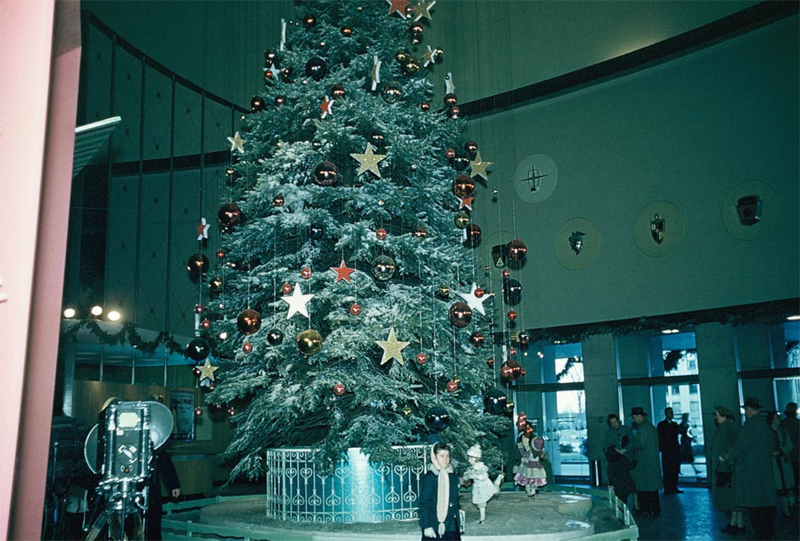
Michigan in Pictures regular Matt passed an email about the Ford Rotunda along that had some cool pictures I thought folks would like to see. When flames consumed a Christmas fantasy from the Detroit News Rearview Mirror begins:

From 1936 to 1962, the gear-shaped Ford Rotunda attracted visitors from around the world. It was the fifth most popular tourist destination in the United States in the 1950s.

The building had its roots in the 1933 Chicago World’s Fair, known as the Century of Progress Exposition, which opened in May of 1933 and attracted more than 40 million visitors over its two-year run. One of the major attractions at the fair was Ford Motor Company’s Rotunda, which was disassembled after the fair and brought back to Dearborn, where it was reconstructed using more permanent materials. Designed to be the showcase of the auto industry, the Ford Rotunda was opened to the public on May 14, 1936.

…In 1960, the Rotunda ranked behind only Niagara Falls, the Great Smoky Mountains National Park, The Smithsonian Institution and the Lincoln Memorial as a national tourist destination. It was more popular than Yellowstone, Mount Vernon, the Washington Monument and the Statue of Liberty.

Read on for the sad tale of how it burned to the ground on November 9, 1962.

Television History – The First 75 Years might be the photographer – there’s some of the same shots there and they write about their parents taking them to see Santa during the Christmas Season at the Rotunda. They also have a nice aerial of how the Ford Rotunda was located in relation to the Rouge Plant.

Old Main and Wayne State University

Wayne State University

Wayne State University, photo by kmaz.

Wayne State University is Michigan’s only urban research university. The 203 acre campus is in Detroit’s University Cultural Center. The main campus and six extension centers are attended by 33,000 graduate and undergraduate students in 13 schools and colleges that offer more than 350 major subject areas.

Wikipedia’s Wayne State University entry says that the university was established in 1868 as the Detroit Medical College. Five more schools were added over the years and in the early 1930s the Detroit Board of Education organized them to form Wayne University. The building pictured is Old Main (c. 1904 photo of Old Main), about which Wikipedia says:

Old Main, originally called “Main Building”, was built December 13, 1894. It was the first major building of Wayne State University. Originally, every course offered was located in Old Main. It was built over a four year period out of limestone quarried from the land directly in front of it. The structure was designed by the architects Malcomson & Higginbotham and contained 103 classrooms, laboratories, offices, and residential space for 3000 students.

…Today, Old Main serves as the home of the College of Liberal Arts and Sciences of Wayne State University as well as accommodating many other classes of different subject matters.

See this bigger in Konrad’s Wayne State University slideshow.

Michigan Courthouses: Van Buren County Courthouse

Van Buren County Courthouse (Paw Paw, Michigan)

Van Buren County Courthouse (Paw Paw, Michigan), photo by courthouselover.

Jordan writes:

The Van Buren County Courthouse was erected in 1901 with the designs of Claire Allen of Jackson, Michigan. It is similar is appearance to the Classical Revival courthouse in Hillsdale, Michigan.

Wikipedia’s entry for Claire Allen says that he was was a prominent architect in southern Michigan in the early twentieth century. He was head of the firm of Claire Allen & Sons and his resume includes the Chelsea Clock Tower.

Be sure to check this out bigger and in his Michigan County Courthouses set (slideshow)

More Michigan courthouse shots on Michigan in Pictures.

Lines

Lines

Lines, photo by Ralph Krawczyk Jr.

If you don’t know Ralph, you should.

Be sure to check it out bigger or in his Digital Goodness slideshow.

See more from Ralph on Michigan in Pictures.

One more Winter

One more Winter

One more Winter, photo by swatzo.

As our unseasonably gorgeous November 2009 drifts off to snowy sleep, it’s pretty clear that winter will in fact include Michigan on its list of tour dates. I hope that like the house above, you’re ready for one more winter.

See this bigger in his slideshow and check out one of my favorite photos ever that Steve took, Green Hornet.