
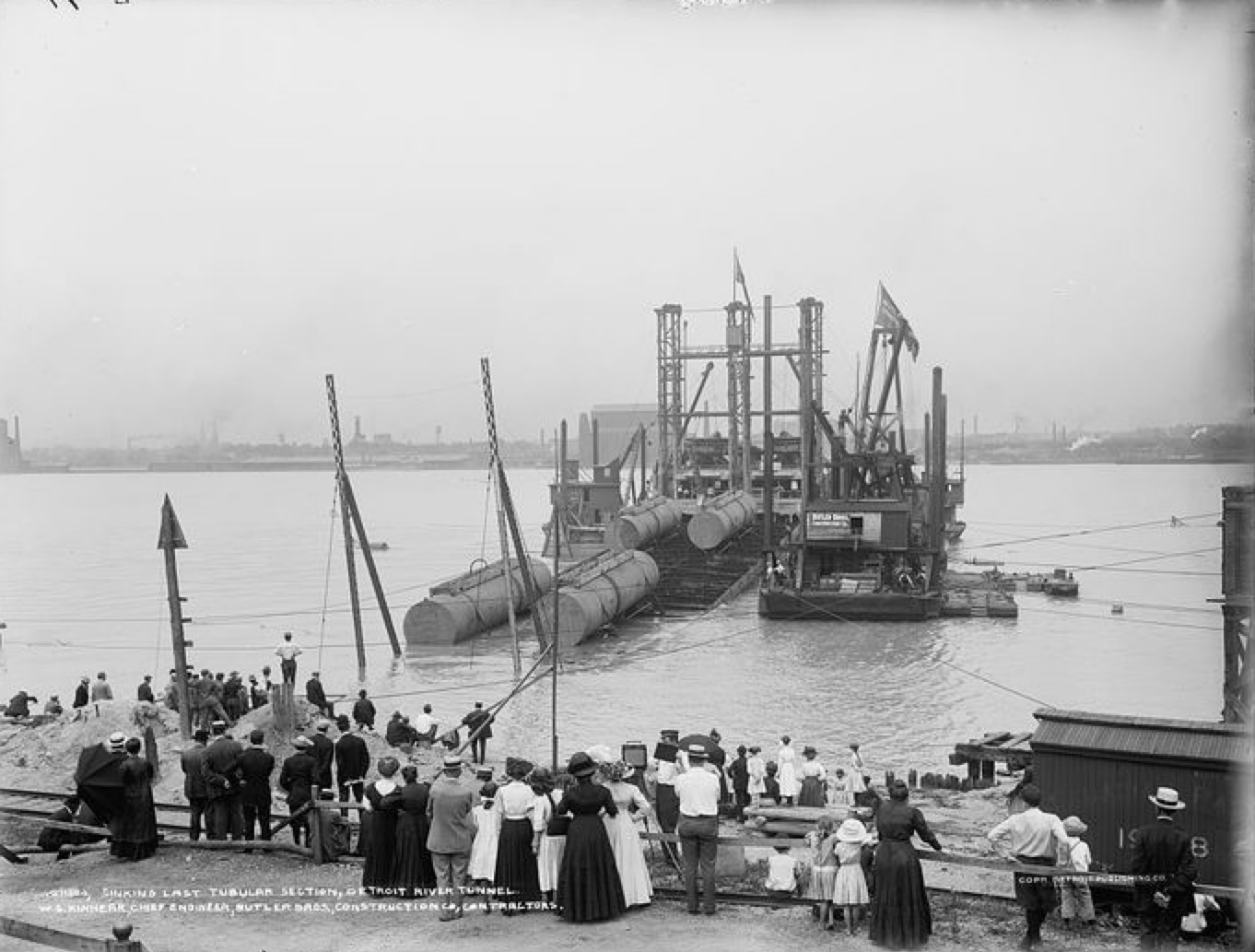
Sinking last tubular section Michigan Central RR tunnel by Albert Duce
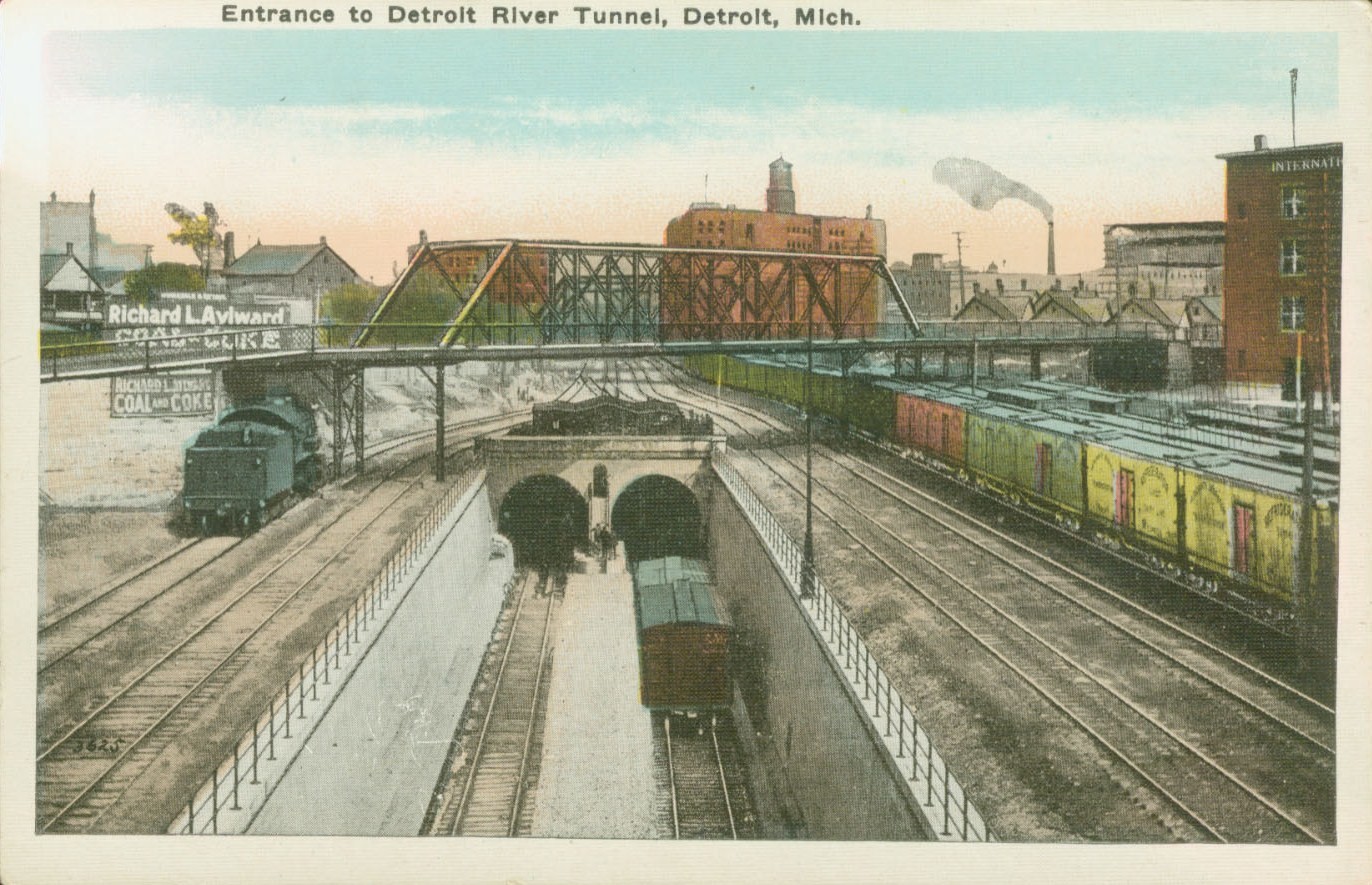
One of the fun things about Michigan in Pictures is the way that the photos I share raise questions that I am then obliged to find the answers to! That is the case today after someone asked “Where does the Holiday Train cross over from Canada?” The answer is the Michigan Central Railroad Tunnel which the Henry Ford explains was the answer to a wintertime challenge:
Ferrying railroad cars across the Detroit River was time-consuming and expensive — and sometimes impossible through winter ice. The Michigan Central Railroad opened a tunnel between Detroit and Windsor in 1910. The tunnel’s sections were built on land and then towed and sunk into position. This innovative construction technique saved the railroad some $2 million versus more conventional methods.
The Diesel Shop shared the photo above and continues the explanation:
The tunnel was constructed utilizing the immersed tube method in which tunnel sections are prefabricated and then sunk to the bottom of the river. Immersed tube construction is generally faster and cheaper than the alternative of boring a tunnel into the earth. The Michigan Central Railway Tunnel was the first immersed tube tunnel to carry traffic. The tunnel, built at a cost of $8,500,000, is 1 3/8 miles in length from portal to portal.
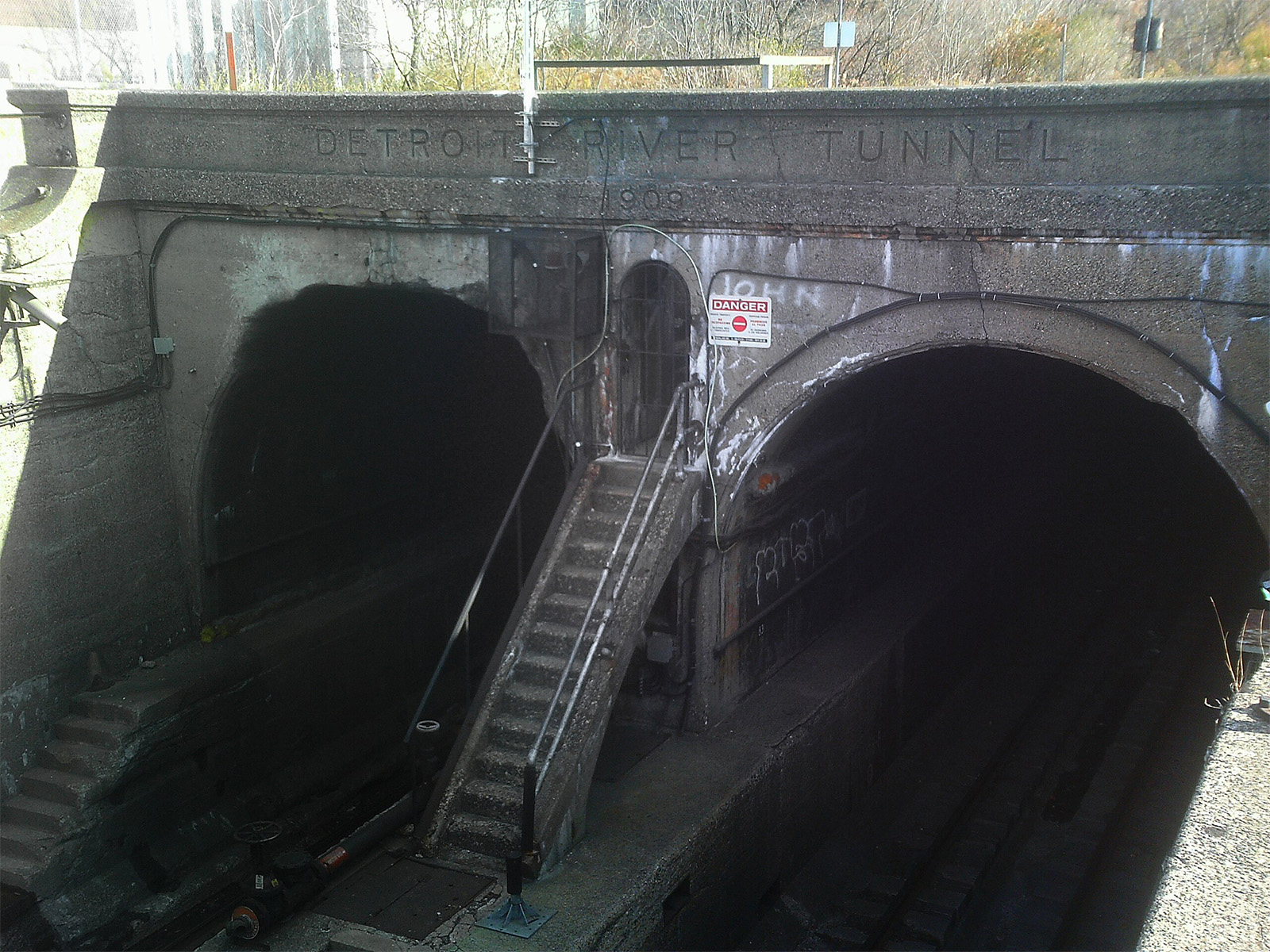
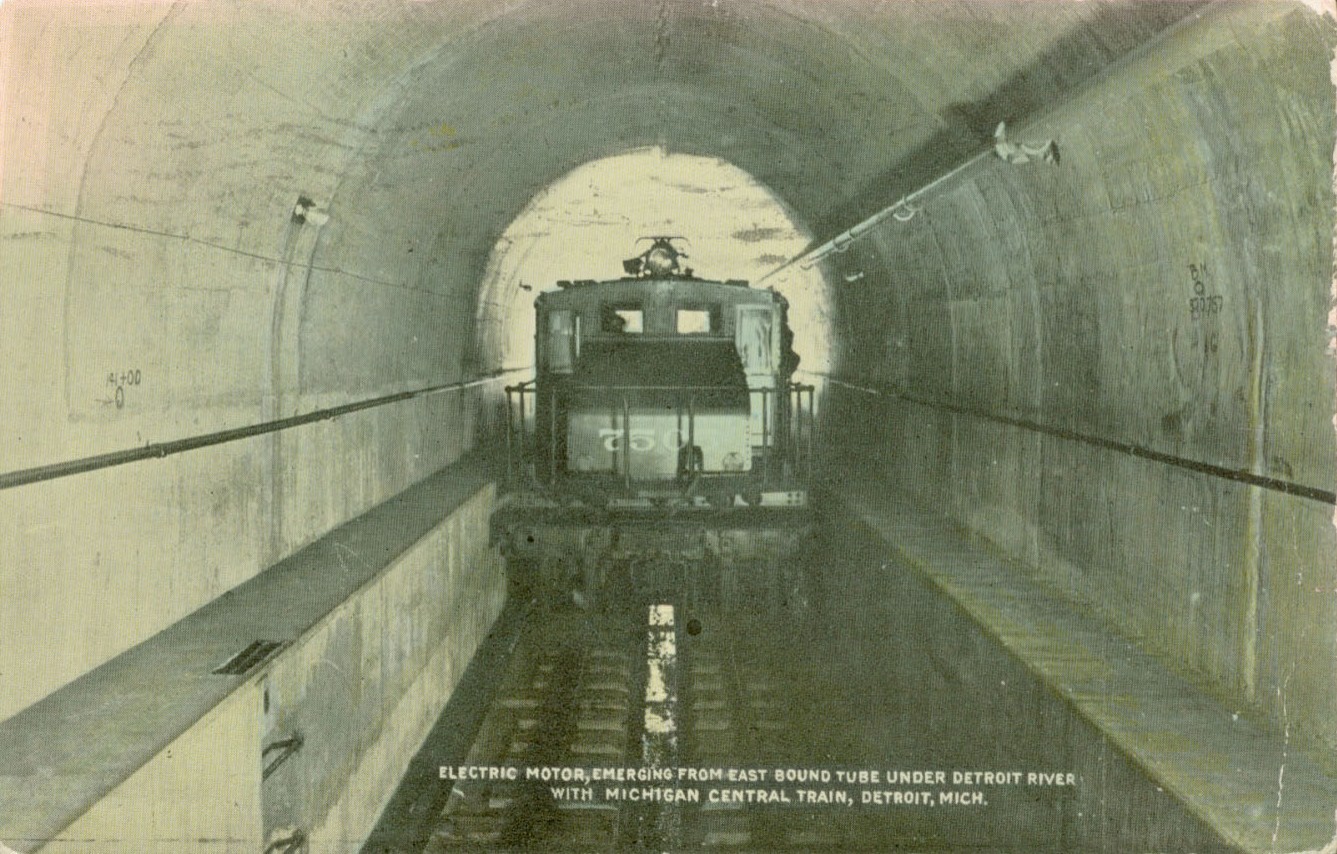
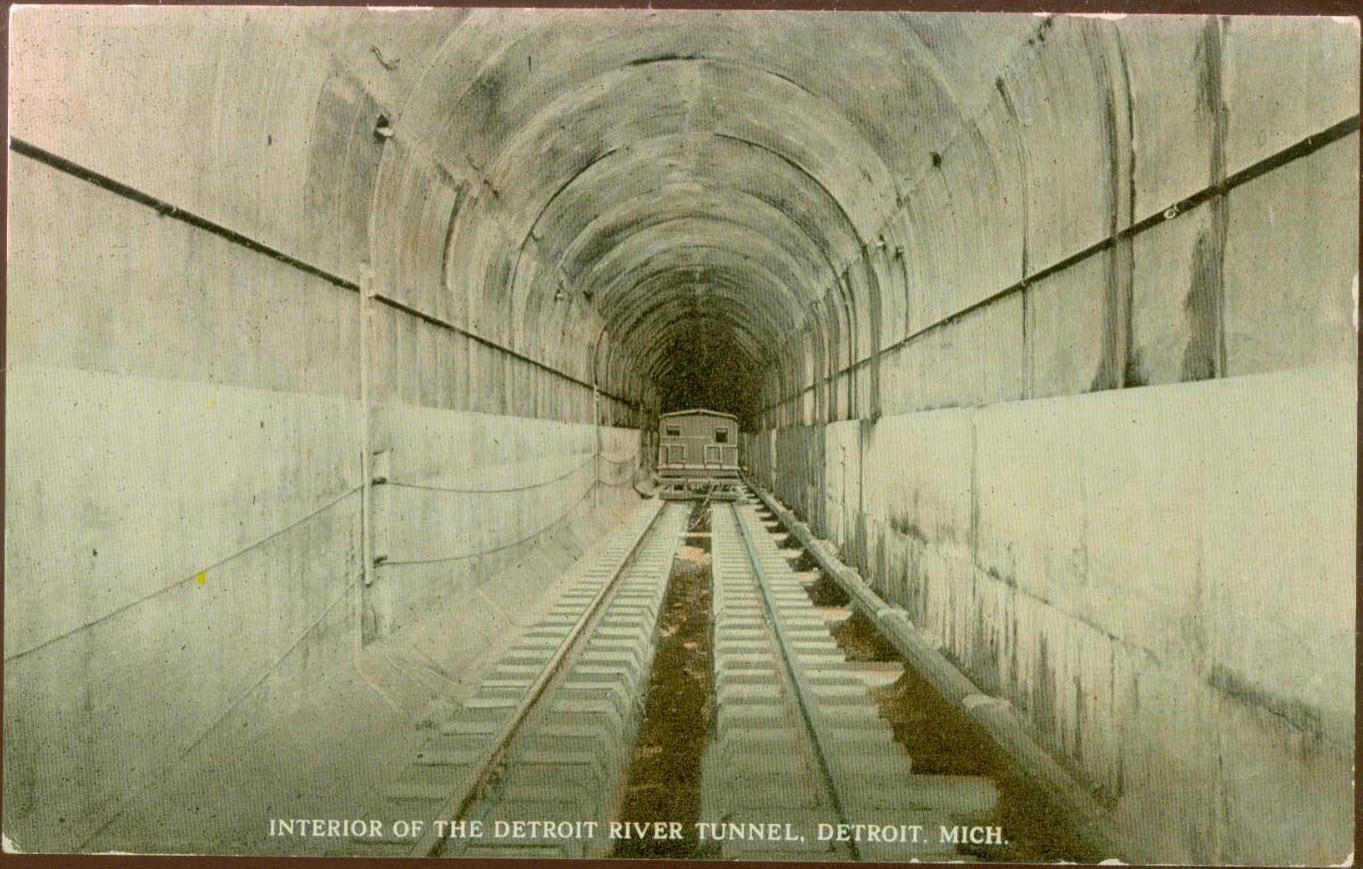
Here’s a cool video tour of the Michigan Central Railway Tunnel & some shots of the tunnel via Wikipedia’s Michigan Central Railway Tunnel entry.

 Michigan in Pictures
That’s really interesting – I got behind here in Reader, so I know I’ll be seeing about the train and its arrival tomorrow, as I scroll down through Reader. You miss a day, or two here and quickly regret it!
LikeLike