Misty morning on the Macatawa River

Misty morning

Misty morning, photo by Fellowship of the Rich.

Gorgeous photo from Holland last week from where Lake Macatawa meets the Macatawa River. Wikipedia says that the Macatawa River, also known as the Black River, drains into Lake Macatawa, adding that the name Macatawa is a mis-phoneticization of the Native American “Muck-i-ta-wog-go-me”, which means “black water.”

Check it out on black and in Rich’s massive Holland, Michigan slideshow.

More sunrises on Michigan in Pictures.

Seul Choix Point Lighthouse

Seul Choix Lighthouse

Seul Choix Lighthouse, photo by DanielBrinks.

The Seul Choix Point Lighthouse (map) is operated by the Gulliver Historical Society and DNR as a park & museum. Terry Pepper’s Seeing the Light’s page for Seul Choix Pointe Light explains:

At the dawn of the 1880’s, the volume of maritime traffic passing between harbors on the western shore of Lake Michigan and Green Bay and the Straits of Mackinac exploded. While the St. Helena Island light station lighted the eastern entry into the Straits, mariners were forced to navigate blind along 100 miles of unlighted upper peninsula coastline before the Poverty Island light came into view at the western end of the passage. With treacherous storms frequent at both ends of the navigation season, mariners frequently chose to ride out such storms in the lee of points protruding into the lake along this 100-mile stretch of unlighted shoreline.

Seeking to both make identification of such a refuge easier, and to mark the shore at an interim point between the two existing lights, the Lighthouse Board recommended that establishment of a light station on the end of Point Patterson, approximately midway between St. Helena Island and Manistique.

It took nearly 20 years to complete – read on for more about what was apparently the Cadillac of lighthouses. The light is also reputed to be haunted, and you can read a lot more about that in The Haunting of Seul Choix Point Lighthouse on Michigan in Pictures.

Check this out bigger and see more in Daniel’s 2020110700 Vacation slideshow.

Shaggy Mane Mushroom

DSC09529_tonemapped

DSC09529_tonemapped, photo by ansonredford.

Mushroom-collecting.com has this to say about the Shaggy Mane Mushroom:

The Shaggy Mane, also occasionally known as the Lawyers Wig, is a distinctive and easy to recognize mushroom. Its size, shape, and tendency to grow in tight groups make it easy to spot even from considerable distance. Shaggy Mane (Coprinus comatus) has an elongated bullet shaped, shaggy cap, with brownish upturned scales and a straight fairly smooth stem.

These grow in summer and fall in grass, wood chips, rocky, or hard packed soil often appearing shortly after a soaking rain. They may grow singly or scattered but often in large, tightly packed groups. Some years they are very common in city and suburban locations, pastures, lawns, gardens, along driveways, etc. Sometimes they are found in huge quantities presenting quite a dilemma since they require almost immediate preparation.

They are very common around this time of year along the roadside as well. Living Afield has a great pic of the Shaggy Mane and you can see a cool timelapse of its lifecycle too! You do need to be careful about a couple of similar mushrooms – see that page for details!

Donald found this beauty in his yard. Check it out background bigilicious and in his slideshow.

More Michigan mushrooms from Michigan in Pictures.

Wolverines, Spartans and Paul Bunyan

100910_UM V MSU FBC DENARD 2 LON

100910_UM V MSU FBC DENARD 2 LON, photo by AnnArbor.com.

In just a few hours, the University of Michigan Wolverines and Michigan State University Spartans will meet for the 104th time for rights to the Paul Bunyan Trophy:

The annual Michigan-Michigan State game gives the winner state bragging rights, an inside track to a bowl game, and last, but certainly not least, ownership of the Paul Bunyan – Governor of Michigan Trophy.

Presented for the first time in the 1953 meeting between the Wolverines and the Spartans, the Paul Bunyan Trophy is the lesser-known of Michigan’s two annual trophy games, shadowed by the nationally recognized Little Brown Jug Game between Michigan and Minnesota.

The Bunyan Trophy was put into circulation by then Michigan Governor G. Mennen Williams. The prize consists of a four-foot wooden statue of the legendary Paul Bunyan astride an axe with feet planted on a map of the state of Michigan. Two flags — one with the Michigan “M” and the other with the Michigan State “S” — are planted on either side of Bunyan. A five-foot stand supports the statue.

The Brown Jug is old news, because the game puts 1st place in the new Legends division of the Big Ten on the line, and both programs are in the top 25. Get a picture of the trophy along with all the links & history on the Michigan vs Michigan State Football Rivalry page on Absolute Michigan.

The photo of Michigan quarterback Denard Robinson being dropped for a loss by MSU’s Chris L. Rucker was taken by Lon Horwedel of AnnArbor.com in last year’s 34-17 Spartan victory. Check this out on black and in AnnArbor.com’s excellent slideshow from last year’s Michigan vs MSU game!

Bare Bluff overlooking Bete Grise Bay

n2c_111-8083

n2c_111-8083, photo by sgowtham.

The Keweenaw Free Guide’s entry for Bare Bluff begins:

Towering some 500 feet above the sparkling waters of Lake Superior, Bare Bluff commands a spectacular view across the lush green forest of the Keweenaw Tip and the encompassing waters of Lake Superior. The rocky bluff sits several miles from any semblance of civilization, standing along the far northern arm of Bete Grise Bay. In fact the only hint of civilization glimpsed from its vantage point os the Mendota Canal breakwaters and lighthouse – producing a landscape much like the early explorers to the region might have experienced. Highlights include the rocky shore of the Keweenaw, Smith Fisheries, the mouth of the Montreal River, Bete Grise Beach, and on clear days the Huron Mountains on the horizon.

Read on for directions. While the Guide deems it “a very difficult trail with a good amount of steep cliffs and sudden drop offs along the way,” Gowtham says it’s a “moderate hike is a price worth paying any day for a glorious view of the eastern shore of Michigan’s Keweenaw Peninsula.”  We should add a link to the Fall Color Tour for the Keweenaw Peninsula (Houghton, Eagle River, Copper Harbor) courtesy Pure Michigan’s Fall Color Tours.

In any case – stunning vista! He took it on October 4th, and you can see there’s still lots of color left! Check it out bigger and on his photo map.

An adventure a day…

Michigan Fall Paddle

Michigan Fall Paddle, photo by onewildwest

An adventure a day keeps the doctor away by Carol Thompson on the Great Lakes Echo is short, sweet and exactly the prescription that Michigan can be filling for an over-stressed and under-recreated nation. Carol writes:

A dose of exercise and fresh air is just what the doctor ordered.

Getting out for a bike ride is a good medicine for any Great Laker.

Indiana Dunes National Lakeshore is partnering with Porter Health Systems in Indiana to prescribe walks, bike rides, kayak trips and other activities to patients through the Park Prescription Program. By getting out to the park, patients will get some exercise and stress relief, while hopefully boosting visitation.

Not every prescription is the same. Before they write a prescription, Porter doctors will find the right trails and activities based on the patient’s needs and abilities. Considering there are over 40 miles of trails in the Lakeshore, there’s something for everyone.

Don’t wait for your next checkup to get out for a hike or a ride. In this case, a little self-medication might be ok!

We should probably add “paddle, ski and snowshoe” to that list. Can we take a cue from out neighbors to the south and add “Michigan is good for you” to the Pure Michigan message?

Check this out bigger and in Brent’s Random slideshow.

Battered but not Beaten: Great Lakes Week 2011

Battered

Battered, photo by James Marvin Phelps.

Invasive species, pollution, diversion – the threats facing the Great Lakes are legion.

This week (October 11-14) is Great Lakes Week, a partnership to improve the places around the Great Lakes basin basin where people live, work, learn and play. This week’s activities, meetings and conferences bring representatives of the U.S. and Canadian governments together in Detroit along with a broad coalition of public and private groups to highlight efforts to implement solutions for the lakes’ most pressing problems. It’s one of the most wide-ranging Great Lakes summits in history and you can watch it LIVE today starting at noon through Friday on Absolute Michigan or at greatlakesnow.org.

Check this photo of the Grand Haven Pier Light out background big and in James’ Michigan Lighthouses slideshow.

fall in detroit

fall in detroit

fall in detroit, photo by buckshot.jones.

Color touring and fall fun isn’t only for Northern Michigan – check out the Detroit Fall Color Tour on Pure Michigan, which begins:

The home of the Motown Sound is the starting point for a 195-mile fall color route that skirts three waterways to the maritime city of Port Huron, and rolls through historic Southeast Michigan towns with connections to three pop music stars. The month of October is prime for viewing autumn hues at a variety of parks, and stopping to taste seasonal treats at cider mills along the way

Read on for more!

Check it out background big and in Scott’s Cass Corridor slideshow.

More Fall Wallpaper on Michigan in Pictures.

Fall, from the farm or at 440 miles

Fall

Fall, photo by southarmstudio

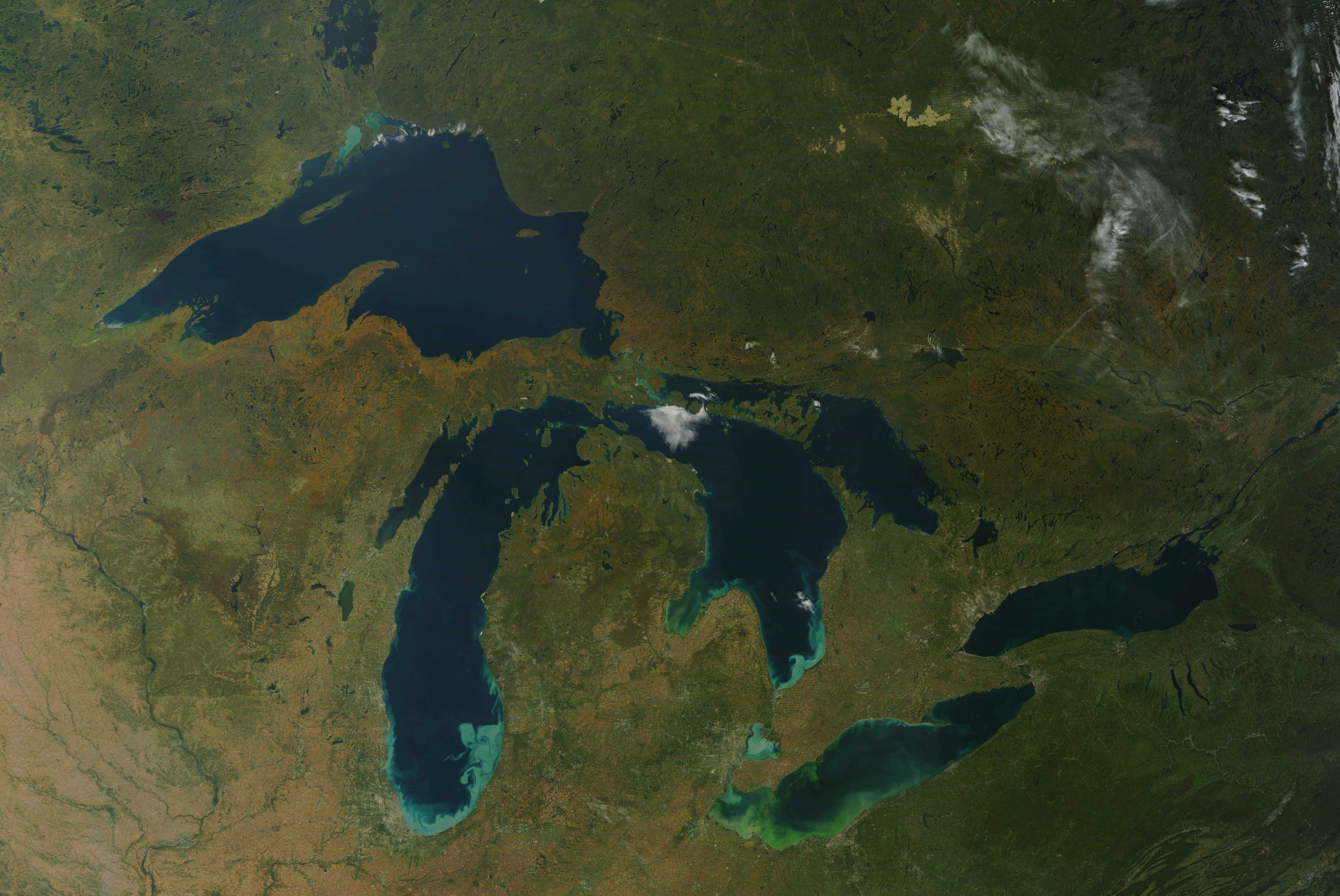
mLive tipped us off that NOAA has a MODIS high-res satellite image showing Michigan’s fall foliage throughout northern Michigan as taken by the high-resolution satellite. Click here for the photo which shows a lot of oranges and reds across the western U.P. and increasingly in northern lower Michigan. You can check the photo out that that link or if it’s gone, here’s a copy (1.6 MB).

They also include a link to the Foilage Network’s report for the upper Midwest.

Check it out bigger and in Ron’s Earthscapes slideshow.

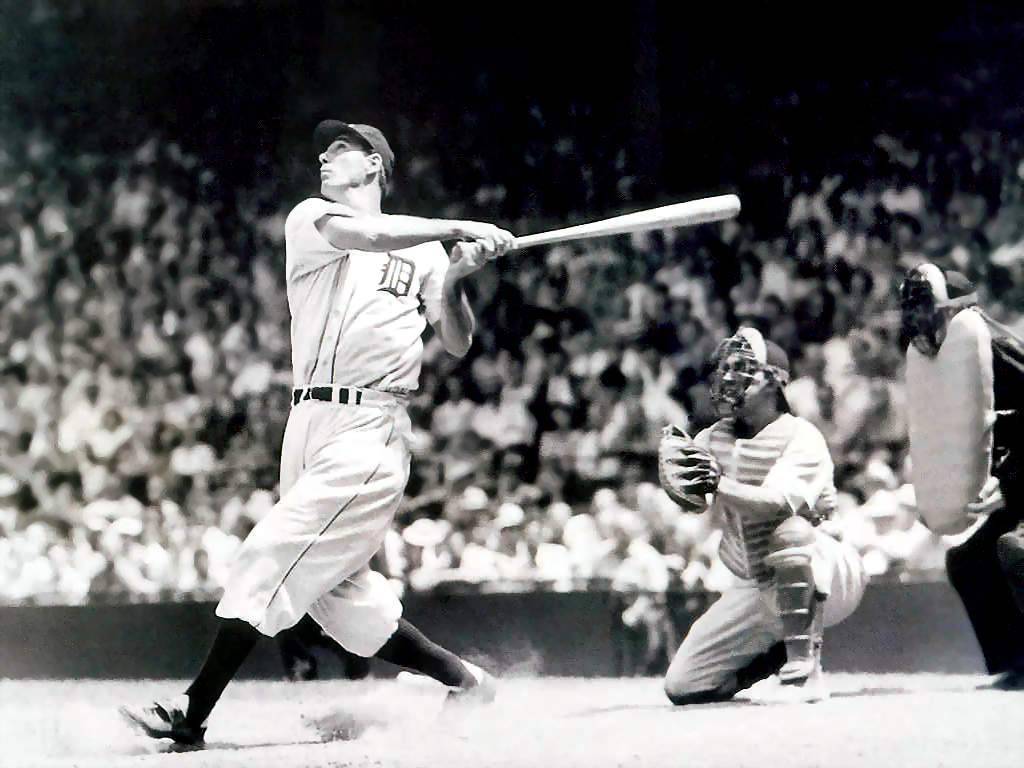
Yom Kippur and Hall of Famer Hammerin’ Hank Greenberg

Detroit Tiger Hank Greenberg, source unknown

“When I was playing, I used to resent being singled out as a Jewish ballplayer. I wanted to be known as a great ballplayer, period. I’m not sure why or when I changed, because I’m still not a particularly religious person. Lately, though, I find myself wanting to be remembered not only as a great ballplayer, but even more as a great Jewish ballplayer.”
~Hank Greenberg, after his career

Tonight the Tigers continue their drive toward the World Series. Wikipedia’s entry for Hank Greenberg begins:

Henry Benjamin “Hank” Greenberg (January 1, 1911 – September 4, 1986), nicknamed “Hammerin’ Hank” or “The Hebrew Hammer,” was an American professional baseball player in the 1930s and 1940s. A first baseman primarily for the Detroit Tigers, Greenberg was one of the premier power hitters of his generation. He hit 58 home runs in 1938, equaling Jimmie Foxx’s 1932 mark for the most home runs in one season by any player between 1927 (when Babe Ruth set a record of 60) and 1961 (when Roger Maris surpassed it).

The Jewish holiday Yom Kipper started last night, and this article on Greenberg’s career from the Baseball Almanac tells how rabbis got involved in the decision as to whether or not he would play on Rosh Hashanah in 1934, explaining that:

Rosh Hashanah was not the only major religious holiday that momentarily got in the way of the Tigers’ march to the 1934 World Series while simultaneously adding to the legend of Hank Greenberg. Nine days after the win over Boston, Detroit played the second place New York Yankees. Despite the fact that the pennant was not officially decided, Greenberg was not in the lineup. He was not injured, or suspended, or being benched for poor play. He had simply come up against Yom Kippur, the one day he could never hope to overcome.

Yom Kippur is the Jewish Day of Atonement, the holiest day on the calendar, when all the sins of the past year are “wiped away” through fasting and prayer. Devout Jews would never think of working on such a day. The 1934 Greenberg was not particularly devout; for his entire life, in fact, he would harbor deep doubts and questions about all organized religion. He was, however, still influenced by his father, who “put his foot down” (Greenberg 57). So he sat.

Also check out this great article on Hank Greenberg’s World War II service from Baseball Reference and his induction speech for the Baseball Hall of Fame.

Tons more Detroit Tigers history & photos on Michigan in Pictures!